
.jpg) 1 hour ago
4
1 hour ago
4
Article content
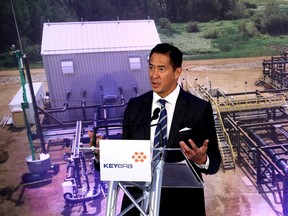
The European Commission announced last week that it will be relaxing its rules on corporate mergers to enable the growth of global champions that can compete with United States and Chinese companies. It’s a message that Canada’s Competition Bureau, which is reviewing Keyera Corp.’s $5-billion purchase of the Canadian assets of U.S.-based Plains All American Pipeline LP, should heed.

THIS CONTENT IS RESERVED FOR SUBSCRIBERS ONLY
Subscribe now to read the latest news in your city and across Canada.
- Exclusive articles from Barbara Shecter, Joe O'Connor, Gabriel Friedman, and others.
- Daily content from Financial Times, the world's leading global business publication.
- Unlimited online access to read articles from Financial Post, National Post and 15 news sites across Canada with one account.
- National Post ePaper, an electronic replica of the print edition to view on any device, share and comment on.
- Daily puzzles, including the New York Times Crossword.
SUBSCRIBE TO UNLOCK MORE ARTICLES
Subscribe now to read the latest news in your city and across Canada.
- Exclusive articles from Barbara Shecter, Joe O'Connor, Gabriel Friedman and others.
- Daily content from Financial Times, the world's leading global business publication.
- Unlimited online access to read articles from Financial Post, National Post and 15 news sites across Canada with one account.
- National Post ePaper, an electronic replica of the print edition to view on any device, share and comment on.
- Daily puzzles, including the New York Times Crossword.
REGISTER / SIGN IN TO UNLOCK MORE ARTICLES
Create an account or sign in to continue with your reading experience.
- Access articles from across Canada with one account.
- Share your thoughts and join the conversation in the comments.
- Enjoy additional articles per month.
- Get email updates from your favourite authors.
THIS ARTICLE IS FREE TO READ REGISTER TO UNLOCK.
Create an account or sign in to continue with your reading experience.
- Access articles from across Canada with one account
- Share your thoughts and join the conversation in the comments
- Enjoy additional articles per month
- Get email updates from your favourite authors
Sign In or Create an Account
or
Article content
Article content
The EU said it will now evaluate transactions on the basis of innovation, investment and resilience to benefit the European economy. In other words, the usual focus on concentration in a particular sector is being set aside in favour of growing larger, more competitive entities.
Article content
Article content
By signing up you consent to receive the above newsletter from Postmedia Network Inc.
Article content
The decision brings to mind a book written by Canadian business icon Dick Haskayne in 2007, entitled Northern Tigers, which explored the idea of creating Canadian global champions. Northern Tigers is a whirlwind tour of Canada’s economic history, which is littered with homegrown companies taken over by foreign entities — and a successful few that took risks and became global players.
Article content
The impetus for the book came from Haskayne’s time as chair of MacMillian Bloedel — ‘Mac Blo’ for short — which was taken over by the U.S. pulp and paper giant Weyerhaeuser in 1999, but there have been many more examples since.
Article content
Miners Inco Ltd. and Falconbridge Ltd. were both bought by foreign players. Nova Chemicals Corp. was taken over by the Mubadala Investment Company in 2009 and is now under the umbrella of Borouge Group International AG. And Viterra Ltd. — which was created through the merger of Agricore United Inc. and the Saskatchewan Wheat Pool in 2007 — was bought by Glencore PLC in 2012 and is now part of the conglomerate Bunge Global SA.
Article content
Article content
Keyera’s proposed deal would run against that trend, fitting with Haskayne’s thesis that Canadian companies should grow and compete.
Article content
Article content
It would expand the company’s position from being primarily Alberta-focused onto the national stage, establishing a fully connected NGL corridor stretching from the West Coast to eastern Canada. It would bolster Canadian ownership over domestic assets, at a time when Canadians have made clear that a strong economy and economic sovereignty are priorities. And it would increase exports, seemingly supporting the federal government’s stated goal of growing trade with non-U.S. markets, at a time when the demand for Canadian energy is rising.
Article content
Overall, those outcomes would appear to align with the federal government’s own priorities, which Industry Minister Melanie Joly outlined plainly last fall in a speech to business groups on Canada’s new industrial strategy.
Article content
“When it comes to creating jobs, we will be building Canadian champions,” Joly said. “We need bigger Canadian companies. And we need to make sure these companies become bigger and at the same (time) we have more of these Canadian champions … that we help them grow and ultimately that they are strong at home and abroad.”
 English (US)