
.jpg) 1 hour ago
3
1 hour ago
3
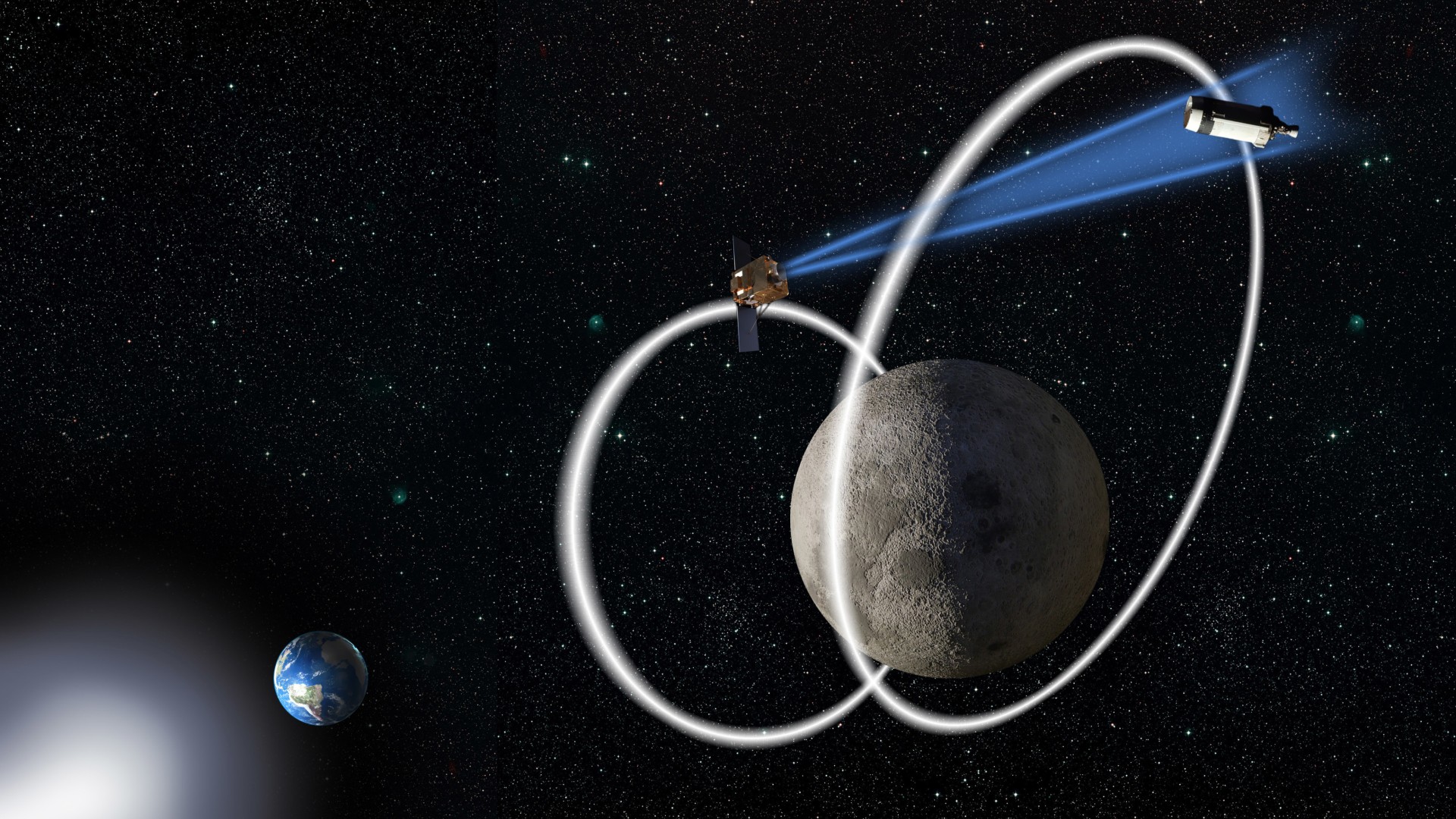
The ongoing military conflict regarding Iran and the Strait of Hormuz may well mirror a future situation off-Earth — the use of cislunar space, the region between the moon and our planet. Think blockades, seizing of ships, impacts on the global economy, repercussions in terms of needed resources and markets, from fuel to high-tech semiconductors and production processes. Now turn your attention skyward and note that the U.S. Space Force is establishing a dedicated acquisition office to appraise the importance of the cislunar region for warfighting and national security.
In recent weeks, there has been palpable excitement over NASA's Artemis 2 moon mission and the announcement of the space agency's ambitious plans for human habitation of the moon. "In parallel, Iran has blocked the Strait of Hormuz, causing global energy markets to spike and everyone to notice, yet again, how vulnerable we are to accidents of geography," said Marc Feldman, executive director of the Center for the Study of Space Crime, Piracy & Governance. "Sometimes, a pair of events contains a warning, if you are able to see it", Feldman added.
The closure of the Strait of Hormuz should inform our thinking about inhabiting the moon and defending cislunar space, said Feldman and Hugh Taylor, also a co-founder of the Center. They authored the 2025 book Space Piracy: Preparing for a Criminal Crisis in Orbit.
"Just as the Strait of Hormuz is a narrow waterway, cislunar space, though seemingly large, actually contains a few unique and exclusive points of transit through which all lunar travel must pass," said Feldman.
Like the Strait of Hormuz, cislunar space is a critical, strategic passage, Taylor and Feldman explained. "If it falls into the wrong hands, all of NASA's and Elon Musk's nascent lunar enterprises — the first steps in a multi-trillion dollar space economy — may have to be written off."
Future value
Could cislunar space be shut down or interdicted in a similar way in the future?
The answer revolves around just how valuable cislunar territory becomes, said Peter Garretson, a senior fellow in defense studies at the American Foreign Policy Council and a strategy consultant who focuses on space and defense. Along with Namrata Goswami, Garretson is a co-author of the 2020 book Scramble for the Skies: The Great Power Competition to Control the Resources of Outer Space.
"It depends on if your valuation is only current value or includes future value. By analogy, are you asking about this year revenues or expectation of future revenues expressed in Net Present Value," Garretson told Space.com. "Obviously any current commercial value of the moon is tiny, but at the same time, the expectation of future value is gargantuan, both in market and strategic value," he said.
But not all cislunar and lunar territory is of equal value. "There is strategic terrain on the poles, on the equator, and in areas of unusual concentration of useful minerals," Garretson said. "There is strategic 'terrain' in lunar orbits and Lagrange points."
At some future point, could access to lunar vital national or economic interests be threatened either on or to and from the surface, or to or through key lunar orbits?
"Certainly," Garretson responded. "At some future point, could such interdiction have a serious impact on the global economy? Maybe."
Data centers
Elon Musk has recently discussed a future where electromagnetic electromagnetic catapults on the moon could launch 500-1,000 terawatts of AI data centers per year, said Garretson. "In a future where significant amount of orbital power stations, data centers, mass for space stations and on-orbit factories were built from lunar sources, many markets would assume and be dependent on such growth."
Data centers are an ever bigger part of our economy, Garretson added. It is energetically much cheaper to get the major mass of data centers — structure, photovoltaics, and thermal control — from the moon. The actual computer is a minor component of the mass, he said.
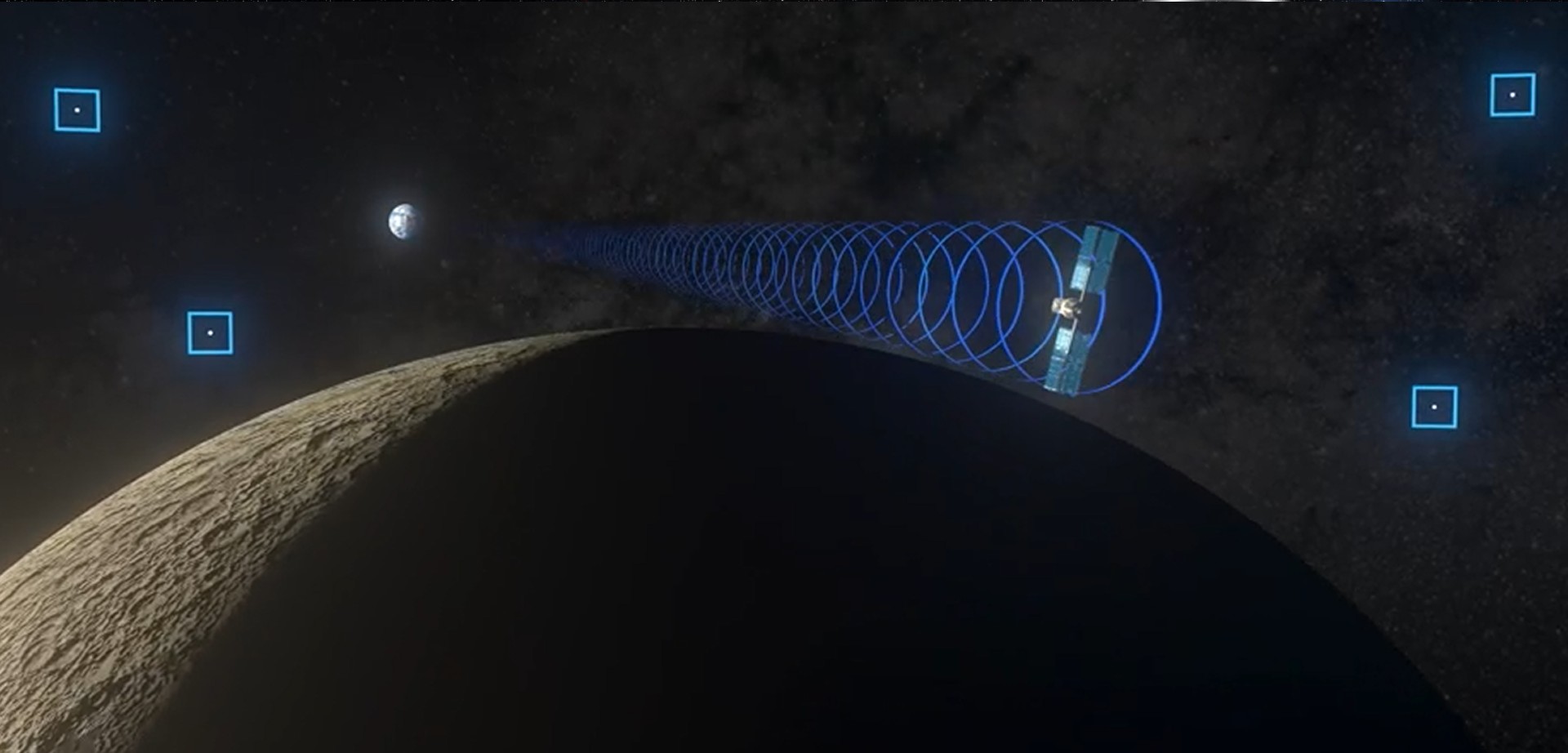
Similarly, Garretson said, lunar surface activity is likely dependent upon orbital infrastructure to provide position, navigation and timing, communications, remote sensing, and space domain awareness. Interruption of those could also shut down production, he said.
"I can certainly imagine a future where the moon plays as important a role in the future economy as the Gulf does today, and that an interruption at some concentrated location could have a similar effect as closing the Strait of Hormuz," Garretson said.
Any disruption to that supply chain — the mining, the refining, the manufacture of structural and functional materials, or mass driver, or a lunar space elevator launch — "or any interruption in logistical resupply of workers or equipment to its production could undermine that future global economy," Garretson concluded.
 English (US)