
.jpg) 2 hours ago
2
2 hours ago
2
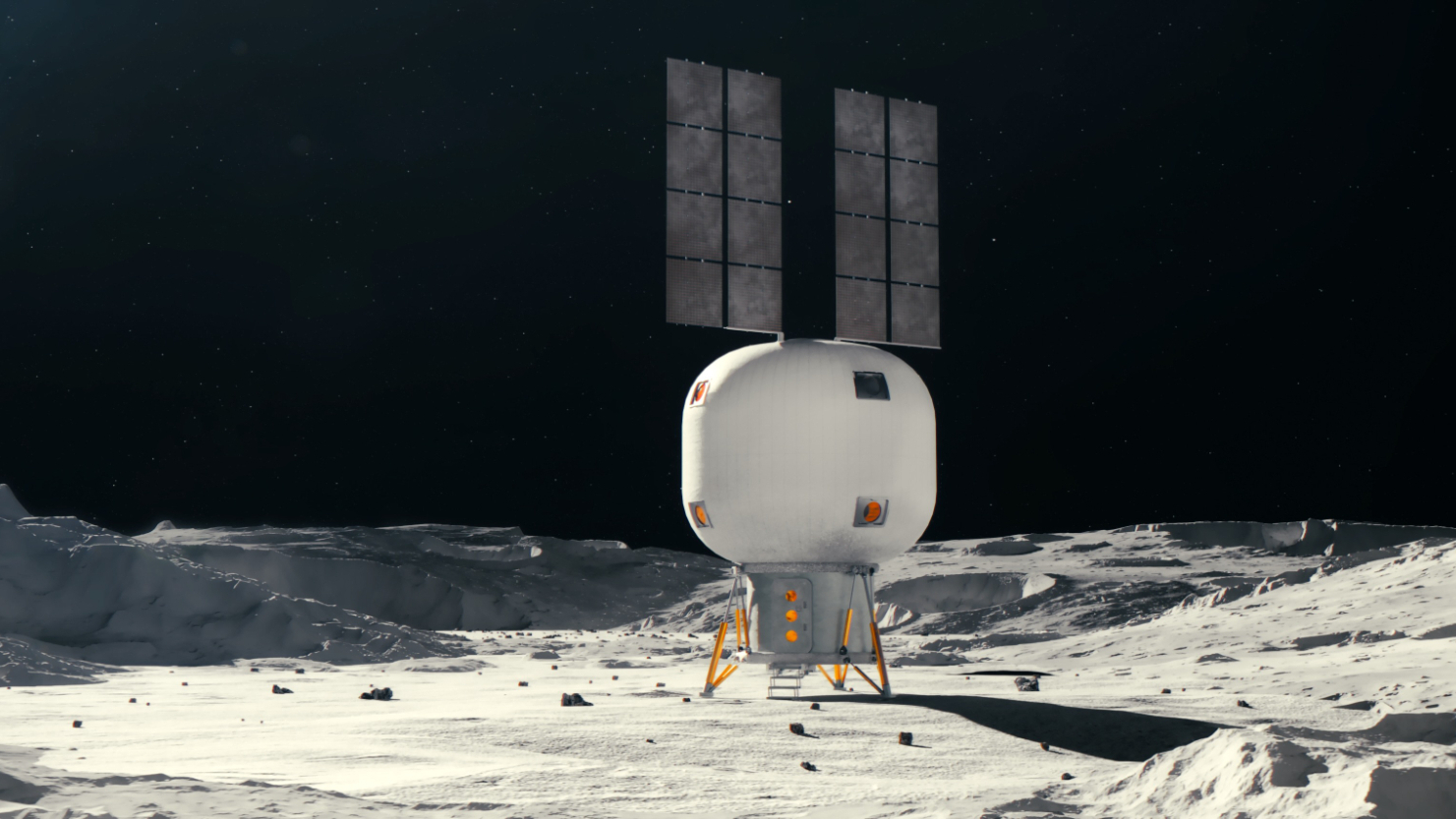
Commercial space infrastructure firm Voyager Technologies is backing lunar habitat developer Max Space with a new multi-million-dollar investment aimed at accelerating development of expandable modules for future missions to the moon.
The companies say the partnership will help move expandable habitat technology toward operational missions by scaling up production, bolstering engineering efforts and integrating Voyager's technology systems with Max's habitat infrastructure.
"Expanding human presence beyond low Earth orbit (LEO) requires infrastructure that is scalable, resilient and purpose-built for permanence,” Dylan Taylor, chairman and CEO of Voyager, said in a March 9 statement. "By pairing Voyager’s integrated platform with Max Space’s expandable habitat architecture, we are accelerating the transition from demonstration missions to durable lunar capability.”
Article continues below
Max Space's expandable habitat technology is designed to fold into a tightly packed configuration capable of fitting inside the payload fairings of rockets like SpaceX's Falcon 9. Once delivered to orbit, the moon or another planet, the structure expands to drastically increase its interior living space, offering the dual benefits of lightweight launch mass and greater usable volume than traditional rigid spacecraft.
"Voyager’s investment is a powerful validation of our expandable habitat thesis and long heritage in orbit. Together we are building habitats designed not just to reach the moon but to stay there," said Saleem Miyan, co-founder and CEO of Max Space.
The companies did not reveal the exact value of the investment.
Denver-based Voyager markets itself as a commercial space infrastructure innovator focused on mission services and technologies for system operations beyond low Earth orbit. The company is also developing, along with Airbus, a commercial space station called Starlab, which NASA selected as one of several private LEO destinations intended to succeed the International Space Station (ISS) after its retirement in the 2030s.
Expandable habitats themselves are not a new idea. NASA tested the concept in an on-orbit demonstration with the Bigelow Expandable Activity Module (BEAM), a small inflatable test habitat that was attached to the ISS in 2016 to study the technology’s performance in space.
BEAM was built by Bigelow Aerospace, which had its own plans for large expandable space stations, but was forced to close its doors due to financial struggles at the start of the Covid-19 pandemic in 2020. Max hopes to scale the concept much further, creating bigger space modules that support astronauts for deep space missions and long-term stints on the lunar surface.
Max and Voyager say their combined initiative is in direct response to a recent NASA announcement outlining a new roadmap for its Artemis program and the agency's efforts to land astronauts on the moon in 2028. The Artemis program aims to establish a permanent human presence on the moon and will need a variety of surface modules to sustain crews.
The companies hope their partnership helps support future lunar missions, "including cislunar mission management, surface logistics, propulsion, power systems and future surface infrastructure, reinforcing a shared vision of the moon as an operational domain, not a temporary destination," according to the March 9 statement.
 English (US)