
.jpg) 6 hours ago
6
6 hours ago
6
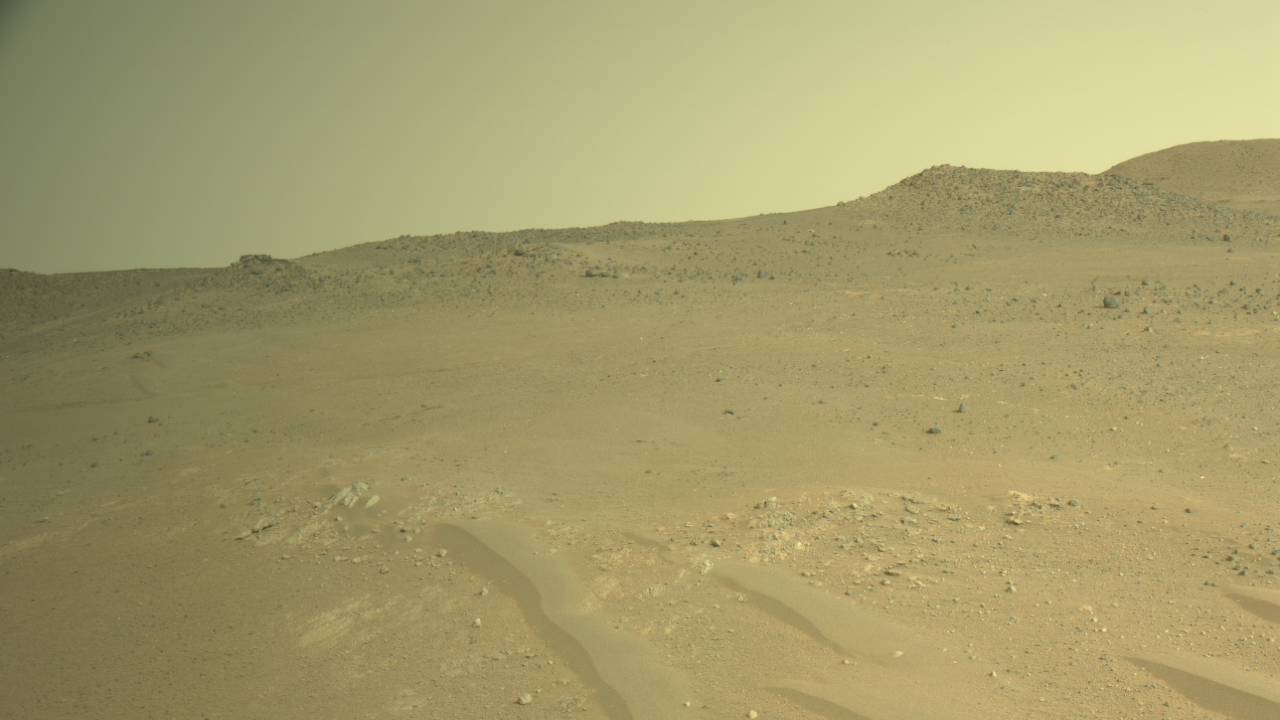
Surprisingly, a toxic compound found on Mars could help bacteria produce brick-like substances that could be used to assemble habitats on the Red Planet.
In 2025, researchers at the Indian Institute of Science showed how the bacterium Sporosarcina pasteurii, which is commonly found in Earth soils, could help create bricks out of regolith on the moon and Mars. The bacterium produces urea as a waste product, which can then react with calcium to produce calcium carbonate crystals. Then, by mixing these calcium carbonate crystals with guar gum, which is a natural adhesive extracted from guar beans, particles of the local regolith can be bound together to form a brick-like material.
"The idea is to do in situ resource utilization as much as possible," Shubhanshu Shukla, who is an astronaut with the Indian Space Research Organisation (ISRO) and a co-author of a new paper on the topic, said in a statement. "We don't have to carry anything from here; in situ, we can use those resources and make those structures, which will make it a lot easier to navigate and do sustained missions over a period of time."
Since samples of lunar regolith are rare and precious, and we have no samples of real Martian regolith, experiments use simulants instead — artificial regolith designed to be as close to the real deal as possible. However, for safety reasons, Martian simulants are missing one key ingredient: perchlorate, which is a toxic, chlorine-containing chemical first found in Martian regolith in 2008 by NASA's Phoenix lander, at an abundance of 0.5% to 1%.
But with regard to simulants, it's not perchlorate's toxicity that's the problem but rather its high flammability, and so usually it's left out.
When conducting their experiments, Shukla and his colleagues, led by microbiologist Swati Dubey of the University of Florida, had to carefully add perchlorate to a simulant called Mars Global Simulant 1, and then see how it affected Sporosarcina pasteurii's ability to produce material usable as bricks. Their experiment produced two main findings: one that was expected, and another that was very surprising.
Given perchlorate's toxicity, Dubey's team used a more robust strain of the bacterium found in soils near the Indian city of Bengaluru (a.k.a. Bangalore). As expected, the perchlorate affected the bacterium by causing stress to its cells, slowing the bacterium's growth and causing multiple bacteria to clump together. It also resulted in enhanced protein and molecule excretion, producing a material known as an extracellular matrix (ECM).
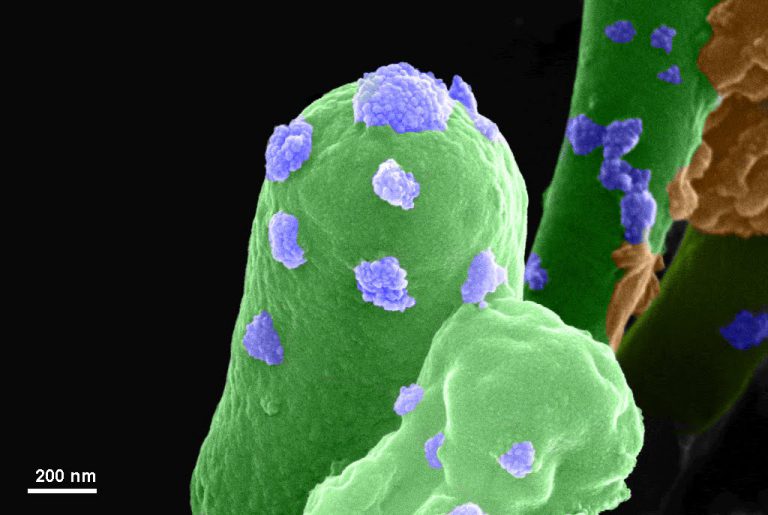
Despite the cellular damage to the bacterium, the team found that the brick material produced is stronger than in previous experiments, and Dubey thinks that it's all down to the ECM.
Using electron microscopy to study what was going on between the bacterium and the simulant, Dubey and her team found that more calcium chloride crystals were being formed, and that the ECM was forming tiny "microbridges" between bacterial cells and the crystals.
"When the effect of perchlorate on just the bacteria is studied in isolation, it is a stressful factor," Dubey said in the same statement. "But in the bricks, with the right ingredients in the mixture, perchlorate is helping."
Something about the composition of the bricks seems to be helping the bacterium — certainly without the guar gum and a catalyst in the form of nickel chloride, the bacterium doesn't see any benefit. Dubey thinks that the microbridges formed by the ECM could provide a pathway for nutrients to reach the bacteria, helping to repair their stressed cells and enhancing the bacteria's ability to bond the regolith particles into bricks — a process called biocementation.
Testing Dubey's hypothesis is the next step, and her team also wants to experiment with the biocementation process in a carbon dioxide-rich atmosphere, mimicking the atmosphere on Mars.
"Mars is an alien environment," said study co-author Aloke Kumar of the Indian Institute of Science. "What is going to be the effect of this new alien environment on Earth organisms is a very, very important scientific question that we have to answer."
The findings were published on Jan. 29 in the journal PLOS One.
 English (US)