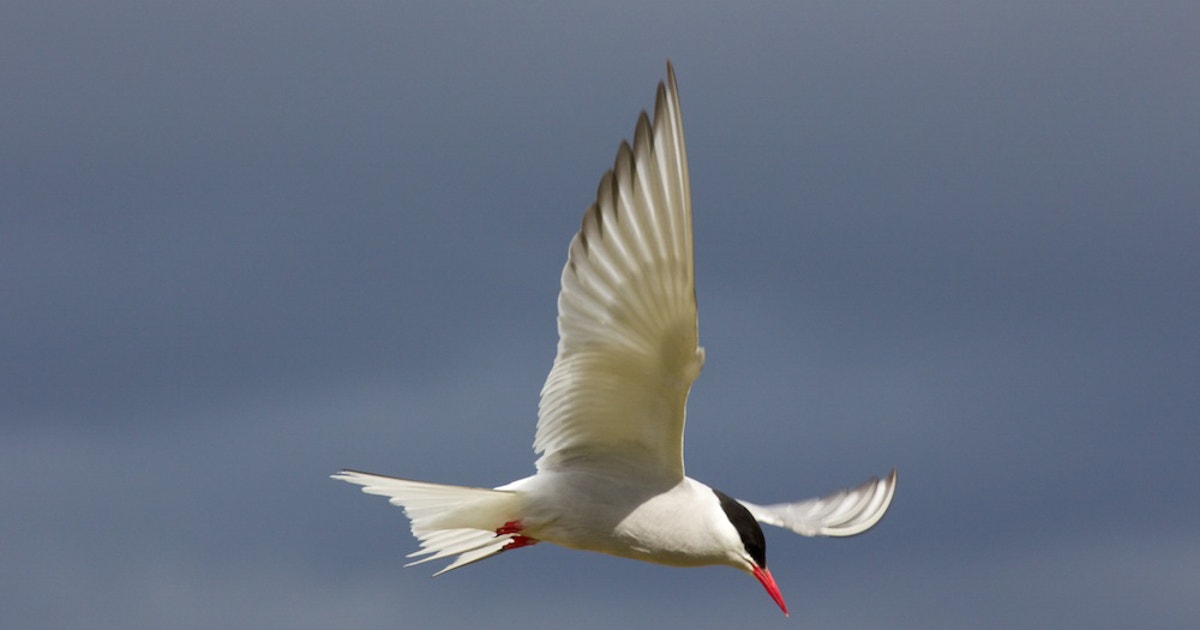
With a mission of protecting birds and the places they need, the National Audubon Society was founded more than a century ago. Despite Audubon’s work to establish laws holding people accountable for intentionally harming birds, more than three billion birds have disappeared from our skies over the past 50 years, proving that laws alone are not enough.
Convening and inspiring a diverse community of bird and nature lovers is more important than ever if we have any chance of reversing this catastrophic decline of birds across the Americas. One way we do that at Corkscrew Swamp Sanctuary is by hosting butterfly identification workshops and official surveys twice a year.
Why butterflies?
In addition to serving as important pollinators, butterflies are a crucial high-protein food source for a variety of wildlife. Many species of birds eat butterflies, including Florida Scrub-Jays, Great-crested Flycatchers, and Eastern Bluebirds. Butterfly larvae (caterpillars) are especially important during the spring breeding season, when parent birds require virtually endless supplies of soft food for their growing young.
An organized effort
Since 1993, the North American Butterfly Association (NABA) has coordinated approximately 450 annual North American butterfly counts, including about 60 counts in Florida, with Corkscrew Swamp Sanctuary and part of Corkscrew Regional Ecosystem Watershed (CREW) among the three official count circles in Southwest Florida. Count coordinators submit data to NABA, whose published reports provide information about the distribution and relative population sizes of nearly 750 species of butterflies.
Comparing results across years helps researchers track changes in butterfly populations and assess the impacts of habitat loss, climate change, and pesticide use. Unfortunately, in 2025, NABA confirmed that, similar to bird populations, butterfly numbers have declined significantly over the past 20 years.
The Fall Survey at Corkscrew Swamp Sanctuary
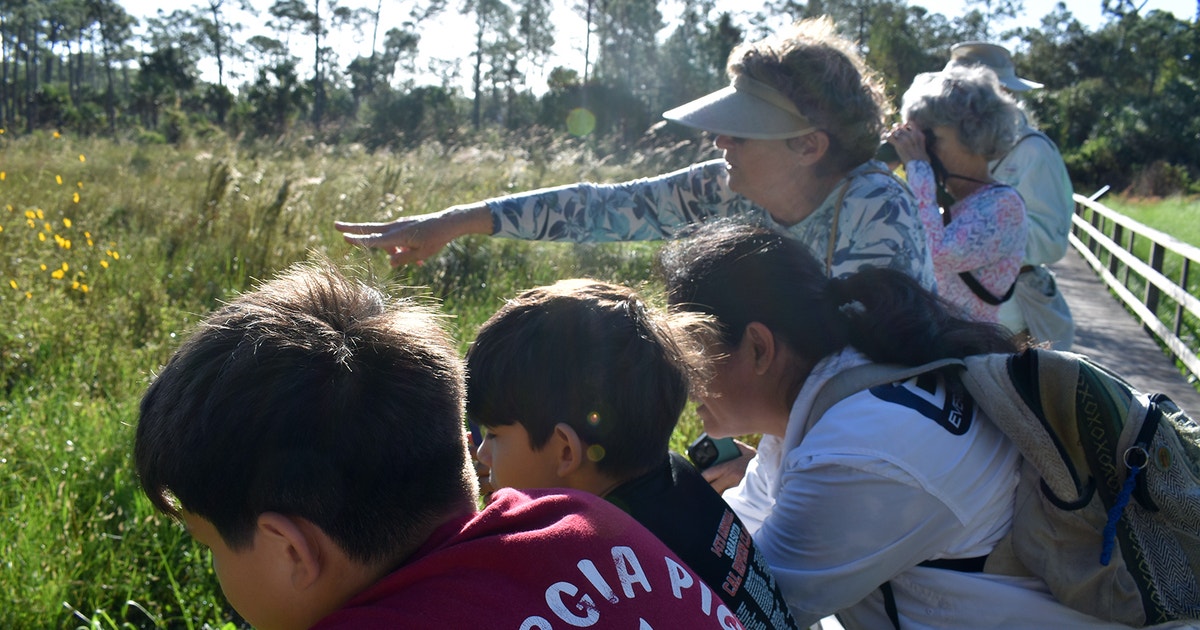
On October 20, thirteen community scientists of different ages, backgrounds, and experience set out on a mission to record every butterfly they could spot in the Sanctuary’s count circle. Coordinated by Sally Stein, Audubon’s director of public programs, the butterfly counters split into groups to cover the Blair Visitor Center campus and parking area and a section of the iconic boardwalk on foot. They later hopped on board a swamp buggy to cover more ground in the backcountry.
The most numerous species recorded was the white peacock, with 111 individuals. This species thrives in warm climates, ranging from the southeastern U.S. to Argentina. It favors wetlands and other locations with weedy, low-lying plants, such as turkey-tangle frogfruit (Phyla nodiflora), which is one of its larval host plants.
Other species reported in good numbers were cloudless sulphur (65), palamedes swallowtail (30), and ruddy daggerwing (18). There were also 131 Brazilian skippers: 21 were adults, and 111 were either larvae or pupae, curled up within their alligator flag (Thalia geniculata) leaf “cocoons.”
NABA uses survey data to document species-level declines and highlights the need to protect butterflies from further losses through habitat conservation, pesticide regulation, and other efforts to support recovery.
How does this help birds again?
Habitat conservation and other efforts that help butterflies also help birds. However, engaging new audiences is imperative for raising awareness of conservation issues and inspiring action. A butterfly count is a perfect opportunity.
Corkscrew member Gloria Moorman and her sons, Tomas (11) and Rafael (8), visit the Sanctuary often.
“Since the butterfly counting, we are a lot more interested in identifying different butterfly species,” says Moorman, who loved seeing the results of the counting as well. “The boys felt like they were part of something special and bigger,” she added.
The scale of the challenge facing birds and the planet is daunting. Driving transformative change requires widespread public support and decisive action. Bringing people together to appreciate and understand what birds need is the first step toward inspiring actions that protect them. Counting butterflies is one way Audubon encourages a lifelong love of birds, the Sanctuary, and the planet.