Image via Buena Vista Pictures

Published Oct 27, 2026, 9:46 PM EDT
Mitchell Brown is a Wisconsin-based writer, film fanatic, and graduate of University of Wisconsin-Milwaukee who has written for various publications covering film analysis, reviews (both classic and contemporary), and movie news. He's also a screenwriter, having written multiple spec scripts. When he's not watching movies, writing movies, or writing about the films he's already seen...no, that about covers it.
There are two things ubiquitous within independent filmmaking: the indie boom of the '90s, and Bruce Campbell. The former is what led to the rise of filmmakers like Quentin Tarantino, Christopher Nolan, Robert Rodriguez, and Kevin Smith, and the latter is famously the star of the most inexpensive horror film to ever become a massive franchise (he's also currently touring with a new self-financed movie, Ernie & Emma). While most people view Campbell as an icon of B-movies and genre films, it doesn't often come up that he was also a part of the wave of '90s independent films that proved you could do a lot with very little. In fact, he was part of one of the more ambitious but lesser-known outings of the era, when Campbell stepped away from horror and into the heist subgenre of crime films, partaking in a filmmaking innovation that was decades ahead of its time in 1997's Running Time.
What is 'Running Time?'
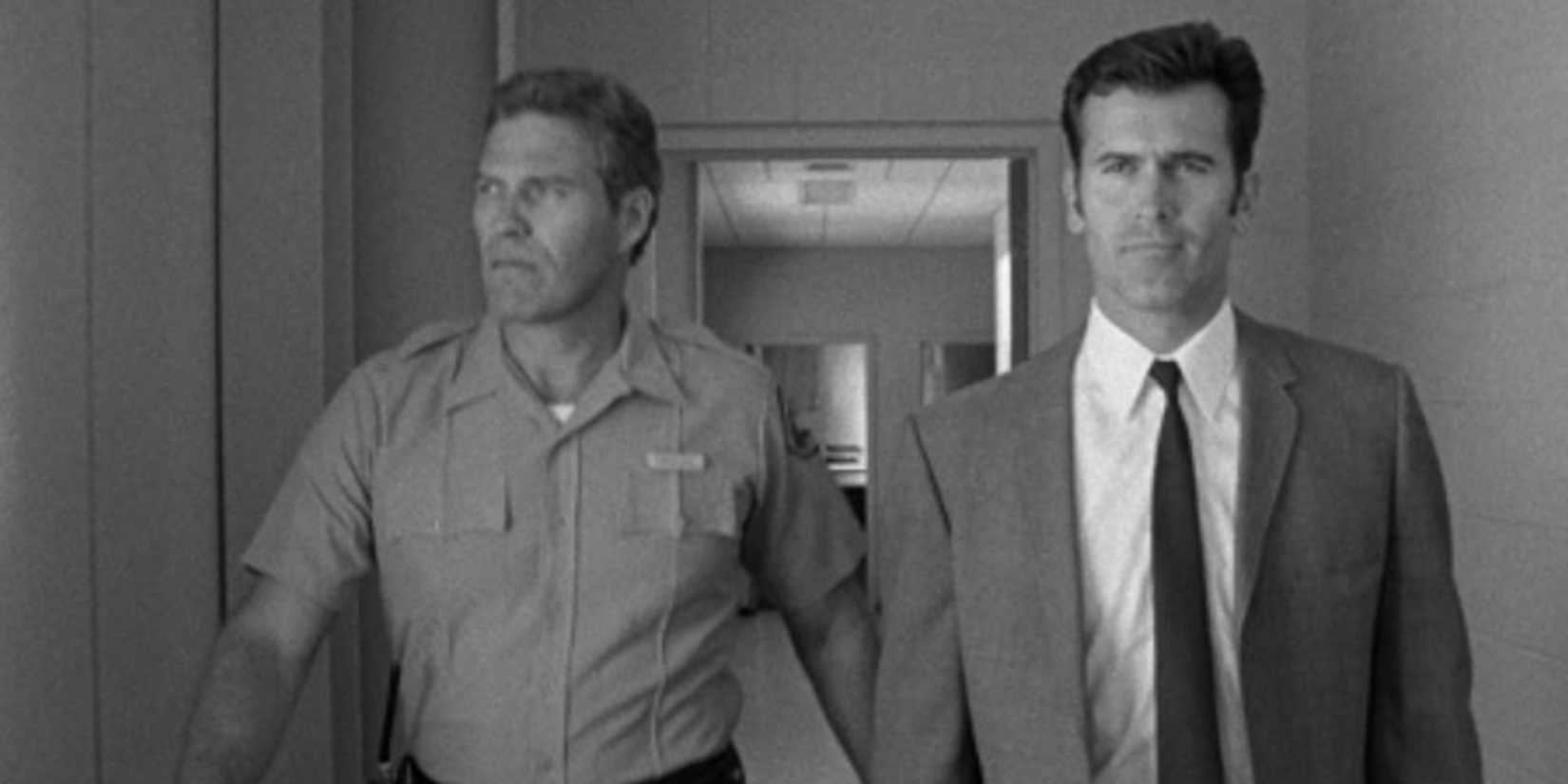
The film takes place in real-time as a seemingly rehabilitated inmate named Carl (Campbell) is released after serving time in prison. Upon exiting the front gate, Carl is given a lift from his old friend Patrick (Jeremy Roberts), who has set up some time for Carl to get reacquainted with his old high school flame, Janie (Anita Barone). After that, it's made clear that Carl and Patrick are on the clock, and have a short amount of time to pull off a heist and rob the very prison that Carl just vacated.
Running Time was written, produced, and directed by Josh Becker, a fellow Detroit filmmaker who is probably best known for being a recurring writer and director for Xena: Warrior Princess. Released in 1997 with a budget of $125,000, Running Time is a lesser-remembered example of filmmakers working with what they have at their disposal to make a movie. Which, if the bonus material on the Blu-ray released by Synapse Films is to be believed (naturally, hosted by Campbell), meant shooting without permits and using any available locations, up to and including Becker's own apartment. Much like Clerks, the film was shot in black-and-white to hide changing color temperatures and to avoid the use of filters when alternating between indoor and outdoor sequences. That last point is important when you know the selling point of the film.
It's All Done in One Take... Sort Of

Almost two decades before films like Birdman and 1917, Running Time took inspiration from Alfred Hitchcock's Rope, by having the entire film be presented with the illusion of being one continuous take. While the story doesn't have any overly elaborate set pieces like the films previously mentioned, most of the scenes are executed like a stage play, relying on the actors to bounce off one another, which adds to the heightened sense of urgency when things begin to go sideways. Part of what's clever about Becker's direction is how the film has to work around the limitations of everything being done from the point of view of a single camera. Little things like insert shots relying on the timing of the camera settling on an object right when one of the characters notices it, or audio cues being used in lieu of flashbacks show the amount of thought that went into working with the self-imposed barriers that the continuous take presentation allotted.
The film is also a unique against-type performance from what Bruce Campbell fans might expect, as the actor uses his on-screen magnetism in the name of being a professional criminal, rather than a chainsaw-gauntleted annihilator of monsters and Maniac Cops. He plays Carl as far more competent and self-assured than Ash, and lacks his trademark comical arrogance, while still being able to command a scene. As it turns out, his inherent charisma fits nicely as an old-school smooth-talking conman, which is shown early on when he has a farewell conversation with the warden (played by the always wonderful Art LaFleur), and convincingly presents himself as a rehabilitated man who's ready to go out into the world and make a name for himself on the straight and narrow. The movie also shows a warmer side to the actor, too, with his scenes acting alongside Anita Barone ending up as the heart of the film.
Running Time is an underrated film, both in Campbell's filmography, and as an example of what independent filmmakers can accomplish with limited resources and a miniscule budget, similar to movies like El Mariachi, Clerks, and Following. While the plot is very simple, it's used more as a framework to showcase the performances of the actors and the creativity of the camerawork, and it makes for a lean and surprisingly intense 70-minute crime-thriller. If you're a fan of Bruce Campbell (which is a weird statement, since it implies there are people who aren't), it's definitely required viewing. Running Time is currently streaming for free on Tubi.
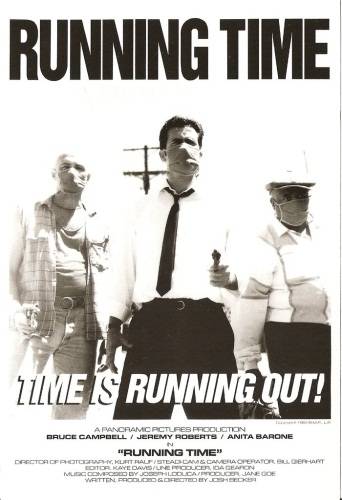
Release Date March, 1997
Runtime 70 minutes
Director Josh Becker
Writers Josh Becker, Peter Choi