
.jpg) 1 hour ago
3
1 hour ago
3
Article content
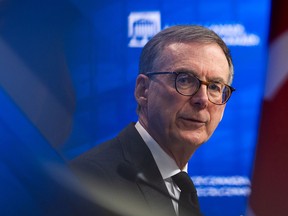
Bank of Canada governor Tiff Macklem said military actions in Iran have increased volatility in energy and financial markets, with uncertainty about the duration and fallout from the conflict contributing to greater risks to global economic growth.

THIS CONTENT IS RESERVED FOR SUBSCRIBERS ONLY
Subscribe now to read the latest news in your city and across Canada.
- Exclusive articles from Barbara Shecter, Joe O'Connor, Gabriel Friedman, and others.
- Daily content from Financial Times, the world's leading global business publication.
- Unlimited online access to read articles from Financial Post, National Post and 15 news sites across Canada with one account.
- National Post ePaper, an electronic replica of the print edition to view on any device, share and comment on.
- Daily puzzles, including the New York Times Crossword.
SUBSCRIBE TO UNLOCK MORE ARTICLES
Subscribe now to read the latest news in your city and across Canada.
- Exclusive articles from Barbara Shecter, Joe O'Connor, Gabriel Friedman and others.
- Daily content from Financial Times, the world's leading global business publication.
- Unlimited online access to read articles from Financial Post, National Post and 15 news sites across Canada with one account.
- National Post ePaper, an electronic replica of the print edition to view on any device, share and comment on.
- Daily puzzles, including the New York Times Crossword.
REGISTER / SIGN IN TO UNLOCK MORE ARTICLES
Create an account or sign in to continue with your reading experience.
- Access articles from across Canada with one account.
- Share your thoughts and join the conversation in the comments.
- Enjoy additional articles per month.
- Get email updates from your favourite authors.
THIS ARTICLE IS FREE TO READ REGISTER TO UNLOCK.
Create an account or sign in to continue with your reading experience.
- Access articles from across Canada with one account
- Share your thoughts and join the conversation in the comments
- Enjoy additional articles per month
- Get email updates from your favourite authors
Sign In or Create an Account
or
Article content
Adding to the risks — which are “tilted to the downside” — is the rapid growth of two activities outside, yet intersecting, with the heavily regulated banking and financial system: private credit and leveraged trading by hedge funds in sovereign debt markets.
Article content
Article content
Article content
“Economic uncertainty is already high,” Macklem said in a speech on Wednesday at the Global Risk Institute in Toronto. “We cannot afford to add financial instability to the mix.”
Article content
By signing up you consent to receive the above newsletter from Postmedia Network Inc.
Article content
Non-bank financial players have become central to how sovereign debt markets function, both globally and here at home, he said, adding that, in Canada, they account for up to 50 per cent of government bonds sold at market and are major players in the secondary market.
Article content
This adds liquidity and efficiency in good times, but these leveraged sovereign debt purchases pose risks in times of stress.
Article content
“The scale of these trades and speed at which they can unwind pose a systemic risk,” Macklem said.
Article content
“Short-term funding strains could cause severe dislocations in sovereign debt markets — the backbone of our financial system, and the cross-border nature of markets means that stress that begins in one jurisdiction or sector can quickly move to another.”
Article content
One scenario he worries about is a shock to markets that leads to a spike in global interest rate volatility, which causes these lenders to take haircuts on their investments or curtail funding.
Article content
Article content
“Higher funding costs or reduced access can force the positions to be unwound. Leverage can build quietly and then unwind very quickly when conditions change,” he said.
Article content
Article content
“If leveraged investors are forced to reduce their positions, they may need to sell sovereign bonds into already stressed markets. Prices fall. Liquidity deteriorates. And the stress feeds back on itself.”
Article content
Macklem said the dash for cash at the start of the pandemic, the U.K. gilt crisis in 2022, and stress in the U.S. Treasury market last spring after President Donald Trump unleashed a torrent of tariffs around the world all shone a light on vulnerabilities in the sovereign debt market.
Article content
More recently, he said, vulnerabilities have been exposed in the now trillion-dollar private credit market, which also raise concerns about potential contagion to the banking sector and core of the financial system.
Article content
“Banks and insurers are linked to private credit through lending, sponsorship, warehousing and risk transfer,” he said. “That means weakness in private credit could spill back to the regulated sector, and because private credit is increasingly global, those spillovers could travel quickly across borders.”
 English (US)