
.jpg) 1 hour ago
3
1 hour ago
3
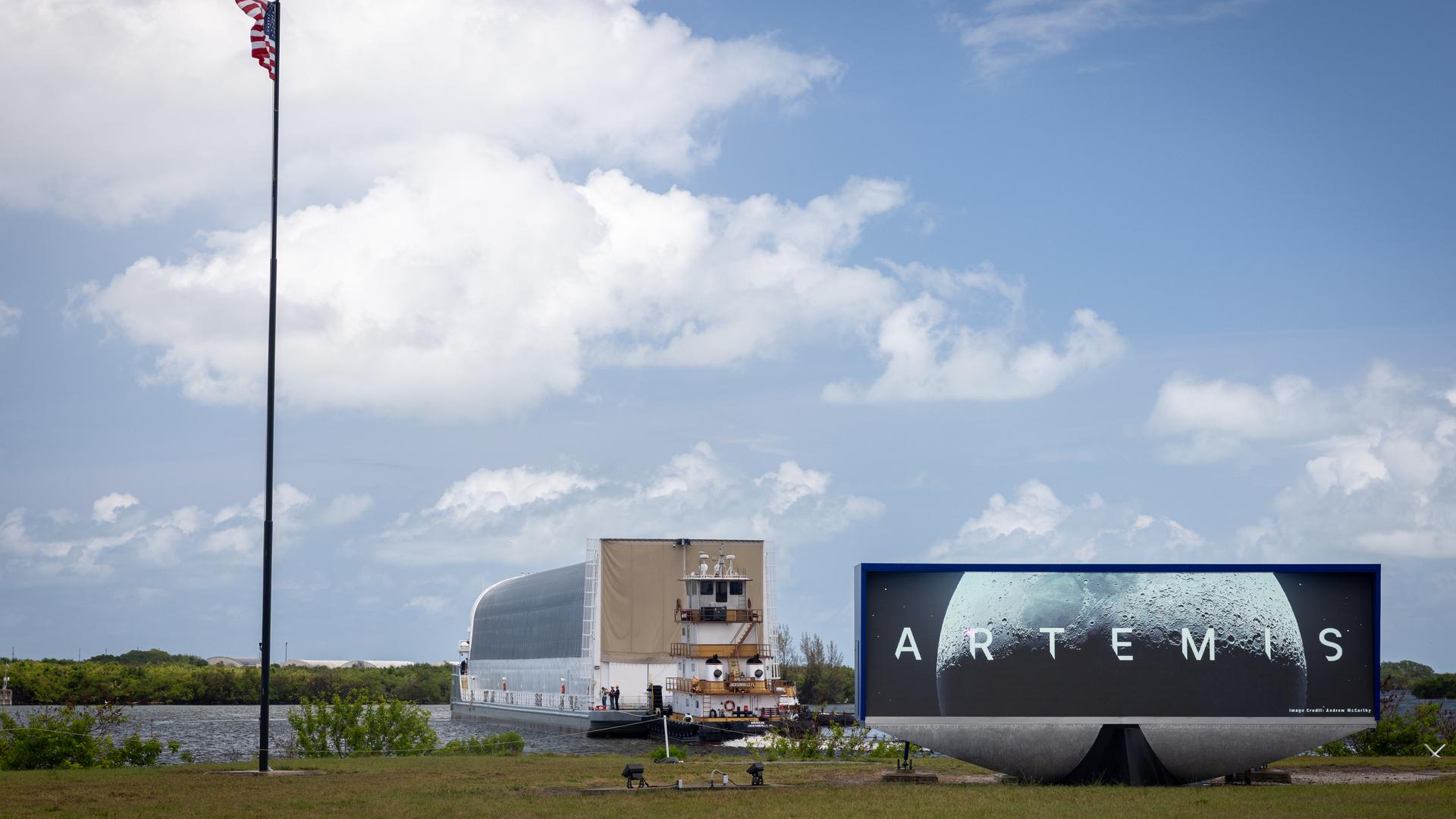
The central piece of NASA's next moon rocket has made it to the launch site.
The top 80% of the core stage of the Space Launch System (SLS) rocket that will launch the crewed Artemis 3 mission arrived at Kennedy Space Center (KSC) in Florida on Monday (April 27).
The newly arrived hardware will be moved to KSC's cavernous Vehicle Assembly Building today (April 28), where teams will mate it with its engine section. That work will complete assembly of the 212-foot-tall (64.6-meter-tall) SLS core stage.
Though SLS is a moon rocket, this particular vehicle won't get anywhere near Earth's nearest neighbor. Artemis 3 will remain in Earth orbit, where it will test rendezvous and docking operations between the Orion capsule and one or both of the Artemis program's privately developed crewed lunar landers, SpaceX's Starship and Blue Origin's Blue Moon.
NASA had been targeting mid-2027 for the Artemis 3 launch, but that timeline has now apparently slipped to late 2027 to allow more time for Starship and Blue Moon to get ready.
If all goes well with Artemis 3, Artemis 4 will put astronauts on the moon, using either Starship or Blue Moon, as soon as 2028.
This Artemis 3 prep work is coming in the wake of Artemis 2, which launched four astronauts on an epic flight around the moon.
Artemis 2 lifted off on April 1 and splashed down off the coast of San Diego on April 10. It was the first crewed mission beyond Earth orbit since Apollo 17 in 1972, and it set a new distance record for humanity, sending the astronauts 252,760 miles (406,778 kilometers) from their home planet.
 English (US)