
.jpg) 13 hours ago
1
13 hours ago
1
Join the World’s #1 Natural Health Newsletter for FREE!
Latest Trustworthy News from Dr. Mercola - delivered straight to your inbox!
Enter your email address

Story at-a-glance
- Many collagen supplements use low-grade “tannery” scraps, lack third-party testing, and contain undisclosed amounts of actual collagen. Some also harbor heavy metal contaminants and cheap filler amino acids
- Choose products that clearly disclose their collagen form (such as hydrolyzed peptides or whole-food bone broth collagen), avoid vague proprietary blends, verify ingredient sources, and look for transparent quality testing — whether through named third-party certifications or publicly available certificates of analysis
- Homemade bone broth, meat cuts like shanks and oxtail, organ meats, and fish with skin provide natural sources of collagen in your diet
- Regular muscle meats contain minimal collagen and higher amounts of pro-inflammatory amino acids. In contrast, collagen is rich in anti-inflammatory glycine, proline, and hydroxyproline
- Aim for collagen to comprise roughly one-third of your daily protein intake (about 15% of daily calories), which mirrors collagen’s roughly 30% amount of total protein in the body
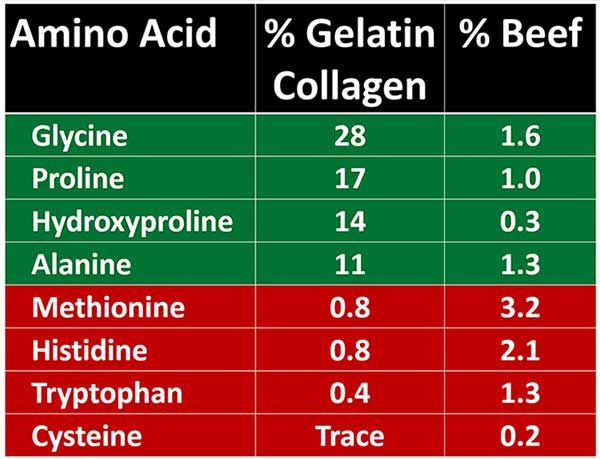
Adequate protein intake is important for optimal health. However, it’s not simply about eating enough protein, you also need to consider the kind of protein. I recommend getting one-third of your overall daily protein intake from collagen-rich sources, as 30% of your body is comprised of this protein. It provides structure for your skin and bones, and it even lines your blood vessels and organs.1 Unfortunately, many people aren’t getting enough collagen from their diet, which has led to the creation of a wide variety of collagen supplements. These products certainly have their place, but not all collagen products are created equal. Choose unwisely, and poor efficacy could be the least of your problems. Unfortunately, many supplement manufacturers have jumped on the collagen bandwagon with an eye on profit rather than true wellness. Here are some of the most common red flags to look out for: • Lack of transparency in sourcing and processing — Some lower-cost collagen supplements use low-grade raw materials, including hides processed through industrial channels — so-called “tannery grade” hides. Reputable manufacturers use food-grade, traceable sources and disclose how their collagen is processed. Many high-quality products use hydrolyzed collagen peptides, which are broken down into smaller units for ease of digestion. Other formats, such as properly prepared bone broth collagen, may provide collagen in a whole-food matrix that some individuals prefer. The key is transparency in sourcing and processing. In my research, I discovered that roughly 1 in 4 leading collagen supplements fail basic quality standards. Some don’t even bother printing the amount of protein or collagen on the label, while others can’t (or won’t) pinpoint where their collagen came from. • Lack of toxicology testing — Because many collagen products are sourced from conventionally raised animals, they likely contain heavy metals like lead, arsenic, and cadmium that accumulate in bones and hides. Independent tests in 2020 found that 64% of the collagen brands tested had measurable arsenic, 37% contained lead, and 17% had cadmium.2 Third-party labs are available to test for all of these contaminants, but many brands don’t bother getting certified. • Label protein can be spiked — When companies do test their products, some game the system. A common trick is “nitrogen spiking” — adding cheap amino acids (like glycine or taurine) that artificially boost the protein content reading. Lab tests measure total nitrogen to estimate protein; extra non-collagen aminos can inflate those numbers. The result? Even if a collagen powder’s lab report looks compliant, you might be ingesting fillers instead of functional collagen peptides. If a product advertises a certain amount of collagen but doesn’t list any protein on the nutrition label, the true collagen content may be negligible. Mislabeling like this means you could be paying for collagen you’re not actually getting. • Marine collagen is often a mystery mix — Some marine collagen products fail to disclose the fish species or sourcing method. High-quality marine collagen should clearly identify the species and origin of the fish used. If a label only says “marine collagen” but won’t name the species or source, consider that a red flag. • Beware the add-ins — Finally, beware of collagen products jazzed up with flavors, sweeteners, and trendy add-ins instead of focusing on quality. I’ve seen collagen powders with artificial flavors and dyes to make them more appealing or marketed as “keto collagen coffee creamer” with lots of fillers. Branding and added ingredients should not distract from what matters most: a clean, well-sourced collagen product with transparent labeling and quality testing. The table below is a summary of our review of some of the most popular collagen supplements sold on Amazon for quick comparison. *Right of Reply: Companies with red flag concerns were contacted for comment; received responses can be found at the bottom of this article. The good news is that there are safe, effective collagen supplements out there — you just have to know what to look for. Research shows that humans taking 2.5 to 10 grams of high-purity hydrolyzed collagen daily yield real benefits for skin,30 joint pain,31 and nails.32 To actually reap those rewards, you'll want a high-quality product that contains what it says and is free of unwanted extras. Here are my recommendations: • Check for third-party certification of purity — Seals from organizations like National Sanitation Foundation (NSF), U.S. Pharmacopeia (USP), or Informed Sport provide a layer of assurance. Other brands may use independent third-party laboratories and provide certificates of analysis upon request. The important factor is verifiable quality testing. • Analyze the ingredients — Look for a simple, transparent ingredient list. You want to see the source explicitly named. Avoid products that hide the collagen amount in a "proprietary blend." If the label doesn't reveal exactly how much collagen you get per serving (in grams) or doesn't identify the collagen source, put it back on the shelf. High-quality collagen will often specify the trademarked ingredient if it uses one — for instance, VERISOL® bovine peptides for skin health, or Peptan® collagen. These branded collagen peptides usually have clinical studies behind them, which is a good sign. • Verify the source — As noted, know where your collagen comes from — both the animal and how it was raised. High-quality collagen is typically derived from grass fed, pasture-raised cattle, wild-caught fish, or pastured chickens. Marine collagen should tell you what fish is used and, ideally, be sustainably sourced. Bovine collagen should ideally be grass fed and hormone-free. The source informs the collagen type. Bovine and fish mainly provide Type I (and III for bovine), which are great for skin, hair, nails, and bones, whereas chicken provides Type II, more targeted to joint cartilage. Some "multi-collagen" blends include all types, but again, only trust those that are upfront about ingredients. • Spot marketing red flags — Don't fall for over-the-top claims like "age-defying," "miracle cure for wrinkles," or "instant joint repair." Also, be cautious of gimmicky combos such as collagen infused with weight-loss blends, or collagen coffee with a laundry list of additives. These trends are usually about riding multiple fads at once. You're better off with pure collagen and taking other supplements separately if needed. While a good supplement can help, I'm a big proponent of food first. You can boost your collagen intake through diet, and this approach offers a broader range of nutrients that work together for body-wide benefits. I recommend planning your protein intake so that about 15% of your daily calories come from protein, and about one-third of that protein is collagen. Again, roughly 30% of your body's protein is collagen, so it makes sense to proportionally include these collagen-building amino acids in your diet. Here are four ways to do it: 1. Make your own bone broth — Take the time to learn how to simmer high-quality bone broth at home. It's one of the best natural sources of collagen — when you slowly cook bones, tendons, and ligaments, the collagen breaks down into gelatin that enriches the broth. I recommend using bones from grass fed beef, pastured poultry, or wild-caught fish. Throw in vegetables and herbs for additional minerals and dietary fiber (plus flavor!). 2. Eat collagen-rich cuts — Don't shy away from cuts of meat that naturally contain a lot of connective tissue. Beef shanks, oxtail, osso buco, and pork knuckles are loaded with collagen that releases during cooking. These "odd bits" are often cheaper and, when cooked low and slow, they yield tender, flavorful meals and gelatin-rich sauces. If those are too adventurous for your palate, even choosing bone-in, skin-on chicken thighs is a good way to get extra collagen, provided you eat the skin and gnaw on the bones. The skin and connective tissue around the joints are rich in collagen. Slow-cooker stews, braised meats, and soups made with these cuts will also boost your collagen intake significantly. 3. Consume organ meats — Organ meats like liver and heart contain connective tissue and collagen, not to mention a wealth of micronutrients. Organ meat may not be everyone's favorite, but when prepared well, they can be delicious and incredibly nourishing. Always source organ meats from clean, pasture-raised animals to minimize toxin exposure. 4. Leave the skin on your fish — If you enjoy seafood, here's a simple hack — when you cook salmon, trout, or cod, eat the skin. The skin of fish (especially wild-caught fatty fish) is rich in Type I collagen. Crispy salmon skin can be a real treat when cooked right. Similarly, if you make fish soup or stew, include fish heads or skin in the broth. They'll dissolve down to add collagen (and great body) to your dish. Just be sure your fish is from unpolluted waters to avoid heavy metals. Smaller wild fish like sardines are a safe bet, and you can eat them whole, bones and skin included, for collagen and calcium. You might be wondering why I keep recommending unusual cuts and organs to boost collagen, instead of the standard steak or chicken breast. The answer is simple — regular muscle meat (the red meat and white meat we commonly eat) doesn't have much connective tissue and thus is not a significant collagen source. You could eat plenty of beef or pork muscle and get lots of protein, but almost none of it would be collagen. Eating enough muscle meat will meet your general protein needs, but it won't specifically support collagen-rich tissues. In fact, it's important not to confuse muscle protein with collagen — they serve different roles and have very different amino acid profiles. Collagen is extraordinarily high in glycine, proline, and hydroxyproline (amino acids that have anti-inflammatory and tissue-repair functions), whereas muscle meats are higher in amino acids like methionine and cysteine, which, in excess, can be pro-inflammatory. The table above provides an overview of my argument — when comparing amino acid content, red meat contains very little glycine and proline (I highlight those as "good for you" in green), while collagen is mostly glycine and proline. Meanwhile, red meat is rich in tryptophan and cysteine (marked in red as they can promote inflammation if unbalanced), whereas collagen has virtually none. In other words, simply eating a lot of steak won't give your body the collagen it needs for strong connective tissues, supple skin, or strong bones.33 In fact, too much muscle meat without balancing collagen-rich foods might even skew your amino acid intake toward a more inflammatory profile. The great thing about collagen (and its cooked form, gelatin) is that it's extraordinarily low in those pro-inflammatory amino acids. This is one reason I personally aim to have about one-third of my daily protein come from collagen or gelatin sources. Since embracing this balance — for example, I cut my egg and muscle meat intake in half and replaced that portion with collagen/gelatin — I've noticed improvements in joint comfort and recovery. This concept was inspired in part by the late Dr. Ray Peat, who emphasized the importance of balancing muscle meats with gelatin to support overall health. • Ancient Nutrition — Thank you so much for reaching out and for the opportunity to provide additional information for your upcoming article. To address your note regarding testing transparency — we’re happy to share documentation confirming our third-party testing practices. Please find our Certificates of Analysis at the links below: Additionally, lot numbers are printed on the bottom of each container (in white or yellow ink), alongside the product’s expiration date. • Physician’s Choice — Thanks for reaching out! Our grass fed bovine collagen delivers 7 grams of high-quality collagen per serving. In regards to the moderate dose, our updated packaging recommends using the product up to 2 to 3 times daily, allowing users to easily achieve an ideal daily intake to support optimal benefits. We’ve formulated this product with a proprietary blend of digestive enzymes and probiotics designed to support nutrient absorption and promote overall digestive well-being. To ensure safety, purity, and potency, all of our products undergo third-party testing at cGMP-compliant laboratories that are ISO/IEC 17025 accredited. This internationally recognized standard confirms that the testing facilities operate with proven technical competence and use validated analytical, chemical, and microbiological methods to deliver consistent, reliable results. • Live Conscious — Thank you for reaching out to Live Conscious. We appreciate your interest in our collagen product and the detailed review process you’re undertaking at Mercola.com. I understand the importance of transparency when evaluating product quality. Our collagen product undergoes rigorous manufacturing and testing in facilities that are cGMP-compliant, meeting U.S. federal safety regulations. Due to confidentiality agreements with our manufacturing and testing partners, we’re unable to disclose the name of the third-party testing organization or provide supporting documentation. We remain committed to complying with quality standards and ensuring our products meet all regulatory requirements, and we hope this reassures you about our dedication to product integrity. Q: Why is collagen important for health? A: Collagen makes up about 30% of your body's total protein. It provides structural support for your skin, bones, tendons, ligaments, and the lining of blood vessels and organs. In essence, collagen is the "glue" that holds our tissues together. Getting enough collagen (and the amino acids within it) supports the integrity of connective tissues, helping keep skin elastic, joints resilient, bones strong, and arteries flexible. Q: Why should I be cautious about collagen supplements? A: Not all collagen supplements are created equal. Many are sourced from questionable materials like tannery-grade hides (industrial leather scraps) processed with harsh chemicals. Others contain fillers, heavy metals, or have much less actual collagen than the label claims. Quality varies widely across the collagen industry, making careful label review essential. Q: How can I choose a trustworthy collagen supplement? A: Look for supplements that explicitly state their collagen source and clearly describe the collagen form — whether hydrolyzed peptides or whole-food bone broth collagen. The label should list collagen content per serving in grams. Choose products that have been certified by an independent lab such as NSF or USP, which ensures it meets purity and content claims. Avoid vague "proprietary blends" that don't tell you how much collagen you're getting. Also, be wary of products making miraculous claims or using lots of additives. Reputable brands tend to be transparent and focus on clinically backed dosages. Q: Can I naturally boost my collagen without supplements? A: Absolutely. Collagen-rich foods are readily available. Consuming homemade bone broth is a fantastic way to get collagen (from the simmered bones and connective tissue). Eating meat with the skin and connective tissue (like chicken thighs with skin, or slow-cooked tough cuts full of cartilage) will give you plenty of collagen. Organ meats and dishes made with gelatin (like natural fruit gelatin desserts or aspic) also contribute collagen. And don't forget fish skin — crispy salmon skin and fish head soup are time-honored collagen sources. Aim to get a variety of these in your diet. I recommend that about one-third of your total protein intake be collagenous protein. Q: Why isn't red meat sufficient for collagen? A: Regular red meat (muscle meat) contains very little of the key amino acids needed to produce collagen. It's great for other proteins like hemoglobin and muscle fiber, but it won't replenish collagen stores. The primary amino acids in collagen — glycine, proline, and hydroxyproline — are only minimally present in lean muscle cuts. Additionally, collagen's amino acids have special benefits. For example, glycine and proline are known to have anti-inflammatory properties. Many amino acids abundant in muscle meat (like methionine) can actually promote inflammation if not balanced with collagen's glycine. Thus, relying solely on steaks and chicken breasts won't support your skin, joints, and bones the way collagen-rich foods will. Balance is key. Take today's quiz to see how much you've learned from yesterday's Mercola.com article. Which fruits are most strongly linked to sustained happiness? Strawberries, blueberries, apples, oranges, and grapefruit were linked to up to 16% higher optimism and about 8% improvement in sustained happiness. Learn more.The State of Collagen Supplements Today
An Overview of Popular Collagen Supplements
Product
Peptide type
Collagen per serving
3rd-party tested?
Red flags/additional comments
Alaya Multi Collagen
Multi (bovine, marine, chicken, eggshell)
8.6 g (per scoop)
No
Lack of testing. But company indicates that product is made from grass fed, wild-caught, and hormone-free sources3
Ancient Nutrition Multi Collagen Protein*
Multi (bovine, chicken, fish, eggshell)
10 g
Yes4
Lacks specific testing dates; certificates of analysis are provided as “typical for all lots” only5,6,7
Anthony’s Collagen Peptide Powder
Bovine (Type I/III from bovine)
11 g
No8
n/a
Bulletproof Collagen Peptides
Bovine (grass fed)
20 g
No9
n/a
ForestLeaf Advanced Collagen
Bovine (hydrolyzed and grass fed)10
1 g (2 capsules)
No
Very low dose
Garden of Life Collagen Peptides
Bovine (grass fed pasture-raised)
20 g
Yes11
Contains additional probiotics
Great Lakes Wellness Collagen
Bovine (grass fed pasture-raised)
20 g
Yes12
Testing confirmed by IGEN
Live Conscious Collagen Peptides*
Bovine (pasture-raised)
15 g
Yes
Third-party tested but not specified13
Microingredients Multi Collagen
Multi (bovine, fish, poultry, eggshell)
~10.88 g
Yes
Third-party tested but not specified14
NativePath Collagen Peptides
Bovine (grass fed)
10 g
Yes
Met label claim; no major red flags besides lack of specific third-party certification15
Nature Made Collagen Gummies
Unknown (likely bovine or porcine)
100 mg (0.1 g)
No
Collagen content not disclosed as protein; extremely low dose16
Nature Target Multi Collagen Peptides
Multi (bovine, marine, poultry, and eggshell)
10 g
Yes
Source not disclosed; third-party tested but not verified17
Orgain Collagen Peptides
Bovine (grass fed)
18 g
No
No third-party certification, only internal testing18
Physician’s Choice Collagen*
Bovine (grass fed) plus digestive enzymes and probiotic blend
7 g
Yes
Moderate dose; instructions say to take it two to three times a day to achieve ideal daily intake. Third-party tested but not specified or shared19
Primal Harvest Primal Collagen
Bovine (grass fed)
10 g
No
No source transparency beyond “grass fed.” No other certifications20
Sports Research Collagen Peptides
Bovine
11 g
Yes (Certified NSF Gluten-Free)21
Company does extensive quality testing. Results can be viewed via their website22
Vitauthority Multi Collagen Burn
Multi (bovine, marine, poultry, and eggshell)
7.8 g
No
“Burn” marketing gimmick, which is their weight-loss blend23
Vital Proteins Collagen Peptides
Bovine (grass fed)
20 g
Yes (NSF Certified for Sport)24
Top quality product; no notable red flags
Vital Proteins Collagen Advanced
Bovine + hyaluronic acid, vitamin C
20 g
No
Contains added nutrients; no major red flags except no testing certifications25
Vital Proteins Marine Collagen
Marine (wild-caught cod)
12 g
No
Testing is done internally only26
Vital Vitamins Multi Collagen Complex
Multi (bovine, poultry, marine, and eggshell)
1.6 g (capsules)
Yes
Collagen amount not disclosed as protein; very low dose per serving; uses “proprietary blend.” Third-party tested but not specified27
Wholesome Wellness Multi Collagen
Multi (bovine, marine, chicken, eggshell)
7.83 g
Yes
Third-party tested but not specified28
Youtheory Collagen (Advanced Type 1, 2 and 3)
Not specified, but likely bovine
6 g
No
Protein not listed on label (collagen assumed ~5 to 6 g); contains added vitamin C; no third-party testing29
How to Choose a High-Quality Collagen Supplement
How to Boost Your Collagen Intake Naturally
Red Meat Doesn't Contain Much Collagen
Company Responses
Frequently Asked Questions (FAQs) About Collagen Supplements
Test Your Knowledge with Today's Quiz!
 English (US)