
.jpg) 2 hours ago
2
2 hours ago
2
A new study of esports gamers has found that sparkling water could be better than still water if you want to maintain concentration and alertness over long sessions at a desk.
To stay in the zone, gamers often turn to caffeine-packed beverages like coffee or energy drinks, which present potential health risks when consumed in large quantities. A team led by researchers from the University of Tsukuba in Japan wanted to see if sparkling water could provide a healthier alternative.
On two separate occasions, 14 casual gamers were asked to play virtual soccer for three hours. In one of the sessions, they drank plain water, and in the other, they drank sparkling water.
Based on measurements of reaction times, pupil size (indicating fatigue), physical stress, and self-reported tiredness, it was sparkling water that proved best for maintaining attention levels and minimizing fatigue.
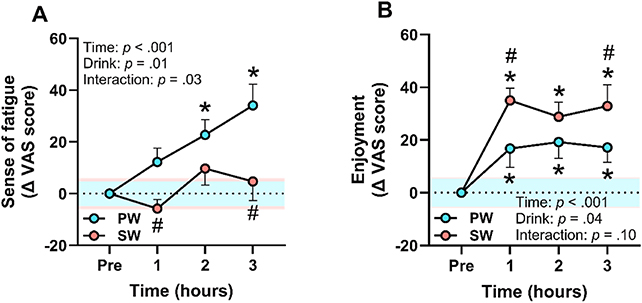 Sparkling water (SW) led to less fatigue and more enjoyment. (Takahashi et al., Comput. Hum. Behav. Rep., 2026)
"Compared to plain water, sparkling water significantly attenuated increases in subjective fatigue, enhanced enjoyment, and preserved executive function, along with preventing pupil constriction," write the researchers in their published paper.
"Heart rate, blood glucose, and salivary cortisol levels did not differ between conditions."
There is a hypothesis behind this result, which in part motivated the study: sparkling (or carbonated) water has been shown to boost performance in some cognitive tasks, and it's thought that the carbon dioxide in the drink acts on sensory receptors in the mouth called 'transient receptor potential' (TRP) channels, increasing brain arousal.
While the current study did not investigate the underlying mechanisms, it provides further evidence that carbonated water really might improve cognitive function in at least one real-world setting: marathon gaming sessions.

Besides their feedback on increased alertness and focus, players reported enjoying the sessions more when drinking sparkling water, and there were signs that they were more in control of their virtual teams, too.
"Notably, players committed fewer in-game fouls with sparkling water, while offensive and defensive performance remained unchanged," write the researchers.
"These findings demonstrate that sparkling water contributes to alleviating both subjective and objective signs of cognitive fatigue during prolonged esports play, consistent with our hypothesis."
As the researchers point out, there are many modern-day activities besides esports that we may try and tackle when we're too tired – from driving to late-night office work. A lot of us could benefit from a healthy beverage option to assist with focus.
It is important to put these results in the context of the study's funding, though, which was partially provided by a soft drinks company that makes sparkling water (the brand used in the experiments). Two of the study authors are also employees of the company, which stands to benefit if sparkling water does indeed get a higher profile.
However, the study authors collectively state that funding sources had "no involvement" in the study design, data collection, data analysis, or data interpretation. The writing of the study and the decision to publish were also made independently.
These findings may be enough to inspire gamers to give sparkling water a try next time they need to stay focused over a long period, though it's worth bearing in mind that the drink wasn't compared against coffee or energy drinks directly.
Related: This Sunlight Trick Can Reduce Morning Fatigue, Study Suggests
Further studies could look at how sparkling water affects concentration in a broader group of people, and against a broader range of drinks. There's an opportunity for a more detailed analysis of the biological effects as well.
"The physiological mechanism underlying the observed effects of sparkling water was not directly examined," write the researchers. "While we discussed that carbonation-induced stimulation of pharyngeal TRP channels contributed to the effect, this was not examined directly."
"Investigating this would require foundational studies, distinct from applied research in esports contexts, using approaches such as pharmacological interventions or TRP knockout animal models."
The research has been published in Computers in Human Behavior Reports.
 English (US)