The year is 2000, and the Millennium Bug panic has just waned. A 13-year-old kid sits in a McDonald’s with a bunch of friends. One of them is wearing a peculiar T-shirt with a logo that, to the kid’s eye, resembles a Native American war bonnet. He asks the friend about it, and the answer will change the rest of his life: “It’s a game. You don’t know about it?”
The game was Baldur’s Gate 2: Shadows of Amn. The T-shirt, which came with the collector’s edition, sported the game’s logo: two mirrored heads, one in light, one in darkness (the exact meaning of the image has been debated for the past 26 years, with no conclusive answer). I was the kid, of course. Soon after, I bought the game and, for the first time, immersed myself in the world of the Forgotten Realms, brought to life in digital form by BioWare. Almost three decades later, BioWare is gone. The sad news made me reflect on how Baldur’s Gate 2 and the other computer RPGs they developed between the 1990s and the early 2000s marked the trajectory of my life.
Baldur's Gate 2 made me fall in love with fantasy worlds
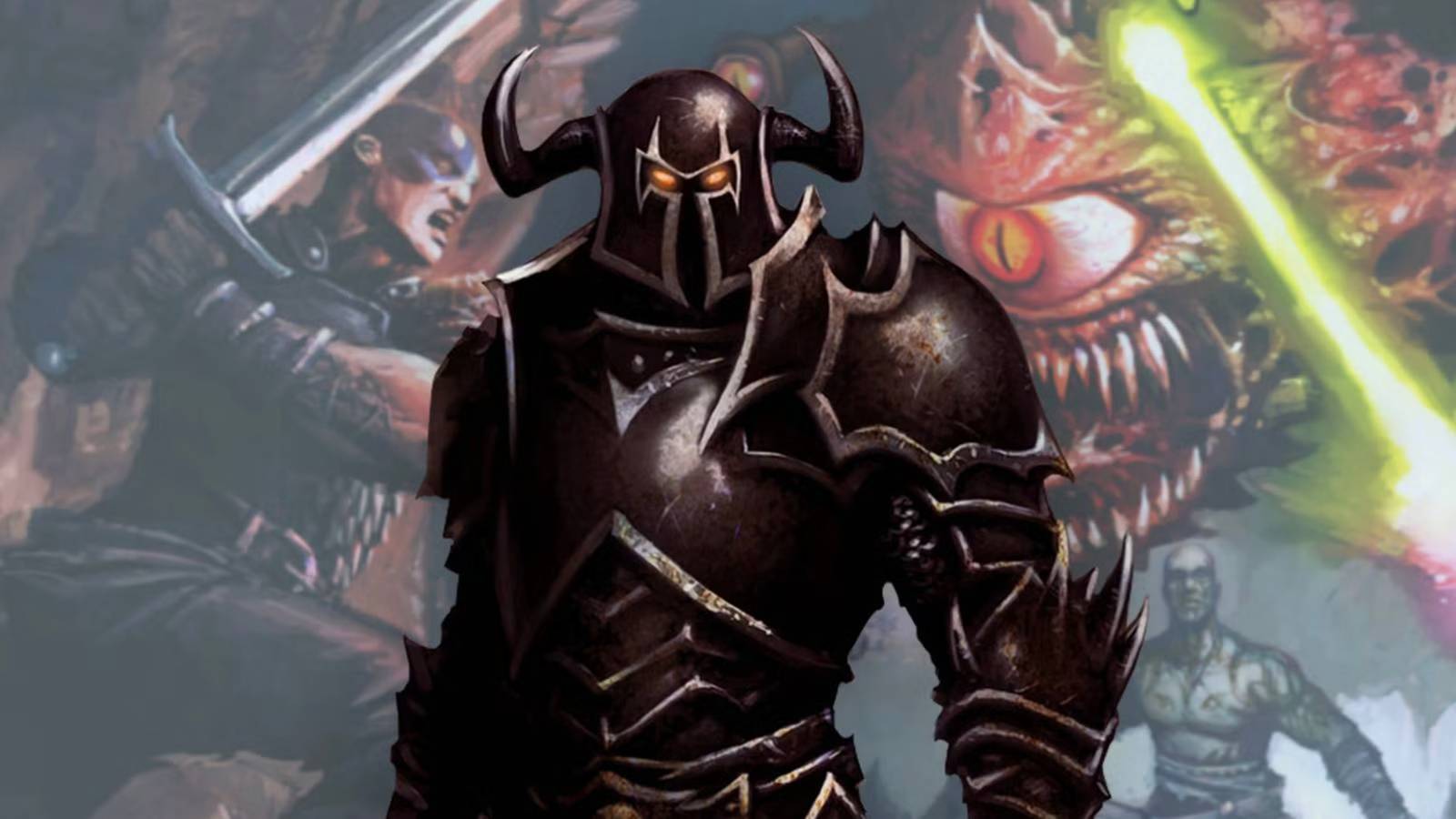
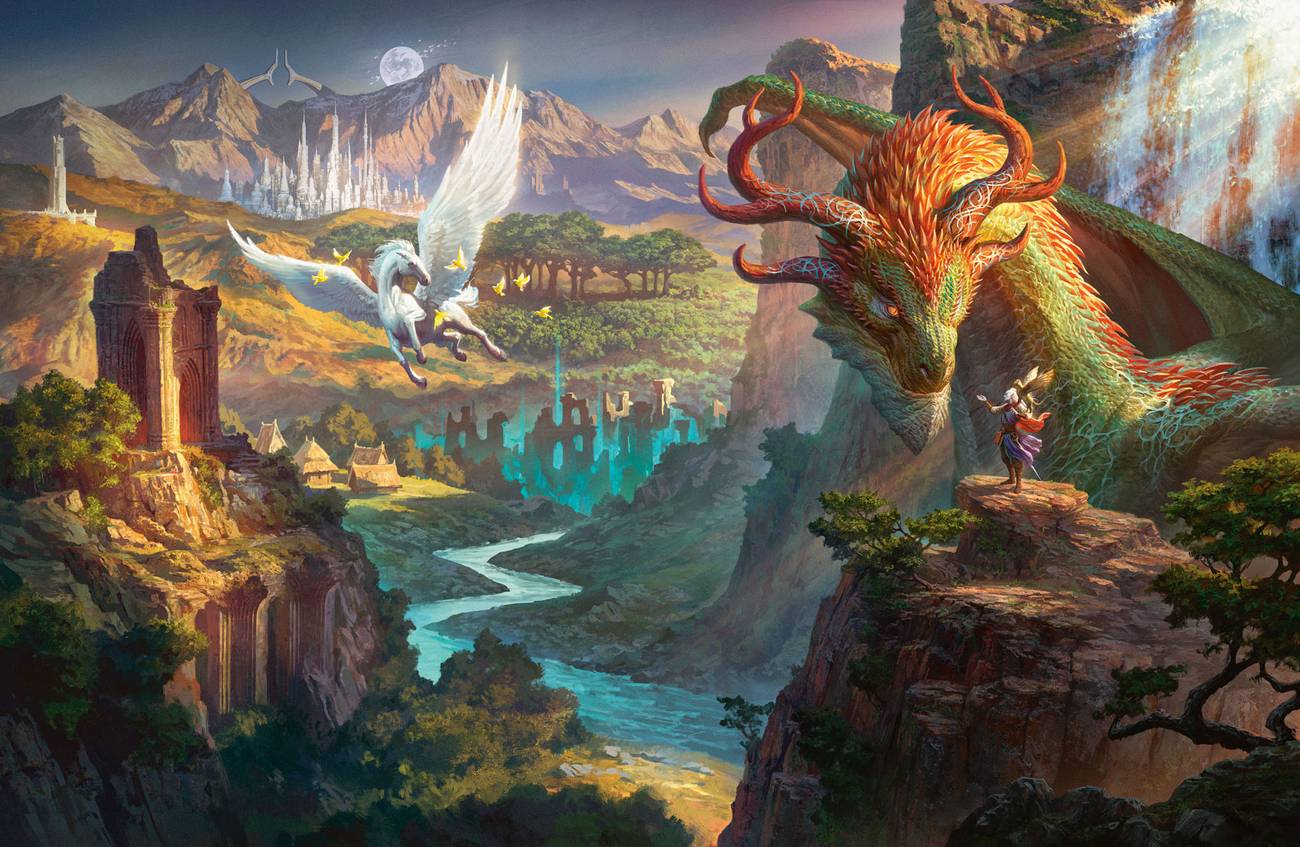 Art by Andrey Kuzinskiy included in the Forgotten Realms: Heroes of Faerun book.Image: Wizards of the Coast
My first meeting with the fantasy genre took the shape of a woman reading The Lord of the Rings at a bus stand. I was way too young to fully understand or appreciate Tolkien, but the amazing cover illustrated by Italian artist Danilo Silva was enough to grab my attention. Later, I randomly bought some Magic: The Gathering packs from a newsstand, developing a passion for the game that my wallet still struggles with today. Still, none of these happy accidents would have been enough, on their own, to steer me on the path that led to where I am today, making a living writing about Magic tournaments or the Council of Elrond scene in The Lord of the Rings.
That’s entirely because of Baldur’s Gate 2. In 2000, I had just started high school, and that’s a time when a young boy’s mind can be pulled in a lot of different directions. BioWare followed up an excellent game, Baldur’s Gate, with an incredible sequel, making sure that I fell forever in love with fantasy worlds, Dungeons & Dragons, and RPGs. In retrospect, that game might also be responsible for my passion for writing.
I knew nothing of D&D when I first played the game — which adapts the rules of the second edition of the TTRPG to a real-time-with-pause combat system. Navigating the intricacies of what’s often considered the most complex edition of D&D was just as challenging and intriguing as exploring the regions of Faerûn where the game takes place. D&D has gone through three more editions (five, if you count 3.5 and 5.5), but I’ve never stopped playing in the Forgotten Realms. I started because I wanted to recreate in the real world the feelings that BG2 gave me, and share them with friends. Twenty-six years later, I still run a weekly D&D game, I write about D&D on a weekly (sometimes daily) basis, and I’ve had the chance to interview some of the people who shaped the game, including Ed Greenwood, the very creator of the Forgotten Realms I fell in love with so many years ago.
A revolution for D&D games and RPGs
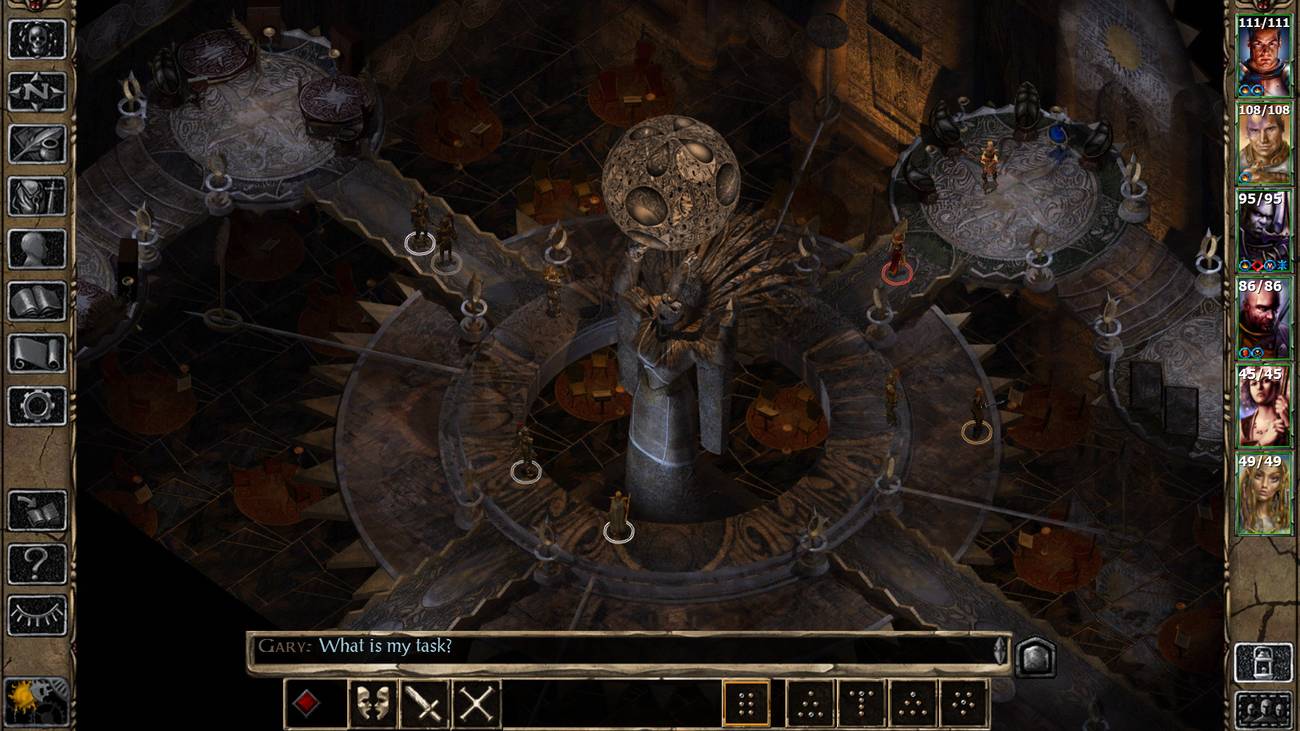 Image: Beamdog
None of this would have happened if BioWare hadn't approached publisher Interplay with Battleground: Infinity, a demo for a new concept of computer RPG that later became Baldur’s Gate. At that time, computer RPGs were experiencing a renaissance, thanks to titles like Diablo, The Elder Scrolls, and Fallout. However, games based on the D&D property were not doing as well. Interplay had just acquired the license from Strategic Simulations, the developer responsible for classics like Pool of Radiance, Eye of the Beholder, and Ravenloft: Strahd’s Possession. But times had changed: first-person games with blocky graphics and rigid controls no longer suited D&D fans.
Baldur’s Gate 2 opens with one of the most powerful soundtracks you’ll ever hear in an RPG, courtesy of Michael Hoenig, who also composed the music for the first game. After you endure Jon Irenicus’ creepy gaze in the unsettling opening cinematic, the “Shadows of Amn’s Theme” hits you with its epic orchestral notes as soon as you reach the main menu. After listening for hours to that bombastic theme while trying to roll the perfect stats for your character, the game delivers exactly on what its music promises.
BioWare didn’t just bring a much-needed technical update to D&D video games. It also did something almost unprecedented in the genre: it put the story first. The studio built its career and legacy on the quality of the writing that went into its games, and Baldur’s Gate 2 was where it became evident that this would be BioWare’s trademark. While Baldur’s Gate follows a pretty linear plot for a fantasy adventure (but one that is still full of interesting twists), the sequel gets a lot braver. You — the hero who saved the Sword Coast, a godspawn with a divine spark — begin the game in a cell, powerless, as a mad wizard performs experiments and torments you and your companions. Jon Irenicus, voiced by the legendary David Warner, is immediately presented as an overwhelming villain, thus making the game about catching up to his power and machinations.
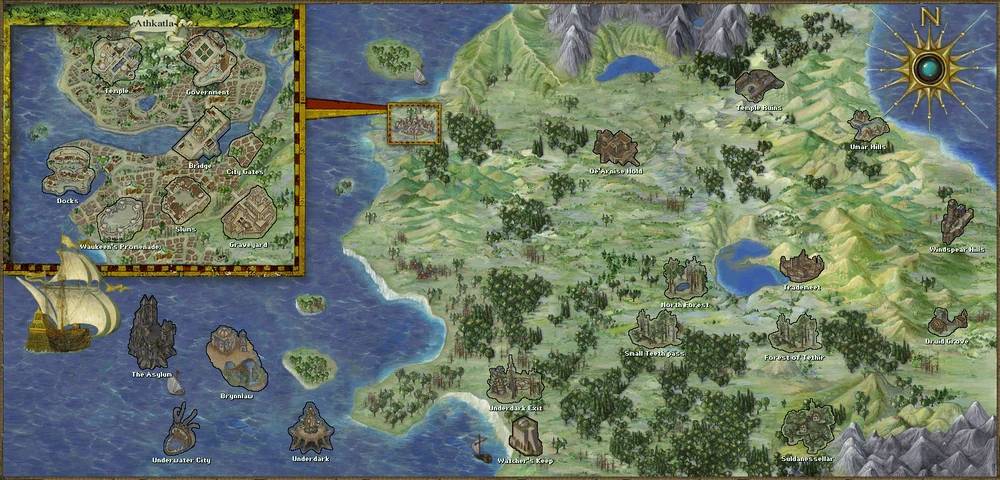 Image: Beamdog
Baldur’s Gate 2 balances stillness and movement: it gives you a clear goal, but at the same time, it presents enough reasons to take your time and explore each region to your heart’s content.
The first area of the game is the city of Athkatla, one of the best renditions of a sprawling fantasy metropolis seen in RPGs. Athkatla is a nest of intrigue, ripe with forbidden magic, treasures, and storylines that wait to be unearthed. But you are also on the trail of Irenicus, and you need to free your friend Imoen from the Cowled Wizards. So, the game gives you a simple main quest: Gather 10,000 gold pieces for the local thieves' guild, and they will set you on the path to rescue Imoen and find Irenicus. Gathering that conspicuous amount of money is the perfect excuse to explore the city and engage with its inhabitants, discovering side quests and new companions; more importantly, it’s a lesson in narrative design that I’m still applying to my D&D campaigns today.
BioWare's early RPGs shaped my life
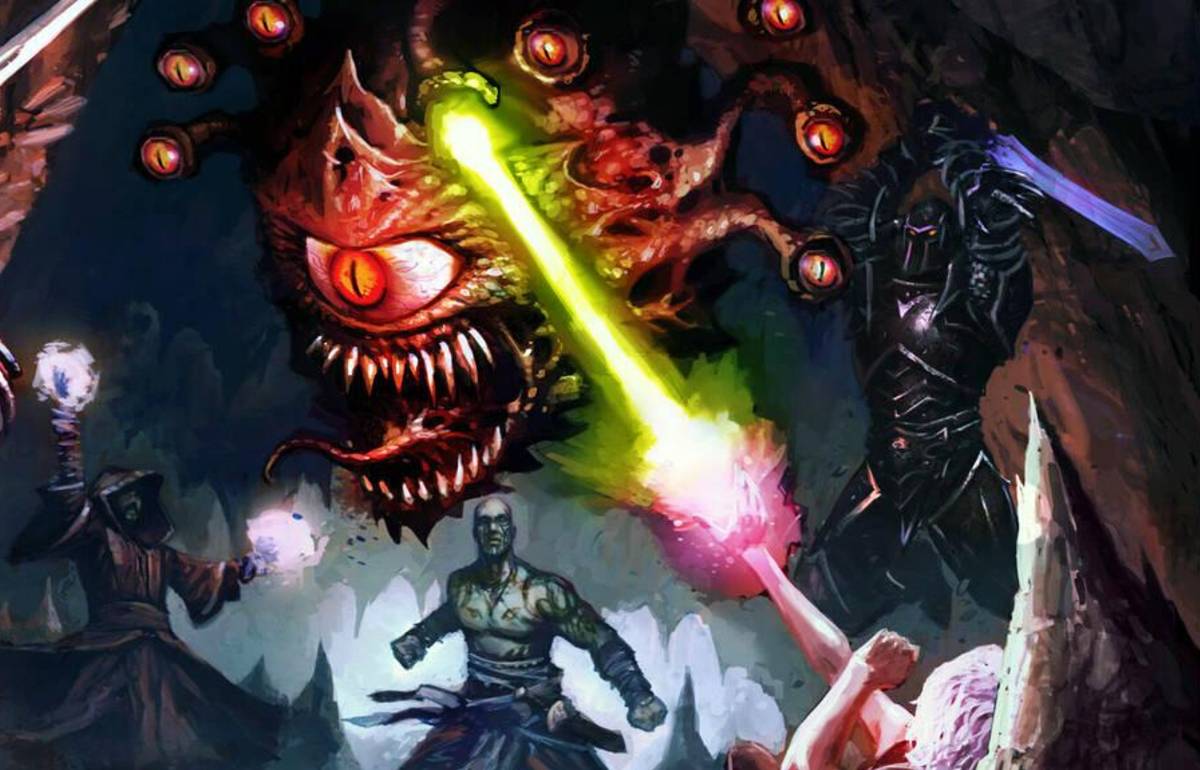 Image: Beamdog/BioWare via Polygon
I could spend thousands of words singing the praises of Baldur’s Gate 2, but there’s no need: people have been doing it for 26 years. I don’t need to explain why it’s one of the greatest games of all time, but the recent closure of BioWare made me reflect on just how much Baldur’s Gate 2 changed my life. And it wasn’t just that game. BioWare returned to D&D with Neverwinter Nights and its expansions. These games never reached the storytelling heights of Baldur’s Gate 1 and 2, but the 3D graphics and the upgrade to the 3rd edition D&D rules were enough to hook me for hundreds of hours throughout high school. It kept the flame going until it was strong enough to burn on its own. Still, I felt that something was missing. Neverwinter Nights was a great D&D video game, but not a great story.
Baldur’s Gate 2 was unique in that sense, and I never found that magic again. BioWare delivered plenty of memorable storytelling with (most of) its Dragon Age and Mass Effect games, but I only played them a little because I associated the video game RPG experience with D&D (until, many years later, Bethesda’s The Elder Scrolls 5: Skyrim changed my perspective again).
Still, one game was enough. I fell in love with fantasy worlds and epic tales of adventure. I cultivated that love through every medium possible: books, comics, TTRPGs, video games, movies, anime, and even some writing of my own. It remained a constant through life's upheavals. It helped me make friends as I moved to different countries, and it even played a significant role in landing this job, which I may quit one day if I fulfill my dream of becoming a successful fantasy novelist — another thing I can trace back to the influence of BioWare’s early RPGs.
So, thank you, BioWare, and in particular, thank you, James Ohlen, Kevin Martens, Brent Knowles, and all the other members of the Baldur’s Gate 2 team. I know none of these people were part of BioWare at the end, but the game they created built the company’s legacy and shaped a lot of lives in the process. And 26 years later, it’s still awesome.