 Image via Parisa Tag; Netflix, Everett Collection
Published Oct 9, 2026, 5:24 PM EDT
Jen Vestuto is a TV Features Writer for Collider. A born and raised New Yorker, she started her career on set as a production assistant for shows like Law & Order: SVU and Person of Interest. In LA, she worked in the writers' rooms for The Vampire Diaries and Nancy Drew. Along with her writing partner, she joined the writing staff of Nancy Drew in Season 2 and stayed on the run of the show, which ended in 2022 with Season 4.
Jen grew up on Long Island in a loud Italian family. She's been writing creatively since she was in elementary school and would often make her younger sister act out scenes from her favorite movies with her. Jen is also a massive sports fan and was an athlete herself growing up.
Writing features for Collider gives her the opportunity to share her passion for great storytelling and compelling characters.
Sign in to your Collider account
In 2026, Black Mirror remains an inviting starting point for viewers who usually avoid science fiction. Whether it’s aliens, time travel, or futuristic technology, the “out of this world” elements can sometimes overshadow character development and make it harder for audiences to connect emotionally. But even if you’ve always sworn you’re not a sci-fi fan, there’s one Netflix series that will almost certainly change your mind.
When the series debuted in 2011, the idea of an anthology series where every episode told a completely different story might have seemed too experimental to catch on. But once viewers gave it a chance, it quickly became clear this was something special. Created by Charlie Brooker, the series uses science fiction not as spectacle, but as a lens to explore human behavior, fear, and desire in an increasingly digital world.
Across its seven seasons, Black Mirror has become one of the most unsettling and emotionally resonant shows of the past 15 years. Each episode might hinge on a sci-fi concept, but the heart of the series has always been about humanity. In January 2026, Brooker confirmed that Black Mirror will return, giving newcomers another reason to catch up. The result is a show that completely transcends its genre and remains endlessly bingeable, even for those who swear they don’t like sci-fi.
'Black Mirror' Focuses More on Character Than Technology
What makes Black Mirror stand out from traditional sci-fi is that it’s never just about the futuristic technology or high-concept ideas. It’s about the people at the center of each story. Some of the series’ most powerful episodes are remembered not for their gadgets or dystopian settings, but for the deeply human emotions driving them, like grief, love, jealousy, and isolation. The technology is there to amplify those feelings, serving as a mirror that reflects our best and worst instincts back at us.
Collider Exclusive · Sci-Fi Survival Quiz Which Sci-Fi World Would You Survive? The Matrix · Mad Max · Blade Runner · Dune · Star Wars
Five universes. Five completely different ways the future went wrong — or sideways, or up in flames. Only one of them is the world your instincts were built for. Eight questions will figure out which dystopia, galaxy, or desert wasteland you'd actually make it out of alive.
💊The Matrix
🔥Mad Max
🌧️Blade Runner
🏜️Dune
🚀Star Wars
TEST YOUR SURVIVAL →
01
You sense something is deeply wrong with the world around you. What do you do? The first instinct is often the truest one.
APull on every thread until I understand the system — then figure out how to break it. BStop asking questions and start stockpiling — food, fuel, weapons. Questions don't keep you alive. CKeep my head down, observe carefully, and trust no one until I know who's pulling the strings. DStudy the patterns. Every system has a rhythm — learn it, and you learn how to survive it. EFind the people fighting back and join them. You can't fix a broken galaxy alone.
NEXT QUESTION →
02
In a world of scarcity, what resource do you guard most fiercely? What we protect reveals what we believe survival actually requires.
AKnowledge. If you understand the system, you don't need resources — you can generate them. BFuel. Everything else — movement, power, escape — runs on it. CTrust. In a world of fakes and informants, a truly reliable ally is rarer than any commodity. DWater. And after water, information — the two things empires are truly built on. EShips and credits. The galaxy is big — you survive it by being able to move through it freely.
NEXT QUESTION →
03
What kind of threat keeps you up at night? Fear is useful data — if you're honest about what you're actually afraid of.
AThat reality itself is a lie — that everything I experience has been constructed to keep me compliant. BA raid. No warning, no mercy — just the roar of engines and then nothing left. CBeing identified. Once someone with power decides you're a problem, you're already out of time. DBeing outmanoeuvred — losing a political game I didn't even know I was playing. EThe Empire tightening its grip until there's nowhere left to run.
NEXT QUESTION →
04
How do you deal with authority you don't trust? Every dystopia has a power structure. Your approach to it determines everything.
ASubvert it from the inside — learn its rules well enough to weaponise them against it. BIgnore it and stay out of its reach. The further from any power structure, the better. CAppear to comply while doing exactly what I need to do. Visibility is the enemy. DManoeuvre within it carefully. You can't beat a system you refuse to understand. EResist openly when I have to. Some things are worth the risk of being seen.
NEXT QUESTION →
05
Which environment could you actually endure long-term? Survival isn't just tactical — it's physical, psychological, and very much about where you are.
AUnderground bunkers and server rooms — cramped, artificial, but with access to everything that matters. BOpen wasteland — brutal sun, no shelter, constant movement. At least the threat is honest. CA dense, rain-soaked city where you can disappear into the crowd and nobody asks questions. DMerciless desert — extreme heat, no water, and something enormous living beneath the sand. EThe fringe — backwater planets and busy spaceports where the Empire's attention rarely reaches.
NEXT QUESTION →
06
Who do you want in your corner when things fall apart? The company you keep is the clearest signal of who you actually are.
AA tight crew of believers who've seen behind the curtain and have nothing left to lose. BOne or two people I'd trust with my life. Any more than that and someone talks. CNobody, ideally. Alliances are liabilities. I work alone unless I have no choice. DA community bound by shared hardship and mutual survival — people who need each other to last. EA ragtag team with wildly different skills and total commitment when it counts.
NEXT QUESTION →
07
Where do you draw the line — if you draw one at all? Every survivor eventually faces a moment that tests what they're actually made of.
AI won't harm the innocent — even the ones who'd report me without hesitation. BI do what I have to to protect the people I've chosen. Everything else is negotiable. CThe line shifts depending on who's asking and what's at stake. DI draw a long-term line — nothing that compromises my people's future, even if it'd help now. ESome lines, once crossed, can't be uncrossed. I know which ones they are.
NEXT QUESTION →
08
What would actually make survival worth it? Staying alive is one thing. Having a reason to is another.
AWaking others up — dismantling the illusion so no one else has to live inside it. BFinding somewhere — or someone — worth protecting. A reason to keep moving. CAnswers. Understanding what I am, what any of this means, before time runs out. DLegacy — shaping the future in a way that outlasts me by generations. EFreedom — for myself, for others, for every world still living under someone else's boot.
REVEAL MY WORLD →
Your Fate Has Been Calculated You'd Survive In…
Your answers point to the world your instincts were built for. This is the universe your temperament, your survival instincts, and your particular brand of stubbornness were made for.
The Matrix
You took the red pill a long time ago — probably before anyone offered it to you. You're a systems thinker who can't help but notice the seams in things.
- You're drawn to understanding how the system works before figuring out how to break it.
- You'd find the Resistance, or it would find you — your instinct for spotting constructed realities is the machines' worst nightmare.
- You function best when you have access to information and the freedom to act on it.
- The Matrix built an airtight prison. You'd be the one probing the walls for the door.
Mad Max
The wasteland doesn't reward the clever or the well-connected — it rewards those who are hard to kill and harder to break. That's you.
- You don't need comfort, community, or a cause larger than the next horizon.
- You need a vehicle, a clear threat, and enough fuel to outrun it — and you're good at all three.
- You are unsentimental enough to survive that world, and decent enough — just barely — to be something more than another raider.
- In the wasteland, that distinction is everything.
Blade Runner
You'd survive here because you know how to exist in moral grey areas without losing yourself completely.
- You read people accurately, keep your circle small, and ask the questions others prefer not to answer.
- In a city where humanity is a legal designation rather than a feeling, you hold onto something that keeps you functional.
- You're not a hero. But you're not lost, either.
- In Blade Runner's world, that distinction is everything.
Dune
Arrakis is the most hostile environment in the known universe — and you are precisely the kind of person it rewards.
- Patience, discipline, and political awareness are your core strengths — and on Arrakis, they're survival tools.
- You understand that the long game matters more than any single victory.
- Others come to Dune and are consumed by it. You'd learn its logic and earn its respect.
- In time, you wouldn't just survive Arrakis — you'd begin to reshape it.
Star Wars
The galaxy far, far away is vast, loud, and in a constant state of violent political upheaval — and you wouldn't have it any other way.
- You find meaning in being part of something larger than yourself — a cause, a crew, a rebellion.
- You'd gravitate toward the Rebellion, or the fringes, or whatever pocket of the galaxy still believes the Empire's grip can be broken.
- You fight — not because you have to, but because standing aside isn't something you're capable of.
- In Star Wars, that willingness is what makes all the difference.
↻ RETAKE THE QUIZ
Take, for example, one of the best episodes of the whole series, “The Entire History of You," from Season 1. It imagines a world where everyone has an implant that allows them to replay every moment of their lives. Liam (Toby Kebbell) grows suspicious that his wife, Ffion (Jodie Whittaker), is having an affair, a very human fear amplified by the technology at his disposal. Liam has the ability to rewind and analyze every second of their shared memories and force others to show him their memories. Written by Jesse Armstrong (who, of course, would go on to create Succession), the episode feels all too real as obsession, mistrust, and heartbreak spiral out of control when memory itself becomes a weapon.
Other standout episodes are love stories disguised as science fiction. The beloved “San Junipero” presents a digital afterlife where consciousness can be uploaded, but at its core, it’s a tender romance between Yorkie (Mackenzie Davis) and Kelly (Gugu Mbatha-Raw), who find connection beyond time and mortality. Season 7’s “Hotel Reverie,” starring Issa Rae and Emma Corrin, explores similar themes of love and identity through the lens of old Hollywood and virtual reality, exposing just how fragile human connection can be. Regardless of how futuristic or far-fetched the technology seems, Black Mirror always circles back to its characters and how their emotions are magnified by the world around them.
'Black Mirror's Best Episode Got a Sequel
If there’s one episode that perfectly captures everything that makes Black Mirror so unforgettable, it’s "USS Callister." What begins as a playful Star Trek homage quickly transforms into a much deeper story about power, control, and loneliness. Jesse Plemons stars as Robert Daly, a brilliant but socially awkward programmer who builds a virtual world where he can live out his sci-fi hero fantasies and torment digital clones of his real-life coworkers. It’s funny, horrifying, and heartbreakingly human all at once. In true Black Mirror fashion, it uses its futuristic premise to explore how very human emotions like isolation and resentment can twist even the most ordinary person into something monstrous.
The episode was so wildly successful, winning multiple Emmys and becoming one of the most talked-about entries in the anthology, that creator Charlie Brooker did something Black Mirror had never done before: he gave it a sequel. Season 7’s “USS Callister: Into Infinity” follows Nanette Cole (Cristin Milioti), now captain of the USS Callister, expanding the story’s universe while deepening its exploration of power, autonomy, and morality in the digital age. It builds on the original’s emotional core while raising new questions about what freedom really means in a simulated world. And given how rapidly AI and virtual identity continue to evolve, it’s not hard to imagine Black Mirror revisiting other universes and creating sequels to some of its most eerily relevant stories.
Across its seven seasons, Black Mirror has remained one of television’s most consistently inventive and thought-provoking series. If you’ve avoided it because sci-fi isn’t usually your thing, I say it’s absolutely worth giving a shot. Thanks to its anthology format, you can start with almost any standalone episode that catches your eye, whether it’s the concept, the cast, or the story that draws you in. But don’t be surprised if, after watching one, you end up watching all seven seasons.
All seven seasons of Black Mirror are available to stream on Netflix.
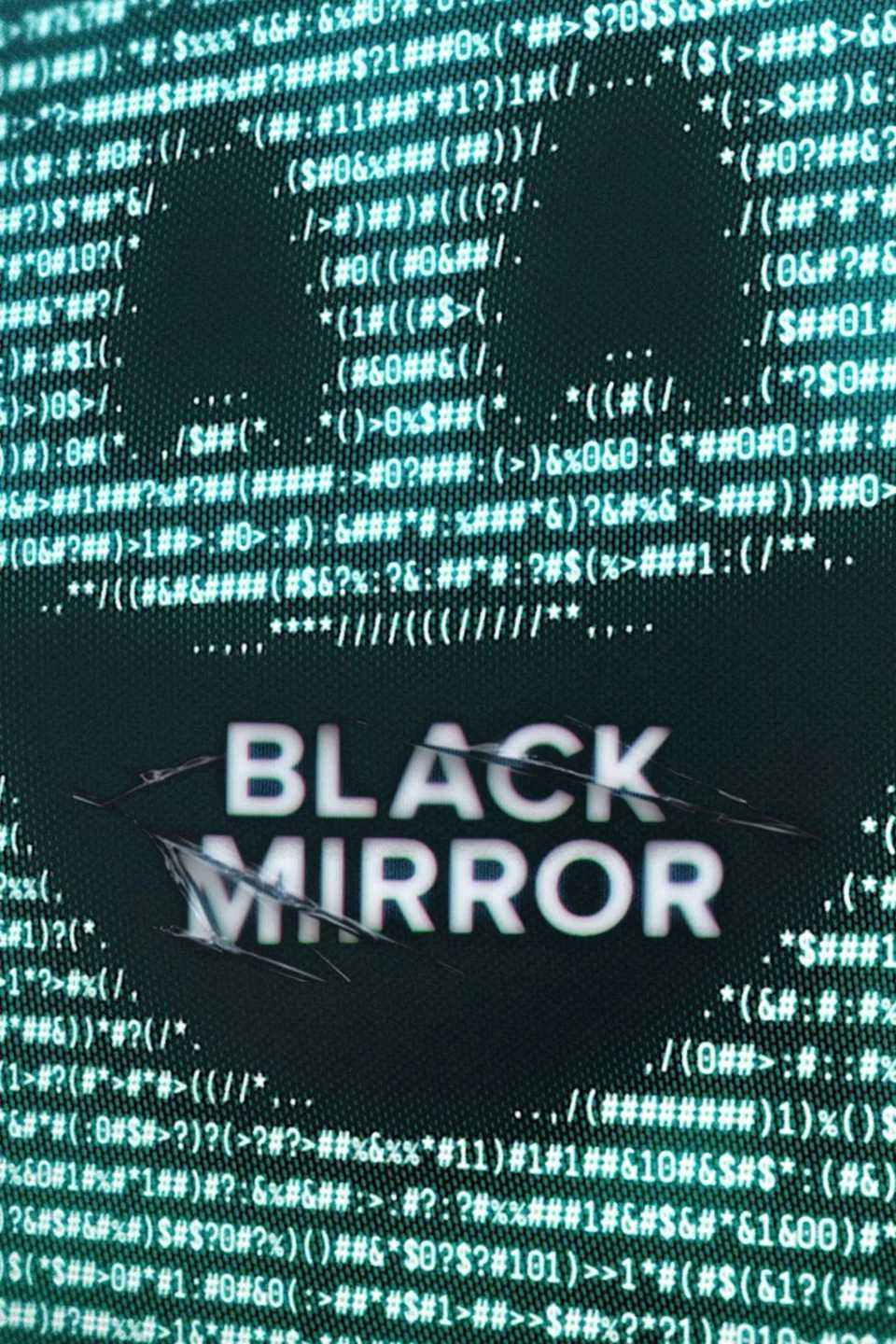
Release Date December 4, 2011
Network Channel 4, Netflix