
.jpg) 1 hour ago
3
1 hour ago
3
From record-breaking genre films and rising global cinema to politically charged storytelling, the 2026 Oscars reflects a turning point for Hollywood.
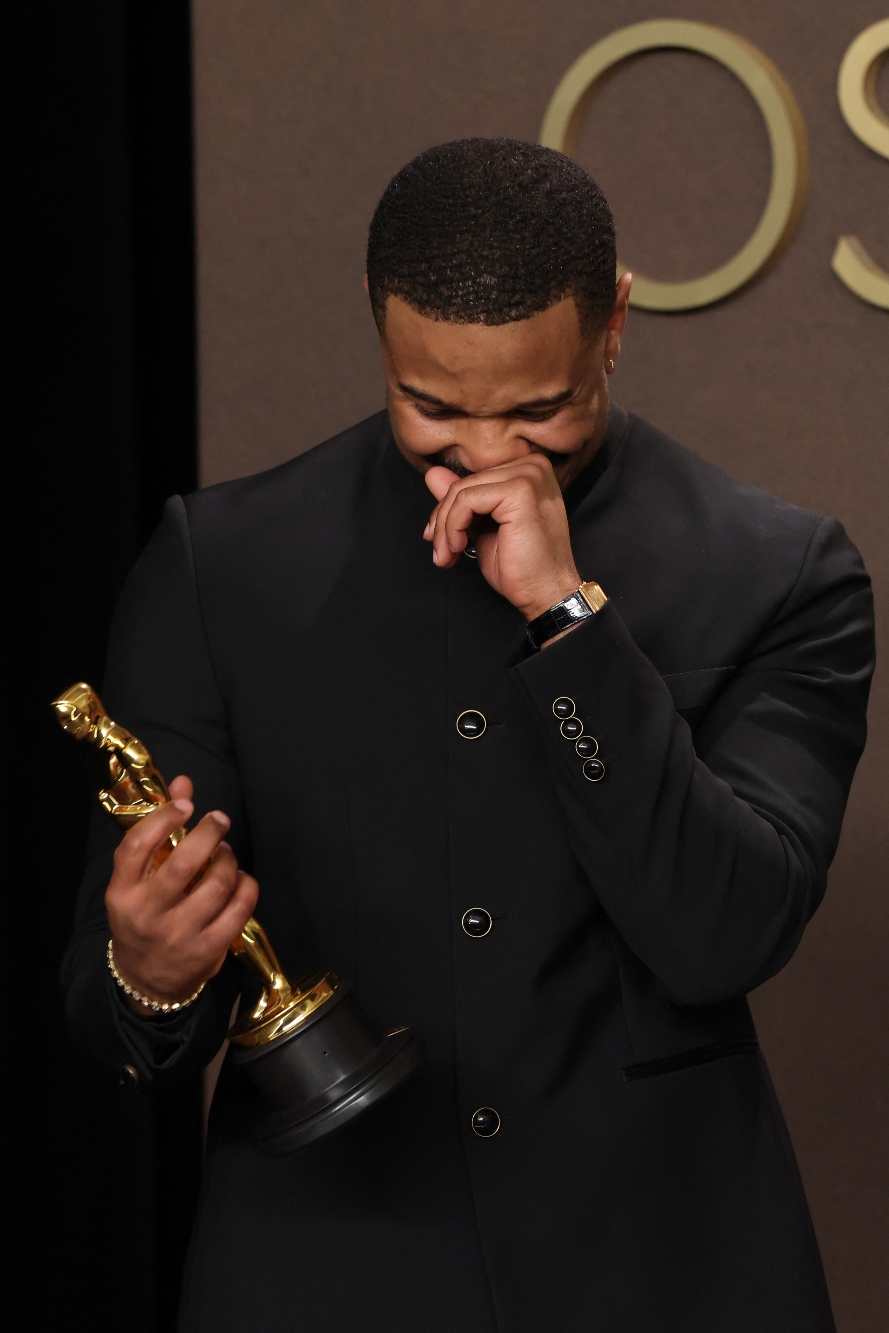 US actor Michael B. Jordan poses in the press room with the Oscar for Best Actor in a Leading Role for “Sinners” during the 98th Annual Academy Awards at the Dolby Theatre in Hollywood, California on March 15, 2026. (Photo by VALERIE MACON / AFP)
There has been a longstanding discourse on the relevance of the Academy Awards in recent years amid controversies surrounding biased academy voting, campaign rules, elitism and the marginalisation of minority voices. In 2023, the Best Actress Oscar scandal involved a surprise nomination for Andrea Riseborough’s performance in “To Leslie” which critics saw as a nomination driven purely by an intense, celebrity-led grassroots campaign rather than traditional studio marketing that led to the sidelining of what “more worthy” potential nominees of colour including Viola Davis and Danielle Deadwyler.
Fast forward three years and the 2026 Oscar nominations saw a film industry undergoing something of a cultural transformation. Genre filmmaking gained legitimacy, international cinema garnered a range of nominations while political storytelling became increasingly visible on Hollywood’s most prestigious evening. Rather than reflecting a single cultural shift, this year’s nominations suggest that the Academy itself is evolving by attempting to champion a forward-thinking film industry that is more global, politically engaged and creatively diverse than ever before.
Historic Records and Genre Diversity

The supernatural horror drama “Sinners” broke the all-time record for Oscar nominations with 16 nominations, surpassing the previous record of 14 held by “Titanic”, “La La Land” and “All About Eve”. The multi-genre film includes themes of horror, historical drama and musical elements, following twin brothers in 1930s Mississippi confronting supernatural forces. Actor Michael B. Jordan ultimately won Best Actor for the role, marking his first Academy Award. His milestone Best Actor win made him the sixth black actor to win the category. The success of “Sinners” suggests the Academy is increasingly recognising hybrid genre filmmaking, where horror, fantasy and historical narratives intersect with serious themes such as race, identity and social conflict.
For decades, the Oscars largely favoured historical dramas and highly publicised biopics. Horror has historically struggled for recognition — with only rare exceptions such as “The Silence of the Lambs” or “Get Out”. A film like “Sinners” breaking the nominations record signals a major shift in how genre films are evaluated. For context, “Get Out” won Best Original Screenplay at the Oscars in 2018 and opened the door for horror films to be taken seriously as social commentary. Other genre-driven contenders included “Frankenstein”, a gothic reinterpretation of Mary Shelley’s novel that received nominations in several technical categories including production design and makeup. Elsewhere, another historic moment unfolded. Jessie Buckley has made history as the first Irish woman to win the Lead Actress Oscar for her performance as Agnes in Hamnet at the Academy Awards in Hollywood.
International and Non-English Cinema Visibility
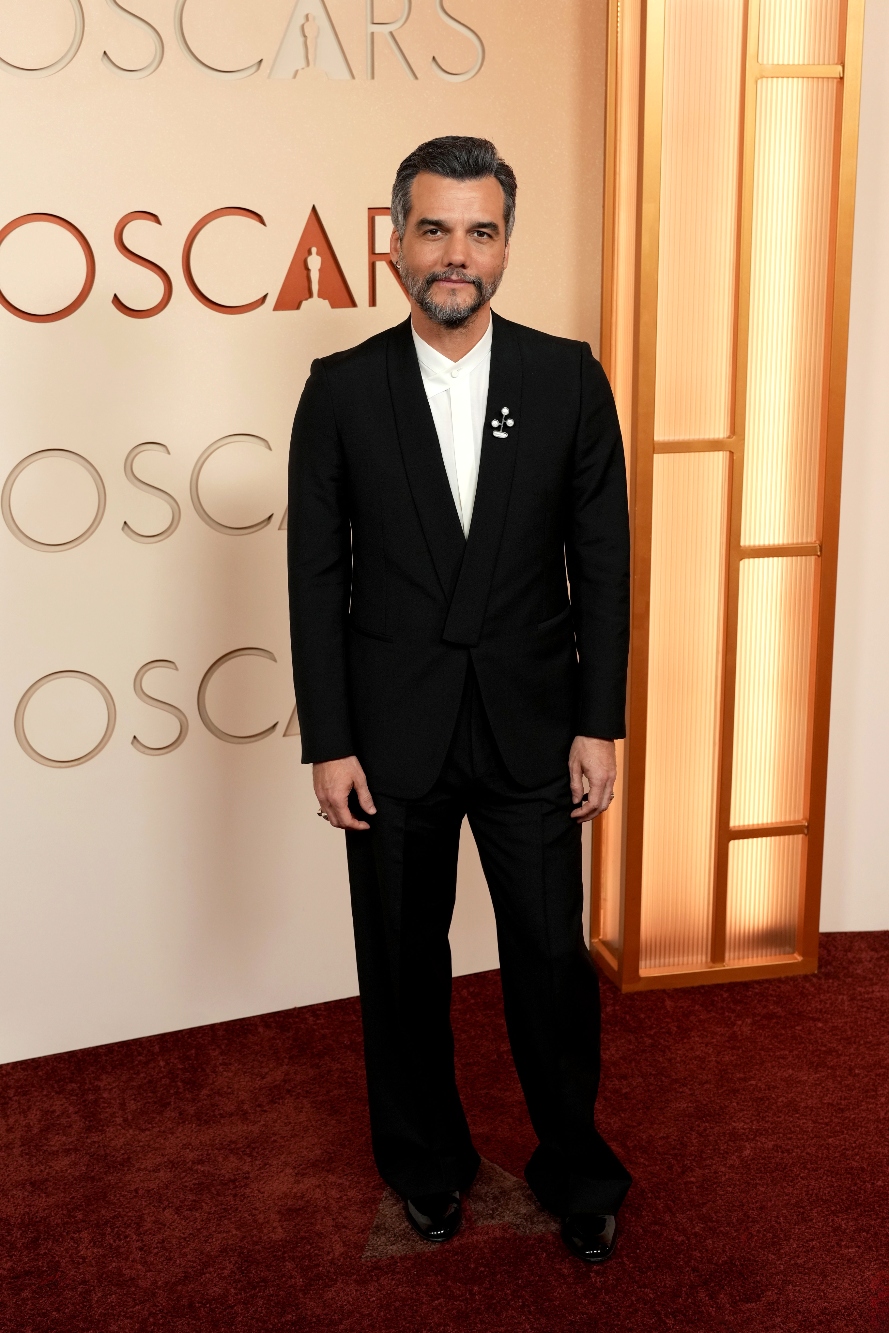 Wagner Moura wears a ZEGNA Red Carpet Collection black wool kimono blazer, black wool wide pants, white silk tab-collar shirt and black Gala slip-on shoes at the Dolby Theatre.
 Celebrating international artists and films proved to be one of the strongest themes of the 2026 nominations. The Norwegian drama “Sentimental Value” received multiple nominations including Best Picture, Best Director and several acting categories. It ultimately won Best International Feature, marking the first Oscar win for a Norwegian film in the category. The Brazilian political thriller “The Secret Agent” also broke new ground when actor Wagner Moura became the first Brazilian nominee for Best Actor. Similarly, the Iranian drama “It Was Just an Accident” was also nominated outside the International Feature category, reinforcing the Academy’s increasingly global outlook.
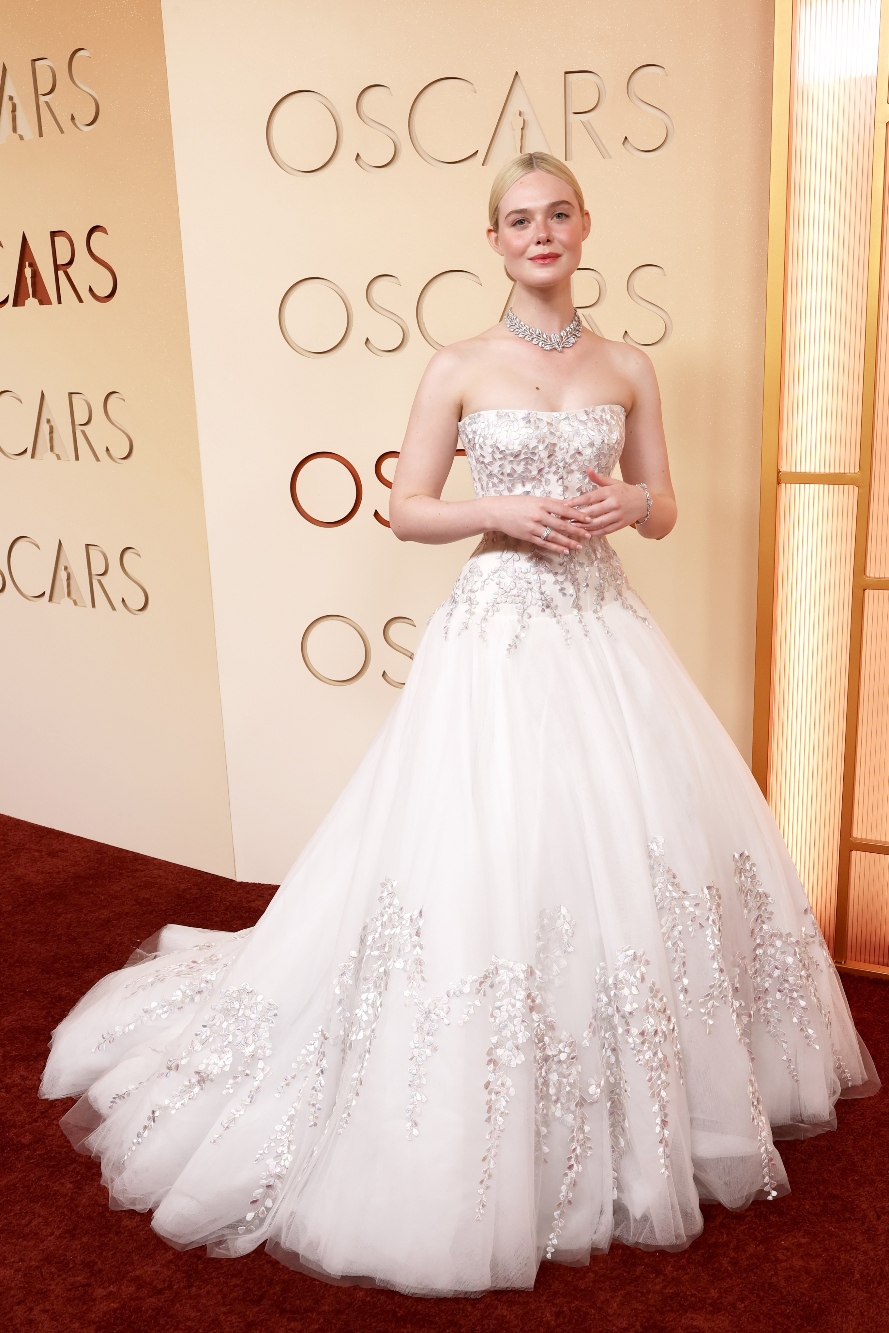 Elle Fanning — nominated for the Best Actress in a Supporting Role Award for her performance in Joachim Trier’s Sentimental Value — wore a custom Givenchy by Sarah Burton
Historically, international films were largely confined to the International Feature category. However, since the success of “Parasite” — which won Best Picture in 2020 — the Academy has increasingly embraced non-English language cinema in major categories. The structural reason for this shift is partially due to how the Academy’s voting body itself has changed significantly. Over 35 percent of members are now women and over 25 percent are from ethnic minority backgrounds, following reforms introduced after the #OscarsSoWhite controversy. The increasingly international composition of the Academy’s membership has directly influenced voting patterns, resulting in a more globally representative slate of nominees. Today, more than a quarter of Academy voters live outside the United States, contributing to a more globally representative selection of nominees.
Political and Cultural Themes in Cinema
Many nominated films address contemporary issues such as race, identity and geopolitical conflict.
For instance, “Sinners” explores racism and community dynamics in Depression-era America while “Sentimental Value” deals with generational trauma and family relationships. This suggests the Academy continues to reward films that merge entertainment with cultural commentary.

Perhaps the most politically charged element of the 2026 nominations is the inclusion of “The Voice of Hind Rajab”, a film centred on the killing of a six-year-old Palestinian girl in Gaza. The film was nominated for Best International Feature, placing the Gaza conflict directly within the cultural conversation surrounding the Oscars. However, the nomination has also highlighted the political barriers faced by filmmakers from conflict zones. Several of the film’s creators reportedly faced difficulties travelling to the United States for awards events due to visa restrictions enforced by the Donald Trump presidency and the political sensitivity surrounding the subject matter — underscoring how global politics can intersect with cultural institutions like the Academy Awards.
The issue also surfaced during the ceremony itself, when actor Javier Bardem referenced Palestine during his presentation speech. This moment reflects a broader trend in recent awards seasons, where political activism and international conflicts increasingly shape the cultural narratives surrounding cinema. Art and cinema are inherently political and therefore films addressing war, identity and historical trauma have become more prominent on the Oscars stage, suggesting that the Academy is gradually embracing cinema as a platform for global dialogue rather than purely entertainment.
Performance Milestones and Young Talent
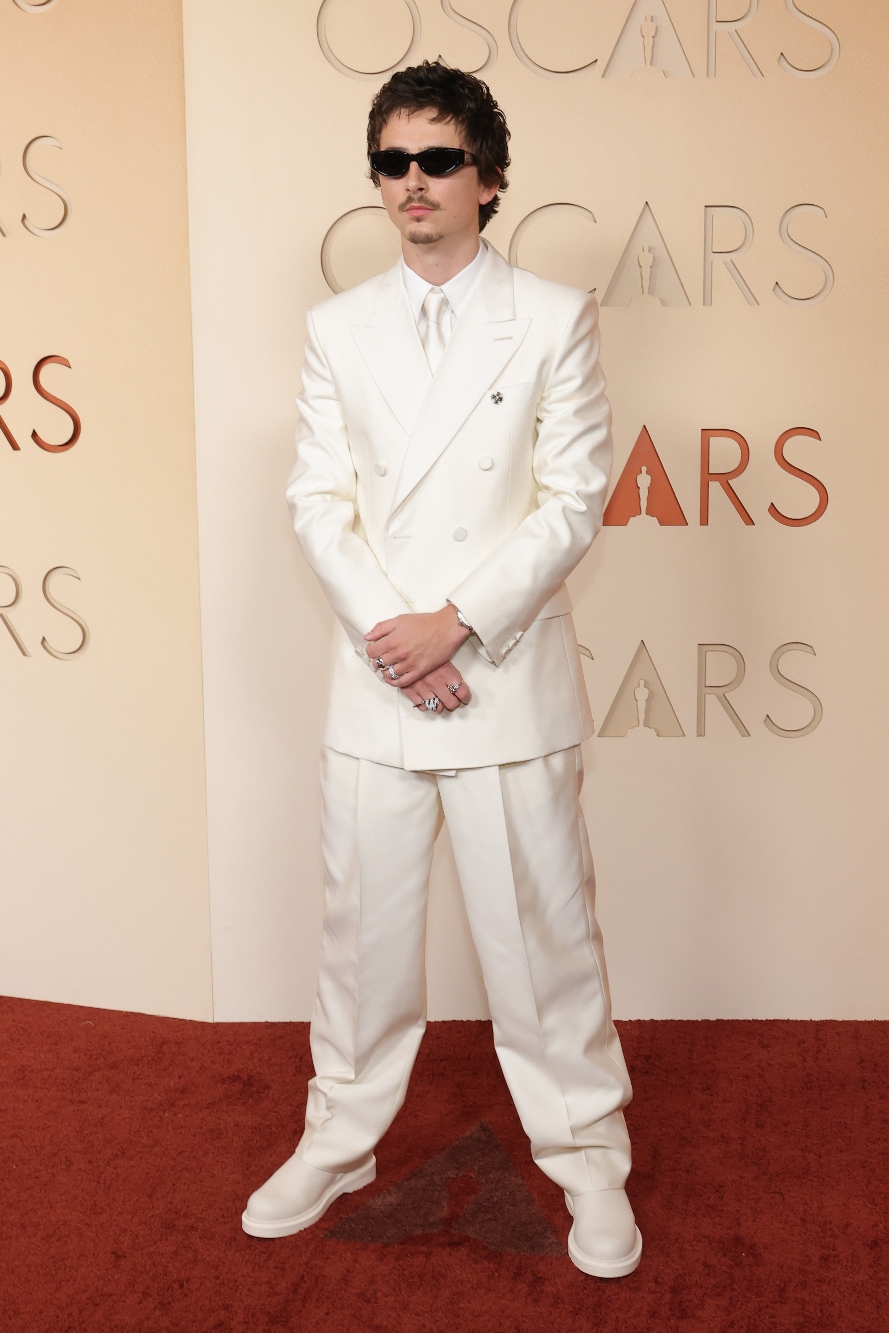 Timothée Chalamet — nominated for Best Actor in a Leading Role Award for “Marty Supreme” — was dressed in a custom Givenchy by Sarah Burton monochromatic look.
This year’s nominations illustrate a generational shift in Hollywood, where younger actors increasingly take on roles as producers or creative collaborators rather than simply performers. Timothée Chalamet’s performance in “Marty Supreme” received major nominations for his role as a table-tennis hustler in postwar New York. Had he won Best Actor, he would have become one of the youngest winners in Oscar history, highlighting the Academy’s recognition of younger creative voices. Another notable element is that Chalamet has also been increasingly involved as a producer, illustrating a broader trend among younger actors seeking creative control over projects.
This growing creative autonomy among actors represents a significant change from earlier Hollywood eras, when studios controlled most production decisions. Instead, today’s stars are increasingly shaping the films themselves — often producing projects that reflect their own artistic or social priorities.
Industry Shifts with Streaming and Franchise Films
 Netflix’s “KPop Demon Hunters”
The 2026 Academy Award nominations also reveal the extent to which the power dynamics of Hollywood are shifting, particularly as streaming companies and legacy studios compete for cultural influence. Warner Bros. emerged as the dominant studio in the 2026 nominations, leading all competitors with 30 total nominations across its film slate. Much of that success came from two films — “Sinners” and “One Battle After Another” — which collectively accounted for nearly all of the studio’s nominations.
Streaming services are no longer peripheral to the Oscars ecosystem. Instead, they now operate as full-scale film studios competing directly with legacy distributors. In 2026, Netflix earned 18 Oscar nominations across several films, tying with independent distributor Neon and trailing only Warner Bros in total nominations. This reflects a broader pattern that has been building for several years. Netflix has accumulated more than 160 Oscar nominations historically, demonstrating how streaming platforms have transitioned from distribution channels to major production financiers and awards contenders. “KPop Demon Hunters” — which ultimately won Best Animated Feature and Best Original Song — was released on Netflix. The animation production was primarily handled by Sony Pictures with the story heavily inspired by Korean mythology and Seoul’s city locations.
Another defining shift is the widespread adoption of hybrid distribution models, where films receive limited theatrical releases before transitioning to streaming platforms. This strategy allows studios and streaming services to qualify films for Academy Award eligibility — which traditionally requires theatrical exhibition — while still leveraging global streaming distribution. Several nominated films were released in theatres before later appearing on platforms such as HBO Max, Netflix or Apple TV, reflecting the increasingly thin line between theatrical and digital film distribution.
The 2026 nominations also show how smaller distributors are gaining disproportionate cultural influence. Independent distributor Neon matched Netflix with 18 nominations, largely driven by internationally acclaimed films such as the aforesaid “Sentimental Value”. This highlights an important dynamic within the current industry landscape where cinema is increasingly shaped by a combination of global streaming platforms and agile independent distributors, rather than the traditional studio system alone. These companies often specialise in acquiring international films, festival winners and auteur-driven projects that resonate strongly with Academy voters.
Finally, the 2026 Oscars arrive at a moment when the structure of Hollywood itself is evolving. Major studio mergers and acquisitions have become increasingly common as companies seek scale to compete with streaming giants. The potential Paramount–Skydance consolidation, for example, represents a major attempt to reshape the studio landscape through large-scale investment and restructuring. Industry analysts note that such consolidation is partly driven by the economic pressures of streaming — where companies must finance large volumes of content while competing globally for subscribers. As a result, the Oscars are increasingly reflecting not just artistic trends but also the strategic battle between streaming platforms, independent distributors and legacy studios.
Explore the full winner’s list here:
Actor in a Leading Role
Michael B. Jordan (Winner for Sinners)
Nominees:
Timothée Chalamet (Marty Supreme)
Leonardo DiCaprio (One Battle after Another)
Ethan Hawke (Blue Moon)
Wagner Moura (The Secret Agent)
Actor in a Supporting Role
Sean Penn (Winner for One Battle after Another)
Nominees:
Benicio Del Toro (One Battle after Another)
Jacob Elordi (Frankenstein)
Delroy Lindo (Sinners)
Stellan Skarsgård (Sentimental Value)
Actress in a Leading Role
Jessie Buckley (Winner for Hamnet)
Nominees:
Rose Byrne (If I Had Legs I’d Kick You)
Kate Hudson (Song Sung Blue)
Renate Reinsve (Sentimental Value)
Emma Stone (Bugonia)
Actress in a Supporting Role
Amy Madigan (Winner for Weapons)
Nominees:
Elle Fanning (Sentimental Value)
Inga Ibsdotter Lilleaas (Sentimental Value)
Wunmi Mosaku (Sinners)
Teyana Taylor (One Battle after Another)
Animated Feature Film
KPop Demon Hunters (Winner)
Maggie Kang, Chris Appelhans and Michelle L.M. Wong
Nominees:
Arco — Ugo Bienvenu, Félix de Givry, Sophie Mas and Natalie Portman
Elio — Madeline Sharafian, Domee Shi, Adrian Molina and Mary Alice Drumm
Little Amélie or the Character of Rain — Maïlys Vallade, Liane-Cho Han, Nidia Santiago and Henri Magalon
Zootopia 2 — Jared Bush, Byron Howard and Yvett Merino
Animated Short Film
The Girl Who Cried Pearls (Winner)
Chris Lavis and Maciek Szczerbowski
Nominees:
Butterfly — Florence Miailhe and Ron Dyens
Forevergreen — Nathan Engelhardt and Jeremy Spears
Retirement Plan — John Kelly and Andrew Freedman
The Three Sisters — Konstantin Bronzit
Casting:
One Battle after Another (Winner)
Cassandra Kulukundis
Nominees:
Hamnet — Nina Gold
Marty Supreme — Jennifer Venditti
The Secret Agent — Gabriel Domingues
Sinners — Francine Maisler
Cinematography
Sinners (Winner)
Autumn Durald Arkapaw
Nominees:
Frankenstein — Dan Laustsen
Marty Supreme — Darius Khondji
One Battle after Another — Michael Bauman
Train Dreams — Adolpho Veloso
Costume Design
Frankenstein (Winner)
Kate Hawley
Nominees:
Avatar: Fire and Ash — Deborah L. Scott
Hamnet — Malgosia Turzanska
Marty Supreme — Miyako Bellizzi
Sinners — Ruth E. Carter
Directing
Paul Thomas Anderson (Winner for One Battle after Another)
Nominees:
Chloé Zhao (Hamnet)
Josh Safdie (Marty Supreme)
Joachim Trier (Sentimental Value)
Ryan Coogler (Sinners)
Documentary Feature Film
Mr. Nobody against Putin (Winner)
David Borenstein, Pavel Talankin, Helle Faber and Alžběta Karásková
Nominees:
The Alabama Solution — Andrew Jarecki and Charlotte Kaufman
Come See Me in the Good Light — Ryan White, Jessica Hargrave, Tig Notaro and Stef Willen
Cutting through Rocks — Sara Khaki and Mohammadreza Eyni
The Perfect Neighbor — Geeta Gandbhir, Alisa Payne, Nikon Kwantu and Sam Bisbee
Documentary Short Film
All the Empty Rooms (Winner)
Joshua Seftel and Conall Jones
Nominees:
Armed Only with a Camera: The Life and Death of Brent Renaud — Craig Renaud and Juan Arredondo
Children No More: “Were and Are Gone” — Hilla Medalia and Sheila Nevins
The Devil Is Busy — Christalyn Hampton and Geeta Gandbhir
Perfectly a Strangeness — Alison McAlpine
Film Editing
One Battle after Another (Winner)
Andy Jurgensen
Nominees:
F1 — Stephen Mirrione
Marty Supreme — Ronald Bronstein and Josh Safdie
Sentimental Value — Olivier Bugge Coutté
Sinners — Michael P. Shawver
International Feature Film
Norway — Sentimental Value (Winner)
Nominees:
Brazil — The Secret Agent
France — It Was Just an Accident
Spain — Sirāt
Tunisia — The Voice of Hind Rajab
Live Action Short Film
The Singers (Winner) — Sam A. Davis and Jack Piatt
Two People Exchanging Saliva (Winner) — Alexandre Singh and Natalie Musteata
Nominees:
Butcher’s Stain — Meyer Levinson-Blount and Oron Caspi
A Friend of Dorothy — Lee Knight and James Dean
Jane Austen’s Period Drama — Julia Aks and Steve Pinder
Makeup and Hairstyling
Frankenstein (Winner)
Mike Hill, Jordan Samuel and Cliona Furey
Nominees:
Kokuho — Kyoko Toyokawa, Naomi Hibino and Tadashi Nishimatsu
Sinners — Ken Diaz, Mike Fontaine and Shunika Terry
The Smashing Machine — Kazu Hiro, Glen Griffin and Bjoern Rehbein
The Ugly Stepsister — Thomas Foldberg and Anne Cathrine Sauerberg
Music (Original Score)
Sinners (Winner)
Ludwig Göransson
Nominees:
Bugonia — Jerskin Fendrix
Frankenstein — Alexandre Desplat
Hamnet — Max Richter
One Battle after Another — Jonny Greenwood
Music (Original Song)
“Golden” from KPop Demon Hunters (Winner)
Music and Lyric by EJAE, Mark Sonnenblick, Joong Gyu Kwak, Yu Han Lee, Hee Dong Nam, Jeong Hoon Seo and Teddy Park
Nominees:
“Dear Me” — Diane Warren: Relentless
“I Lied To You” — Sinners
“Sweet Dreams Of Joy” — Viva Verdi!
“Train Dreams” — Train Dreams
Best Picture
One Battle after Another (Winner)
Adam Somner, Sara Murphy and Paul Thomas Anderson
Nominees:
Bugonia
F1
Frankenstein
Hamnet
Marty Supreme
The Secret Agent
Sentimental Value
Sinners
Train Dreams
Production Design
Frankenstein (Winner)
Production Design: Tamara Deverell
Set Decoration: Shane Vieau
Nominees:
Hamnet
Marty Supreme
One Battle after Another
Sinners
Sound
F1 (Winner)
Gareth John, Al Nelson, Gwendolyn Yates Whittle, Gary A. Rizzo and Juan Peralta
Nominees:
Frankenstein
One Battle after Another
Sinners
Sirāt
Visual Effects
Avatar: Fire and Ash (Winner)
Joe Letteri, Richard Baneham, Eric Saindon and Daniel Barrett
Nominees:
F1
Jurassic World Rebirth
The Lost Bus
Sinners
Writing (Adapted Screenplay)
One Battle after Another (Winner)
Written by Paul Thomas Anderson
Nominees:
Bugonia — Will Tracy
Frankenstein — Guillermo del Toro
Hamnet — Chloé Zhao and Maggie O’Farrell
Train Dreams — Clint Bentley and Greg Kwedar
Writing (Original Screenplay)
Sinners (Winner)
Written by Ryan Coogler
Nominees:
Blue Moon — Robert Kaplow
It Was Just an Accident — Jafar Panahi
Marty Supreme — Ronald Bronstein and Josh Safdie
Sentimental Value — Eskil Vogt and Joachim Trier
For more on the latest in culture and events, click here.
 English (US)