"There is a real threat."
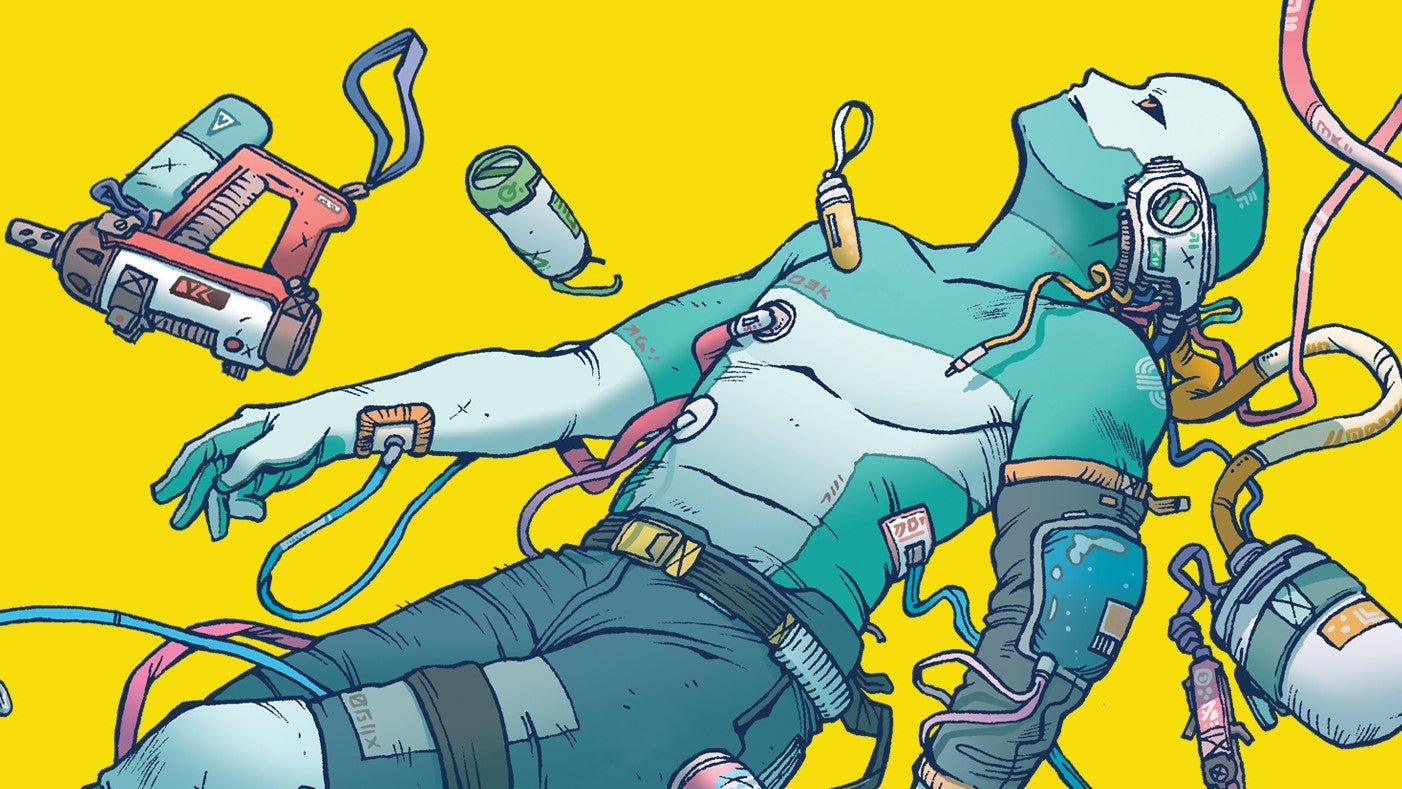
Citizen Sleeper creator Gareth Damian Martin - also known by their studio name Jump Over the Age - believes we're reaching a point of gen-AI saturation whereby game-makers are starting to counter-promote games as being human-made.
"We already are. Yeah, yeah, yeah. 100 percent," Damian Martin told me in an interview, while discussing their striking new game Signet City. "That was already something that my publisher [Fellow Traveller] was saying they want to do with my games more, especially with me doing the art this time as well. Yeah, 100 percent - it's going to give rise to that."
It's a label I haven't seen circulating in games yet, but we have seen an increase in the number of AI disclosures for games being sold on Steam, and many videos on YouTube now carry 'No AI' badges, in an effort to stand out from the torrent of videos made using gen-AI. We are already seeing Steam events dedicated to games without any AI usage whatsoever. Things are clearly changing.
Damian Martin told me "the only good thing" that could come from gen-AI use is a bounce-back effect of people noticing and cherishing human-made things more. They were reminded of this while looking at a Rembrandt sketch while doing a brief stint in art school ahead of Signet City (the art in the Citizen Sleeper games was commissioned, but the art in Signet City is done by them). In the sketch, the faces had been scribbled out, presumably because Rembrandt didn't like the work he'd done. They were scribbles that revealed the humanity of the creator.
"I exist in this space where the idea that I would use AI is kind of mad" -Gareth Damian Martin"You suddenly remember that trying to represent a human face by using a pencil and a piece of paper is something that's been happening for hundreds of years," Damian Martin said. "So when you do it, you're connecting to an entire history of that challenge and that opportunity, and it's fascinating to me to engage and be part of that. It's really beautiful.
"If AI makes us notice that more," they added, "then I think that's great. If we can make a counter-punch, if we can find that energy, that's great. I certainly think if it gives value to human-made things, in a way that perhaps we'd been forgetting, then that's the only good thing that can come from that process."
To be clear, Damian Martin is not using gen-AI in making Signet City, a game about being a parasite in people's heads in a fictional version of Newcastle in the 1980s and then influencing what they do. It's a game with a distinct hand-drawn look, presented in a thick-lined, moody black-and-white way, and with bleak industrial backgrounds and post-punk influences and energy. Indeed, the idea Damian Martin would use gen-AI in any way runs counter and contrary to what they're known for.
"I exist in this space where the idea that I would use AI is kind of mad," they said. "It's a bit like me saying, 'I'm going to start buying all of my art materials from the asset store on Unity.' The reason people buy my games is because they come from me, and the only evidence I have - the only thing I can trust - is my own expression and identity. That's the thing that's worked for me; there's no other judgeable thing. So I'm working to put more of that into my games.
"But there is a real threat," they added, "and the reason there is a real threat in the wider games industry is because it's an industry, and people who work on games for big companies, in my experience, are treated very poorly. They are not respected as human beings in a lot of cases. So why would they not be replaced by machines if the people who pay their wages do not even respect their human nature? They do not respect their creativity. We've seen such a lack of respect for expression, for directors, for individuals within games."
"We do have to be vigilant, and we do have to be loud and say stuff, and say that it's not okay for us, because otherwise it will happen""When something is industrial production and it doesn't care about the people involved, then it doesn't care whether they're machines or they're people as long as the work happens, and that's the real threat," they reiterated. "So we do have to be vigilant, and we do have to be loud and say stuff, and say that it's not okay for us, because otherwise it will happen. It just seems inevitable that you would try to automate these things because it's easier than having employees; that's the kind of horrible logic of industry, unfortunately. But that doesn't really concern me because I'm operating in a completely different mode."
Signet City currently has no release date but was said to be halfway through development when announced this summer. Citizen Sleeper 2 - Damian Martin's most recent game - was released at the beginning of 2025. It's a sequel that introduced more pressure into the heartwarming sci-fi, dice-rolling, role-playing series, and I thought it better for it. "With a new found sense of tension, and showpiece Contract missions, Citizen Sleeper is transformed. This follow-up has improved the RPG formula in every way," I wrote in my Citizen Sleeper 2 review.