Encompassing five aquatic preserves along the southwestern coast of Florida, Charlotte Harbor Aquatic Preserves (CHAP) protects and monitors 180,000 acres where many of the state's most iconic bird species nest, forage, and thrive. On rookery islands dotted throughout the preserves, CHAP scientists study bird nesting trends and restore habitat to ensure these species have suitable places to raise their young. Our team at Florida Coastal Islands Sanctuaries sat down with our partners at CHAP to learn more about the work they're doing.
What is the scope of the work that you do monitoring and protecting rookery islands in Charlotte Harbor?
The colonial wading and diving bird nesting study aims to establish a long-term data set to assess annual nesting effort and seasonality, monitor the distribution and status of known rookeries, and document the establishment of new rookeries throughout the greater Charlotte Harbor area. The study also aims to enhance and restore nesting sites to ensure suitable nesting habitat for wading and diving birds.
Charlotte Harbor Aquatic Preserves (CHAP) and J.N. “Ding” Darling National Wildlife Refuge (Ding Daring NWR) began this program in 2008 and have collected 19 years of continuous data. CHAP and Ding Daring NWR monitor 45 islands monthly throughout the five aquatic preserves managed by CHAP and the refuge. Following the nesting season, staff remove marine debris and discarded fishing line from each island to reduce potential entanglement hazards for nesting birds.
Could you talk a bit about what you discovered this year with nesting Tricolored Herons? How does this differ from what you usually see?
In recent years, hurricanes Ian, Helene and Milton caused significant damage to mangrove islands that historically supported nesting habitat throughout the region. In response, CHAP expanded its efforts to identify and monitor alternative nesting locations, documenting shifts in nesting activity to nearby islands.
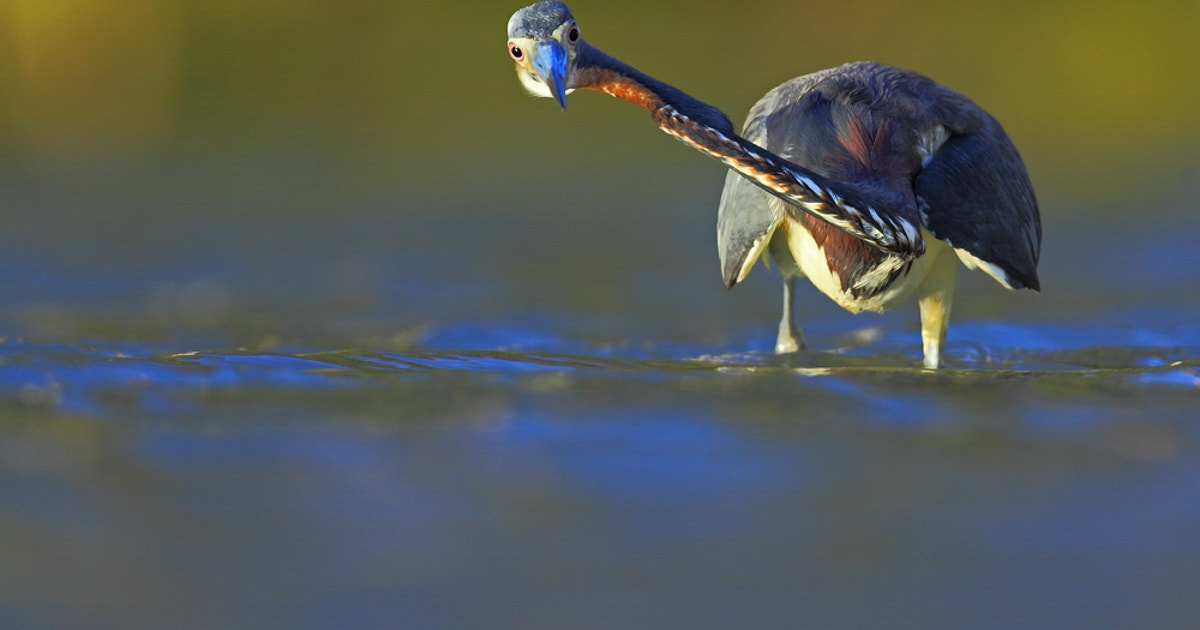
One notable finding has been the continued nesting activity at Wallace Keys in Pine Island Sound Aquatic Preserve. After an impressive nesting season last year, tricolored herons returned in strong numbers again this year. These observations highlight the importance on monitoring existing nesting sites as birds respond to changes in available habitat.
Did the Tricolored Herons have success nesting this year?
The monthly monitoring surveys capture nesting effort rather than fledging success. During the 2026 nesting season, peak nesting effort reached was 89 Tricolored Heron nests. Staff also observed chicks during the late summer months, indicating the Tricolored Herons had a successful nesting effort this year.
How have the birds fared in recent years given all of the hurricanes that have impacted the region?
Although there has been no formal analysis of the rookery data since the hurricanes occurred, based on the peak nesting numbers after Ian, Helene and Milton suggest that regional nesting efforts appear relatively stable. Regional data has not been analyzed for trends over time since 2020, however an updated analysis will occur in the near future.
Anything else that you'd like to share about your work?
Wading and diving birds are indicator species to the health of an estuary. Continuing the monthly monitoring of colonial wading and diving birds’ nests remains a high management priority for CHAP.
In 2017, the Florida Fish and Wildlife Commission established five new Critical Wildlife Areas in the South Florida region. Two islands were established in Pine Island Sound Aquatic Preserve, and three islands were established in Estero Bay Aquatic Preserve. Posting at these nesting sites further enhanced the protection of the wading and diving bird species that nest on the islands.
CHAP employs protocols that are also used by Estero Bay Aquatic Preserve and Ding Darling NWR, allowing data to be compared across the region. These datasets are also published annually in the South Florida Wading Bird Report, compiled by the South Florida Water Management District. These long-term data sets also support resource management decisions, including the establishment of Critical Wildlife Areas by Florida Fish and Wildlife Conservation Commission. Historical nesting activity and the presence of specific bird species help identify the importance of these islands.