
.jpg) 10 hours ago
2
10 hours ago
2
Creativity is a discipline, Van Cleef & Arpels Timepieces Director Pascal Narbeburu assures us because otherwise, the work might never finish.
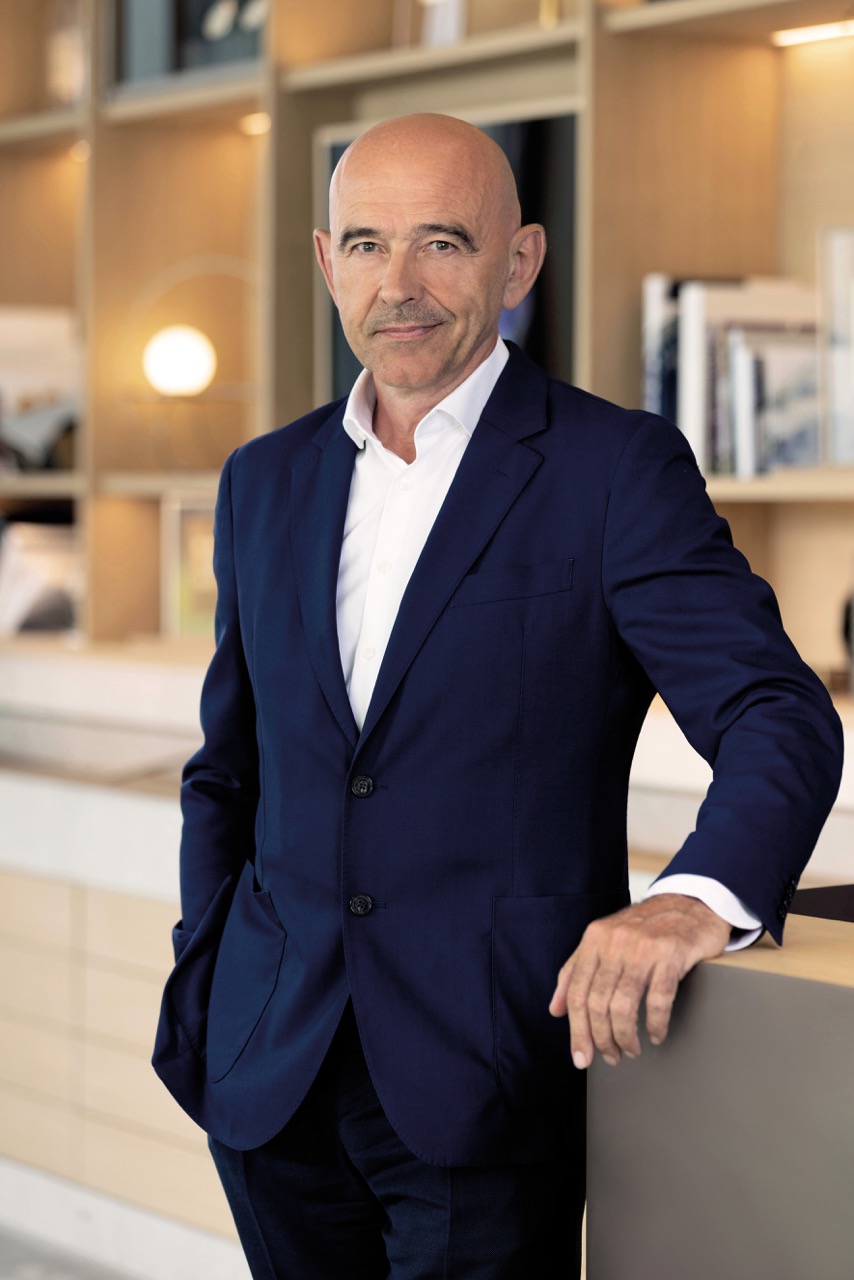 Director Pascal Narbeburu
In the world of haute horlogerie, where technical prowess and centuries of tradition often dominate the conversation, Van Cleef & Arpels stands apart. Of course, there are practical reasons of being that explain this because Van Cleef & Arpels is best known for its jewellery and that alone tends to make for a very different watchmaking side of things, if one even emerges.
Indeed, the meteoric rise of this Parisian brand over the last 15 years or so has largely been a story of creative ascendancy emerging from its jewellery business.
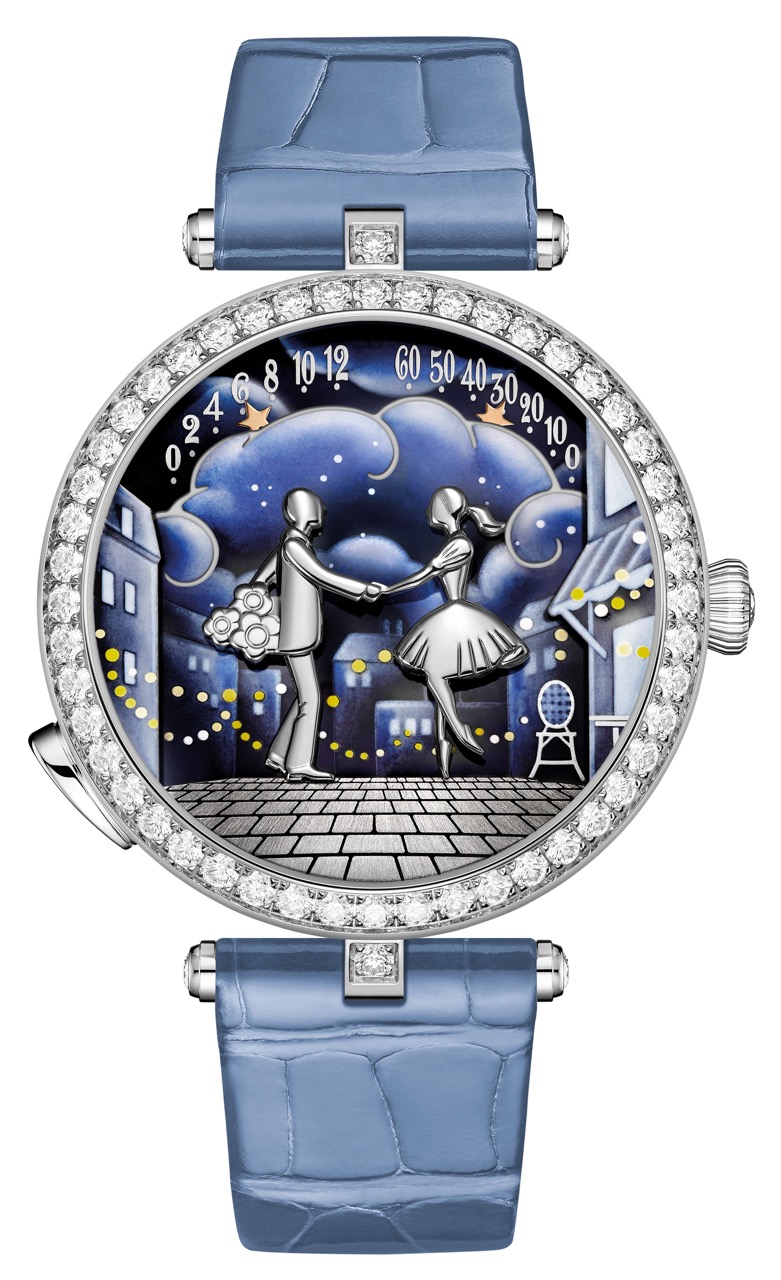 Lady Arpels Bal des Amoureux Automate watch and a segment of its dial in the process of coming together
That being the case, Van Cleef & Arpels never considered going the same route as any of the various storied haute horlogerie brands. Former CEO Nicolas Bos said as much when we first met him circa 2006, when the brand was in the midst of launching a tribute to 100 years of watchmaking at Van Cleef & Arpels (more on this later). This heritage should not be forgotten because the firm, which likes to call itself a Maison, has the history to back up its ambitions.
Van Cleef & Arpels is a firm where the story comes first; where the mechanics serve a narrative of poetry, love, and enchantment. Its particular genius is allowing its creative power to act as its engine. Bos, now the CEO of the Richemont group that owns Van Cleef & Arpels, once said the acronym VCA stands not only for Van Cleef & Arpels but also Very Creative Artists, which remains pure gold. At the helm today of this unique horological vision is Pascal Narbeburu, the Timepieces Director who orchestrates the complex dance between high jewellery, masterful craftsmanship, and mechanical ingenuity. He is very creative, true, but also an admirer of industry and its values.
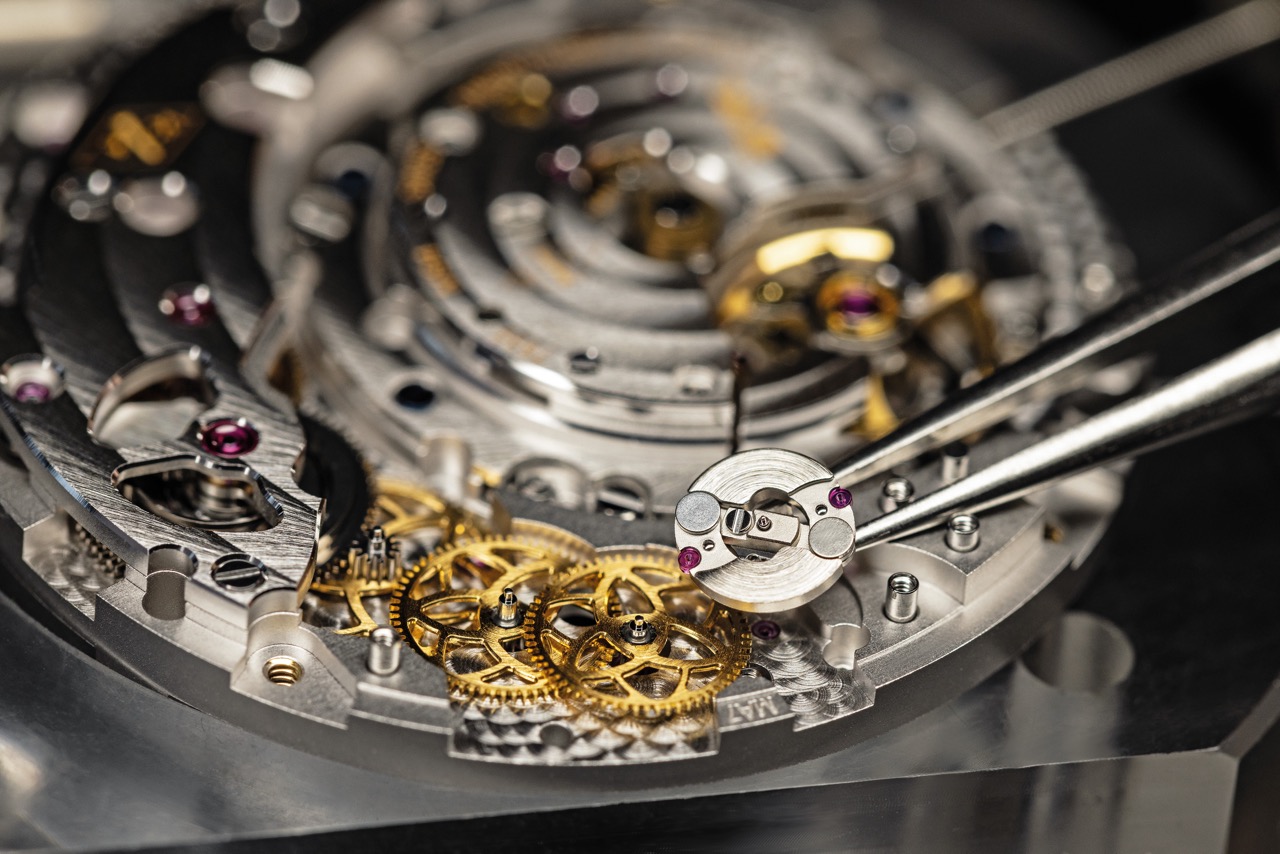
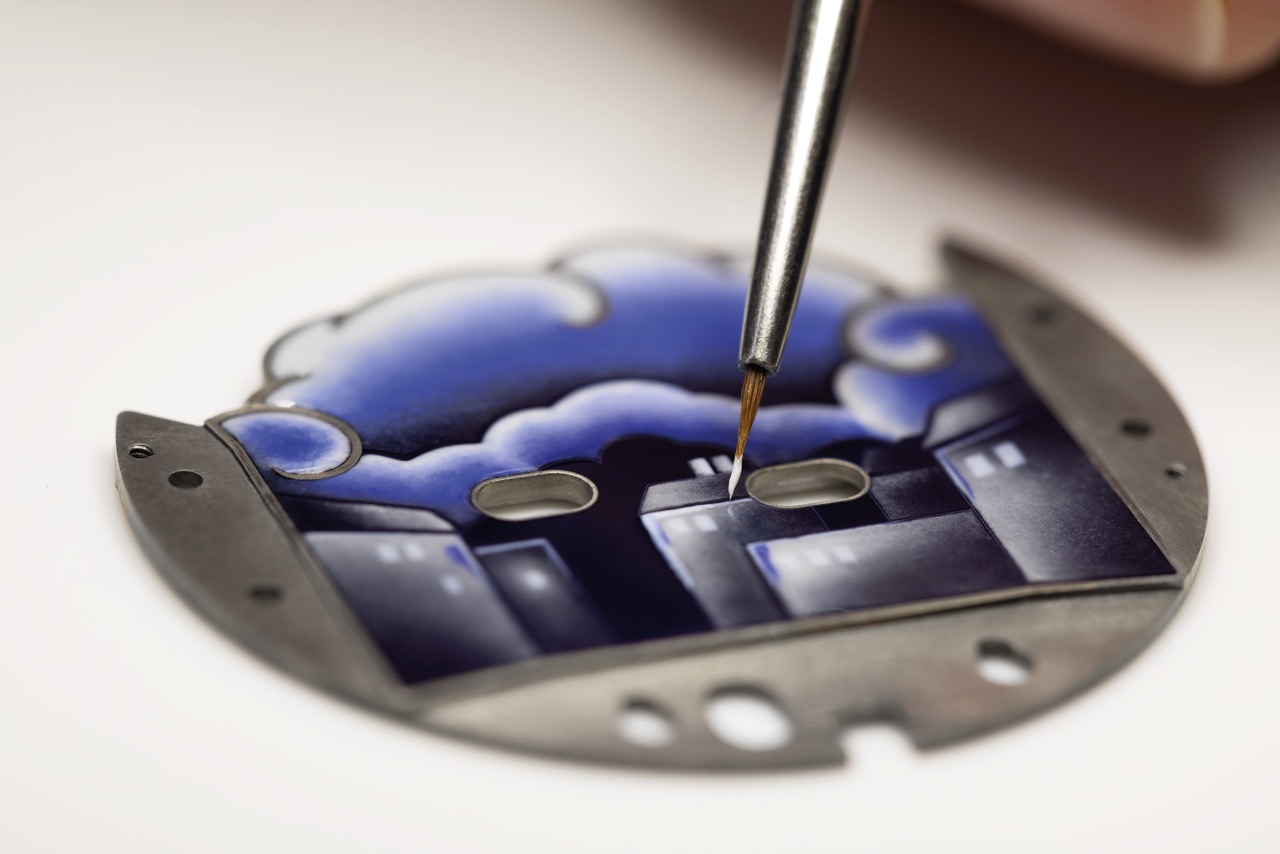 The governor of the automaton in the Lady Arpels Bal des Amoureux Automate is put into place on the calibre
Wheels Of Fate
With a background that began not in the quiet valleys of Swiss watchmaking but in the high-precision world of automotive gearbox prototyping, Narbeburu’s journey to Van Cleef & Arpels was unconventional. “In the gearbox, you have wheels, so maybe it was my destiny to work with mechanical watches,” he jokes.
After cutting his teeth in efficiency and operations, he transitioned into the watch industry, holding positions at some of its most revered names, including Rolex, Piaget, Audemars Piguet, and François-Paul Journe. But after years spent at these watchmaking brands, each one an institution of sorts and all bastions of traditional Swiss watchmaking, he found himself seeking something more.
“We develop patents because a story is needed; we will be obliged to develop new mechanisms to express the stories we want to tell because (these mechanisms do not already exist). This is so powerful for the team, and everybody is so enthusiastic to work in this mode of discovery”
“I desired more meaning behind the work—something with a soul,” he told WatchAdvisor in a 2025 interview. “At Van Cleef & Arpels, I rediscovered storytelling.” One of the watches Narbeburu would have discovered at that time is the standard bearer that defines Van Cleef & Arpels for many: the Lady Arpels Pont des Amoureux, with its delicate male and female figurines that tell the time but meet for a kiss at noon and midnight.
Looking at the watch, the story here must be the kiss, not the time, although Van Cleef & Arpels would subsequently allow the couple to meet more than twice in successive creations, including this year’s Lady Arpels Bal des Amoureux.
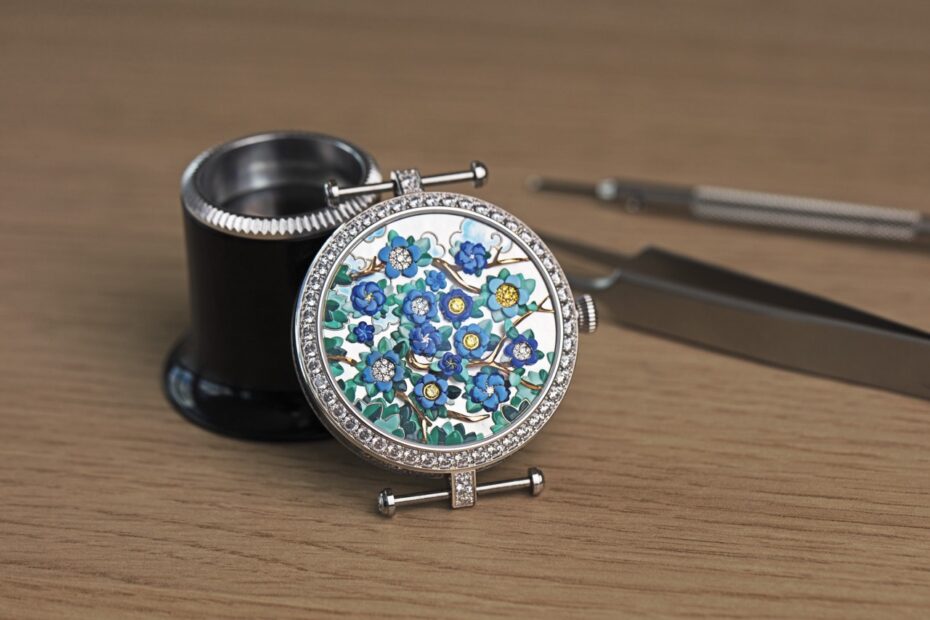 Lady Arpels Heures Florales
This narrative-first approach is what defines the Maison’s creative process. Unlike other manufactures that might build a watch around a new movement or complication from a pre-existing “library,” Van Cleef & Arpels begins with a story. Once a year, Narbeburu’s team of watchmakers and engineers meets with the design and marketing departments to brainstorm ideas. “If there is no story, there is no development,” he states unequivocally.
“What is the story we want to tell? We always start from that,” said Narberburu. “Once a year, we have a meeting between my team (the watchmakers and engineers, including research and development), the design studio and the marketing team, and to try to find the story we want to tell in the future.” These ideas, which can take four to five years to come to fruition, are presented to the CEO, who selects a handful to pursue.
Olympic Games Of Patents
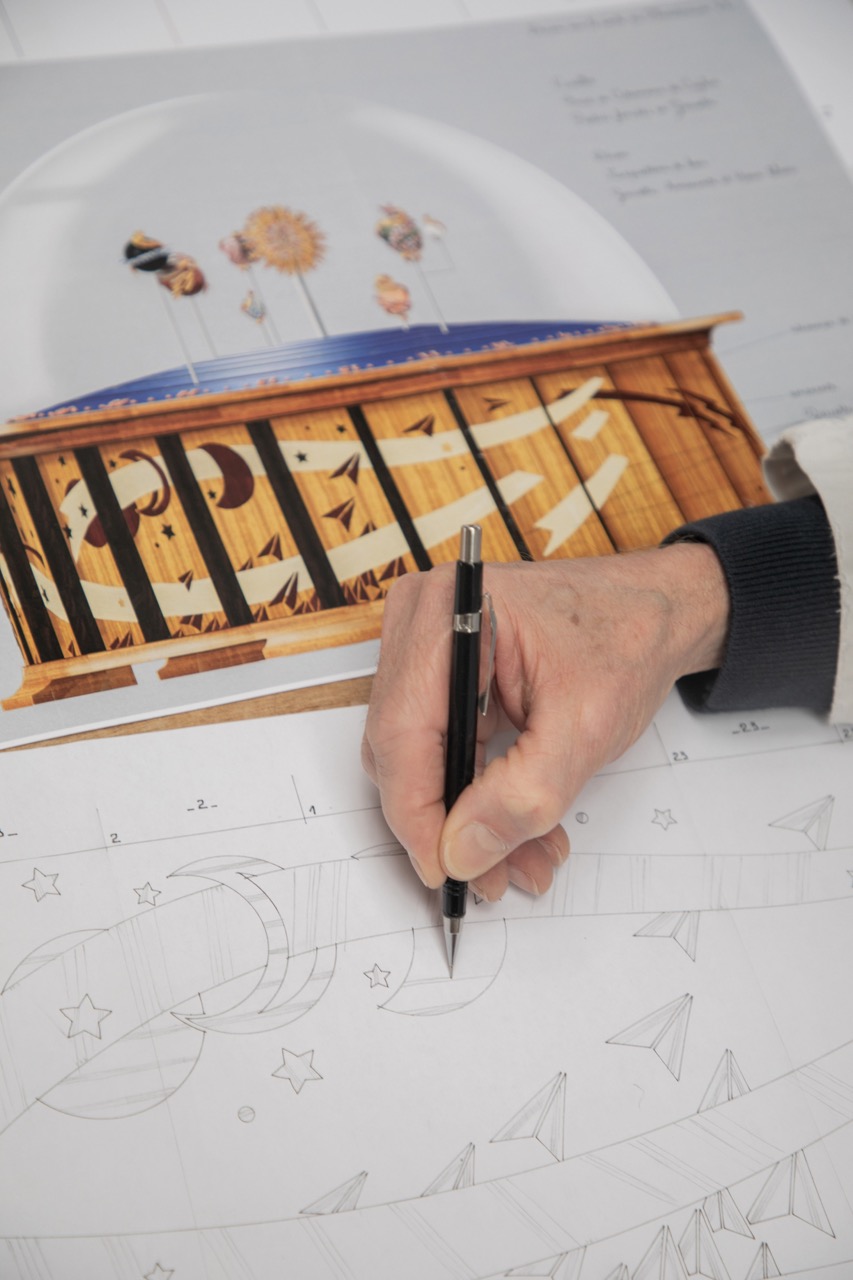
Only then does the technical “nightmare,” as Narbeburu fondly calls it, begin. The design studio first translates the story into watercolour illustrations. These are then handed to the watchmaking team, who are tasked with a formidable challenge: inventing the mechanics to bring the story to life.
“We have to discover new tracks which don’t yet exist,” Narbeburu explains, and neatly explaining how the retrograde mechanisms that mark the brand’s Poetic Complications collection came to be. Clearly, the watchmaking process at Van Cleef & Arpels often requires the development of entirely new complications, leading to three to four new patents each year—not as a goal in itself, but as a necessity driven by the story.
“For us, it’s not a goal to develop patents. It’s not the Olympic Games of patents!” says Narbeburu. “We develop patents because a story is needed; we will be obliged to develop new mechanisms to express the stories we want to tell because (these mechanisms do not already exist). This is so powerful for the team, and everybody is so enthusiastic to work in this mode of discovery.”
A perfect example of the above ethos is the Lady Arpels Heures Florales. The inspiration was the 18th-century “flower clock” concept of Swedish botanist Carl Linnaeus, also known as Carl von Linne, who theorized that one could tell time by observing the opening and closing of different flowers throughout the day. The idea was magical: a mechanical garden on the wrist. But the execution was a multi-year headache. Early versions were deemed too predictable by then-CEO Nicolas Bos.
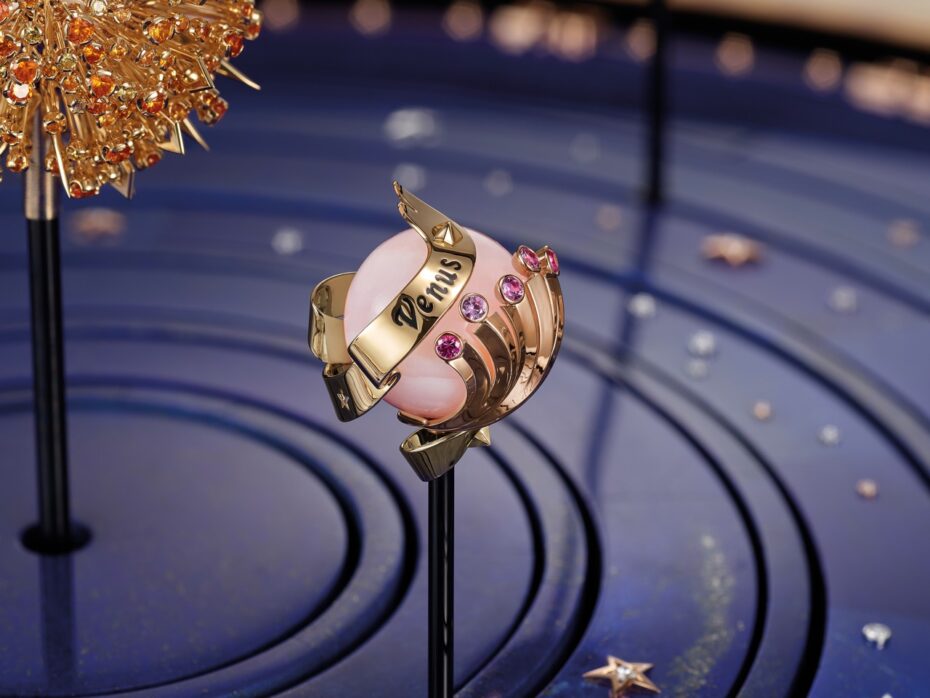 Individual planets are represented by gems and precious metals in the Planétarium Automaton
Vertical Integration
“The first version we presented showed time with a programmed and regular opening and closing of three-dimensional flowers… Nicolas said yes, this is nice but could you give me something with more magic?” Narbeburu recalls. “Okay, so we came back some months after with a version with less predictability. Nicolas said, Yes, it’s better, but maybe something more?”
The final watch, a mechanical marvel, features 12 flowers that open and close in three distinct, seemingly random cycles to indicate the hour, creating an ever-changing floral tableau on the dial. As Narbeburu reminds us, ‘seemingly’ is key there because the whole thing operates on a programmed schedule and is a tribute to very clever engineering. The watch is also a magical showcase of virtually every métiers common to both watchmaking and jewellery.
“From the beginning, we created watches, jewellery and high jewellery so in our DNA, all the traditional techniques are natural,” says Narbeburu. “So, we express and use the different techniques from watchmaking and jewellery making, fusing them together. But to do that, it’s quite difficult because there are engineers, watchmakers and jewellers who might all be in different places.”
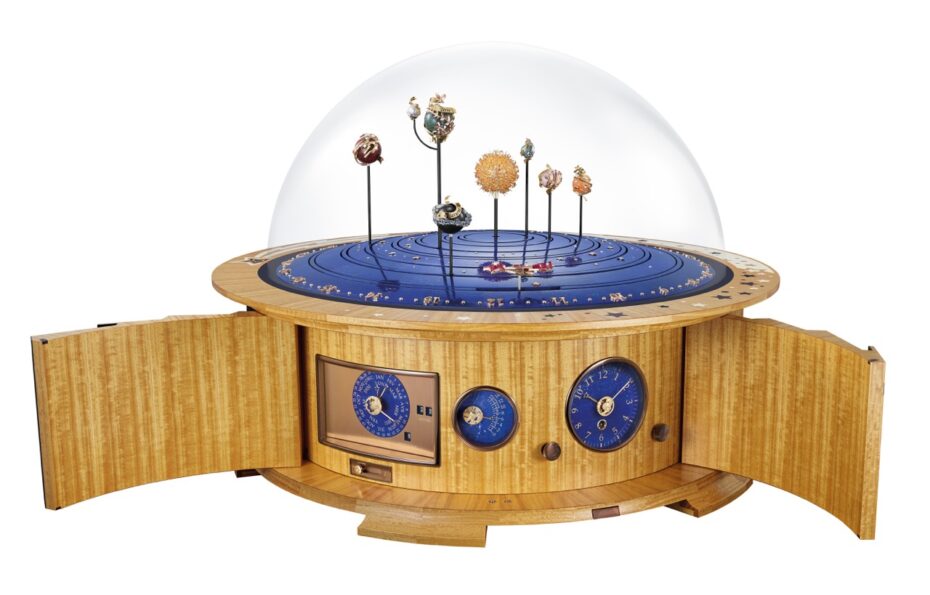 The Planétarium Automaton in its entirety, showing the scale of its lapis lazuli galaxy and, on the side of its base, the perpetual calendar, and indicators for hours and minutes, day or night, and power reserve
This fusion of artistry and engineering is made possible by the integrated structure Narbeburu has championed. Seven years ago, he made the decisive move to “verticalize everything.”
“We were developing a new extraordinary dial (which is a signature feature of Van Cleef & Arpels),” Narbeburu recalls. “It was very complicated so we asked one of our partners to create just the dial. This partner then tasked different suppliers to do different parts, but it was impossible. In the end, when they received the parts, nothing matched. Six months before the launch, I decided to repatriate everything in-house.”
Now, at the Maison’s state-of-the-art workshop in Meyrin, Geneva, all the métiers—engineers, watchmakers, gem-setters, enamellers—work under one roof. “In five minutes, I can get 10 people around a table to imagine together how to create something,” he says. This synergy allows them to push the boundaries of their respective crafts, understanding each other’s constraints while challenging everyone to go “to the limit and beyond.”
Creating Efficiency
This philosophy has been the driving force behind the brand’s aforementioned Poetic Complications collection, which issued its first chapter in 2006 to celebrate the brand’s watchmaking centenary. From the celestial ballet of the Planétarium automaton to the tender kiss of the Pont des Amoureux, each watch is a miniature theatre for the wrist.
For Watches & Wonders 2025, the brand revisited the beloved Pont des Amoureux with new day-and- night variations, in addition to the even more complex the Bal des Amoureux; the figurines now have much more strikingly natural and fluid movements.
For Narbeburu, the challenge is not just technical but also managerial: balancing the creative impulses of artisans with the pragmatic realities of deadlines. “We have to implement the idea and practice of efficiency in the minds of people whose job it is to be creative,” he notes.
“When you receive a drawing, you don’t know how you will be able to create the product, but you know that five years later, you will have to launch the product,” says Narbeburu, reflecting on the reality that confronts every watchmaking outfit that needs to present novelties at trade shows. Planning for these releases has to be methodical and rigorous.
“Every day, you have to be efficient. Yes, you are creative, but you also have deadlines to respect! You have to have a plan, and you have to follow it. Otherwise, you might need 10 years to develop something, and we already take five years, which is quite long.”
It is precisely this balance—between dreamy narratives and disciplined execution, between ancestral crafts and groundbreaking innovation—that allows Van Cleef & Arpels to continue telling time in the most poetic way imaginable.
This story was first seen as part of the WOW #81 Autumn 2025 Issue
For more on the latest in luxury watch reads, click here.
 English (US)