
.jpg) 1 hour ago
3
1 hour ago
3
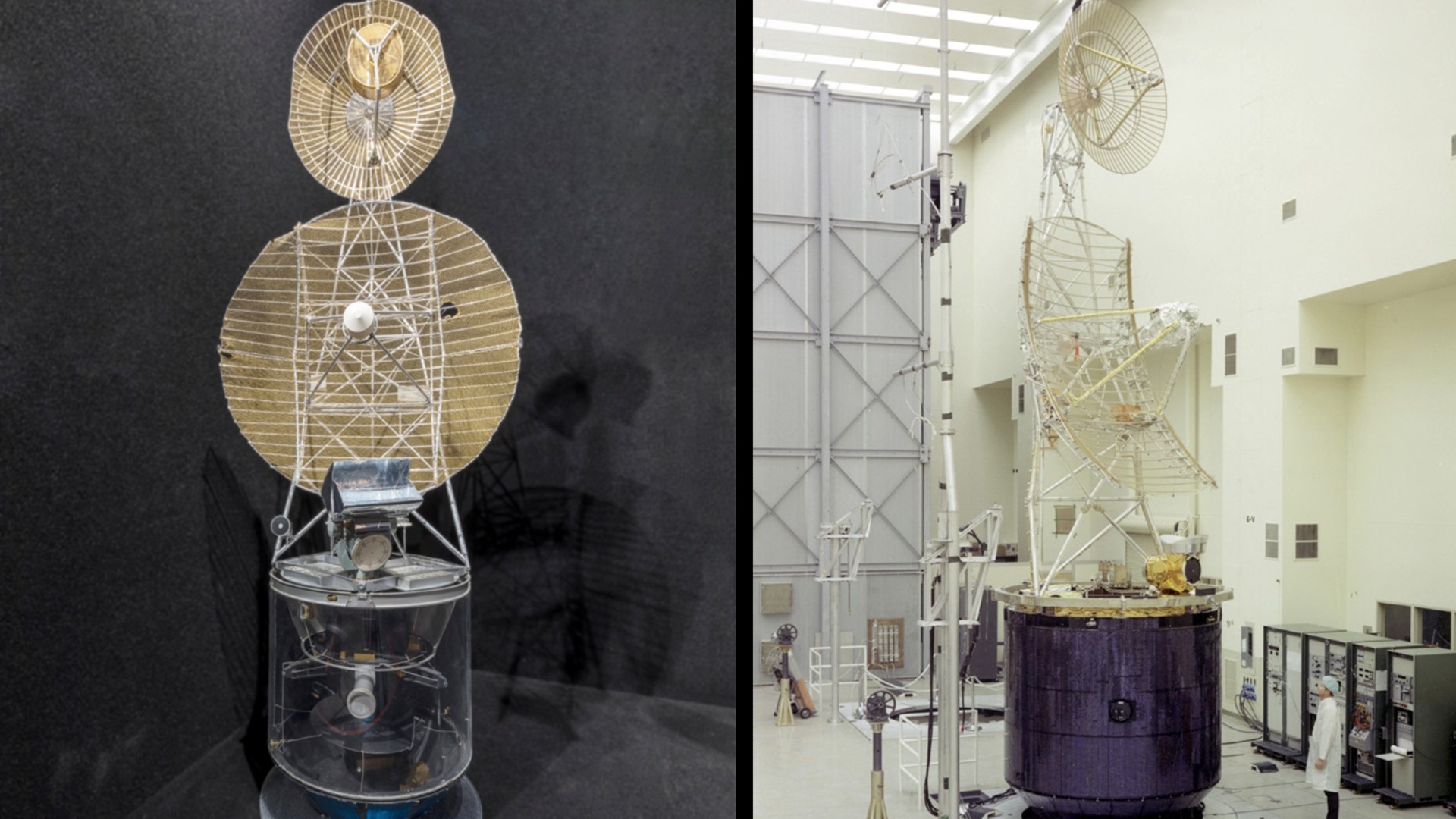
We just learned about a pioneering U.S. spy satellite program, nearly 40 years after its final spacecraft launched to the final frontier.
On Wednesday (Jan. 28), the U.S. National Reconnaissance Office (NRO) declassified its "JUMPSEAT" spy satellite, eight of which reached a highly elliptical orbit (HEO) between 1971 and 1987.
"The historical significance of JUMPSEAT cannot be [over]stated," James Outzen, NRO director of the Center for the Study of National Reconnaissance, said in a statement on Wednesday. "Its orbit provided the U.S. a new vantage point for the collection of unique and critical signals intelligence from space.”
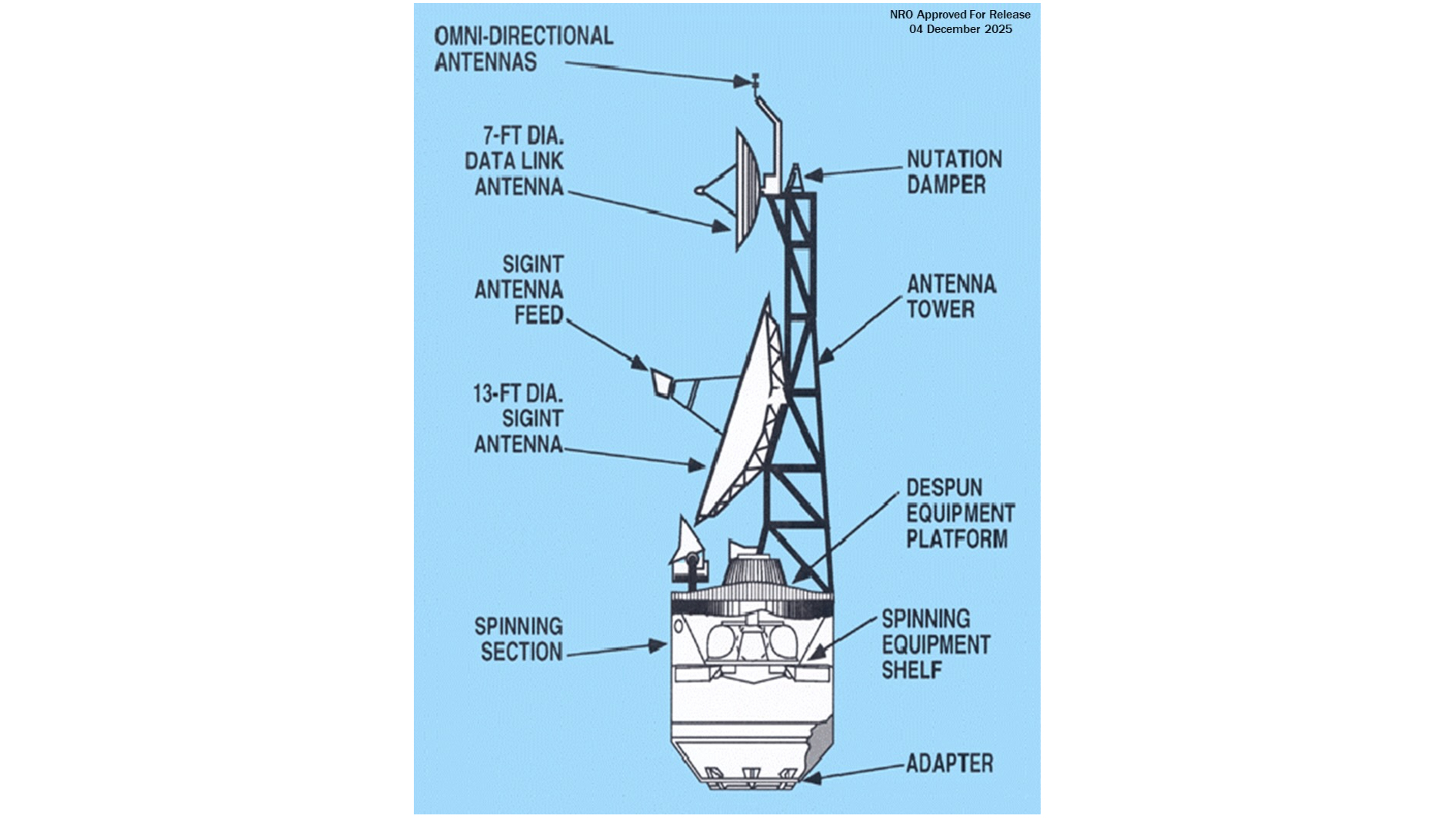
As the term implies, signals intelligence involves the detection and decryption of electromagnetic signals — adversary communications, for example, or emissions from missiles or other weapons systems.
Early in the space age, the United States launched some electronic surveillance satellites to low Earth orbit — those in the GRAB and POPPY lines, for example. But the NRO wanted to do such work from a different vantage point.
The agency, which was founded in 1961, worked with the U.S. Air Force toward this end on a program that came to be known as "Project EARPOP." The result was JUMPSEAT, a satellite designed to operate in a type of HEO called a Molniya orbit.
Molniya orbits are inclined 63 degrees relative to the equator and feature a perigee (closest Earth approach) of about 620 miles (1,000 kilometers) and an apogee (most distant point from Earth) of roughly 24,855 miles (40,000 km).
These characteristics allow satellites in Molniya orbits to linger over high-latitude stretches of the Northern Hemisphere for extended periods. Not coincidentally, this fits the geography of the Soviet Union, the United States' Cold War rival.
"JUMPSEAT's core mission focus was to monitor adversarial offensive and defensive weapon system development," NRO officials wrote in the same statement. "From its further orbital position, it aimed to collect data that might offer unique insight into existing and emerging threats."
The first JUMPSEAT satellite launched in 1971 from California's Vandenberg Air Force Base, which is now known as Vandenberg Space Force Base. And it was a success, according to the NRO.
"Once in orbit, JUMPSEAT successfully collected electronic emissions and signals, communication intelligence and foreign instrumentation intelligence — invaluable information that was downlinked to ground processing facilities within the U.S.," agency officials wrote.
Seven other JUMPSEAT spacecraft reached orbit over the next decade and a half, concluding with JUMPSEAT 8 in February 1987. But JUMPSEAT's utility extended far beyond that final launch; the final one wasn't taken out of service until 2006, after operating for a spell in "transponder mode."
Many other U.S. spy satellites have followed JUMPSEAT to space; the NRO is always upgrading its fleet of reconnaissance spacecraft. For example, the agency is currently building out its new "proliferated architecture," a constellation of hundreds of small satellites that are designed to be flexible, cost-effective and resilient to anti-satellite actions such as jamming.
 English (US)