
.jpg) 1 hour ago
3
1 hour ago
3
Article content
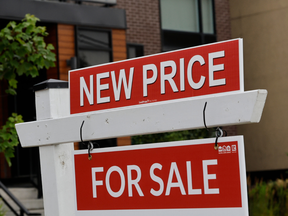
Toronto and Vancouver were named the two weakest housing markets internationally in 2026, in Swiss bank UBS Group AG’s global real estate bubble index, released on Tuesday. However, UBS also rated the two Canadian cities as being at “moderate” risk of a bubble in the sector.

THIS CONTENT IS RESERVED FOR SUBSCRIBERS ONLY
Subscribe now to read the latest news in your city and across Canada.
- Exclusive articles from Barbara Shecter, Joe O'Connor, Gabriel Friedman, and others.
- Daily content from Financial Times, the world's leading global business publication.
- Unlimited online access to read articles from Financial Post, National Post and 15 news sites across Canada with one account.
- National Post ePaper, an electronic replica of the print edition to view on any device, share and comment on.
- Daily puzzles, including the New York Times Crossword.
SUBSCRIBE TO UNLOCK MORE ARTICLES
Subscribe now to read the latest news in your city and across Canada.
- Exclusive articles from Barbara Shecter, Joe O'Connor, Gabriel Friedman and others.
- Daily content from Financial Times, the world's leading global business publication.
- Unlimited online access to read articles from Financial Post, National Post and 15 news sites across Canada with one account.
- National Post ePaper, an electronic replica of the print edition to view on any device, share and comment on.
- Daily puzzles, including the New York Times Crossword.
REGISTER / SIGN IN TO UNLOCK MORE ARTICLES
Create an account or sign in to continue with your reading experience.
- Access articles from across Canada with one account.
- Share your thoughts and join the conversation in the comments.
- Enjoy additional articles per month.
- Get email updates from your favourite authors.
THIS ARTICLE IS FREE TO READ REGISTER TO UNLOCK.
Create an account or sign in to continue with your reading experience.
- Access articles from across Canada with one account
- Share your thoughts and join the conversation in the comments
- Enjoy additional articles per month
- Get email updates from your favourite authors
Sign In or Create an Account
or
Article content
Inflation-adjusted home prices in both cities’ markets plunged by about 10 per cent year over year, compared with the rest of the global urban centres analyzed, which ticked up by just about 0.5 per cent on average. Seoul, South Korea, was at the top of the index, with the strongest annual increase in home price growth at 11 per cent, followed by Lisbon, Portugal (up 10 per cent) and Madrid (up eight per cent).
Article content
Article content
Article content
The UBS report selected cities that reflected their housing markets’ importance to global financial markets and residential real estate investment.
Article content
By signing up you consent to receive the above newsletter from Postmedia Network Inc.
Article content
This is a major reversal for the two Canadian cities from their peak years. Between 2014 and 2022, Toronto had been the strongest market among the cities analyzed by UBS before dropping to the bottom of the pack in 2026, as prices sank by 30 per cent. Vancouver home prices also fell 20 per cent since hitting their peak in 2022.
Article content
Even though home prices in these cities have dropped quickly in recent years, they remain expensive by international standards, said Aled ab Iorwerth, deputy chief economist at the Canada Mortgage and Housing Corporation (CMHC). The benchmark home price in the Greater Toronto Area has hovered around the $930,000-mark since March of this year, according to the latest data from the Toronto Regional Real Estate Board. In Metro Vancouver, the benchmark home price was about $1.08 million in August, according to Greater Vancouver Realtors.
Article content
The UBS report’s global price-to-income index, which looks at the number of years of average income it takes to purchase a 650-square-foot apartment, placed Toronto at the bottom and Vancouver on the lower end (roughly around five years). This would still make these Canadian cities more affordable compared with other urban centres, such as Paris, which requires an average of more than a decade’s income, for example, ab Iorwerth said.
Article content
Article content
“From 2006 onwards, home prices in Toronto and Vancouver were really growing,” he said, adding that economic and population growth, coupled with these cities attracting high-tech industries, led these urban centres to outpace others in terms of home price growth. “They became very unaffordable.”
Article content
Article content
This was a trend seen in other major cities, such as Sydney, Australia, San Francisco and Boston in the U.S., which experienced tremendous price growth over the past decade-and-a-half as well, he added.
Article content
But after the homebuying surge seen during the COVID-19 pandemic, Toronto and Vancouver prices began to flatline. As well, as these cities became more expensive, people started to move to other cities instead, leading to price growth in other metros, such as Ottawa and Montreal, ab Iorwerth said.
Article content
In the past year, general economic uncertainty has meant that people have been more reluctant to make large capital investments, such as purchasing a home. “The other impact, and maybe this is exaggerated in Toronto, is the fall … in the condo sector,” ab Iorwerth said.
Article content
According to a May report from Toronto-Dominion Economics, GTA resale benchmark condo prices fell 10 per cent year over year in the first quarter of 2026, and the bank expects prices won’t trend higher until 2028. By that time, it projects prices will have plummeted 25 to 30 per cent from their early 2022 peak.
 English (US)