Marvel Comics
We may receive a commission on purchases made from links.
This article contains spoilers for "Alien vs. X-Men" #2.
After Disney acquired 20th Century Fox in 2019, "Alien" and Marvel Comics became housed under the same corporate umbrella. While we've yet to see any Xenomorphs pop up in the Marvel Cinematic Universe, the two franchises have crossed over in the comics.
The first time was in the surprisingly excellent 2024-2025 miniseries "Alien vs. Avengers" by Jonathan Hickman and Esad Ribic. That series features the Marvel Universe's Earth falling prey to a Xenomorph infestation; most of the story takes place decades in a post-apocalyptic future of the few remaining Marvel heroes trying to survive. Mutantkind takes refuge on Mars, where evil scientist Mister Sinister begins experimenting on Xenomorphs to predictably disastrous results.
The mutants are facing off with the Xenomorphs again in the new miniseries "Alien vs. X-Men," co-written by the defining "X-Men" writer Chris Claremont and Kieron Gillen with art by Geraldo Borges. The comic begins in media res: An X-Men team (Cyclops, Beast, Kitty Pryde, Emma Frost, and Wolverine) is in space trying to find a Phoenix Egg, the egg from which the Phoenix Force hatches when it reincarnates. Instead, the ship is filled with Xenomorph eggs.
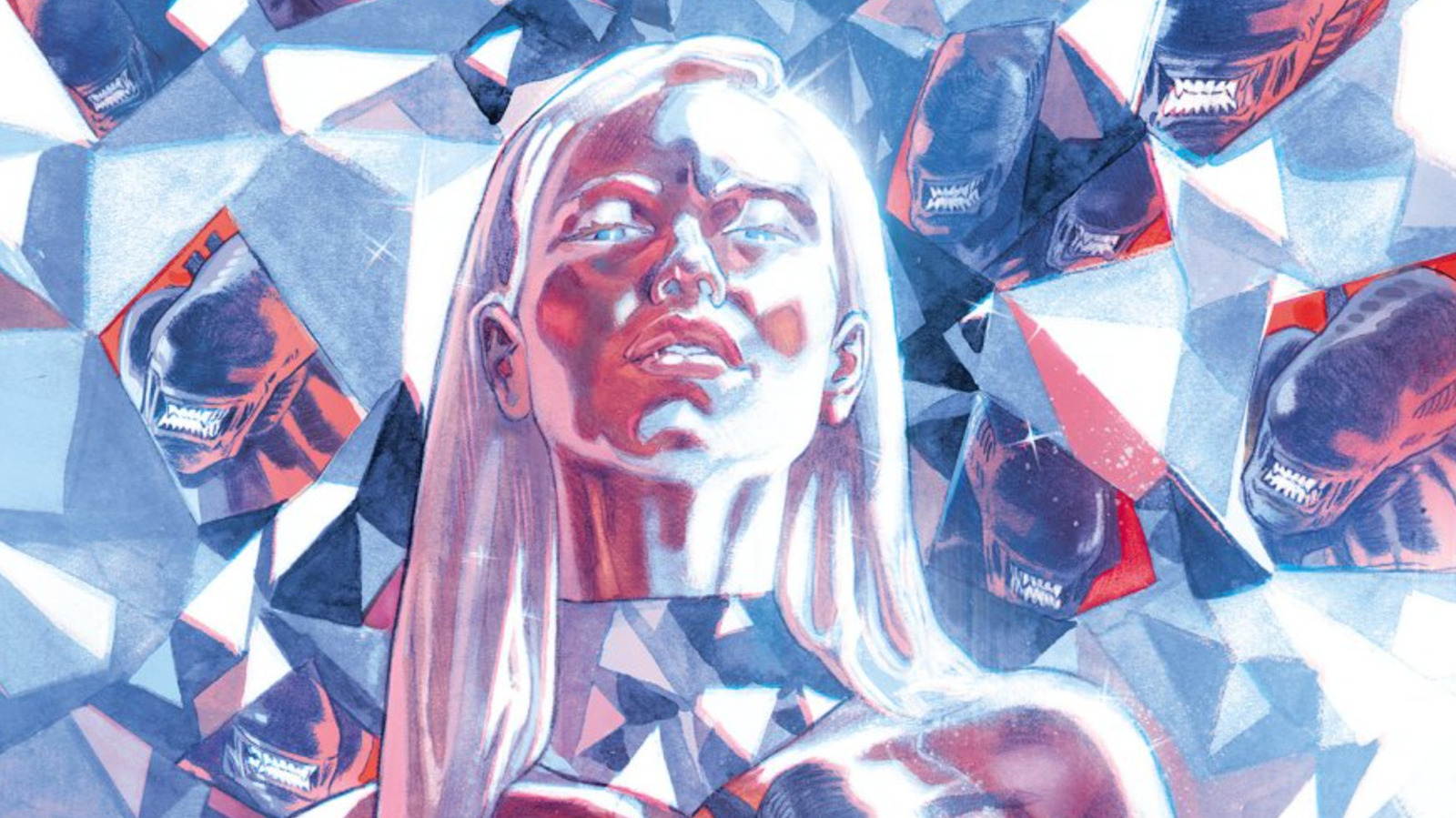
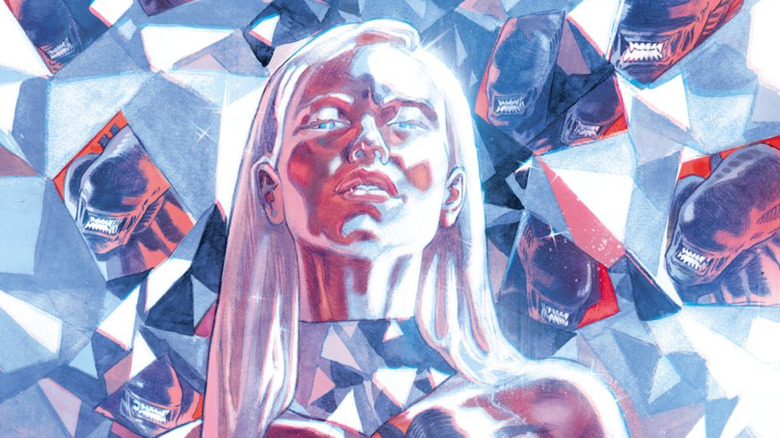
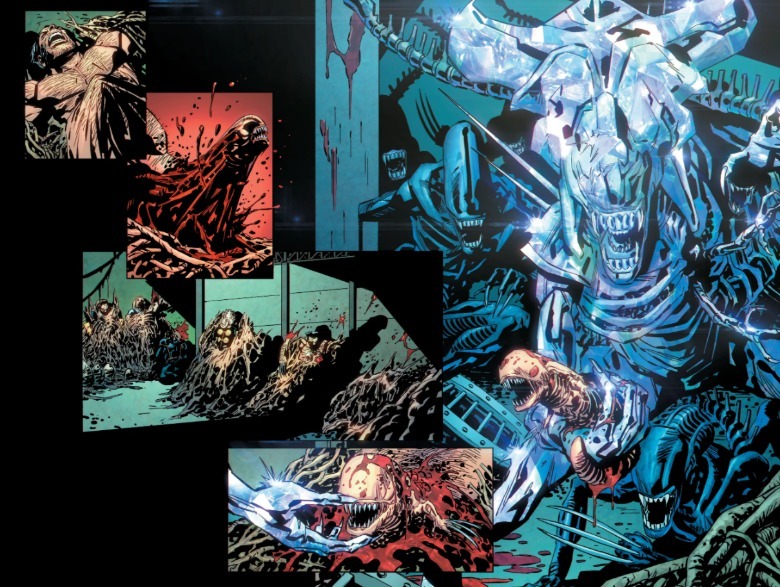
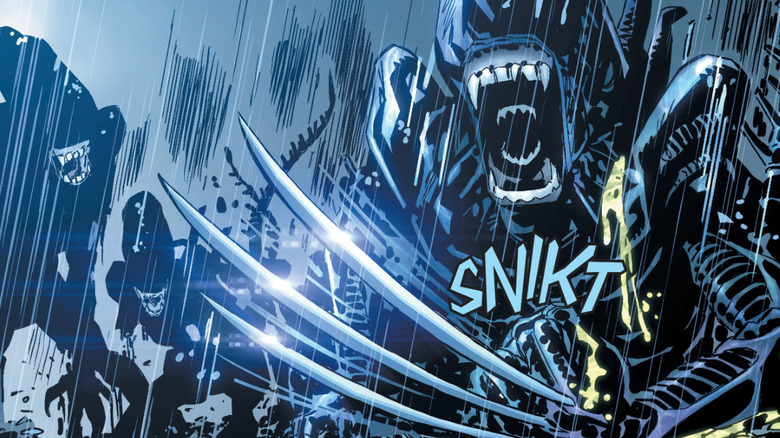
When the ship returns to Earth and crashes in front of Xavier's School, all the X-Men but Wolverine are dead — and Logan is being kept alive as a repeat incubator. Worse, the Xenomorphs spawned from him have his claws, just as the hive queen has Emma's diamond skin.
 Marvel Comics
In the "Alien" films, Xenomorphs take on qualities of the hosts from which they spawn. For instance, in "Alien 3," a Xenomorph that spawns from a dog walks on four legs. This is the horrifying culmination of that idea: Xenomorphs birthed from mutants have mutant superpowers.
Alien vs. X-Men features Xenomorphs with mutant powers
Marvel Comics
During "Alien vs. X-Men" #1, the mutant Xenomorphs attack the X-Mansion and the remaining X-Men; their acid blood proves strong enough to melt Colossus' steel skin. Worse, they take Jamie Madrox, the Multiple Man, who has the power to clone himself into endless duplicates. The stakes of that are laid out in issue #2; if the Xenomorphs absorb Multiple Man's power, they'll be able to spawn endlessly, without the need for living hosts, and Earth is doomed.
Now, the X-Men often fight parasitic aliens called the Brood that are inspired by "Alien." (Chris Claremont originally created the Brood in 1982 during his titanic "X-Men" run.) Unlike Xenomorphs, the Brood can talk and explicitly share a hive mind. The Brood also reproduce by infesting living hosts with their spawn, though the hosts' bodies are transformed into Brood drones. It's slightly less gruesome than how Xenomorphs spawn in the "Alien" movies via chestbursters. The Brood also absorb mutant powers with infestation, hence why the X-Men are such desirable hosts.
Earlier this year, animated series "X-Men '97" used the Brood to do an extended homage to "Aliens" in the episode "Weapon X, Lies, and DVDs." So what makes "Alien vs. X-Men" different from an "X-Men fight the Brood" story? The Xenomorphs have one weapon the Brood don't: Acid blood. In a flashback in "Alien vs. X-Men" #2, when the X-Men are overrun, Cyclops destroys a chestburster launching at his head with his eyebeam ... but then it explodes into a splash of acid right in his face, killing him.
We'll see if the X-Men can still triumph despite their losses. But either way, Ellen Ripley should count herself lucky she never had to fight Xenomorphs with adamantium claws.
"Alien vs. X-Men" issues #1-2 are now available for purchase.