
.jpg) 6 hours ago
2
6 hours ago
2
Beyond its viral roots, parkour has matured into a sophisticated art that redefines our interaction with the modern urban landscape.
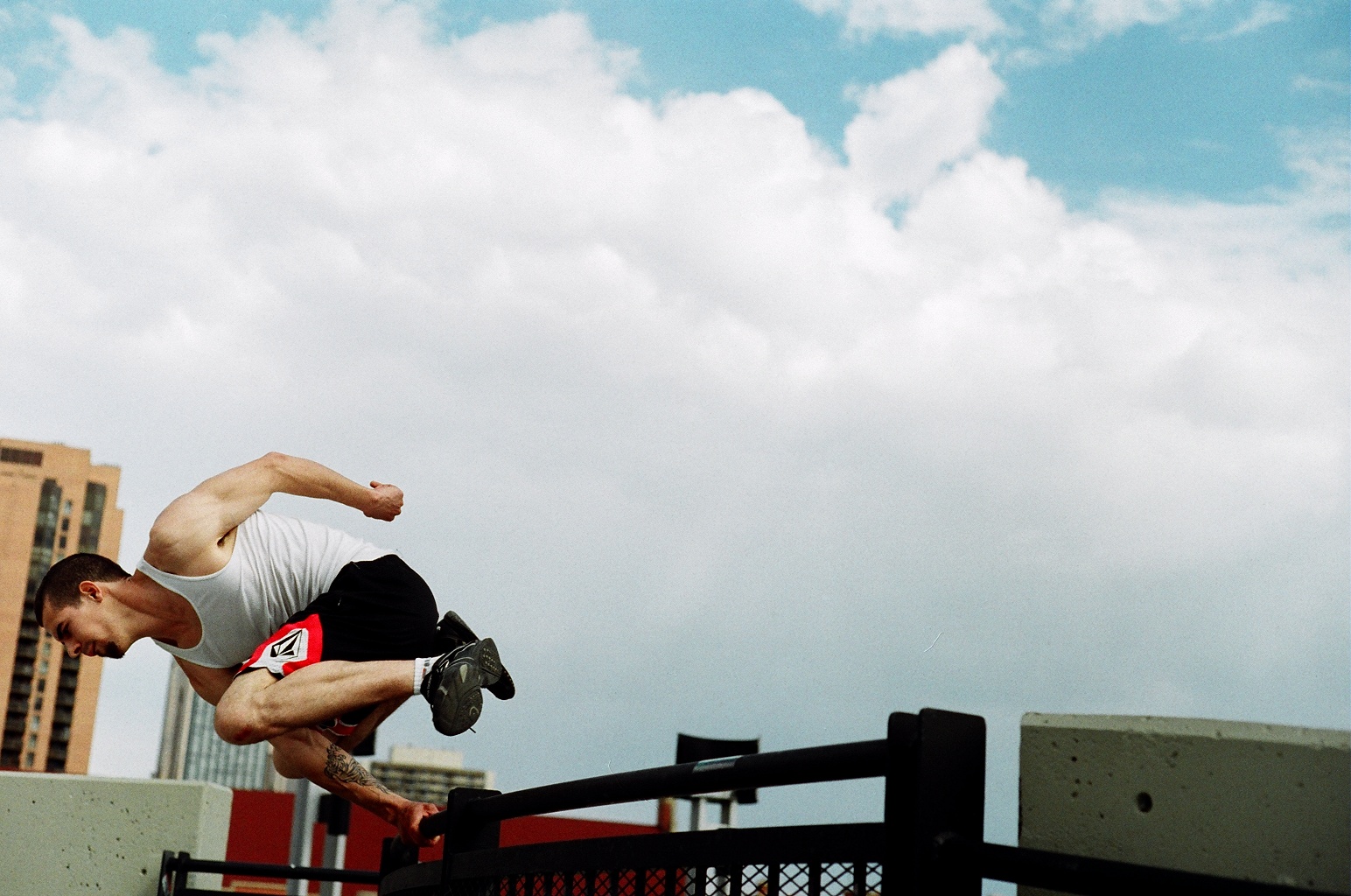
Only a couple of decades ago, parkour felt like the internet’s most elegant shock. Grainy clips turned everyday streets into film sets, and cities became puzzles solved at speed. That moment never fully left our culture, but it did change shape.
Parkour’s place in the world right now is a bit in between. On one hand, those old, shocking rooftop videos are harder to repeat, because everything goes viral for a moment and then disappears.
On the other hand, parkour has grown into a bigger movement style. You can see it in:
- training gyms,
- live shows and performances
- and big events around the world.
Parkour is also special because it turns buildings and streets into part of the sport, as rock climbing and other adrenaline-fuelled sports do to nature. For luxury and culture readers, that is the hook. Parkour is no longer just an internet dare. It is a lens on modern life: how we build cities, how we seek challenges and how style and control can turn a hard surface into something close to art.
How Today’s Movers Train for a World Built of Obstacles
If parkour once looked like pure impulse, the reality has always been craft. What has changed is how visible that craft has become. The best work now is less about shock and more about control: absorbing force quietly, placing feet with precision and making hard landings look soft. This is why the people who perform it at a high level often train like specialists, not thrill seekers, and the Pawson brothers podcast released recently made this point pretty clear. I know, there are myriads of audio shows out there, but this one particularly was attention-grabbing as the twins are very famous athletes themselves.
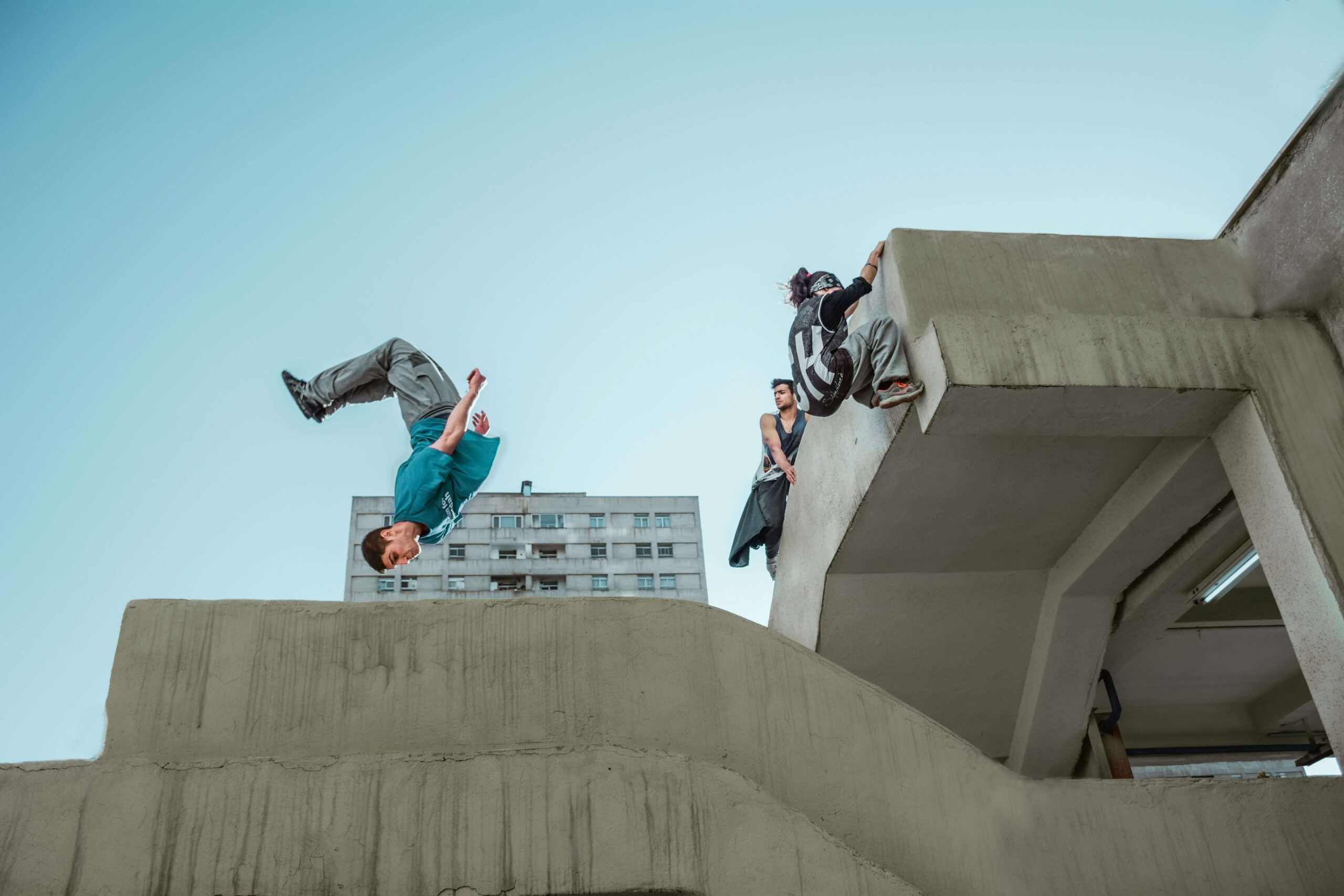
On top of their discussion, it is clear that treating movement as a system is a crucial aspect in sports. The body is the tool, but the environment is the test. Training tends to break down into repeatable patterns:
- takeoff mechanics
- landing mechanics
- the “in between” moments where balance and timing decide everything
A clean vault is not just a leap. It is a sequence of grips, hip position and exit angle that determines whether you carry speed forward or lose it. Even a simple jump becomes a study in distance judgment and how quickly you can stabilise on contact.
What keeps parkour compelling, even for people who never plan to try it, is that it sits between sport and style. The same route can be done in a direct, efficient way or with more expression through spins and flips. That creates a wide creative range, and it also explains why parkour translates so well to camera work and live performance. Check out the recorded show below, where the Australian athletes take the viewer behind the scenes of their unbelievable jumps:
What the Numbers Say About Visibility Now
Popularity is not only about search trends or memes. Parkour’s current footprint is easier to see through a mix of international competitions, live events and long tail video culture. It appears in concentrated bursts, then continues as steady background interest, the kind that signals a mature scene rather than a fading fad.
The table below captures a few clear indicators. Each one points to a different kind of attention: spectators who show up in person, international travel and competition and the enduring pull of well-made video concepts that keep drawing views years later.
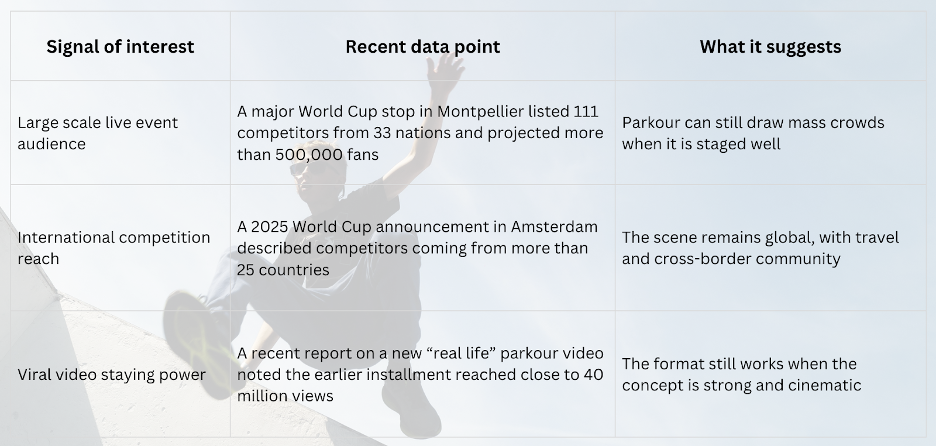 This table indicates that parkour still has strong mainstream momentum today, proven by big live audiences, wide international participation and viral videos that continue to pull massive viewership when presented well.
This mix matters. A sport that only lives online can feel thin, and a sport that only lives in events can feel niche. Parkour continues because it does both. It creates moments worth watching, then leaves behind footage that people return to, especially when it connects movement with storytelling, place and a clear visual idea.
Why the Appeal Keeps Resurfacing in Culture and Design
Parkour lasts because it is built on a simple human urge: progress. Not progress as a slogan, but progress you can feel in the body. That idea is captured in an older but still influential line from founder David Belle. In The New Yorker, he described his guiding mindset as “the progression of ability, being better than I was the day before.”
That philosophy travels well. It fits fitness culture, but it also fits luxury’s quieter obsession with mastery, the long path toward something that looks effortless. And it explains why parkour keeps returning even when the internet moves on. People do not just want new content. They want new capacity.
You can see that steady curiosity in simple information behaviour too. In January 2026, Wikipedia’s sports popularity list logged 47,045 views for the “Parkour” article in English. That is not a one day spike. It is a month of ongoing lookups, the kind of signal you get when a topic remains part of the cultural toolkit.
Cities Have Become Quiet Stages
Parkour also fits well with how cities are changing. Many new public spaces are made to feel open and easy to move in: wide steps, simple lines, big plazas and car-free zones where people can walk and play.
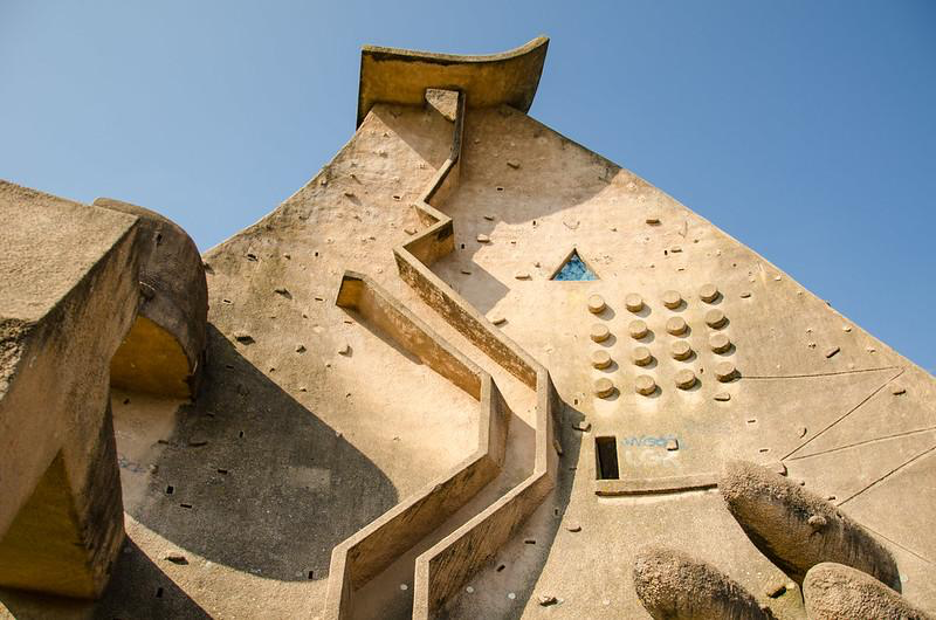 Lisses, which is a city in France, is famous in parkour because it is one of the places where early traceurs trained and helped shape the sport into what it is today.
Even when no one is doing parkour, the look and style of parkour matches how these places are photographed and enjoyed.
When a person runs, jumps, or climbs through a space, their body in motion helps you see:
- how big the place is,
- what its surfaces and shapes feel like
- and how people can move through it.
So is parkour still popular? Yes, but not as a single viral wave. It is popular as a lasting style of movement that keeps finding new stages.
For more on the latest in culture, lifestyle and events reads, click here.
 English (US)