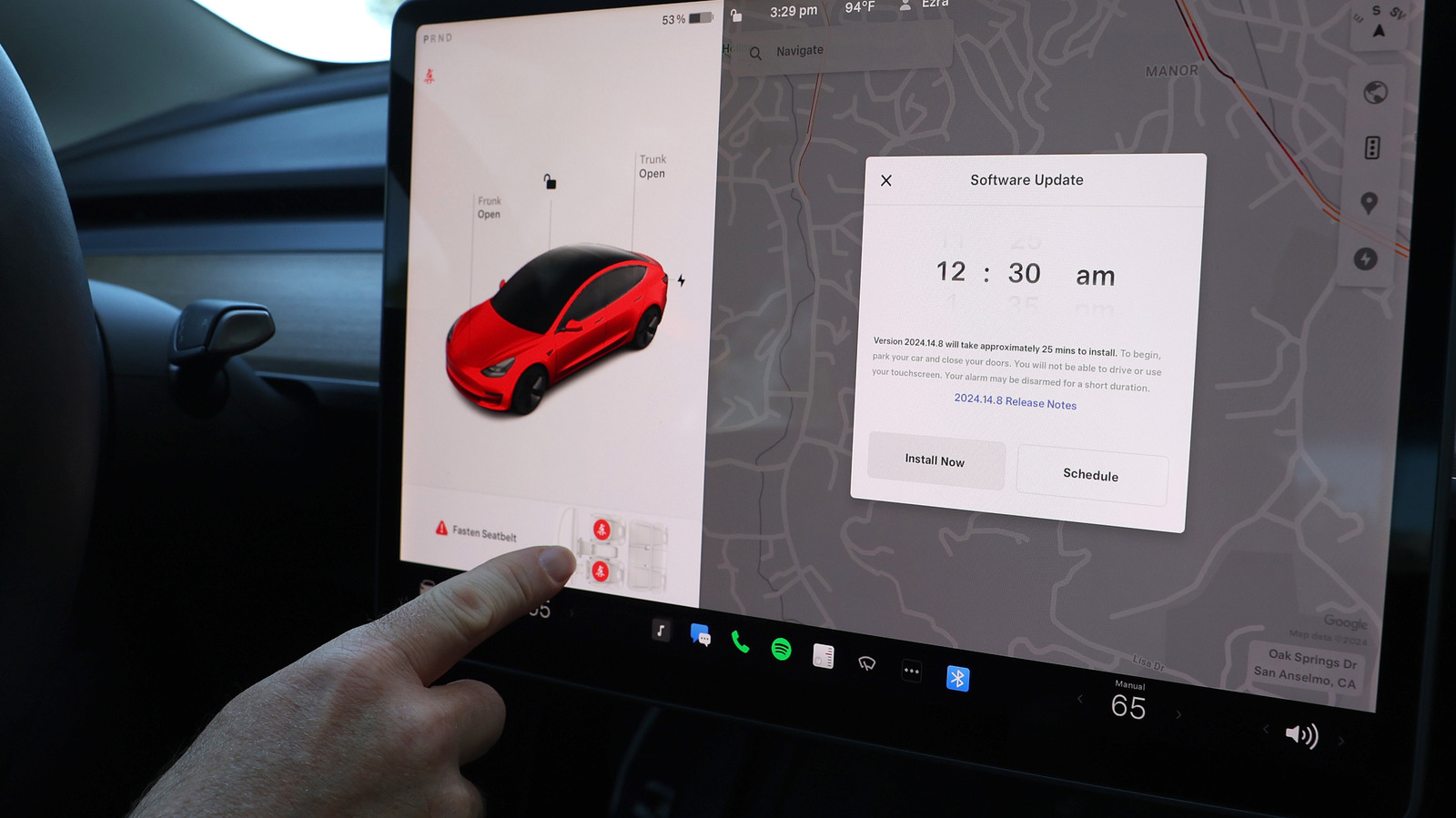
Hitting "remind me later" every time that pop-up appears may be keeping your car less secure.
Justin Sullivan/Getty Images
Your car isn't just metal and moving parts anymore. Modern cars are more like "smartphones on wheels," with dozens of electronic control units running everything from the infotainment screen to the engine and the driver-assistance systems. All of that runs on software, and software has bugs. On a phone, a bug means an app crashes. On the road, it can mean a backup camera that won't turn on when you shift into reverse, or even a car that brakes when it shouldn't. That's why you should probably stop pressing "Remind me later" every time your car asks to be updated.
A software update is a new version of the code that runs on your car's computers, and it can change a lot more than the look of the touchscreen. Updates might clear up glitches, false warnings, and trouble connecting to your phone. They may patch security holes that could let someone attack a connected car. They can adjust things like engine or battery management, and they can sometimes add features. Some even change how the car drives. After Consumer Reports found braking problems with the original Tesla Model 3 in 2018, for example, Tesla sent out an update that shortened its braking distances.
Sometimes called over-the-air or "OTA" updates, revised software is also how many recalls get fixed now. When a safety defect is in the software, the automaker still has to issue a recall, but the repair can arrive as an update instead of a trip to the dealer. Ford, GM, Mercedes-Benz, Porsche, and others have done this. Tesla's recall of more than 2 million cars over Autopilot safety controls was fixed that way, with a free update sent wirelessly to owners.
Why skipping updates is a bad idea
Evgeniyshkolenko/Getty Images
Skipping an update means you keep the bugs it was meant to fix, and if it carries a recall fix, that fix never gets installed. Experts say the risks that come with not updating are more significant than the potential issues that come with updating. And that putting updates off can mean missing features and more trips to the dealer, which could ultimately make the car less safe.
Security patches work the same way, and they're often invisible to owners, which makes them easy to ignore. Car hacking has happened before. In 2015, hackers remotely took control of Chrysler vehicles and shut them down, and Chrysler had to recall 1.4 million cars, with the patch delivered on a USB stick. Tesla fixed a separate, similar Model S hack by sending an update to every owner over the air.
Your warranty can be at stake too. GM's 2025 and 2026 warranty booklets require owners to install over-the-air updates within 45 days of availability, and say damage that results from not installing them isn't covered. Tesla and Lucid have similar exclusions. Policies differ by brand (Nissan's 2025 booklet goes the other way and says owners don't pay for parts damaged by an update Nissan delivers), so it's worth checking your own.
How to check for updates and install without drama
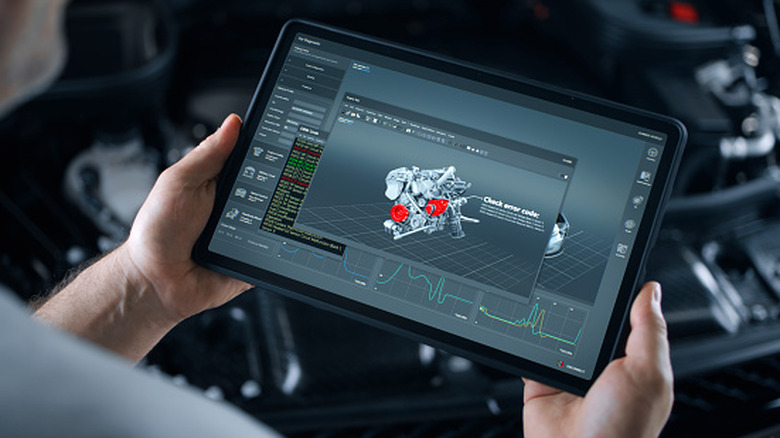
Many updates arrive over the air, through the car's built-in cellular connection or a password-protected Wi-Fi network, and they usually show up as a prompt on the infotainment screen. If you've been tapping "later," look for an update option in the car's settings menu. Some automakers require a telematics subscription for over-the-air access, so owners without one, such as some Hyundai and Kia drivers, may need to visit a dealer, sometimes for a fee. Older cars without wireless connectivity can still be updated at a dealership, where a technician may reprogram a control module with diagnostic equipment.
Read the release notes before you start the update. Vague wording like "general improvements" is common, so call the manufacturer if you want details. Install when you won't need the car, with nobody inside and a strong signal or Wi-Fi. Some updates take just a few minutes while others can take up to 90, and many lock the car so you can't drive it. Electric cars may need a charged battery, and some gas cars have to stay running. If an update stalls, moving the car to get a better signal can help, and the dealer is the fallback.