 Image: Courtesy of Netflix
Published Oct 10, 2026, 1:00 PM EDT
Denis is a news writer for Collider with close to five years of experience in the industry. He has analyzed shows across different genres, formats and styles. His favorite types of articles to write are exciting news updates and episodic deep-dives. He might say he doesn't have a favorite show, but he has watched The Wire, Shameless, The Big Bang Theory, and The Blacklist more than once. Denis is increasingly becoming focused on the global streaming arena and how media connects with audiences in various markets. Find him on X tweeting about something random that occurred to him about a TV show or the industry in general.
Sign in to your Collider account
For over three decades, John Wells has been a quiet but powerful presence on television. The writer-director has shaped some of the most popular shows of the past 30 years in different roles, but he's best known as an executive producer and showrunner. From China Beach and ER to The West Wing, Shameless and Animal Kingdom, Wells has mastered the art of spotting good stories for the small screen. His latest credit as an executive producer is on HBO Max's hit medical drama The Pitt. But one thing about being an executive producer is that one can focus on multiple projects, and Wells' production company is always tackling a project or two. In his latest one, he returns to Netflix for a different kind of family drama.
Wells' recent Netflix series is Untamed, the neo-Western starring Eric Bana. The series was a success and will return for Season 2. His next show is a family drama but not about a chaotic family like the Gallaghers. It follows an American-Indian community dealing with love, longing, loss, and belonging. Titled Unaccustomed Earth, the series is based on Jhumpa Lahiri's 2008 short story collection of the same name.
The story is a multi-generational family drama that explores how culture, tradition, love, and loss affect people. For Parul Chaudhury (Freida Pinto), a cancer diagnosis suddenly upends her entire world, and she is forced to reevaluate the decisions she made in the past that got her here. One of those is when she sacrificed her first love in college to honor her father's wishes. Now, with mortality staring her in the face, Parul uproots her life in India and returns to the one place that felt like home: Cambridge, Massachusetts. Her decision changes the course of her life and the lives of those she loves forever. Unaccustomed Earth arrives on Netflix on December 17.
Collider Exclusive · TV Medicine Quiz Which Fictional Hospital Would You Work Best In? The Pitt · ER · Grey's Anatomy · House · Scrubs
Five hospitals. Five completely different ways medicine goes sideways on television — brutal, chaotic, romantic, brilliant, and ridiculous. Only one of them is the ward your instincts were built for. Eight questions will figure out exactly where you belong.
🚨The Pitt
🏥ER
💉Grey's
🔬House
🩺Scrubs
FIND YOUR HOSPITAL →
01
A critical patient comes through the door. What's your first instinct? Medicine under pressure reveals who you actually are.
AStay completely present — block everything else out and work through it step by step, right now. BTriage fast and delegate — get the right people on the right problems immediately. CTrust my gut and move — I work best when I stop overthinking and just act. DAsk the question everyone else is ignoring — what's the thing that doesn't fit? ETake a breath, make a joke to cut the tension, and then get to work — panic helps no one.
NEXT QUESTION →
02
Why did you go into medicine in the first place? The honest answer says more about you than the one you'd give in an interview.
ABecause I wanted to be where it matters most — right at the edge, when someone's life is actually on the line. BBecause I wanted to help people — genuinely, one patient at a time, in a system that makes it hard. CBecause I was drawn to the intensity of it — the stakes, the drama, the feeling of being fully alive. DBecause medicine is the most interesting puzzle there is — and I needed a problem worth solving. EBecause I wanted to make a difference — and also, honestly, I didn't know what else to do with my life.
NEXT QUESTION →
03
What do you actually want from the people you work with? Who you want beside you under pressure is who you are.
ACompetence and calm — I need people who don't fall apart when things get bad. BTrust and reliability — I want to know that when I pass something off, it's handled. CConnection — I want colleagues who become family, even if that gets complicated. DIntelligence and the willingness to be challenged — I have no interest in people who just agree with me. EFriendship — people I actually like spending twelve hours a day with, because those hours are going to happen either way.
NEXT QUESTION →
04
You lose a patient you fought hard to save. How do you carry it? Every doctor who's worked a long shift has had to answer this question.
AI carry it. All of it. I don't look for ways to put it down — that weight is part of doing this work honestly. BI process it and move — you have to, or the next patient suffers for the one you just lost. CI feel it deeply and lean on the people around me — I don't think you're supposed to handle that alone. DI go back over every decision — not to punish myself, but because I need to understand what I missed. EI grieve it genuinely, find some way to laugh about something unrelated, and try to be kind to myself — imperfectly.
NEXT QUESTION →
05
How would your colleagues describe the way you work? Your reputation on the floor is usually more accurate than your self-image.
AIntense and completely present — no small talk during a shift, but exactly who you want there. BSteady and dependable — not the flashiest in the room but never the one who drops something. CPassionate and occasionally chaotic — brilliant on the hard cases, prone to drama everywhere else. DBrilliant and difficult — right more often than anyone else, and everyone knows it, including me. EWarm and self-deprecating — not the most intimidating presence, but genuinely good at this and easy to like.
NEXT QUESTION →
06
How do you feel about hospital protocol and procedure? Every institution has rules. What you do with them is a choice.
AProtocol is the floor, not the ceiling — I follow it until the patient needs something it can't provide. BI respect it — the system is broken in places, but the structure is there for a reason and I work within it. CI follow it until my instincts tell me not to — and my instincts are usually right, even when they cause problems. DRules are for people who haven't thought hard enough about when to break them. EI try to follow it and mostly do — with a few memorable exceptions that still come up in meetings.
NEXT QUESTION →
07
What does this job cost you personally? Nobody works in medicine without paying a price. What's yours?
AEverything outside these walls — I've given this job my full attention and the rest of my life has gone around it. BMy idealism, mostly — I came in believing the system could be fixed and I've made a complicated peace with that. CStability — my personal life has been as chaotic as the OR, and that's not entirely a coincidence. DMy relationships — I am not easy to know, and the people who've tried to would probably agree. EMy sense of gravity — I use humour as a coping mechanism, which not everyone appreciates in a hospital.
NEXT QUESTION →
08
At the end of a long shift, what keeps you coming back? The answer to this question is the most honest thing about you.
AThe fact that it's real — that nothing else I could be doing would matter this much, right now, today. BThe patients — individual human beings who needed something and got it because I was there. CThe people I work with — I have walked through impossible things with these people and I'd do it again. DThe next unsolved case — there's always another puzzle, and I'm not done yet. EBecause despite everything — the exhaustion, the loss, the absurdity — I actually love this job.
REVEAL MY HOSPITAL →
Your Assignment Has Been Made You Belong In…
Your answers have pointed to one fictional hospital above all others. This is the ward your instincts, your temperament, and your particular brand of dysfunction were built for.
The Pitt
You are built for the most unsparing version of emergency medicine television has ever shown — one that puts you inside a single fifteen-hour shift and doesn't let you look away.
- You need your work to be real, not romanticised — meaning over drama, honesty over aesthetics.
- You find purpose inside the work itself, not in the chaos surrounding it.
- You've made peace with the fact that this job takes from you constantly, and gives back in ways that are harder to name.
- Pittsburgh Trauma Medical Center demands exactly that kind of person — and you would not want to be anywhere else.
ER
You are the person who keeps the whole floor running — not the most brilliant in the room, but possibly the most essential.
- You show up, do the work, absorb the losses, and come back the next day without needing the job to be anything other than what it is.
- You care about patients as individual human beings, not as cases to solve or dramas to live through.
- You believe in the system even when it fails you — and you understand that emergency medicine is about holding the line just long enough.
- ER is television about endurance. You have it.
Grey's Anatomy
You came to medicine with your whole self — your ambition, your emotions, your relationships, your history — and you have never quite managed to leave any of it at the door.
- You feel things fully and form deep attachments to the people you work with.
- Your personal and professional lives are permanently, chaotically entangled — and that entanglement drives both your greatest disasters and your most remarkable saves.
- You understand that extraordinary medicine often happens at the intersection of clinical skill and profound human connection.
- It's messy at Grey Sloan. You would not have it any other way.
House
You are drawn to the problem above everything else — the symptom that doesn't fit, the diagnosis hiding underneath the obvious one.
- You're not primarily motivated by the patient as a person — though you are capable of caring, even if you'd deny it.
- You work best when the stakes are highest and the standard answer is wrong.
- Princeton-Plainsboro exists to house one extraordinary, impossible mind — and everyone around that mind is there because they're smart enough to keep up.
- The only way forward here is to think harder than everyone else in the room. That is exactly what you do.
Scrubs
You understand that medicine is tragic and absurd in almost equal measure — and that the only sane response is to hold both of those things at the same time.
- You are warm, self-aware, and funnier than most people in your field.
- You use humour to get through terrible moments — and at Sacred Heart, that's not a flaw, it's a survival strategy.
- You lean on the people around you and let them lean back. The laughter and the grief are genuinely inseparable here.
- Scrubs is a show about learning to become someone worthy of the job. You are still very much in the middle of that process — which is exactly right.
↻ RETAKE THE QUIZ
Who Is Behind the TV Adaptation of 'Unaccustomed Earth?'
Writer Madhuri Shekar (3 Body Problem) adapts the short-story collection and weaves together a coherent narrative. She also serves as showrunner and executive producer. Lahiri also serves as an executive producer on this adaptation. Pinto leads the sizable ensemble, which also includes Siddharth as Amit, Parul's greatest love, Indraneil Sengupta (Jai), Sarayu Blue (Ruma), Parveen Kaur (Nina), Adi Roy (Kaushik), Iyla Sundarsingh McKaig (Hema), Justin Bartha (Adam), Jayant Kripalani (Pranab), Swayam Bhatia (Sudha), and Palomi Ghosh (Anjali).
Unaccustomed Earth premieres on Netflix on Thursday, December 17. Stay tuned to Collider for more updates.
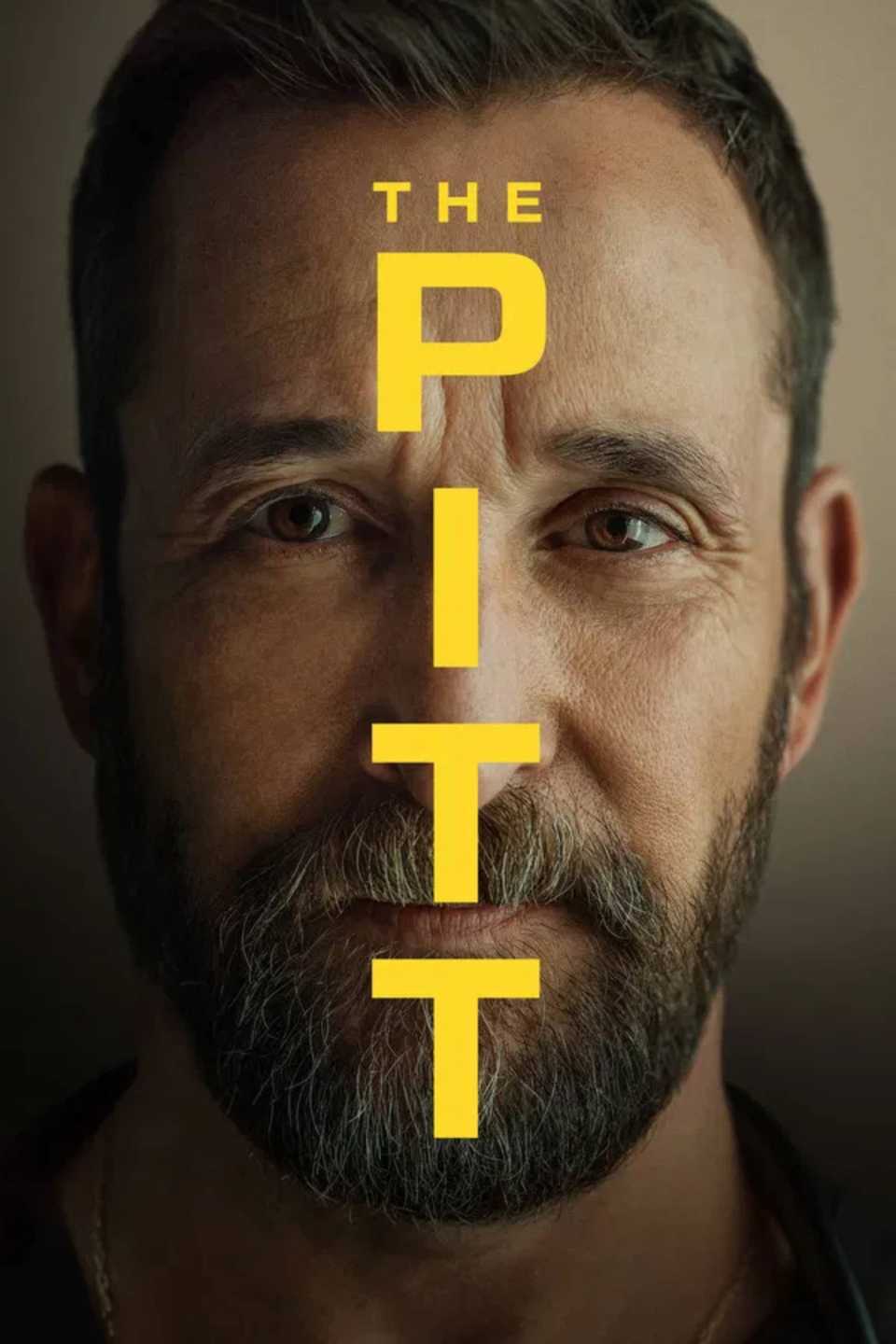
Release Date January 9, 2025
Network Max
Showrunner R. Scott Gemmill
-

Noah Wyle
Dr. Michael 'Robby' Robinavitch
-

Tracy Ifeachor
Dr. Heather Collins