
.jpg) 4 hours ago
2
4 hours ago
2
New markets, new patrons and new talents have burst onto the art scene in 2025, providing fresh momentum for the year ahead.
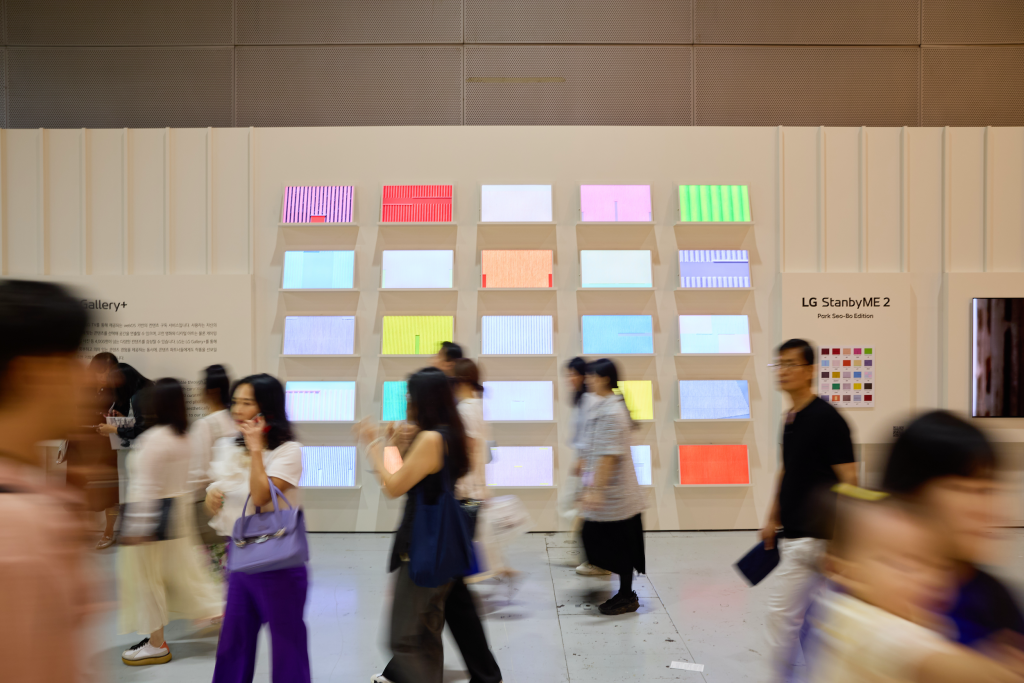 LG’s collaboration with the Park Seo-Bo Foundation at Frieze Seoul in September. Photo by Wecap Studio. Courtesy of Frieze.
Back in January, we titled The Asia Pivot’s first issue of the year, “A Bigger Asia in 2025.” Fast forward to now, and we are proud to say that we have stayed true to that mission, reporting on the full breadth of the world’s largest and most populous continent as it undergoes remarkable changes. Here are our key takeaways from the past 12 months.
A Wider World
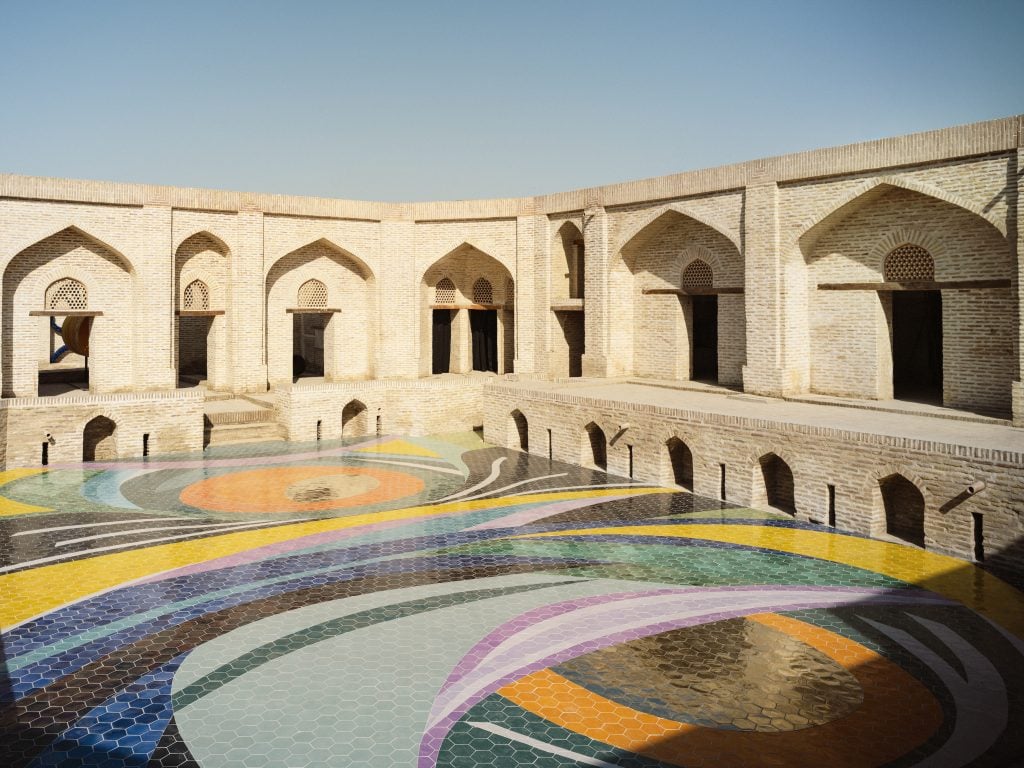 Marina Perez Simão in collaboration with Bakhtiyar Babamuradov, Untitled (2024–25) at the Bukhara Biennial. Photo: Felix Odell. Courtesy of Uzbekistan Art and Culture Development Foundation.
We have expanded our coverage to emerging regions, beyond the traditional markets in East Asia, and we expect momentum will continue there in the new year. “The shift in Asia is unmistakable,” industry veteran Adeline Ooi said earlier this year. “Asia is incredibly complex, with diverse contexts and histories, offering myriad ways to craft a constellation of programs. The idea of a singular ‘Asia’ no longer holds.”
The Gulf has been a major focus for us, especially since art fair giants Art Basel and Frieze and auction houses Sotheby’s and Christie’s are expanding in the region. We took a deep dive into the area’s rich cultural offerings and analyzed the interplay among the three Gulf powers, Qatar, the United Arab Emirates, and Saudi Arabia. “It’s an exciting moment that brings opportunity, but also responsibility,” Faisal Al Hassan, the director of 421 Arts Campus in Abu Dhabi, said.
South Asia has been making waves globally, at auctions, art fairs, and institutions over the past year. The art scene in India has become more vibrant than ever, with the rise of a new generation of collectors and patrons as well as private initiatives. A recent reduction in its GST (Goods and Services Tax) has given the country’s art trade a boost, according to New Delhi dealer Roshini Vadehra. The growing dialogue among different parts of Asia has also been exciting to see.
Former Soviet republics such as Kazakhstan, Uzbekistan, and Kyrgyzstan are transforming Central Asia into an art destination. This year in Uzbekistan saw the first Bukhara Biennial debut and the soon-to-open Centre for Contemporary Arts Tashkent announce its inaugural programming. In Kazakhstan, the Almaty Museum of Arts opened its doors.
Thailand‘s art scene is flourishing, opening up new market opportunities, amid an array of next-generation patrons and private initiatives, such as the private museum Dib Bangkok, which opens this week. More private museums and foundations, as well as art fairs, will take place in the capital city and across the country in the near future. This Southeast Asian country could very well be Asia’s answer to Miami.
Evolving Major Markets
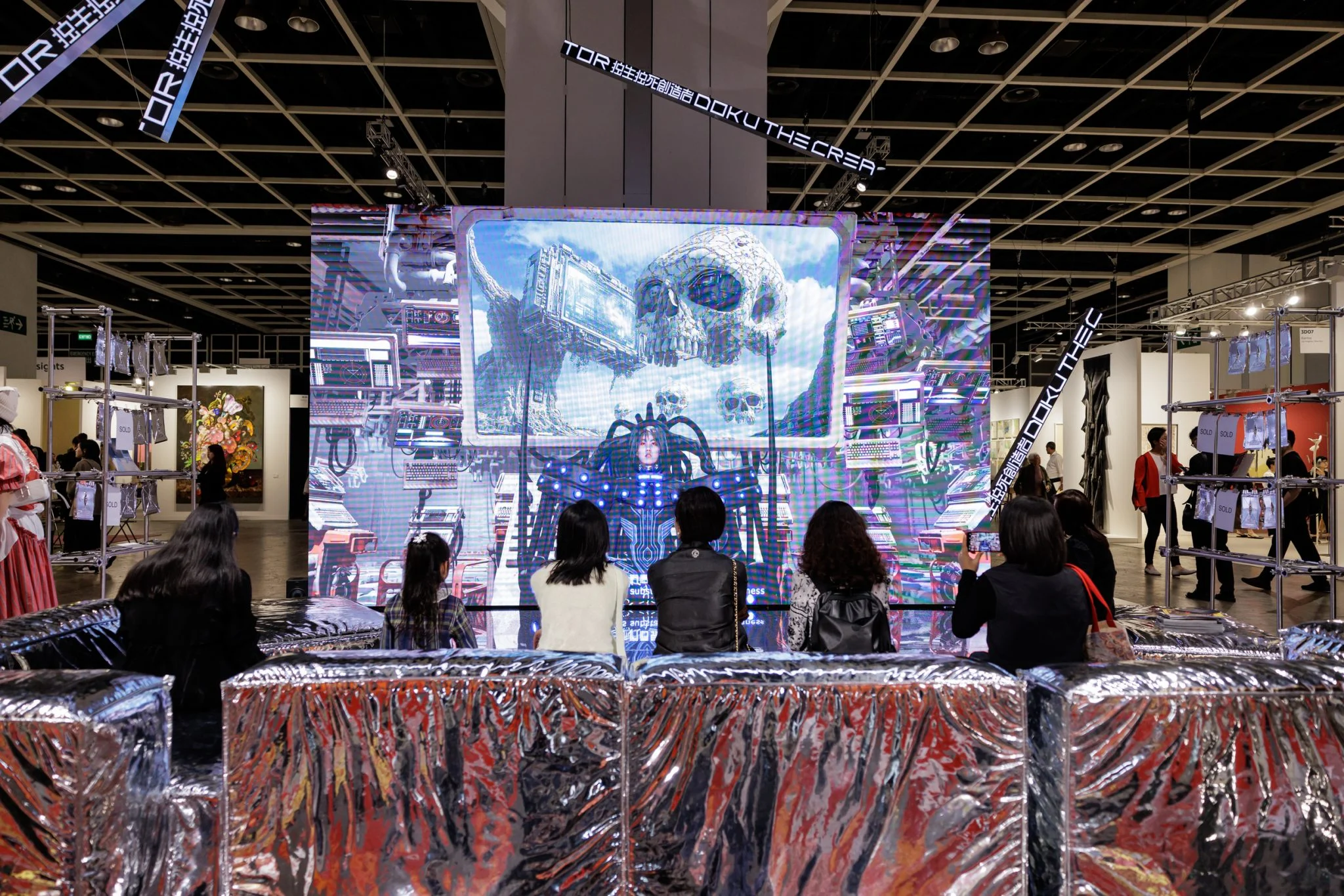 Lu Yang, DOKU the Creator (2025), presented by De Sarthe in the Encounters sector at Art Basel Hong Kong 2025. Courtesy of Art Basel.
Covering major markets in the region, such as China (Hong Kong and Shanghai), South Korea, and Japan has been one of our top priorities. This year we have explored these evolving areas in-depth, amid shifting economic winds and geopolitical dynamics. We also examined how Asia’s industry players have adjusted their strategies and worked smart amid the global market contraction.
As one of the world’s biggest art markets, and the largest in Asia, China is naturally a key focus. Early in the year, we looked into the impact of the U.S.-China trade war on the art trade. All eyes were on Hong Kong during Art Basel in March. Amid the ongoing crackdown on dissent, the global market correction, and most recently, the devastating Tai Po fire that claimed at least 160 lives, the city is still home to exceptional array of artists. And Shanghai and Beijing continue to play an instrumental role in driving the development of China’s art scene, boosted by young collectors with fresh ambitions.
With the election of Sanae Takaichi as Japan‘s new prime minister, its first female leader, the country is getting renewed attention globally. Expectations are high for Takaichi, who has a background in the cultural world (as a drummer and as a policy wonk). Meanwhile, despite a market downturn, South Korea maintains its global influence and has shown resilience, as demonstrated at the fourth edition of Frieze Seoul.
A Year of Rebalancing
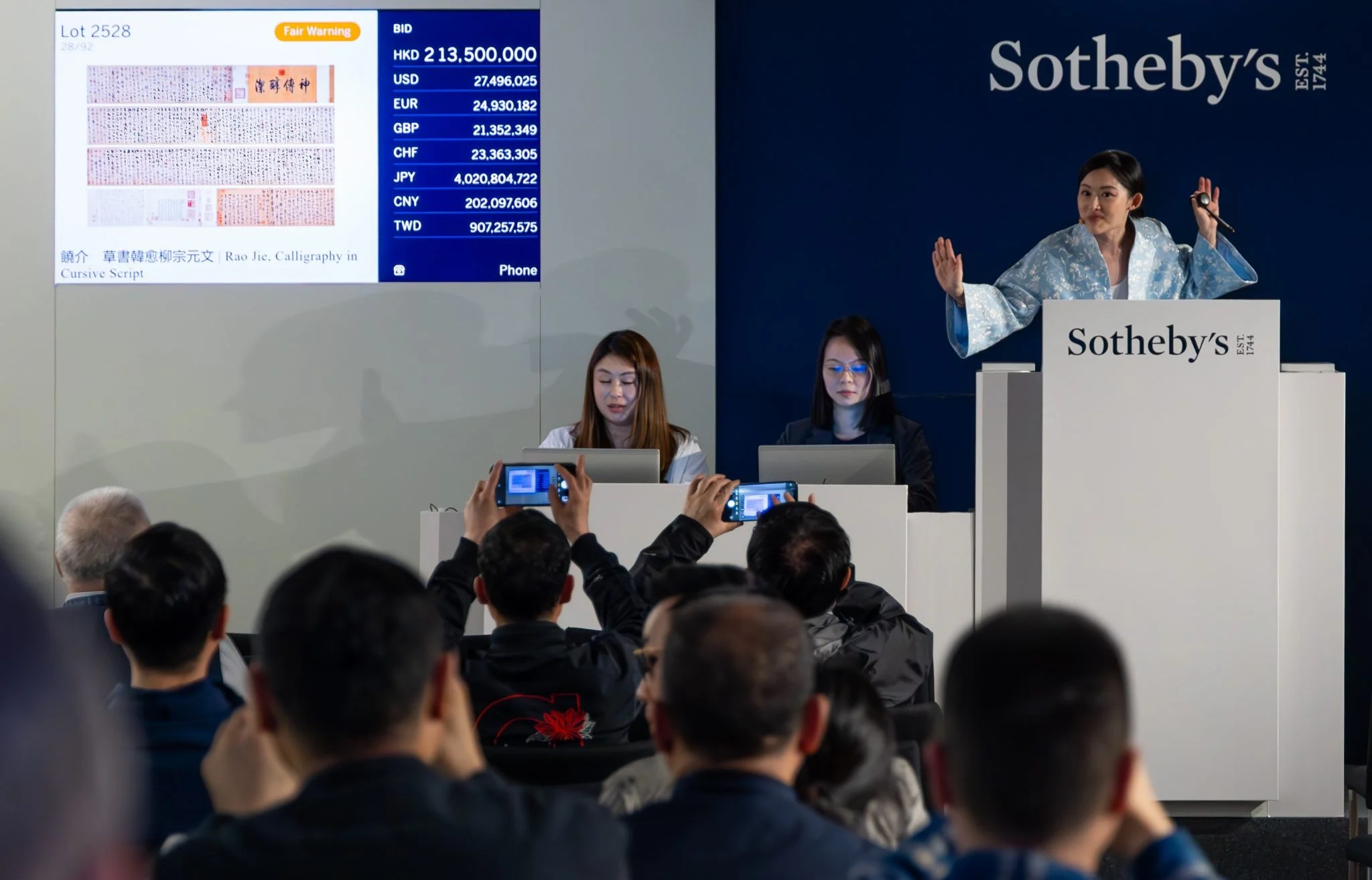 Auctioneer Xichu Wang selling Rao Jie’s Calligraphy in Cursive Script at Sotheby’s Hong Kong on April 10. Courtesy of Sotheby’s.
We took a close look at auction data to assess how Asia’s art markets have evolved over the past year. Against a backdrop of trade tensions, geopolitical instability, and slowing growth, the region delivered a year of sharp contrasts.
While overall sales volumes were down from previous highs, there was a notable shift at the very top of the market in the beginning of the year, with Asian artists and Asia-based sales accounting for a growing share of the year’s most valuable lots—breaking the Western-heavy pattern of recent years. At the same time, other segments showed clear signs of recalibration. Our analysis revealed that the once red-hot ultra-contemporary market, particularly for Asian artists born in the 1990s, has cooled significantly, as collectors grow more selective and price sensitivity returns.
While China remained the biggest market in Asia, its market share in the region shrank slightly. Japan, India, and South Korea’s market shares inched larger. India has emerged as one of the most dynamic growth stories, supported by new collectors, policy changes, and rising international visibility. And even as the global art market has struggled, auctions in Japan and Korea have shown cautious reasons for optimism.
To mark The Asia Pivot’s second anniversary this fall, we also analyzed the 50 living Asian artists with the highest auction totals over the past year, a snapshot that revealed some of the market’s enduring patterns. The rankings were dominated by established blue-chip names, with Chinese and Japanese artists taking the majority of the slots. A pronounced gender imbalance persists: Yayoi Kusama led the list by a wide margin, but the mid-career Indonesian painter Christine Ay Tjoe was the only other woman in the top 10. The list also skewed heavily toward artists born in the 1960s and 1970s.
New Talents Keep Rising
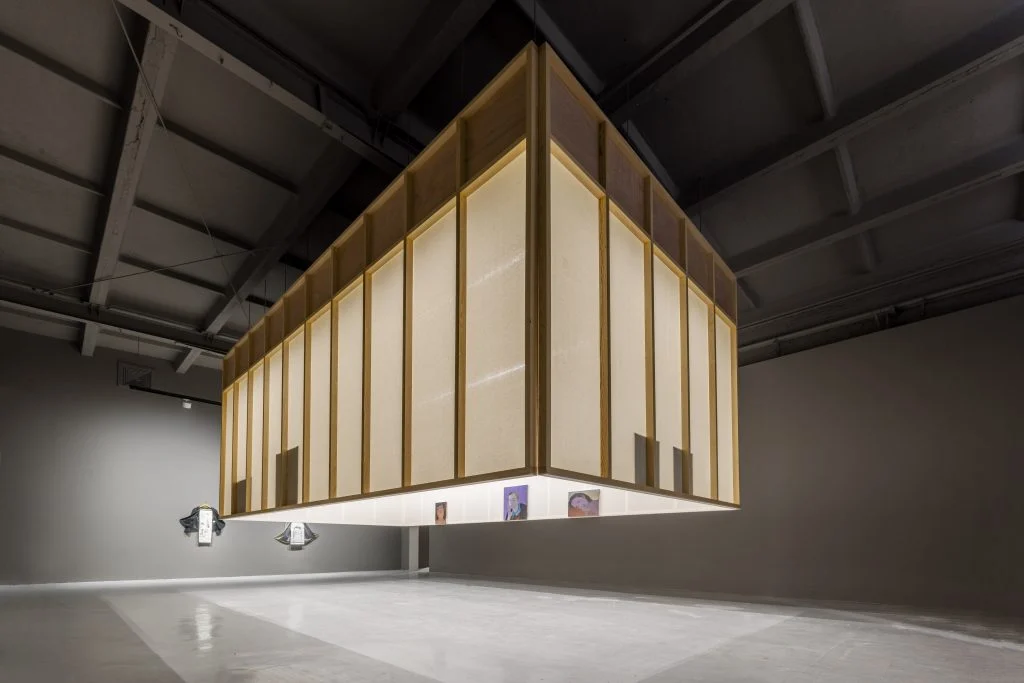 Installation view of Evelyn Taocheng-Wang and Xinyi Cheng, “Between-the-Shadow-and-the-Highlight,” presented by Antenna Space during Gallery Weekend Beijing. Courtesy the artists and Antenna Space
If you missed any of our Talentspotter features — which spotlights key Asian artists, particularly emerging voices in each edition of The Asia Pivot — a comprehensive roundup of the past year follows below.
Across more than 20 editions, we tracked a new generation of artists whose practices reflect some of the most urgent conversations shaping contemporary art today. At a moment when much of the art world is seeking renewed authenticity and emotional depth, many of these figures turned inward, producing work grounded in personal experience, while others looked toward mythology, folklore, and the surreal while expanding the language of figuration.
We also kept a close eye on key moments on the ground, from Gallery Weekend Beijing, where a new generation of artists captured attention, to Art Basel Hong Kong, where locally based practitioners emerged as standouts amid a packed fair week.
This article was first seen on artnet.com and was written by London Correspondent Vivienne Chow & Director of Content China Cathy Fan
For more on the latest in art and culture reads, click here.
 English (US)