 Image via Apple TV

Published Oct 21, 2026, 10:40 PM EDT
Michael Hein has been covering entertainment, fandom news, and trending topics since 2016 on outlets including Rogues Portal, PopCulture.com, and ComicBook.com. He has provided live coverage of red carpet premieres, conventions, and up-fronts, and has interviewed major stars including Charles Dance, Patrick Stewart, and Chloe Sevigny. An avid fiction reader and writer, Michael has been diving deep into all the biggest book-to-screen adaptations of the last decade, from Game of Thrones to Foundation.
Science fiction has been musing on the possibilities of artificial intelligence for decades now, and the subject is more relevant than ever today. For long-time sci-fi fans, A.I. might call to mind Isaac Asimov's The Robot and Foundation series, or James Cameron's The Terminator series, among many others. More modern takes on the topic are rising in popularity, and one under-appreciated series debuted on Netflix in 2021. Vivy: Fluorite's Eye Song evokes all the same themes and concepts as Foundation, Terminator, and other great sci-fi A.I. stories, but with a few unique twists that set it apart. Fans of all ages should make time for this 13-episode series to see where the idea of A.I. is heading in sci-fi today.
Vivy: Fluorite's Eye Song is an anime series produced by Wit Studio in Japan and distributed by Netflix in the U.S. — along with many other parts of the world. The show is about the world's first autonomous A.I., Vivy — voiced by Atsumi Tanezaki in the original Japanese and Cristina Vee in the English-language dub. In this story, humanity determined that an autonomous A.I. would need a lifelong mission to function, so Vivy was created with the purpose of making people happy with her songs. However, her quest for stardom is interrupted by another autonomous A.I. who claims to have traveled back in time from the future, warning that in his time, A.I. is at war with humanity.
'Vivy: Fluorite Eye's Song' Pays Homage to Other Sci-Fi Greats
 Image via Aniplex America
That elevator pitch likely calls to mind The Terminator series, which is all about a war between humanity and A.I. that is frequently steered by time-travelers. Additionally, the idea of that an A.I. would need a single pursuit to give its life meaning is reminiscent of Asimov's "Laws of Robotics." In his work, all A.I. beings are bound by four incontrovertible rules — 1. No machine may harm humanity, or through inaction allow humanity to come to harm; 2. A robot must obey the orders given it by human beings except where such orders would conflict with the First Law; 3. A robot must protect its own existence as long as such protection does not conflict with the First or Second Laws.
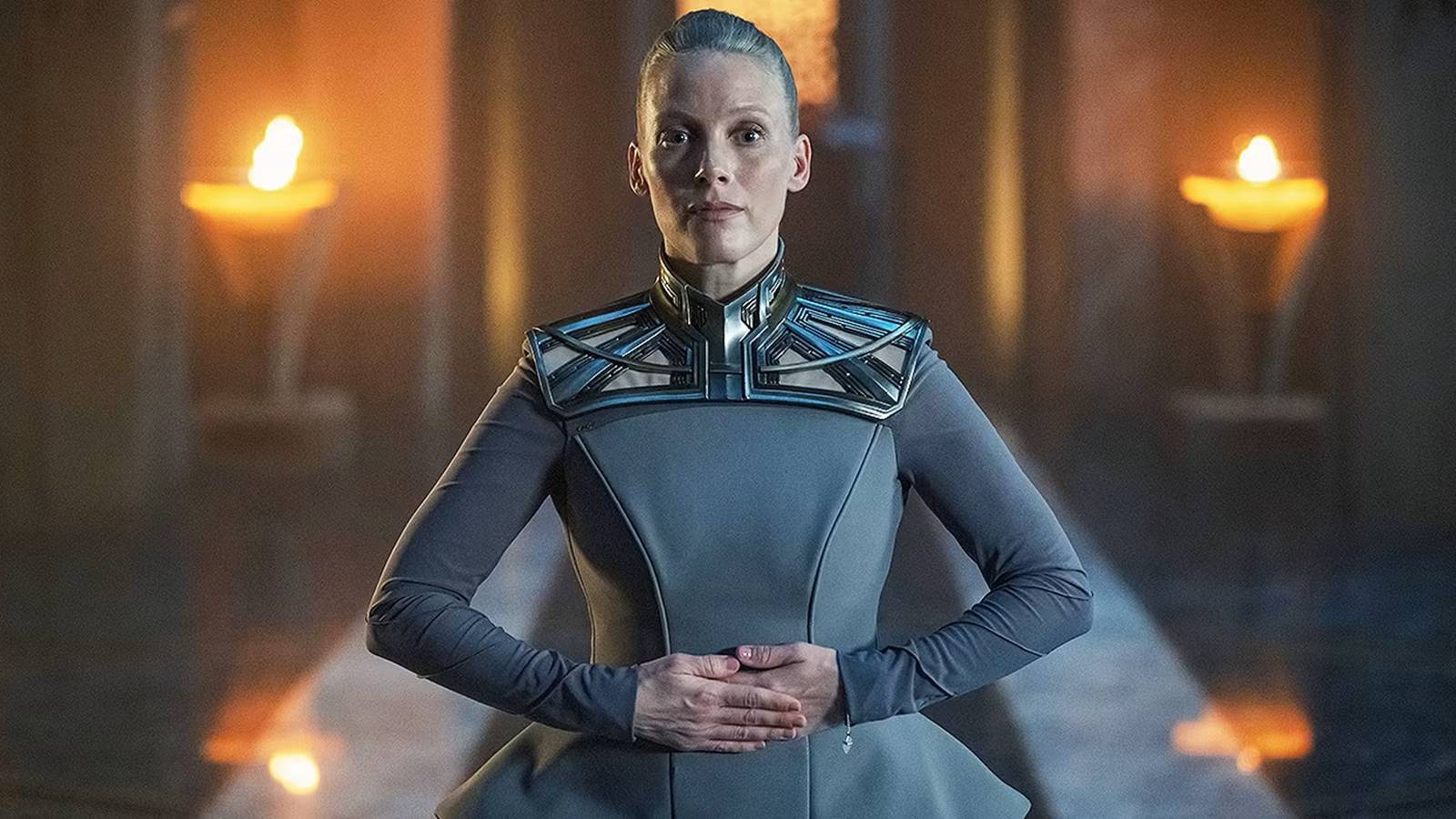
These laws became central to many Asimov stories, especially later on in his career when he began connecting many of his characters and settings. It wasn't until the fifth book in the Foundation series, Foundation's Edge, that Asimov revealed it took place in the same continuity as The Robot series and his Galactic Empire novels. However, Apple TV's adaptation chose to make this connection much more overt from the start. The Laws of Robotics inspired many other stories to take an existential look at A.I., including Vivy.
Of course, Vivy is distinguished from the other two series here with its pop music twist, but that may be all the more appropriate for our time. Right now, so-called "generative A.I." is used by millions of people to create art including music, and there are widespread debates about whether these creations have any merit or substance. Vivy's story provides a means to examine those questions from a different angle, and to look ahead at where A.I.-generated art might take humanity on a philosophical level.
'Vivy: Fluorite Eye's Song' is Today's Most Relevant A.I. Story
 Image via Tri-Star Pictures
These days, invoking The Terminator or Foundation in a conversation about real-life "A.I." software is often a dead-end. These two series have helped shape our collective conception of A.I. for decades, but they lack the nuance for our current situation. That's why there's so much value in new science fiction stories — they push the conversation forward and ensure that we aren't using antiquated, inaccurate paradigms to discuss real-life advancements.
That's not to say that Vivy is an accurate reflection of today's A.I. industry — far from it. However, it provides some new context and vocabulary for discussion that we will all need urgently in the months and years to come. Many other modern sci-fi stories are doing the same, and hopefully more will continue to do so. For now, Vivy: Fluorite Eye's Song is streaming on Netflix in the U.S.