 Image via NBC

Published Oct 24, 2026, 5:11 PM EDT
Jeffrey is a freelance features writer at Collider. He is an MPA-accredited entertainment journalist and a Tomatometer-approved critic based in the LA area. He graduated from the University of Texas at Austin with a Bachelor of Science in Radio, TV, & Film and a Bachelor of Arts in Theater.
Sign in to your Collider account
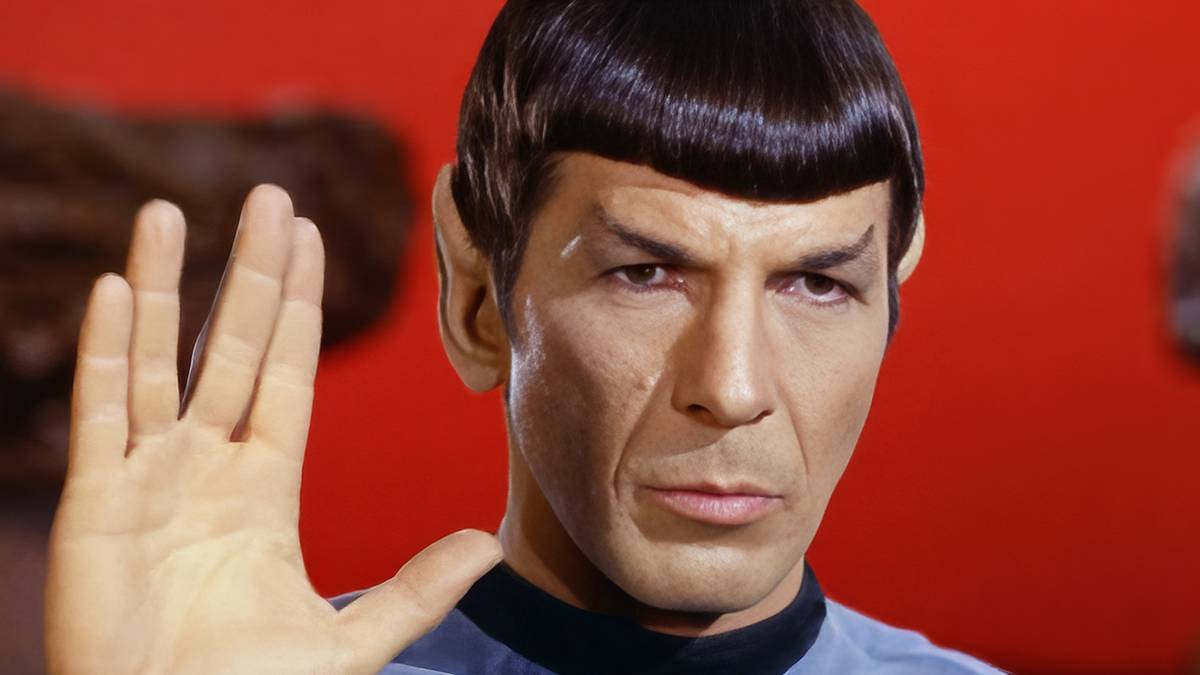
Star Trek: The Original Series remains an iconic television series 60 years after its broadcast television debut. The show endures as a foundational series not only for science fiction but for television in general. The show's best episode cements its place in the franchise's lexicon and serves as a crucial episode involving the relationship between Enterprise captain James T. Kirk (William Shatner) and his science officer, Mister Spock (Leonard Nimoy). The Season 2 premiere episode, "Amok Time," is so good that it can be rewatched countless times.
'Amok Time' Features Crucial Development for Spock's Vulcan Heritage
"Amok Time" begins with Spock acting weirdly moody and erratic, which is extremely out of character for his normally calm, cool demeanor, as he favors the logic and rational behavior of his Vulcan heritage. It's later revealed that Spock is undergoing pon farr, a mating cycle that Vulcans experience throughout their lives where they must mate or potentially risk death. Dr. Leonard "Bones" McCoy (DeForest Kelly) diagnoses Spock's condition, stating that the physical and emotional stress of the pon farr will kill Spock if it's not treated soon.
Collider Exclusive · Sci-Fi Survival Quiz Which Sci-Fi World Would You Survive? The Matrix · Mad Max · Blade Runner · Dune · Star Wars
Five universes. Five completely different ways the future went wrong — or sideways, or up in flames. Only one of them is the world your instincts were built for. Eight questions will figure out which dystopia, galaxy, or desert wasteland you'd actually make it out of alive.
💊The Matrix
🔥Mad Max
🌧️Blade Runner
🏜️Dune
🚀Star Wars
TEST YOUR SURVIVAL →
01
You sense something is deeply wrong with the world around you. What do you do? The first instinct is often the truest one.
APull on every thread until I understand the system — then figure out how to break it. BStop asking questions and start stockpiling — food, fuel, weapons. Questions don't keep you alive. CKeep my head down, observe carefully, and trust no one until I know who's pulling the strings. DStudy the patterns. Every system has a rhythm — learn it, and you learn how to survive it. EFind the people fighting back and join them. You can't fix a broken galaxy alone.
NEXT QUESTION →
02
In a world of scarcity, what resource do you guard most fiercely? What we protect reveals what we believe survival actually requires.
AKnowledge. If you understand the system, you don't need resources — you can generate them. BFuel. Everything else — movement, power, escape — runs on it. CTrust. In a world of fakes and informants, a truly reliable ally is rarer than any commodity. DWater. And after water, information — the two things empires are truly built on. EShips and credits. The galaxy is big — you survive it by being able to move through it freely.
NEXT QUESTION →
03
What kind of threat keeps you up at night? Fear is useful data — if you're honest about what you're actually afraid of.
AThat reality itself is a lie — that everything I experience has been constructed to keep me compliant. BA raid. No warning, no mercy — just the roar of engines and then nothing left. CBeing identified. Once someone with power decides you're a problem, you're already out of time. DBeing outmanoeuvred — losing a political game I didn't even know I was playing. EThe Empire tightening its grip until there's nowhere left to run.
NEXT QUESTION →
04
How do you deal with authority you don't trust? Every dystopia has a power structure. Your approach to it determines everything.
ASubvert it from the inside — learn its rules well enough to weaponise them against it. BIgnore it and stay out of its reach. The further from any power structure, the better. CAppear to comply while doing exactly what I need to do. Visibility is the enemy. DManoeuvre within it carefully. You can't beat a system you refuse to understand. EResist openly when I have to. Some things are worth the risk of being seen.
NEXT QUESTION →
05
Which environment could you actually endure long-term? Survival isn't just tactical — it's physical, psychological, and very much about where you are.
AUnderground bunkers and server rooms — cramped, artificial, but with access to everything that matters. BOpen wasteland — brutal sun, no shelter, constant movement. At least the threat is honest. CA dense, rain-soaked city where you can disappear into the crowd and nobody asks questions. DMerciless desert — extreme heat, no water, and something enormous living beneath the sand. EThe fringe — backwater planets and busy spaceports where the Empire's attention rarely reaches.
NEXT QUESTION →
06
Who do you want in your corner when things fall apart? The company you keep is the clearest signal of who you actually are.
AA tight crew of believers who've seen behind the curtain and have nothing left to lose. BOne or two people I'd trust with my life. Any more than that and someone talks. CNobody, ideally. Alliances are liabilities. I work alone unless I have no choice. DA community bound by shared hardship and mutual survival — people who need each other to last. EA ragtag team with wildly different skills and total commitment when it counts.
NEXT QUESTION →
07
Where do you draw the line — if you draw one at all? Every survivor eventually faces a moment that tests what they're actually made of.
AI won't harm the innocent — even the ones who'd report me without hesitation. BI do what I have to to protect the people I've chosen. Everything else is negotiable. CThe line shifts depending on who's asking and what's at stake. DI draw a long-term line — nothing that compromises my people's future, even if it'd help now. ESome lines, once crossed, can't be uncrossed. I know which ones they are.
NEXT QUESTION →
08
What would actually make survival worth it? Staying alive is one thing. Having a reason to is another.
AWaking others up — dismantling the illusion so no one else has to live inside it. BFinding somewhere — or someone — worth protecting. A reason to keep moving. CAnswers. Understanding what I am, what any of this means, before time runs out. DLegacy — shaping the future in a way that outlasts me by generations. EFreedom — for myself, for others, for every world still living under someone else's boot.
REVEAL MY WORLD →
Your Fate Has Been Calculated You'd Survive In…
Your answers point to the world your instincts were built for. This is the universe your temperament, your survival instincts, and your particular brand of stubbornness were made for.
The Matrix
You took the red pill a long time ago — probably before anyone offered it to you. You're a systems thinker who can't help but notice the seams in things.
- You're drawn to understanding how the system works before figuring out how to break it.
- You'd find the Resistance, or it would find you — your instinct for spotting constructed realities is the machines' worst nightmare.
- You function best when you have access to information and the freedom to act on it.
- The Matrix built an airtight prison. You'd be the one probing the walls for the door.
Mad Max
The wasteland doesn't reward the clever or the well-connected — it rewards those who are hard to kill and harder to break. That's you.
- You don't need comfort, community, or a cause larger than the next horizon.
- You need a vehicle, a clear threat, and enough fuel to outrun it — and you're good at all three.
- You are unsentimental enough to survive that world, and decent enough — just barely — to be something more than another raider.
- In the wasteland, that distinction is everything.
Blade Runner
You'd survive here because you know how to exist in moral grey areas without losing yourself completely.
- You read people accurately, keep your circle small, and ask the questions others prefer not to answer.
- In a city where humanity is a legal designation rather than a feeling, you hold onto something that keeps you functional.
- You're not a hero. But you're not lost, either.
- In Blade Runner's world, that distinction is everything.
Dune
Arrakis is the most hostile environment in the known universe — and you are precisely the kind of person it rewards.
- Patience, discipline, and political awareness are your core strengths — and on Arrakis, they're survival tools.
- You understand that the long game matters more than any single victory.
- Others come to Dune and are consumed by it. You'd learn its logic and earn its respect.
- In time, you wouldn't just survive Arrakis — you'd begin to reshape it.
Star Wars
The galaxy far, far away is vast, loud, and in a constant state of violent political upheaval — and you wouldn't have it any other way.
- You find meaning in being part of something larger than yourself — a cause, a crew, a rebellion.
- You'd gravitate toward the Rebellion, or the fringes, or whatever pocket of the galaxy still believes the Empire's grip can be broken.
- You fight — not because you have to, but because standing aside isn't something you're capable of.
- In Star Wars, that willingness is what makes all the difference.
↻ RETAKE THE QUIZ
Captain Kirk faces a dilemma when Starfleet orders the Enterprise to embark on an inauguration ceremony on another planet, but Spock might soon die if he doesn't fulfill his genetic imperative. Kirk ultimately takes the Enterprise to Vulcan, so Spock can engage in a Vulcan marriage ceremony with his betrothed wife T'Pring (Arlene Martel). The landing party of Kirk, McCoy, and Spock arrives on Vulcan, which is shown in the series for the first time in history.
"Amok Time" serves as a significant moment in the history of Star Trek. It introduces the pon farr mating cycle for Vulcans, along with many of their customs, cultural ceremonies, and rituals. In Vulcan culture, marriages are arranged, and the crew of the Enterprise is shocked to learn Spock has a "wife," or rather an arranged marriage pact with T'Pring. The episode also introduces an important Vulcan leader, T'Pau (Celia Lovsky), an esteemed diplomat who serves as the judge of the marriage ceremony, and later Kirk and Spock's fight to the death.
Spock and Kirk Engage in a Deadly Duel
Of course, "Amok Time" features a shocking twist after the Starfleet officers arrive on Vulcan. T'Pring voices her desire to no longer marry Spock, instead preferring another mate. She invokes the Vulcan rite of ritual combat, the kal-if-fee, choosing Kirk as her champion to fight against Spock. Kirk fears that the vulnerable Spock will die if he fights in his condition, so Kirk accepts the challenge, not realizing that the ritual combat must be a fight to the death.
Spock and Kirk’s epic battle is one of the coolest and most iconic moments in Star Trek history. It features tremendous music composed by Gerald Fried. The theme for the fight sequence is synonymous with the series, and the motif has often been parodied and referenced in various television shows and movies for decades. The battle scene contains a dark moment when it appears an enraged Spock kills his friend and commanding officer. However, the death is later revealed as an elaborate ruse planned by Kirk and McCoy, with the good doctor injecting Kirk with a neuroparalytic to help fake his death. Additionally, the shock of nearly killing Kirk broke Spock's fever caused by the pon farr. The issue of Kirk defying orders is also resolved when it’s revealed that T'Pau contacted Starfleet about wanting the Enterprise to travel to Vulcan at her request. Theodore Sturgeon's clever writing in the final act is top-notch.
'Amok Time' Forges Kirk and Spock’s Unbreakable Bond
 Image via Paramount Pictures
Aside from all the tremendous world-building in Star Trek's lore, "Amok Time" is the best episode that defines Kirk and Spock's friendship. Kirk puts his career on the line to save Spock's life, as Spock's life is more important to Kirk than his captaincy. As Kirk explains to Bones, "I can't let Spock die, can I, Bones? And he will if we go to Altair. I owe him my life a dozen times over. Isn't that worth a career? He's my friend." Kirk's actions always speak volumes, and he proves his loyalty and devotion to Spock.
The episode also famously depicts rare displays of emotion from Spock. First, we see Spock showing uncharacteristic rage and anger due to symptoms of the pon farr. After arriving on Vulcan, Spock suffers further from the Vulcan blood fever when T’Pring attempts to break their marriage pact and invokes the combat ritual. Later, when Spock realizes that Kirk faked his death during the fight, Spock smiles and even calls Kirk by his first name, "Jim." It's one of the few times Spock smiles and shows genuine happiness. "Amok Time" reinforces that Kirk and Spock are more than just colleagues; they are close friends who would put their lives on the line for one another. The ending marks a wonderful moment for both characters.
The episode also serves as a tremendous showcase for Kirk's shrewd brilliance as a strategist, as he employs a daring gambit by faking his death on planet Vulcan. Kirk correctly surmises that Spock "killing" him would snap his friend out of the pon farr. Secondly, by taking part in the Vulcan rituals, Kirk impresses T'Pau and gains her favor, as she takes it upon herself to rectify Kirk for defying his orders from Starfleet. T'Pau also proves to be a shrewd and invaluable ally to Kirk and Spock by the end of the episode. "Amok Time" perfectly encapsulates the Star Trek series and franchise as a whole, along with Kirk and Spock's indelible friendship.