 Image via Dimension Films
Published Oct 9, 2026, 8:30 PM EDT
Hannah covers horror, sci-fi, and games at Collider, where she writes news and features, reviews new releases, and interviews the people who make them. She’s helping build out Collider’s gaming coverage, with Pokémon as one of her specialties. If she isn’t writing about a monster, she’s probably watching one on a tape from her VHS collection.
Sign in to your Collider account
Returning to a horror franchise means finding another reason to put its survivors through hell. Audiences want familiar faces back, but familiarity can become a problem when a sequel starts repeating the movie they already love. Scream built an entire franchise around that tension, letting its characters recognize the rules even when knowing them wasn’t enough to stay alive.
Wes Craven and Kevin Williamson understood that bringing Ghostface back required something new to say. Sequels gave the killer another set of conventions to exploit, while the prospect of a trilogy made surviving the previous movies considerably less reassuring. By the time Hollywood’s appetite for remakes offered another target, the franchise had a reason to revisit its own beginnings. Whether that opportunity excited everyone making the movie is another question.
Composer Marco Beltrami says he felt Craven didn’t want to make Scream 4, which became the director’s final movie. In a recent interview, Beltrami described his own reluctance to work on the 2011 sequel and suggested Craven shared it. He characterized the production as driven by studio pressure and called it “uninspired,” making a blunt assessment from someone who helped establish the franchise’s musical identity. Craven’s own explanation of why he returned paints a different picture, however.
Collider Exclusive · 8 Questions · 2 Minutes What Is Your Biggest Horror Nightmare? Elm Street · Chucky · Scream · The Conjuring
Four horror franchises. Four completely different ways of scaring you. One waits until you fall asleep. One makes sure nobody believes you. One is already in your group of friends. And one is in the house with your family. Answer eight quick questions about how you actually watch horror, and find out which nightmare was built for you.
😴Elm Street(Freddy Krueger)
🧸Chucky(Child's Play)
📞Scream(Ghostface)
🕯️The Conjuring(The Warren Files)
FIND YOUR NIGHTMARE →
01
Which horror scene makes you cover your eyes? Four classic images. One of them is worse than the others for you.
ASomebody falling asleep when they really should not. BA toy that has moved, and nobody touched it. CA phone ringing in an empty house. DA child talking to somebody who is not there.
NEXT QUESTION →
02
You are home alone and you hear a noise. First thought? Everybody has one. It arrives before you have decided anything.
AI am exhausted and my mind is playing tricks on me. BSomething in this room is not where I left it. CSomebody is in here with me. DThis house has never felt entirely right.
NEXT QUESTION →
03
Which horror movie rule would you break first? Everybody thinks they would survive. Almost nobody actually does.
ANever fall asleep. BNever leave it out of your sight. CNever answer the phone. DNever go down to the basement.
NEXT QUESTION →
04
Something genuinely frightening happens. What do you do? Not in a film. In your actual living room, tonight.
AConvince myself I imagined the whole thing. BTell someone, and brace for them not believing me. CWork out which person I know could be behind it. DGet everybody in the house into one room.
NEXT QUESTION →
05
How do you actually watch a horror film? Be honest about this one. Nobody is checking.
AFine during. Wide awake at two in the morning. BShouting at the screen that nobody is listening. CCalling the twist out loud before it lands. DThrough my fingers, holding on to something.
NEXT QUESTION →
06
Somebody offers you serious money. Which do you still refuse? The amount does not matter. There is one on this list you are not doing.
AFall asleep in a room I have never been in before. BKeep an old doll on the shelf facing my bed. CAnswer every unknown number that calls after midnight. DSpend one night alone in a house with a history.
NEXT QUESTION →
07
Which feeling stays with you a week after the film? Good horror does not stop when the credits do.
ANot wanting to turn the bedroom light off. BNot trusting one particular object in my house. CLooking twice at people I have known for years. DFeeling like something came home with me.
NEXT QUESTION →
08
Something wakes you at 3am. What is the worst possibility? Eight questions in, this is the one that decides your nightmare.
AThat I am still asleep, and it knows it. BThat the thing nobody believed me about is here. CThat somebody with a key is downstairs. DThat something is in the doorway, watching us sleep.
REVEAL MY NIGHTMARE →
The Lights Just Went Out Your Nightmare Is…
Four franchises, four completely different ways of getting underneath your skin. This is the one built out of your particular fear, why it works so well on you, and what it would leave behind.
Elm Street
Your nightmare does not wait outside the door. It waits for you to close your eyes, which you are going to have to do eventually, because nobody has ever won that particular argument.
- Freddy is horror's cruellest idea: a threat that lives in the one place you cannot guard, cannot lock, and cannot avoid forever.
- You are the one who is fine during the film and wide awake at two in the morning. Your own head is where this does its damage.
- These films understood exhaustion as a horror engine. The kids on Elm Street do not lose because they are weak. They lose because they are tired.
- You can lock every door in the house. You still have to sleep.
Chucky
Your nightmare is not really the doll. It is the face of the person you tell, and the way they decide, very kindly, that you have imagined all of it.
- Chucky works precisely because he is absurd. That is the trap: the more accurately you describe him, the less anybody is going to believe you.
- You are the one shouting at the screen because the characters are not listening. You know that feeling from real life too.
- The franchise is at its best when the adults in the room are the real obstacle, and you have met those adults.
- By the time somebody finally believes you, you will have handled most of it on your own.
Scream
Your nightmare has your number, knows your name, and has almost certainly been inside your house before. The worst part is that you already know them.
- Scream is the only one of these where the killer takes the mask off and turns out to be somebody who was at the party.
- You are the person who calls the twist out loud before it lands. You watch people the same way you watch films.
- The franchise made the rules of horror part of the plot, which means the survivors are the ones paying attention. You would be paying attention.
- Everybody is a suspect, including the person who just offered to walk you home.
The Conjuring
Your nightmare is not really about you. It is about the people asleep down the hall, and the feeling that whatever is here is not interested in leaving.
- The Conjuring films are domestic horror. The house, the family, the perfectly ordinary room that quietly stops feeling ordinary.
- Your instinct is to get everybody into one room. Your fear is protective rather than personal, which is rarer than it sounds.
- This is the one franchise where belief is the weapon. The people who come through it are the ones who are not alone and refuse to be.
- Whatever is here did not come for you. It came for the household, and you are the one standing in the hallway.
↻ RETAKE THE QUIZ
Wes Craven Said Kevin Williamson’s Story Convinced Him to Make ‘Scream 4’
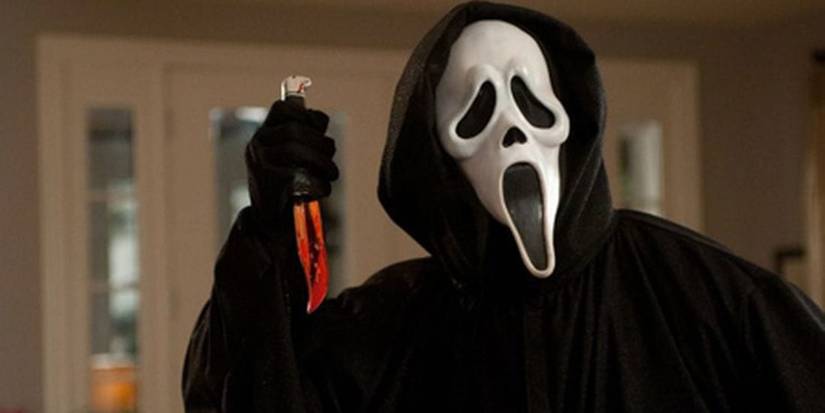 Image via Dimension Films
Speaking with JoBlo in 2011, Craven acknowledged that he’d questioned whether returning would be good for him after the original trilogy. He wanted to make other kinds of movies, and spending time away from Ghostface gave him that opportunity. A decade later, however, the idea had become more appealing. Williamson’s pitch sold him on the sequel, with Craven explaining that “at that point I didn’t have any doubts at all.” That doesn’t sound like a director who rejected the project from the beginning, but getting excited about a story and enjoying the production are different things.
Craven described contributing his own writing and extensive script notes, as well as arguing with Bob Weinstein over creative decisions. He also credited Weinstein with ideas that helped the movie, making their working relationship sound contentious, but not entirely unproductive. His account leaves room for frustration, even alongside his enthusiasm for the original concept.
Beltrami’s recollection is valuable because he was part of that collaboration, but it can’t tell us everything about Craven’s intentions. The director’s own words suggest he believed there was a good movie to make when he signed on. Whether that enthusiasm survived every disagreement is harder to establish. The two accounts offer different perspectives on the experience, and neither requires treating a difficult production as proof that the idea was worthless.
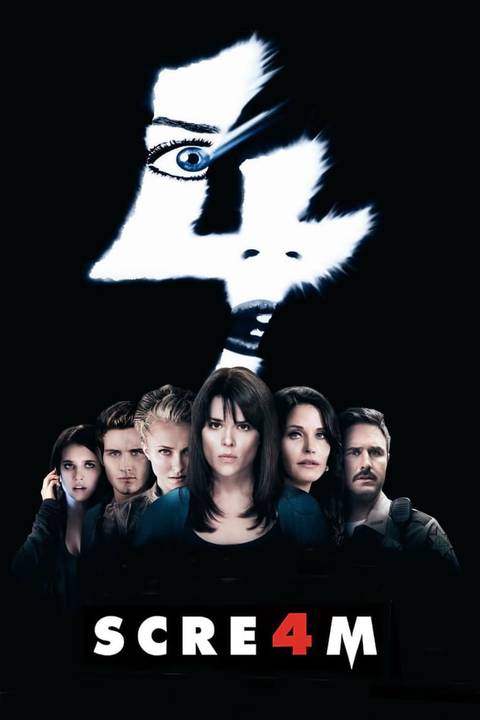
Release Date April 15, 2011
Runtime 111 minutes