
.jpg) 1 hour ago
2
1 hour ago
2
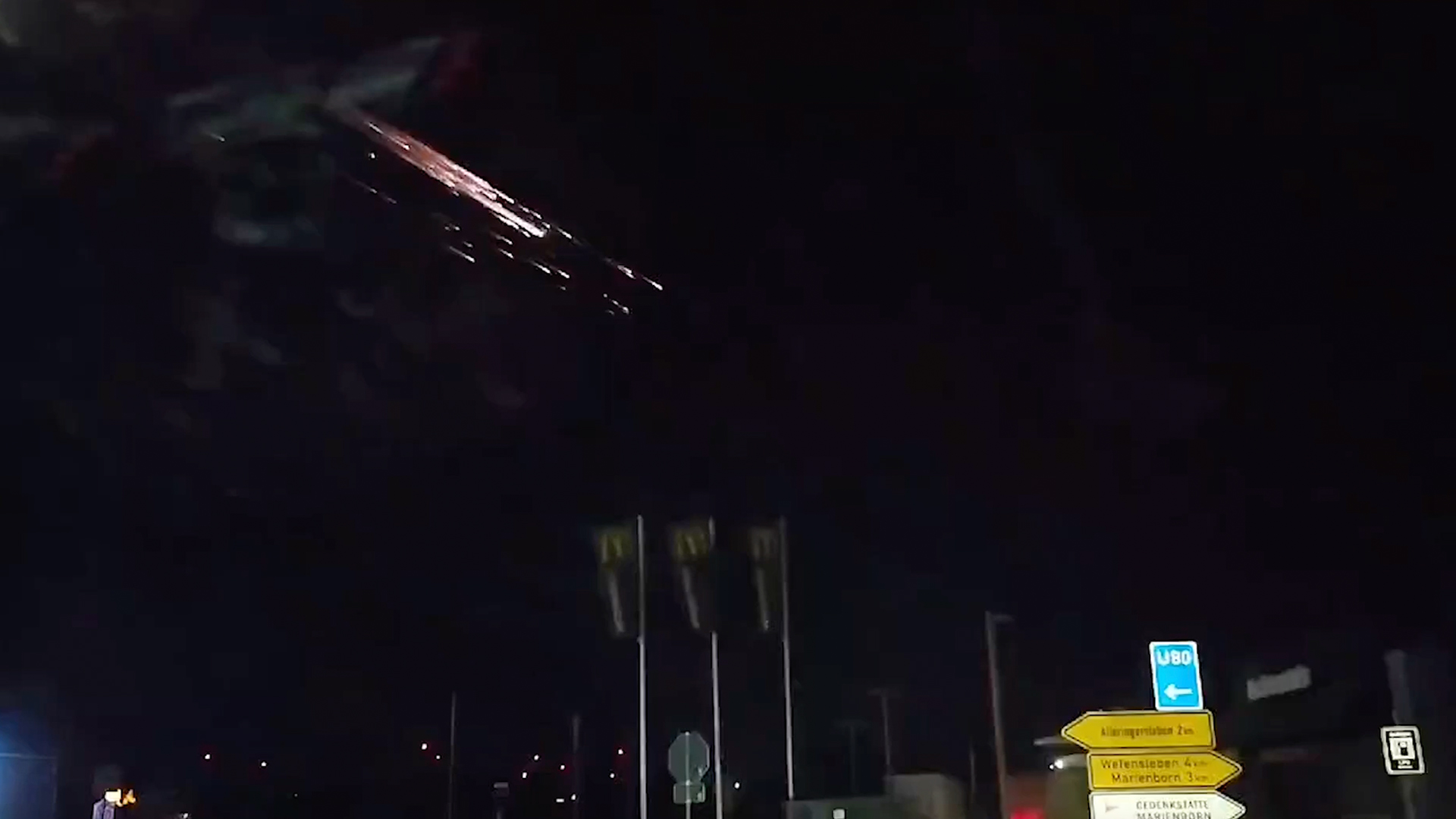
For the first time ever, scientists have observed in near real time a cloud of air pollution created as space debris burned up in Earth's atmosphere. The breakthrough measurement will help atmospheric chemistry researchers untangle the complex chemical reactions triggered by the toxic air pollution created during reentries, which may have devastating effects on Earth's atmosphere and climate.
The cloud of lithium was detected on Feb. 20, 2025, after an upper stage of SpaceX's Falcon 9 rocket came crashing down over Europe, scattering fragments across Poland. A team of researchers from the The Leibniz Institute of Atmospheric Physics in Germany made the detection using a LIDAR — a pulsed laser instrument that excites particular chemical elements based on the frequency of its light.
"We thought that was a good opportunity, so we checked the winds, and as they looked favorable, we started up the LIDAR and made the measurements on the following night," Wing said. "When we processed the data, we saw a very strong signal, a ten-times enhancement in lithium density, at about the correct altitude at about the correct time."
Wing explained that most of the rocket vaporized above the coast of Ireland at an altitude of around 60 miles (96 kilometers). It then took around 20 hours for the plume of air pollution that was created to be carried by winds across western Europe to Germany. The debris fragments, on the other hand, crossed the 930 miles (1,500 km) from Ireland to western Poland in about two and a half minutes.
To ascertain whether or not the plume really came from the Falcon 9 re-entry, the researchers ran a reverse calculation using a global atmospheric circulation model by the The European Centre for Medium-Range Weather Forecasts. The model placed the plume at the intersection with the trajectory of the re-entering Falcon 9 debris at the correct time.
The researchers focused on lithium as it is naturally present in the atmosphere in only minuscule amounts.
"We believe lithium to be a good tracer for [human-made] re-entry," Wing said. "There's very little lithium in natural meteorites. We estimated something on the order of 80 grams per day globally. But in a single Falcon 9 rocket, the aluminum-lithium hull, plus the lithium batteries, make up about 30 kilograms."
Space debris re-entries have become a growing concern in recent years. As the number of satellites in orbit skyrocketed over the past decade, the quantity of space junk perishing in Earth's atmosphere has grown accordingly. The European Space Agency estimates that over three pieces of space debris — old satellites, used rocket stages and all sorts of fragments — spiral back to Earth every day.
In a year, hundreds of tons of space junk burn up in the atmosphere, releasing chemicals that are not naturally present there. The overall amount of re-entering junk is still only a fraction of the quantity of natural meteorites that our planet encounters. But scientists think that unlike the natural space rock, space junk air pollution may have the potential to damage the atmosphere's protective ozone layer and alter its thermal balance.
Wing said that almost nothing is known about the effects of lithium on atmospheric processes with most of the scientific debate so far focused on aluminum — the most abundant metal in spacecraft bodies. Aluminum is known to react with oxygen during the atmospheric burn-up, producing aluminum oxide, or alumina, a powdery substance known to accelerate ozone depletion and alter the reflectiveness of the atmosphere, leading to potential temperature changes on Earth.
"Aluminum is actually quite difficult to measure," said Wing. "It reacts really quickly with oxygen, within a microsecond. So the moment aluminum evaporates out of the rocket hull, the first atom of oxygen it finds, it bonds to."
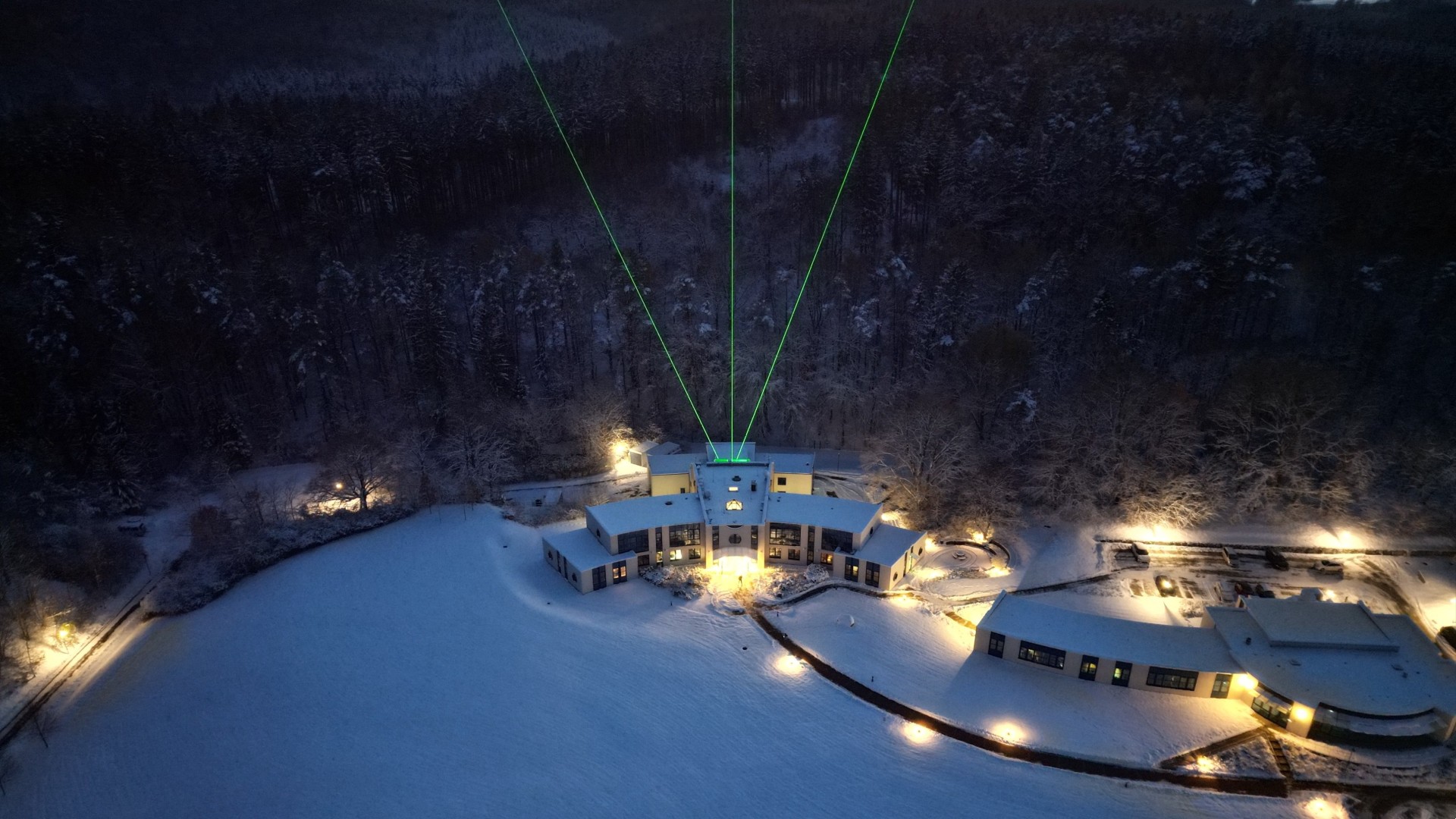
The researchers want to attempt to measure aluminum oxide concentrations in the aftermath of re-entries with their LIDAR instruments in the future.
"This study represents an important milestone in observing the influence of space sector activities on the atmosphere, especially given ablative re-entry currently represents the only viable, scalable method of clearing up increasingly cluttered orbits," Eloisa Marais, a Professor of Atmospheric Chemistry and Air Quality at University College London and a leading researcher into the effects of space debris air pollution, commented on the study.
"Insights from this study, and hopefully similar follow-on and related research, are crucial for improving models, as we rely on these to assess the global environmental impacts of spacecraft re-entry."
Scientists have been speculating for years about the possible effects of the increasing amounts of re-entering space junk on the atmosphere. A 2023 study based on measurements by high-altitude aircraft confirmed that around ten percent of aerosol particles in the stratosphere, the second layer of Earth's atmosphere at altitudes between 10 and 50 miles, contain metal particles from incinerated satellites. The new paper links, for the first time, a specific re-entry with a visible atmospheric air pollution plume.
"For the first time, we could directly show that we have the capability to trace and observe the plume of pollution from space debris to a single re-entry event," said Wing. "It's a bit of a breakthrough on both the observational and computational side. It's just never been done before."
The Leibnitz team will continue their observations in the future. Since the successful detection of the February 2025 Falcon 9 re-entry, they have built a novel LIDAR instrument, which will enable them to measure the traces of multiple metal compounds at the same time.
"We will measure lithium, which is a tracer for space debris, sodium, which is a tracer for natural meteorites, and also scan for all the different elements that are present in spacecraft such as copper, titanium, silicon, gold, silver or lead," said Wing. "So that we can really try and estimate what's coming into the atmosphere and how much of it is anthropogenic in origin. This way, we may give a hint to our colleagues who do atmosphere and chemical modeling to be able to say what impacts space debris re-entries could possibly have on the stratosphere."
The study was published in the Nature-family journal Communications Earth & Environment on Thursday, Feb. 19, 2026.
 English (US)