New Line Cinema
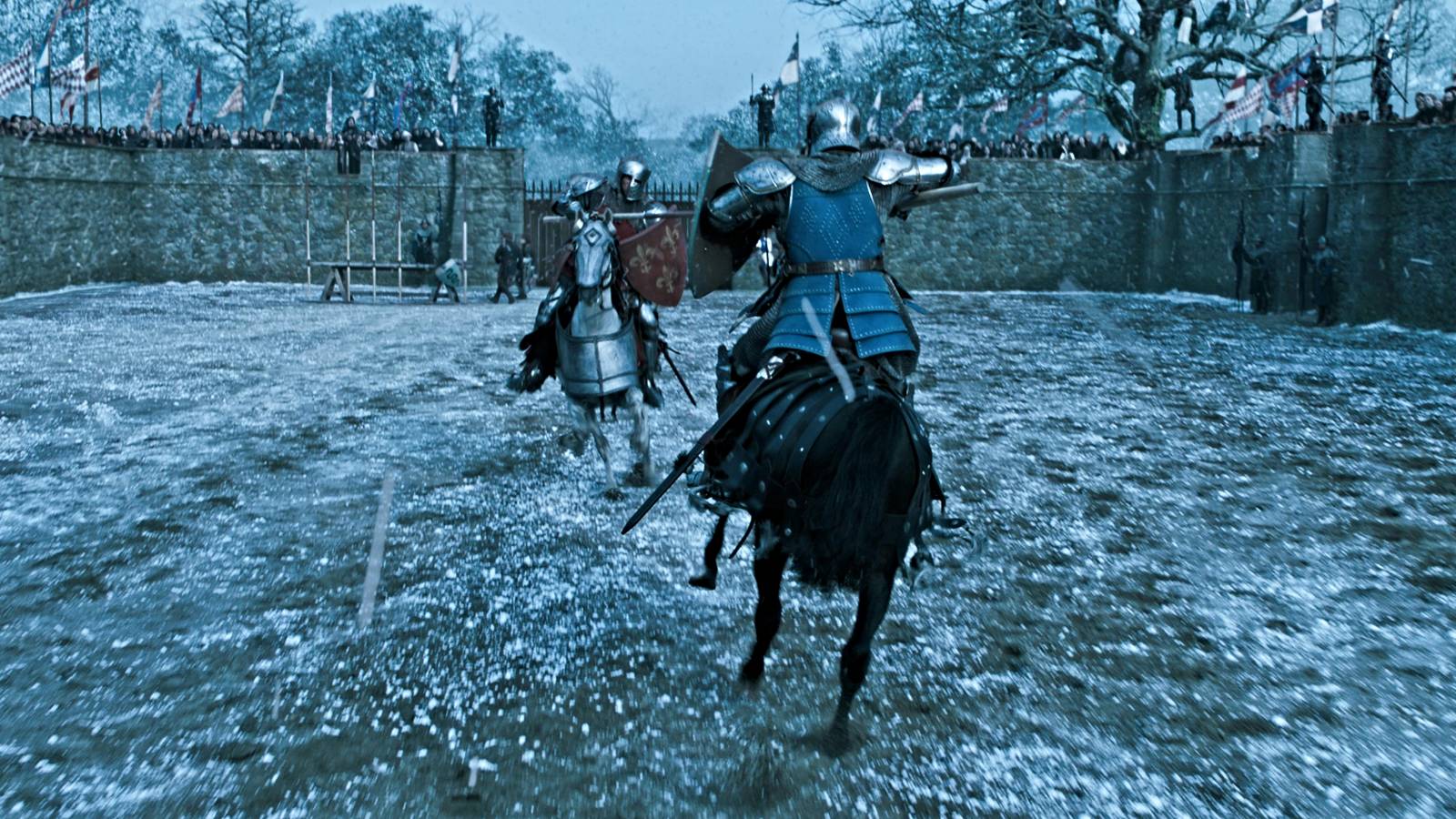
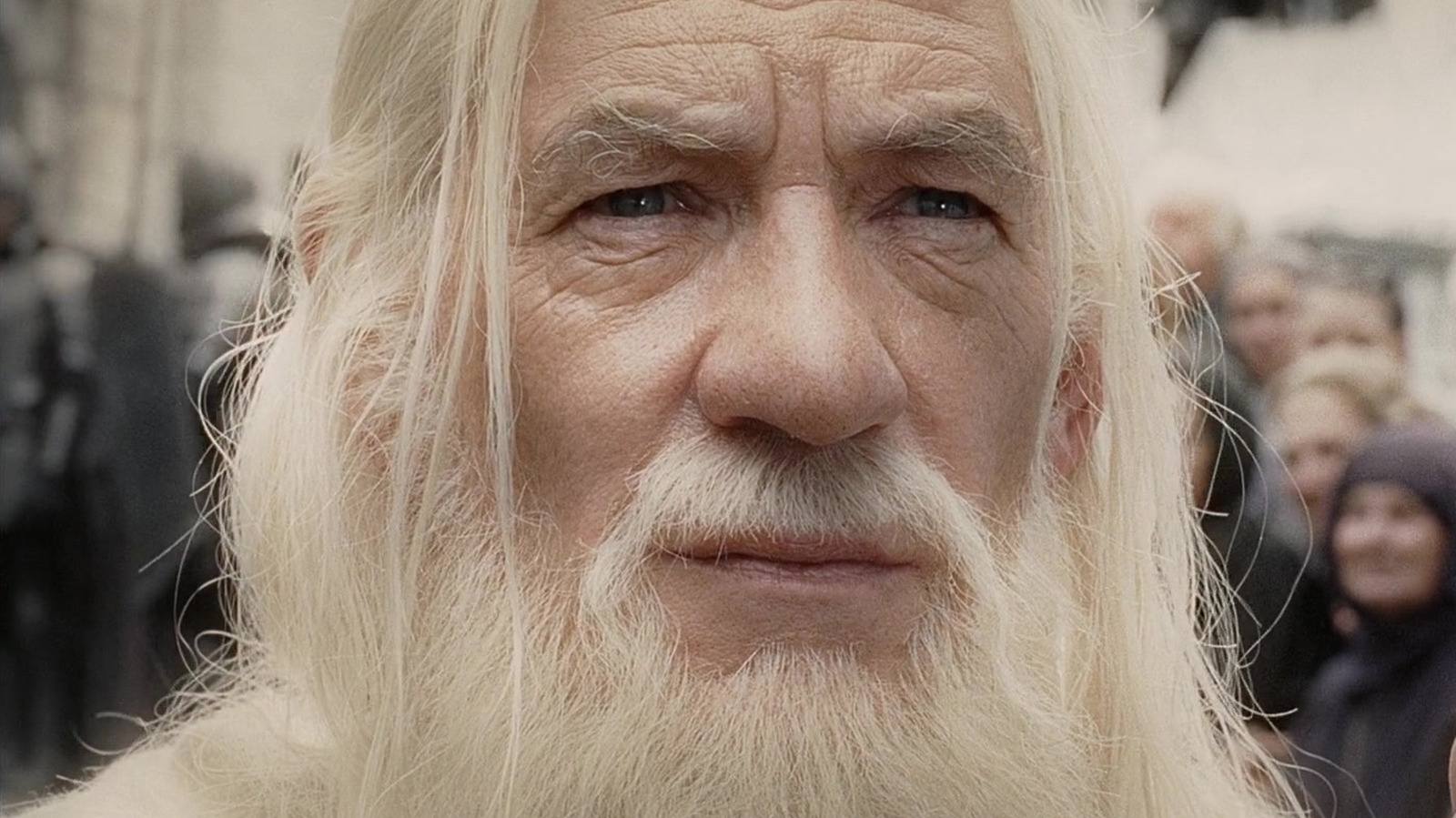
Roger Ebert wasn't as effusive about Peter Jackson's "The Lord of the Rings" films as many other critics. For reference, Ebert gave "Fellowship of the Ring" and "The Two Towers" three stars (out of four) and then "Return of the King" three and a half.
"A true visualization of [J.R.R.] Tolkien's Middle-earth it is not," wrote Ebert of Jackson's "Fellowship," arguing it "adds up to more of a sword and sorcery epic" that loses the "innocence" of the books. Though, Ebert conceded in that review that "That 'Fellowship of the Ring' doesn't match my imaginary vision of Middle-earth is my problem, not yours."
Ebert subsequently wrote that the action of "The Two Towers" "would no doubt startle the gentle medievalist J.R.R. Tolkien." However, he praised "Return of the King" as a strong conclusion which solidified the trilogy as "a work of bold ambition at a time of cinematic timidity," even if he felt the film and trilogy fell "a little shy of greatness."
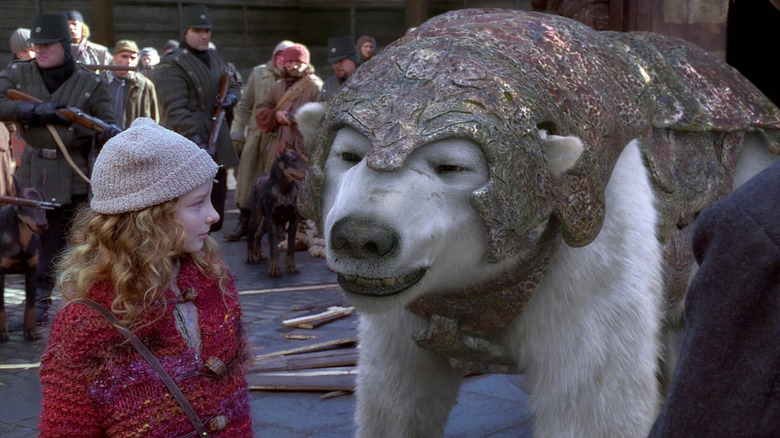
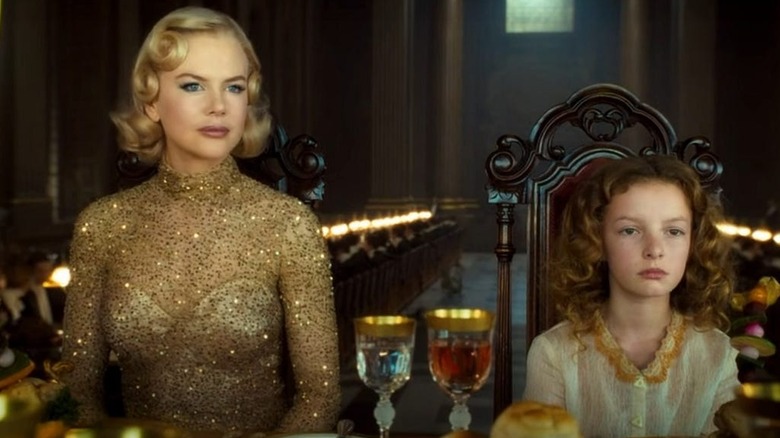
But you know what fantasy movie Ebert did love? 2007's "The Golden Compass," adapted from Philip Pullman's "His Dark Materials" novels. It's set in an alternate world where a piece of every person's soul exists in the form of an animal, called a dæmon. British orphan Lyra Belacqua (Dakota Blue Richards) embarks on a quest to rescue a friend and stumbles onto a much more cosmic struggle. Ebert gave it four stars, writing:
"'The Golden Compass' is a darker, deeper fantasy epic than the 'Rings' trilogy, 'The Chronicles of Narnia' or the 'Potter' films. It springs from the same British world of quasi-philosophical magic, but creates more complex villains and poses more intriguing questions."
While most would disagree with Ebert's quality assessment, he's onto something, as "Golden Compass" invites "Lord of the Rings" comparisons.
Why the Golden Compass movie failed
New Line Cinema
"The Golden Compass" was produced by New Line Cinema, the same production company behind "The Lord of the Rings," and it's clear the studio was hoping to repeat its previous success. "The Golden Compass" even features two important "Rings" alums: Ian McKellen (Gandalf) as the voice of polar bear king Iorek Byrnison, and Christopher Lee (the corrupted wizard Saruman) as a leader of the Magisterium, the Church of Lyra's world. It was reported in 2007 both actors were cast at New Line's behest.
But quite the contrary, "The Golden Compass" under-performed ($372 million in theaters against a $180 million budget), and sequels were never made. "The Golden Compass" even contributed to the end of New Line as an independent studio, as it was folded into Warner Bros. in 2008. Not helping the movie's financials was a religious backlash. The Magisterium allegorically represents all authoritarian religions but especially the Catholic Church, and "The Golden Compass" was in turn condemned by the Vatican.
"The Golden Compass" didn't win over fans of its source novel, either, due to abundant changes. The movie cuts out the book's entire ending, which directly sets up the sequel, "The Subtle Knife." But the attacks on religion? Those are taken right from the book. Philip Pullman is an atheist, and "His Dark Materials" is his rebuttal to the Christian-themed British fantasies of J.R.R. Tolkien and "Chronicles of Narnia" author C.S. Lewis, particularly the latter as both stories are about children traveling to different worlds. (Though Tolkien, for what it's worth, is said to have disliked "Narnia.")
"I cordially dislike allegory," Tolkien once famously claimed, believing it robs readers the freedom to interpret a work. For decades, said readers have since read into the influence of Tolkien's Catholic faith on his Middle-earth stories.
The Golden Compass is a pointed reflection of Middle-earth and Narnia
New Line Cinema
Sauron and his ring are a Luciferian conception of evil: A fallen angel who rules a fiery, molten realm and whose darkness spreads as temptation. J. R. R. Tolkien's villain is the Devil, Philip Pullman's is the Church.
Frodo carrying the ring echoes Christ carrying his own cross to Golgotha and, in turn, the metaphorical crosses that all of Christ's followers carry. "The Chronicles of Narnia," meanwhile, features talking lion Aslan as a direct allegory for the Christian God, Christ-like sacrifice and resurrection included.
In "His Dark Materials," the Magisterium worships "the Authority," a name suggesting an "authority" is all that organized religion is. The Authority is also a liar: He is not the creator of the universe, merely the first "angel" who came into being. The weak and withered "god" eventually crumbles into dust, as if humanity has no more use for him. The very last dialogue of the trilogy is Lyra endeavoring to build a "Republic of Heaven" on Earth.
Yet, circling back to Roger Ebert, he disputed the anti-religious reading of the "Golden Compass" movie, arguing it reworks the Magisterium into a more purely political villain, "a Soviet dictatorship or Big Brother." He specifically praised the film's themes as "murky," compared to Pullman's blatant allegory for the death of God, and affirmed that "the controversy surrounding ['The Golden Compass'] obscures its function as a splendid entertainment."
Amusingly, Ebert championed the movie for the same reasons many "His Dark Materials" fans rejected it. Toning down the anti-religion elements did not spare the movie the Church's wrath, either. One can only wonder what Ebert would have thought of the eventual "His Dark Materials" TV series that adapted Pullman's story to book fans' delight.