
.jpg) 9 hours ago
3
9 hours ago
3
Article content
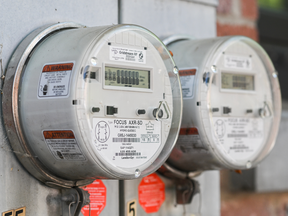
Electricity got cheaper in most of Canada between 2018 and 2023. After adjusting for inflation, real electricity costs fell in many provinces. For households and businesses already stressed by a pandemic, higher inflation and global energy price shocks, price stability seemed welcome news.

THIS CONTENT IS RESERVED FOR SUBSCRIBERS ONLY
Subscribe now to read the latest news in your city and across Canada.
- Exclusive articles from Barbara Shecter, Joe O'Connor, Gabriel Friedman, and others.
- Daily content from Financial Times, the world's leading global business publication.
- Unlimited online access to read articles from Financial Post, National Post and 15 news sites across Canada with one account.
- National Post ePaper, an electronic replica of the print edition to view on any device, share and comment on.
- Daily puzzles, including the New York Times Crossword.
SUBSCRIBE TO UNLOCK MORE ARTICLES
Subscribe now to read the latest news in your city and across Canada.
- Exclusive articles from Barbara Shecter, Joe O'Connor, Gabriel Friedman and others.
- Daily content from Financial Times, the world's leading global business publication.
- Unlimited online access to read articles from Financial Post, National Post and 15 news sites across Canada with one account.
- National Post ePaper, an electronic replica of the print edition to view on any device, share and comment on.
- Daily puzzles, including the New York Times Crossword.
REGISTER / SIGN IN TO UNLOCK MORE ARTICLES
Create an account or sign in to continue with your reading experience.
- Access articles from across Canada with one account.
- Share your thoughts and join the conversation in the comments.
- Enjoy additional articles per month.
- Get email updates from your favourite authors.
THIS ARTICLE IS FREE TO READ REGISTER TO UNLOCK.
Create an account or sign in to continue with your reading experience.
- Access articles from across Canada with one account
- Share your thoughts and join the conversation in the comments
- Enjoy additional articles per month
- Get email updates from your favourite authors
Sign In or Create an Account
or
Article content
The stability was largely borrowed, however. Electricity demand was essentially flat — growing at less than one per cent a year in most provinces and actually declining in several others. When demand does not grow, utilities do not need to build so costs do not rise. Canadians benefited from a system that was not being asked to do more than continue the status quo. But that may be about to change.
Article content
Article content
Article content
Population growth, industrial expansion, increasing electrification of transportation and heating and the emergence of large loads like AI data centres are likely to drive electricity demand at a scale without modern precedent. Ontario projects growth of 65 per cent by 2050. British Columbia and Quebec say demand could double over a similar horizon. Meeting this challenge while de-carbonizing the grid could require roughly doubling the pace of energy infrastructure spending from now to 2050.
Article content
By signing up you consent to receive the above newsletter from Postmedia Network Inc.
Article content
That investment will ultimately be reflected in what Canadians pay for electricity — which is where the conversation becomes complicated. Electricity pricing has long been as much a political exercise in Canada as an economic one. Rates are among the most visible and sensitive costs that governments manage, and the instinct to shield consumers from increases is deeply ingrained across the political spectrum.
Article content
The result is that periods of cost stability — like the one now ending — tend to harden public expectations rather than create space for candid discussion about what lies ahead. Affordability is already a pressing concern for many Canadian households. Selling them on sustained increases in electricity prices, however justified by essential investment, will be a considerable political challenge — especially since the true cost of electricity in Canada has been substantially obscured for some time.
Article content
Article content
Governments have employed rate subsidies, price regulation and cross-class cost transfers to de-couple consumer bills from underlying system costs. Ontario shifted nearly $6 billion in electricity costs off ratepayer bills and onto the provincial tax base in 2023 alone. Quebec’s heritage pool mechanism effectively reserves electricity from legacy hydro assets for domestic consumers at prices well below the market value that would be commanded if exported.
Article content
Article content
These are not isolated cases — they reflect a broad pattern across Canadian jurisdictions. The consequence is a public largely insulated from understanding what electricity actually costs. Households and businesses have made long-term decisions about where to locate, what to build and what to invest in based on prices that do not fully reflect the economics of the system. When the investment required to meet future demand does begin flowing into rate bases and tax bases, those expectations will run straight into a different reality.
 English (US)