
.jpg) 1 hour ago
3
1 hour ago
3
Article content
Though the new product resembles a speaker, OpenAI internally describes it as the first of its kind: a computer built for AI to help make busy people more productive. It includes a camera and other sensors that help it understand a user’s surroundings and context, as well as advanced AI models beyond those available on conventional smart speakers.
Article content
Another central difference is that the device includes a rechargeable battery, allowing it to be carried from room to room throughout the day. A user could bring it into the laundry room while doing chores, move it into the kitchen for cooking assistance, and later place it in a living room or bedroom to have it play music. It can also remain plugged into a single room if the customer chooses.
Article content
To build up its device business, OpenAI spent US$6.5 billion last year to acquire io Products, a startup co-founded by Apple design veteran Jony Ive.
Article content
Ive’s studio, LoveFrom, also is helping craft the new lineup. And the endeavour involves many former Apple designers and engineers responsible for creating products such as the iPhone and Mac. OpenAI believes the LoveFrom team’s expertise in making technology feel personal will help distinguish the company’s first hardware product.
Article content
Article content
In Apple’s lawsuit against OpenAI, it alleged that the AI company used trade secrets to accelerate development of devices. OpenAI chief hardware officer Tang Tan, an io Products co-founder and the former head of iPhone product design, was accused of leading a campaign to obtain confidential information about Apple’s future products and engineering practices.
Article content
While people with knowledge of the matter have said that Tan was famous for taking risks at Apple, they also maintain that the executive is known for building talented development teams, having strong supplier relationships, and working well with creatives and designers. He’s passionate about the technology he is working on and can figure out ways to solve hard engineering problems, they said.
Article content
Article content
OpenAI has hired more than 400 other people from Apple, according to the lawsuit. Besides Ive and Tang, Apple’s former head of industrial design, Evans Hankey, is leading development of the speaker and other future OpenAI products. Last month, OpenAI hired Paul Meade, a longtime senior Apple executive who led development of the Vision Pro headset and future smart glasses.
Article content
Article content
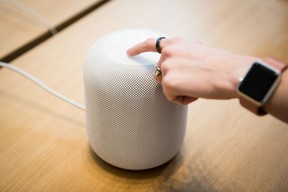
Though Apple sells the HomePod and HomePod mini smart speakers, OpenAI doesn’t see them as comparable to what it is building. The new speaker’s audio system and other hardware differ substantially from Apple’s designs, and OpenAI believes its first product doesn’t violate any trade secrets, according to people with knowledge of the matter.
Article content
In its suit, Apple acknowledged that discovery would be needed to determine whether OpenAI is actually using its technology. OpenAI, meanwhile, said that it has “no interest in other companies’ trade secrets.” “While we take these allegations seriously, we’re not aware of any evidence that this complaint has merit,” the company said.
Article content
It added that it believes “in fair competition and allowing people the freedom to work wherever they choose” and that it is “focused on building innovative technology that empowers people everywhere.”
Article content
OpenAI’s hardware division is working on roughly five different products but plans to start off with the speaker. It’s aiming to unveil the device this year before releasing it in 2027, though that could change depending on the legal process. Apple is seeking an injunction on OpenAI’s hardware, which could delay the ability to sell devices.
 English (US)