
.jpg) 1 hour ago
3
1 hour ago
3
Article content
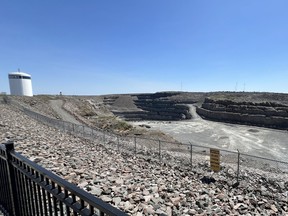
Ontario has issued the first mining exploration permit under the new Recovery of Minerals regime, which was designed to make it easier to explore in old mines.

THIS CONTENT IS RESERVED FOR SUBSCRIBERS ONLY
Subscribe now to read the latest news in your city and across Canada.
- Exclusive articles from Barbara Shecter, Joe O'Connor, Gabriel Friedman, and others.
- Daily content from Financial Times, the world's leading global business publication.
- Unlimited online access to read articles from Financial Post, National Post and 15 news sites across Canada with one account.
- National Post ePaper, an electronic replica of the print edition to view on any device, share and comment on.
- Daily puzzles, including the New York Times Crossword.
SUBSCRIBE TO UNLOCK MORE ARTICLES
Subscribe now to read the latest news in your city and across Canada.
- Exclusive articles from Barbara Shecter, Joe O'Connor, Gabriel Friedman and others.
- Daily content from Financial Times, the world's leading global business publication.
- Unlimited online access to read articles from Financial Post, National Post and 15 news sites across Canada with one account.
- National Post ePaper, an electronic replica of the print edition to view on any device, share and comment on.
- Daily puzzles, including the New York Times Crossword.
REGISTER / SIGN IN TO UNLOCK MORE ARTICLES
Create an account or sign in to continue with your reading experience.
- Access articles from across Canada with one account.
- Share your thoughts and join the conversation in the comments.
- Enjoy additional articles per month.
- Get email updates from your favourite authors.
THIS ARTICLE IS FREE TO READ REGISTER TO UNLOCK.
Create an account or sign in to continue with your reading experience.
- Access articles from across Canada with one account
- Share your thoughts and join the conversation in the comments
- Enjoy additional articles per month
- Get email updates from your favourite authors
Sign In or Create an Account
or
Article content
Toronto-based STLLR Gold Inc. can now take a closer look at the waste left behind at the Hollinger Mine in Timmins, Ont., which produced an estimated 19.5 million tonnes of gold during its heyday between 1915 and the 1960s.
Article content
Article content
Article content
Amidst record high gold prices — US$5,080 per ounce on Thursday morning — STLLR said it believes there is still a lot of bullion that can be recovered from the 50 to 60 million tonnes of waste rock left behind at the mine.
Article content
“At a time of elevated gold prices, Hollinger is uniquely positioned to deliver a ‘triple win’: significant potential cash flows, responsibly remediating a century-old site and securing a prosperous, sustainable future for Timmins and the surrounding communities,” Keyvan Salehi, STLLR chief executive, said in a statement.
Article content
Using cyanidation, an electrochemical process that oxidizes gold from even low-grade ores, the company said it can recover enough gold from the site to make it economic and it is aiming to start in 2027.
Article content
Stephen Lecce, minister of energy and mines in Ontario, said the project demonstrates that the province is making progress on its promises to streamline the mining permit process.
Article content
“Our new framework cuts red tape and turns legacy mine sites into engines of economic growth and stewardship,” he said.
Article content
Last year, Ontario passed Bill 5, also known as the Protect Ontario by Unleashing the Economy Act, which amended the Mining Act with the objective of cutting permit times in half to two years, in part by creating a single point of contact for all provincial approvals.
Article content
Article content
It also repealed parts of the Endangered Species Act and created new protections against litigation that could slow down a mining project, which drew wide opposition from Indigenous and environmental groups.
Article content
Article content
The province also amended the Mining Act through its Recovery of Minerals Regime, which is specifically tailored to streamline the permit process to explore old or abandoned mines and their waste, known as tailings. It also drew opposition, including from groups who expressed concern that disturbing old mining sites could re-release toxins into the environment.
Article content
But some of the largest mines in Ontario recently have come about by exploring old mines, also known as brownfield sites. Perhaps the best example of this is the Canadian Malartic gold mine near Val D’ Or, Quebec.
Article content
Operated by Toronto-based Agnico Eagle Mines Ltd., it was on track to produce 590,000 ounces of gold in 2025, which would make it one of the world’s largest gold mines. Originally discovered in the 1920s, it operated through the 1960s and was brought back to life by Osisko Mining Corp. in 2011.
 English (US)