
.jpg) 1 hour ago
2
1 hour ago
2
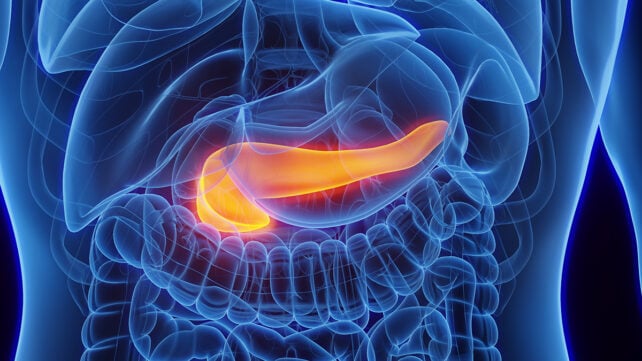 Pancreas damage contributes to the rare form of diabetes studied here. (Sebastian Kaulitzki/Science Photo Library/Getty Images)
GLP-1 (glucagon-like peptide-1) drugs are now perhaps best known in relation to weight loss, but they were originally developed – and continue to be widely used – for diabetes.
Now researchers have discovered something special about GLP-1 treatments in relation to a particular, rare form of diabetes linked to a blood disorder called transfusion-dependent beta-thalassaemia (TDT).
In TDT diabetes, an iron overload damages the pancreas, preventing it from producing insulin normally.
In a study published in Diabetologia, led by a team from Ain Shams University in Egypt, the GLP-1 treatment dulaglutide was found to be notably more effective than standard doses of insulin in treating TBT diabetes, across several health metrics.
It suggests that a weekly injection of the GLP-1 drug could replace daily shots of insulin, significantly simplifying the treatment regime for this form of the disease.
"The glucagon-like peptide-1 receptor agonist dulaglutide therapy was associated with greater improvements in glycaemic control and variability compared with insulin among adolescents with TDT-induced diabetes, without risk of hypoglycemia or compromising safety," write the researchers in their published paper.
TDT is a genetic condition where the body's red blood cells can't carry the amount of oxygen the body needs. As the name of the disorder suggests, regular blood transfusions are needed to help, which then leads to an iron imbalance and pancreatic impairment.
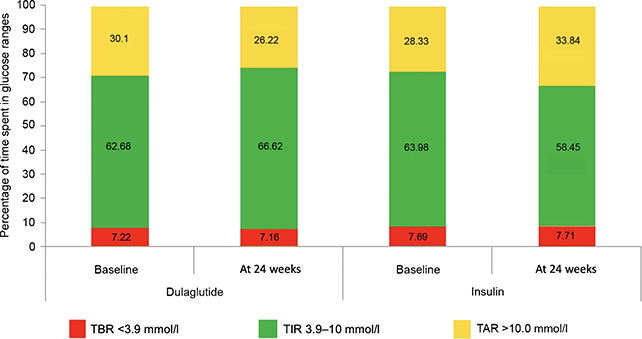 Participants on dulaglutide (left two bars) spent more time in the healthy blood sugar zone (in green) at 24 weeks of treatment. (Adly et al., Diabetologia, 2026)
Eventually, TDT can lead to diabetes, but it's not type 1 or type 2 diabetes – instead, it borrows different parts of each.
As dulaglutide is already used to treat type 2 diabetes, the researchers wanted to test it with TDT diabetes.
They recruited 80 young people with TDT diabetes, aged between 10 and 18, who weren't responding to the diabetes drug metformin that's often prescribed for the condition.
Half the group were put on weekly dulaglutide injections, while the other half were given daily insulin shots, and their health metrics were then tracked over the course of 24 weeks.
"Participants were instructed to refrain from substantial changes in their lifestyle habits throughout the study period," write the researchers.
The GLP-1 dulaglutide treatment came out as the clear winner.
Study participants on the drug showed reduced swings in blood sugar levels, bigger drops in average blood sugar levels overall, and more time spent in healthy glucose level zones.
Other health markers continued the theme. Unlike the insulin group, the participants on dulaglutide didn't have any significant weight gain, and there were even signs the GLP-1 drug was reducing the iron overload too.
It's early evidence that needs to be followed up, but it's promising.

"The current study has several strengths," write the researchers.
"It is the first to assess the efficacy of dulaglutide in adolescents with TDT-induced diabetes, providing insight into a promising therapeutic modality for this vulnerable population.
"Moreover, it assessed the effect of dulaglutide on pancreatic reserve, iron overload and lipid profile."
By mimicking the natural glucagon-like peptide-1 hormone, GLP-1 treatments can prompt the pancreas to produce more insulin, slow down digestion, and reduce glucose release from the liver – all of which help with blood sugar.
These GLP-1 drugs have already replaced insulin injections in some diabetes cases, but what's significant here is that TDT diabetes damages the pancreas and insulin production. It seems to work as a way of helping the natural insulin production processes that are left, rather than simply adding extra insulin.
Related: A Distinct New Type of Diabetes Is Now Officially Recognized
There's still plenty of work to do though, and the researchers are keen to test the dulaglutide treatment in larger groups of participants, as well as get a better idea of how GLP-1 agonists might be helping regulate blood sugar – and even reducing iron levels.
Researchers are continuing to discover hidden effects of these treatments, all of which need to be fully understood to properly prescribe them.
"Future larger prospectively registered multicenter studies with extended follow-up are warranted to validate these findings and explore the mechanistic pathways," write the researchers.
The research has been published in Diabetologia.
This article was fact-checked by Rachel Garner and edited by Peter Dockrill. While we pride ourselves on our process, we are only human. If you spot a mistake, please let us know.
 English (US)