
.jpg) 19 hours ago
5
19 hours ago
5
A cup of coffee or two (or three) in the morning is one of the most common pleasures of the modern world. But how guilty should we feel about indulging in it?
A new scientific statement by the American Heart Association (AHA) may have an answer.
The team behind the statement gathered the most recent health data on caffeine, from a series of existing studies that examined the drug's effects on various outcomes, such as blood pressure and cholesterol, and the risks of metabolic and cardiovascular diseases.
In short: Go ahead and enjoy it!
The review found that for most people, a couple of cups of Joe aren't likely to do any harm, and may even be good for you.
There are a few major caveats, of course. As with most things, moderation is key, and any benefits can be canceled out as soon as you add cream, sugar, sweeteners, flavored syrups, or other things to your java.
The source of your caffeine is important, too. Coffee and tea can provide other antioxidants and compounds that contribute to benefits. Energy drinks, on the other hand, can contain too high a dose of caffeine, not to mention the sugar and other unhealthy ingredients.
"Caffeine consumed in coffee is a key part of daily life for millions of people," says Gregory Marcus, cardiologist at the University of California, San Francisco, and Chair of the AHA volunteer writing group behind the statement.
"In our review of the most recent research, for most adults, intake of up to 400 milligrams of caffeine per day, the equivalent of up to five cups of caffeinated coffee per day without added sugars or fillers, is safe and does not increase cardiovascular risk."

The statement focused on caffeine's relationship with cardiovascular risk factors, such as blood pressure and diabetes, as well as types of cardiovascular disease, including arrhythmias, coronary artery disease, stroke, and heart failure.
The picture that emerges is complicated, but generally positive.
In patients with hypertension, caffeine was found to spike their blood pressure. However, in other studies of people with optimal blood pressure, drinking one to three cups of coffee per day was linked to an increased risk of developing hypertension – but drinking more than three cups a day seemed to decrease risk.
Again, the caffeine source matters: in one study, energy drinks were linked to increased blood pressure, while drinking coffee seemed to reduce risk.
"These contrasting outcomes may be attributed to differences in caffeine concentration and the presence of other bioactive compounds such as taurine in energy drinks and chlorogenic acid in coffee with opposing effects on blood pressure," the researchers write.

Studies analyzed in the review consistently link habitual coffee consumption with reduced risk of type 2 diabetes, with one finding a 27 percent lower risk in women who drank three or more cups per day, compared to those who abstained, and another finding a 30 percent lower risk among those drinking five cups a day.
Caffeine (or coffee, at least) also seemed to reduce the risk of coronary artery disease. A meta-analysis of 30 studies linked consumption of up to 3.5 cups per day with a roughly 10 percent lower risk of the disease.
Another, using data from the UK Biobank, found that drinking up to five cups per day was linked to a lower risk of coronary artery disease than not drinking any coffee, with two to three cups the sweet spot. The study found the effects might not be due to the caffeine, but to other molecules in the brew.
A similar pattern was found for stroke risk: One meta-analysis found that those drinking three to four cups of coffee per day had their risk of stroke reduced by 21 percent.
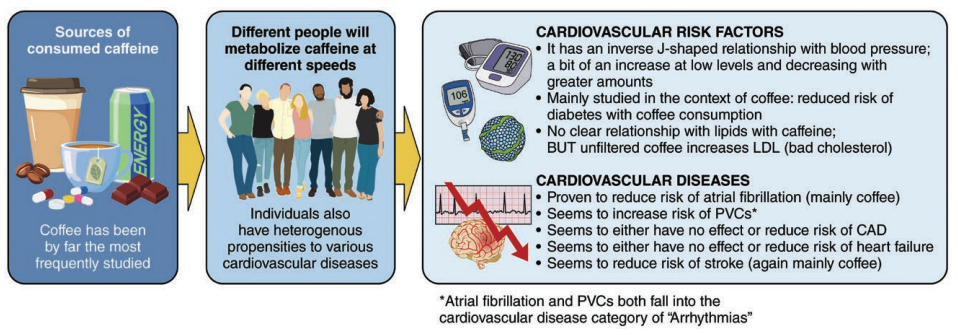 A graphical summary of the scientific statement. (Marcus et al., Circulation, 2026)
All up, the new AHA statement concludes that there's a growing body of evidence that caffeine isn't harmful when taken in moderation, and that coffee specifically may be beneficial.
"The convergence of evidence from large cohort studies and small randomized controlled trials supports the conclusion that moderate caffeine or coffee consumption… (up to 400 mg per day of caffeine or about 3-5 cups) is safe for most adults and is associated with lower risk of cardiovascular disease, including coronary heart disease, stroke, heart failure, and atrial fibrillation, as well as hypertension and type 2 diabetes," the report concludes.
Related: Giant Study May Have Found The Ideal Amount of Coffee to Lower Stress
The researchers say that more work will need to be done to disentangle caffeine from other compounds, deeper explorations of sources beyond coffee, and investigating how the effects may differ in people with hypertension and other diseases.
The statement was published in the journal Circulation.
This article was fact-checked by Clare Watson and edited by Rebecca Dyer. While we pride ourselves on our process, we are only human. If you spot a mistake, please let us know.
 English (US)