
.jpg) 2 hours ago
3
2 hours ago
3
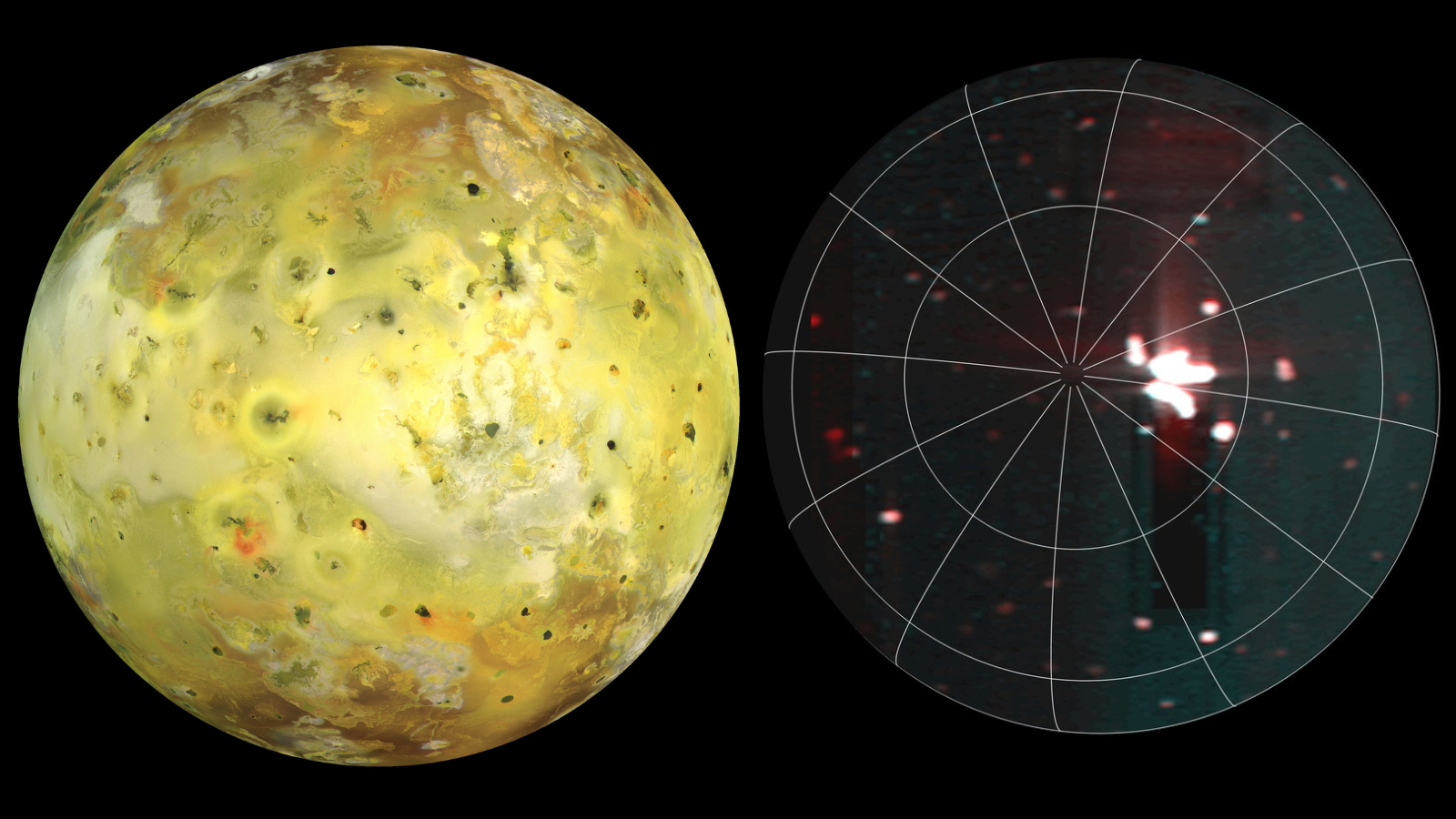
The most violent volcanic cataclysm ever seen in our solar system has been witnessed on Jupiter’s moon Io by NASA’s Juno spacecraft, with simultaneous eruptions covering an enormous 40,400 square miles (65,000 square kilometers). The synchronous eruptions point to a hitherto undetected network of interconnected magma reservoirs just beneath the volcanic moon’s lava-encrusted surface.
The eruptions released an amount of energy estimated to be between 140 and 260 terawatts (one terawatt is a trillion watts). The previous most energetic volcanic eruption seen on Io was about 80 terawatts, from a volcano called Surt in 2001. For comparison, the Mount St Helens eruption in Washington state in 1980 had a power of 52 terawatts.
The volcanic event took place on Dec. 27, 2024, coinciding with one of Juno’s close fly-bys of Io, when the spacecraft was 46,200 miles (74,400 kilometers) above the moon’s charred surface. Io, which has a diameter of 2,263 miles (3,643 km), harbors approximately 400 active volcanoes scattered across its surface, and their frequent eruptions are driven by the vice-like grip of gravitational tidal forces emanating from Jupiter that squeeze and flex Io’s interior, generating more than enough heat to keep its mantle molten.
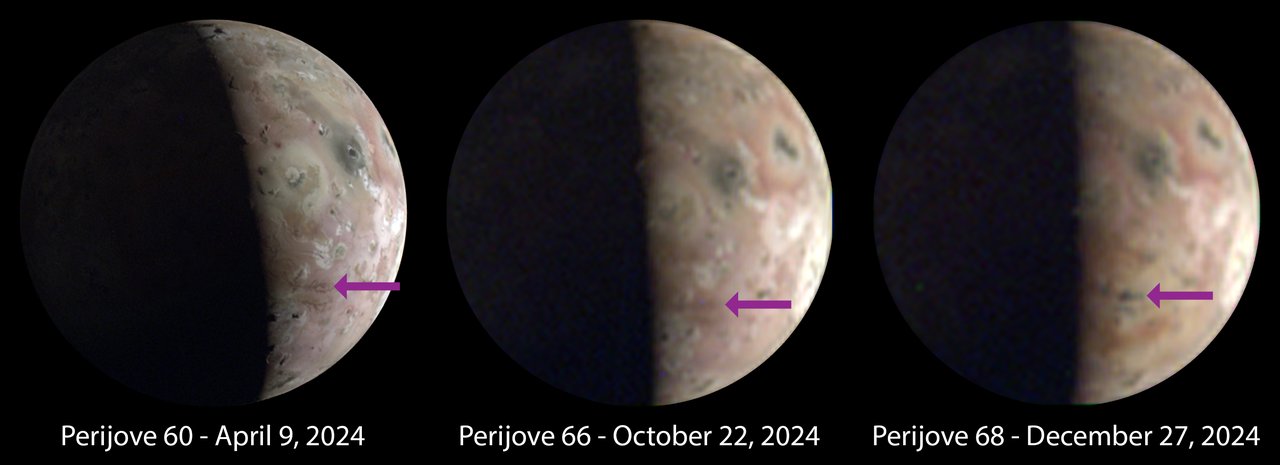
What’s most intriguing about this particular volcanic event is the way that multiple volcanoes all lit up at the same time, implying that they are connected by vast pools of magma that fuel multiple eruptions at once. Mura’s research team suggests that the sub-surface and mantle of Io may be like a sponge, in the sense that it is filled with pores filled with magma. Interestingly, not all the known volcanoes in the region erupted, suggesting that those that didn’t erupt were not connected to this particular magma network, but may be linked to others instead.
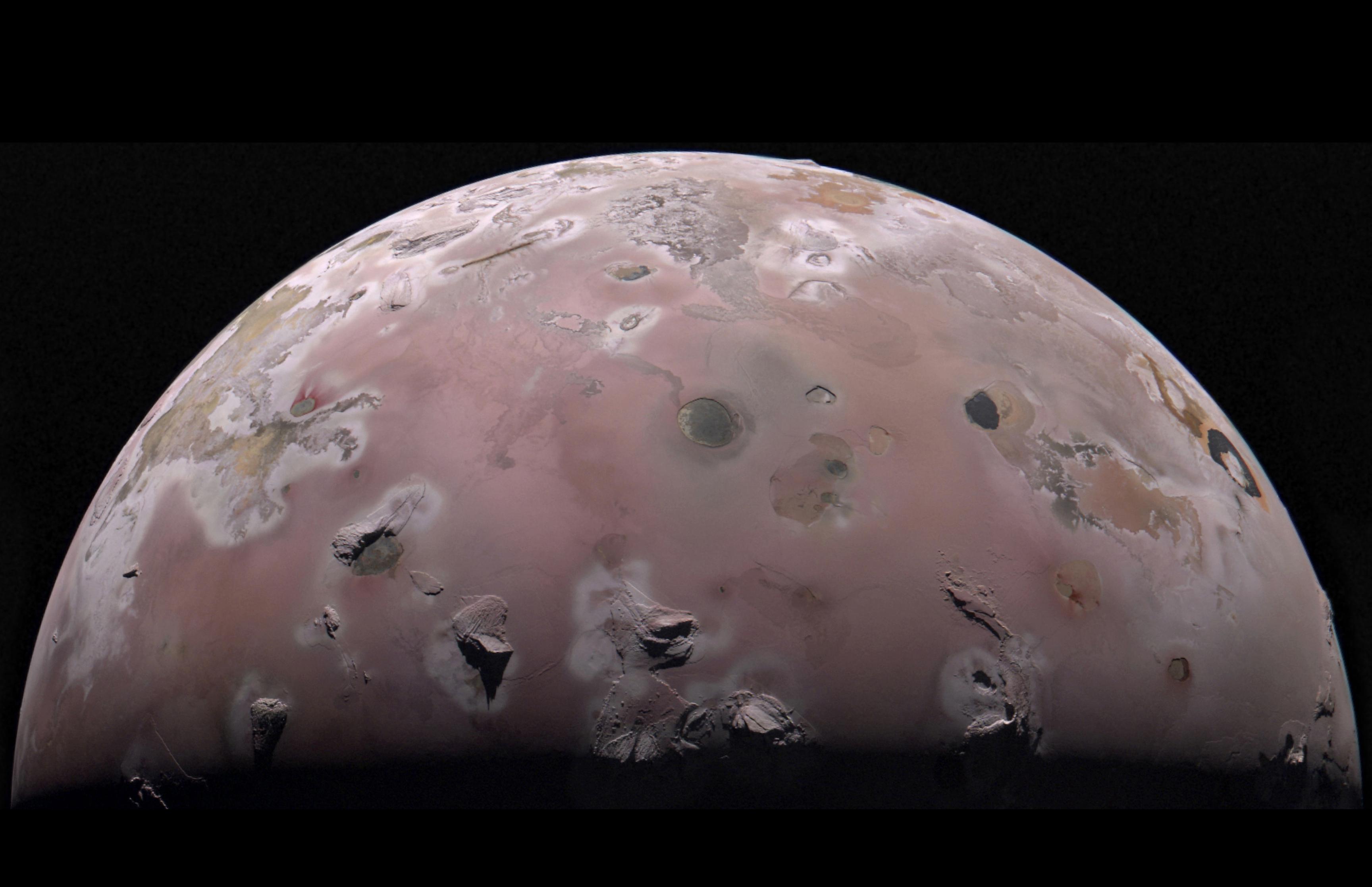
The volcanic outburst was detected by Juno’s JIRAM (Jovian InfraRed Auroral Mapper) instrument, for which Mura is the principal investigator. JIRAM had been designed to probe thermal emissions in Jupiter’s atmosphere and look for aurorae, but JIRAM’s infrared prowess also makes it suitable for spotting volcanic hotspots on Io.
As part of Juno’s extended mission, the spacecraft is making close encounters of Jupiter’s large Galilean moons after having spent most of its mission away from them. During future fly-bys of Io, Juno will survey the moon’s surface looking for new lava flows and ash deposits resulting from this spectacular volcanic eruption.
The findings are described in a paper published on Jan. 10 in Journal of Geophysical Research: Planets.
 English (US)