 Image via Burns & Co.; JIMMY The Movie LLC, All Rights Reserved.

Published Nov 4, 2026, 7:59 AM EST
Tania Hussain is an Executive Editor at Collider responsible for creative, editorial, and managerial duties. In addition to leading content ideation and development, she works to generate innovative and compelling ideas for feature articles and reviews with her editorial team across Features, Lists, Reviews, and Interviews. She also serves as the primary editor overseeing Collider’s Signature Series profiles, spotlighting some of the most influential voices in film and television. Tania has helped cover and ideate content for major events for Collider, including the Toronto International Film Festival. She has also conducted more than 100 interviews since her start in the business more than 15 years ago. Some favorites include Joel McHale, Charlie Cox, Jennifer Garner, Tina Fey, Kate Winslet, Bob Odenkirk, Andy Richter, Jordan Schlansky, Jamie Dornan, Yeardley Smith, Rafe Spall, Esther Smith, and a reasonable toss-up between Cookie Monster and Kermit the Frog. She has covered set visits, in-person junkets, and red carpets for several films and TV shows, including most recently, The Sheep Detectives, Masterchef, and Star Trek: Starfleet Academy.
Sign in to your Collider account
In Frank Capra’s classic It’s a Wonderful Life, a defeated George Bailey sits alone at the local Bedford Falls bar and prays for God to show him the way. It’s one of the most heartbreaking scenes in the 1946 classic, made all the more powerful by James Stewart’s trembling voice and anguished expression. But for a scene hailed as one of the best in movie history, what if some of George’s pain actually came from Stewart himself? That’s the heart of Jimmy, director Aaron Burns’ new biographical drama starring KJ Apa as the beloved actor. Following Stewart’s experiences during World War II and his difficult return to acting, Jimmy offers a moving portrait of the man behind the iconic character, even if it doesn’t always dig deep enough into who Stewart really was.
Written by Justin Strawhand, Jimmy explores the period between the height of Stewart’s Hollywood success and his decision to join the military, where he eventually works his way up the ranks to become a decorated combat pilot. While there’s a great deal of sincerity in Apa’s portrayal, particularly through Stewart’s compassion and patriotism, Jimmy rarely explores the experiences that shaped him. The result is an affectionate, occasionally moving biopic that feels more like a polished dramatization of familiar history than an intimate portrait of an extraordinary man.
‘Jimmy’ Explores the War That Changed James Stewart
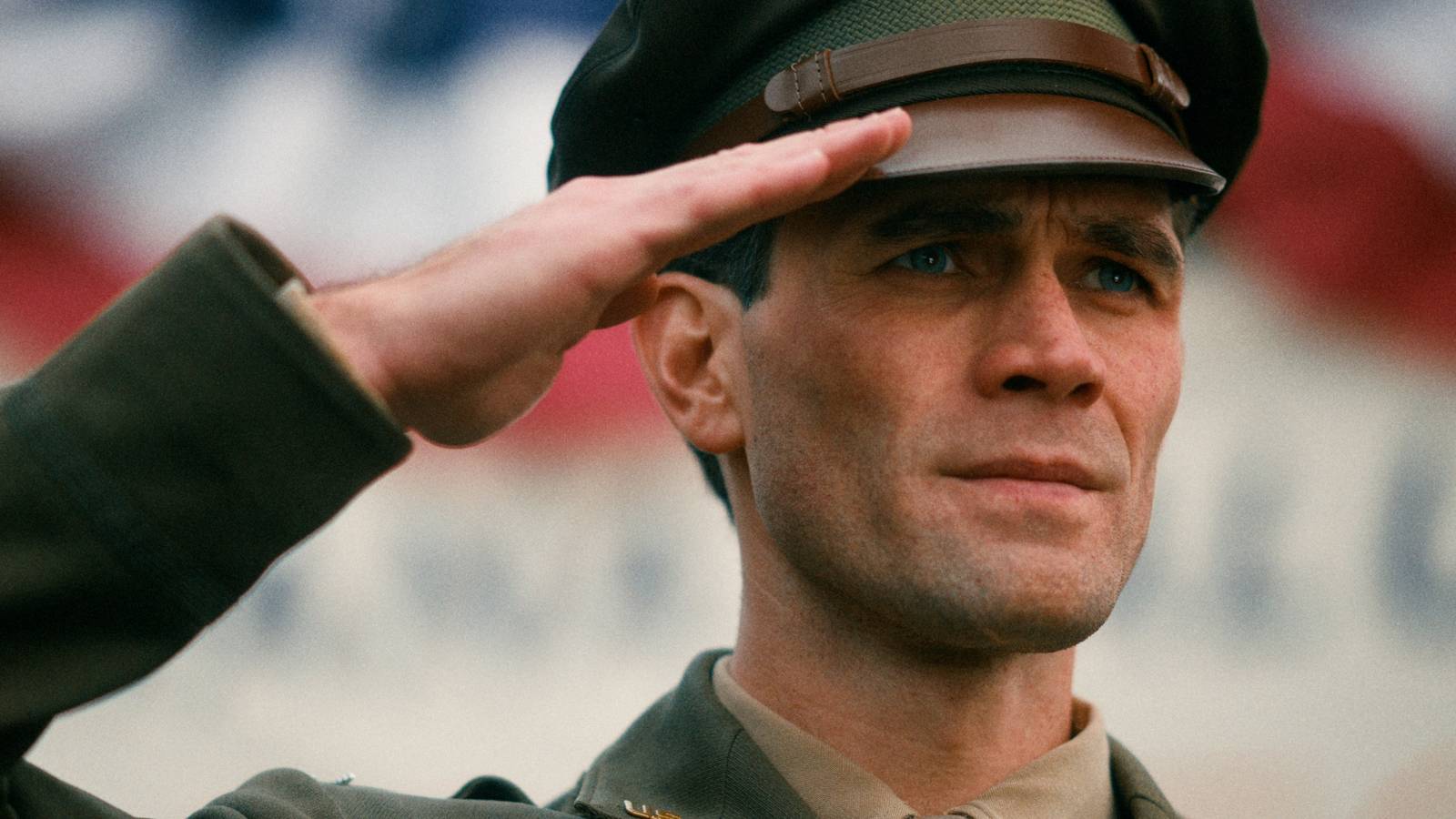
Fresh off his Oscar win for The Philadelphia Story in 1941, Jimmy finds the 32-year-old Jimmy Stewart (Apa) evolving into one of Hollywood’s most prominent rising stars under the MGM banner. With Louis B. Mayer (Jason Alexander) guiding him through a career so many actors envied, Jimmy shortly after admits he has other plans. With the influence of his father, Alexander (Neal McDonough), and a rich family history of military service behind him, Jimmy wants to enlist despite doubts about whether an actor could handle the realities of war. It’s a compelling starting point for a film about a man willing to leave behind everything he has worked so hard for, even if Jimmy only briefly explores these primary relationships and experiences that shaped his determination.
COLLIDERInteractive
Ballot sealed
Movies/Academy Awards/Best Picture
Collider · Best Picture
Which Oscar Best Picture
Is Your Perfect Movie?
Five winners · ten questions · one envelope
Five Oscar Best Picture winners. Five completely different visions of what cinema can be and what it can do to you. One of them is the film made for the way your mind works, and ten questions will work out which. The nominees
2020Parasite
2023Everything Everywhere All at Once
2024Oppenheimer
2015Birdman
2008No Country for Old Men
Open the envelope
Question 01 of 10TONE
01 What kind of film experience are you really after? The best movies do not just entertain. They leave something behind.
ASomething that pulls the rug out, that makes me think I am watching one kind of film and then reveals I am watching another entirely. BSomething overwhelming: funny, sad, absurd and genuinely moving, all at once. CSomething grand and weighty, a film that makes me feel the full scale of what I am watching. DSomething formally daring, a film that pushes what cinema can even do. ESomething lean and relentless, pure tension with no wasted frame.
← Back Keys 1 to 5 or A to E · Enter to advance
Next
Question 02 of 10THEME
02 Which idea grabs you most in a film? Great films are driven by a central obsession. What is yours?
AClass, inequality, and what people are willing to do when desperation meets opportunity. BIdentity, family, and the chaos of holding your life together while everything falls apart. CGenius, moral responsibility, and the catastrophic weight of a decision you can never take back. DEgo, legacy, and the terror of becoming irrelevant while you are still alive to watch it happen. EEvil, chance, and whether moral order exists at all or we just tell ourselves it does.
← Back Keys 1 to 5 or A to E · Enter to advance
Next
Question 03 of 10STRUCTURE
03 How do you like your story told? Form is content. The way a story is shaped changes what it means.
AGenre-twisting. I want it to start in one lane and migrate into something completely different. BMaximalist and genre-blending: comedy, action, drama and sci-fi in one ride. CEpic and non-linear, cutting between timelines to build a mosaic of cause and consequence. DA single unbroken flow. I want to feel like I am living it in real time with no cuts to safety. ESpare and precise, every scene doing exactly what it needs to do and nothing more.
← Back Keys 1 to 5 or A to E · Enter to advance
Next
Question 04 of 10VILLAIN
04 What makes a truly great antagonist? The opposition defines the protagonist. What kind of opposition fascinates you?
AA system: invisible, structural, and almost impossible to fight because it has no single face. BThe self, and the ways we sabotage, abandon and fail the people we love most. CHistory, and the unstoppable momentum of events no single person can stop or redirect. DThe industry, the machinery of culture that chews up talent and spits out irrelevance. EPure, implacable evil, a force so certain of itself it becomes almost philosophical.
← Back Keys 1 to 5 or A to E · Enter to advance
Next
Question 05 of 10ENDING
05 What do you want from a film's ending? The final note is the one that lingers. What do you want it to sound like?
AShock and inevitability, a conclusion that recontextualizes everything before it. BEarned emotion. I want to cry, laugh and feel hopeful, even if the world is a mess. CDevastation and grandeur, an ending that leaves me sitting in silence for a few minutes. DAmbiguity, something open enough that I am still turning it over days later. EBleakness, an honest refusal to pretend the world is tidier than it is.
← Back Keys 1 to 5 or A to E · Enter to advance
Next
Question 06 of 10WORLD
06 Which setting pulls you in most? Where a film takes place shapes everything: mood, stakes, what is even possible.
AA gleaming modern city with a hidden underside, beauty masking rot and wealth masking desperation. BA collapsing suburban life that opens onto something infinite, the multiverse inside one ordinary person. CThe corridors of power and science at a world-historical turning point, where decisions echo for decades. DThe grimy, alive chaos of New York and Hollywood, fame as both destination and trap. EVast, indifferent landscape, desert and highway where violence arrives without warning or reason.
← Back Keys 1 to 5 or A to E · Enter to advance
Next
Question 07 of 10CRAFT
07 What cinematic craft impresses you most? Every great film has a signature, the element that makes it unmistakable.
AProduction design and mise-en-scène, every frame composed to carry meaning beneath the surface. BEditing and tonal control, the ability to move between registers without losing the audience. CScore and sound design, music that becomes inseparable from the dread and awe of what you see. DCinematography as performance, the camera not recording events but taking part in them. ESilence and restraint, what is left unsaid doing more work than any dialogue could.
← Back Keys 1 to 5 or A to E · Enter to advance
Next
Question 08 of 10PROTAGONIST
08 What kind of main character do you root for? The protagonist is the lens. Who you follow says something about you.
ASomeone smart and resourceful who makes increasingly dangerous decisions under pressure. BSomeone overwhelmed and ordinary who turns out to be capable of something extraordinary. CA brilliant, tortured figure whose gifts and flaws cannot be separated from each other. DA self-destructive artist whose ego is both their superpower and their undoing. EA quiet, principled person trying to make sense of a world that has stopped making sense.
← Back Keys 1 to 5 or A to E · Enter to advance
Next
Question 09 of 10PACE
09 How do you feel about a film that takes its time? Pace is a choice. Some films sprint. Others let tension accumulate slowly, deliberately.
AI love a slow build when the payoff is going to be seismic. Patience for a devastating reveal. BGive me relentless momentum. I want to feel breathless and emotionally spent by the end. CEpic runtime does not scare me. If the material demands three hours, give me three hours. DI want it propulsive even when nothing is technically happening, restless energy throughout. EDeliberate and unhurried. I want dread to accumulate in the spaces between the action.
← Back Keys 1 to 5 or A to E · Enter to advance
Next
Question 10 of 10AFTERMATH
10 What do you want to feel walking out of the cinema? The best films leave a mark. What kind of mark do you want?
AUnsettled, like I have just seen something I cannot fully explain and cannot stop thinking about. BMoved and energized, like the film reminded me what matters and gave me something to hold onto. CHumbled, like I have been in the presence of something important and overwhelming. DExhilarated, like I have just watched cinema do something it has never quite done before. EHaunted, like a cold, quiet dread that stays with me for days.
← Back Keys 1 to 5 or A to E · Enter to advance
Reveal my film
The envelope, pleaseAnd the Oscar goes to
★ Best Picture, 2020 Parasite Bong Joon-ho, 2019 A film that hides its true intentions until the moment it is ready to reveal them.
You are drawn to films that operate on several levels at once, that begin in one genre and quietly, brilliantly migrate into another. Bong Joon-ho's Parasite is a film about class, desire and the architecture of inequality that manages to be darkly funny, deeply suspenseful and genuinely shocking across a single extraordinary running time. Your instinct is for cinema that rewards close attention and punishes assumptions, right up to its devastating final image. From the Collider file
- The first film not in the English language to win Best Picture, in the Academy's 92-year history to that point.
- It took four Oscars in one night: Picture, Director, Original Screenplay and International Feature.
- It won the Palme d'Or at Cannes in 2019 by a unanimous jury vote, the first Korean film to do so.
- The Park family's modernist house was not a location. It was built from scratch on an outdoor lot.
Reads between the lines Loves a reveal Attention to detail
★ Best Picture, 2023 Everything Everywhere All at Once Daniel Kwan and Daniel Scheinert, 2022 A film that refuses to choose between being entertaining and being meaningful.
You want it all, and this one gives you all of it. The Daniels' Everything Everywhere All at Once is among the most maximalist films ever made: action comedy, multiverse science fiction, family drama, existential crisis, and an emotional core that sneaks up on you in the middle of the chaos. You respond to ambition. Being overwhelmed is the design, not the side effect, because the feeling of being crushed by infinite possibility is exactly what the film is about. From the Collider file
- Seven Oscars, including three acting wins for Michelle Yeoh, Ke Huy Quan and Jamie Lee Curtis.
- Michelle Yeoh became the first Asian woman to win Best Actress.
- The visual effects were handled by a team of fewer than ten people, most of them self-taught.
- Ke Huy Quan had all but left acting for two decades before this role brought him back.
Wants everything Big swings Soft center
★ Best Picture, 2024 Oppenheimer Christopher Nolan, 2023 A film about the gap between what we can do and what we should do.
You are drawn to cinema on a grand scale, films that treat history not as a backdrop but as a force, then place their characters inside that force and watch what happens. Christopher Nolan's Oppenheimer sits inside one of the most consequential moments in human history and refuses to look away from it. You want your films to feel important without being self-important, earning their ambition through craft and the gravity of the subject. This one is enormous, complicated, and offers no easy comfort. From the Collider file
- Seven Oscars, including Nolan's first wins for directing and for Best Picture.
- Cillian Murphy and Robert Downey Jr. both took their first Academy Awards for it.
- Kodak engineered a black-and-white 65mm stock that did not previously exist so Nolan could shoot those sequences on IMAX.
- A three-hour, R-rated drama about theoretical physics that passed 950 million dollars worldwide.
Thinks in decades Scale and weight No easy comfort
★ Best Picture, 2015 Birdman Alejandro G. Iñárritu, 2014 A film doing something that probably should not be possible.
You are drawn to films that foreground their own construction, where the how of the filmmaking becomes part of the what it is about. Alejandro G. Iñárritu's Birdman, stitched to appear as one continuous take, is cinema examining itself through the cracked mirror of a fading actor's ego. You respond to formal daring. Michael Keaton's performance and Emmanuel Lubezki's restless camera make something unlike anything else: a film about creativity, relevance, self-destruction and never quite knowing whether your work means anything at all. From the Collider file
- Four Oscars, among them Best Picture and Best Director for Iñárritu.
- Emmanuel Lubezki's win here was the middle of three consecutive cinematography Oscars, after Gravity and before The Revenant.
- Antonio Sánchez's improvised drum score was ruled ineligible for the score category, which caused a minor uproar.
- The long-take illusion was built from a handful of extended shots joined by hidden cuts.
Formally daring Camera as character Ego and art
★ Best Picture, 2008 No Country for Old Men Joel and Ethan Coen, 2007 A film that treats dread as a form of meaning.
You are drawn to cinema that trusts silence, refuses to explain itself, and lets unease do the talking. The Coen Brothers' No Country for Old Men is about the arrival of a new kind of evil: implacable, arbitrary, and indifferent to the moral frameworks we use to make sense of things. It is one of the most tightly controlled films ever made, and that control is the source of the terror. You want your films to haunt you rather than comfort you, and you have no interest in a resolution that would be a lie. From the Collider file
- Four Oscars: Picture, Director, Adapted Screenplay, and Supporting Actor for Javier Bardem.
- Adapted from Cormac McCarthy's 2005 novel, with much of his dialogue carried over intact.
- Carter Burwell's score runs about sixteen minutes and is nearly inaudible by design.
- Roger Deakins was nominated twice that year, for this and The Assassination of Jesse James, and won for neither.
Trusts silence Dread over answers No tidy endings
Ballot tally · your top three
1
2
3
Ballot counted byCOLLIDERCollider.com · The Awards Desk
Under Lieutenant Colonel Terrill (Rob Riggle)’s command, Jimmy eventually earns the responsibility of leading his own squadron, while quickly needing to prove he can bring his men home safely and isn’t just some Hollywood leading man. The film also introduces Lady Julia (Kara Killmer), a British aristocrat who helps him escape from the realities of war. As we see them interact, their growing affection brings out a boyish, vulnerable side of Jimmy as we learn he longs for ordinary conversations and companionship. Yet those moments of joy outside the war become increasingly difficult to keep as the losses mount around him, particularly after he forms meaningful bonds with his men.
Burns, whose prior work has been in faith-based independent films, handles this progression with sensitivity, allowing the consequences of war to build rather than rush from one tragedy to another. Through this, we see Jimmy’s own devastation slowly grow between having to write condolence letters to grieving families and his struggle to reassure others while privately questioning his own confidence. There’s also a sincere appreciation for Stewart’s patriotism and faith that never feels overtly preachy and becomes the emotional foundation of a story about a man whose experiences would eventually reshape who he is and the profession he once loved.
KJ Apa Gives ‘Jimmy’ the Emotional Depth Its Screenplay Sometimes Lacks
It should be known that an excellent portrayal of a beloved actor doesn’t automatically make it an excellent biopic, but Apa no doubt gives Jimmy its strongest reason to exist. For as long as I can remember, Stewart has been one of Hollywood’s most recognizable, but also frequently imitated actors, often exaggerated to the point of caricature. Somewhere along the way, between Dana Carvey’s impressions on SNL and a massively popular indie podcast from the 2010s lampooning him as a relationship advice guru, those mockeries have almost made it too easy to forget the sincerity that made Stewart so beloved in the first place.
Thankfully, Apa understands that distinction. He nails Stewart’s unmistakable voice, right down to its familiar cadence and hesitant delivery, without ever letting it become a parody. The former Riverdale star also captures the smaller shifts in his expressions, gentle manner, and the quiet vulnerability beneath his Hollywood persona. Sure, there’s an uncanny resemblance from certain angles, but more importantly, Apa makes Stewart feel like a real person again, rather than the impression of one.
That humanity becomes even more effective as the wartime experiences begin to change Jimmy. In one particularly affecting moment, he reassures his squadron about their plans, only for the camera to linger on his face afterward, revealing a quiet anguish beneath his encouraging words. Apa also shares some rather tender moments with Killmer, who brings a gentle counterbalance as Julia, the fictionalized romantic interest whose presence brings out his desires for an ordinary life.
Elsewhere, Max Casella brings warmth to director Frank Capra, who was a longtime friend and collaborator with Stewart, having worked together on 1938’s You Can’t Take It With You, and 1939’s Mr. Smith Goes to Washington before It’s a Wonderful Life. Alexander lends Louis B. Mayer an appropriately imposing presence, while Riggle is convincing as Terrill, but his role is largely functional and doesn’t give us much to go by. But this is unquestionably Apa’s film, as he carries much of the screenplay’s emotional weight even when the writing never quite gets to his level.
‘Jimmy’ Honors Its Subject, but Doesn’t Always Look Past the Surface
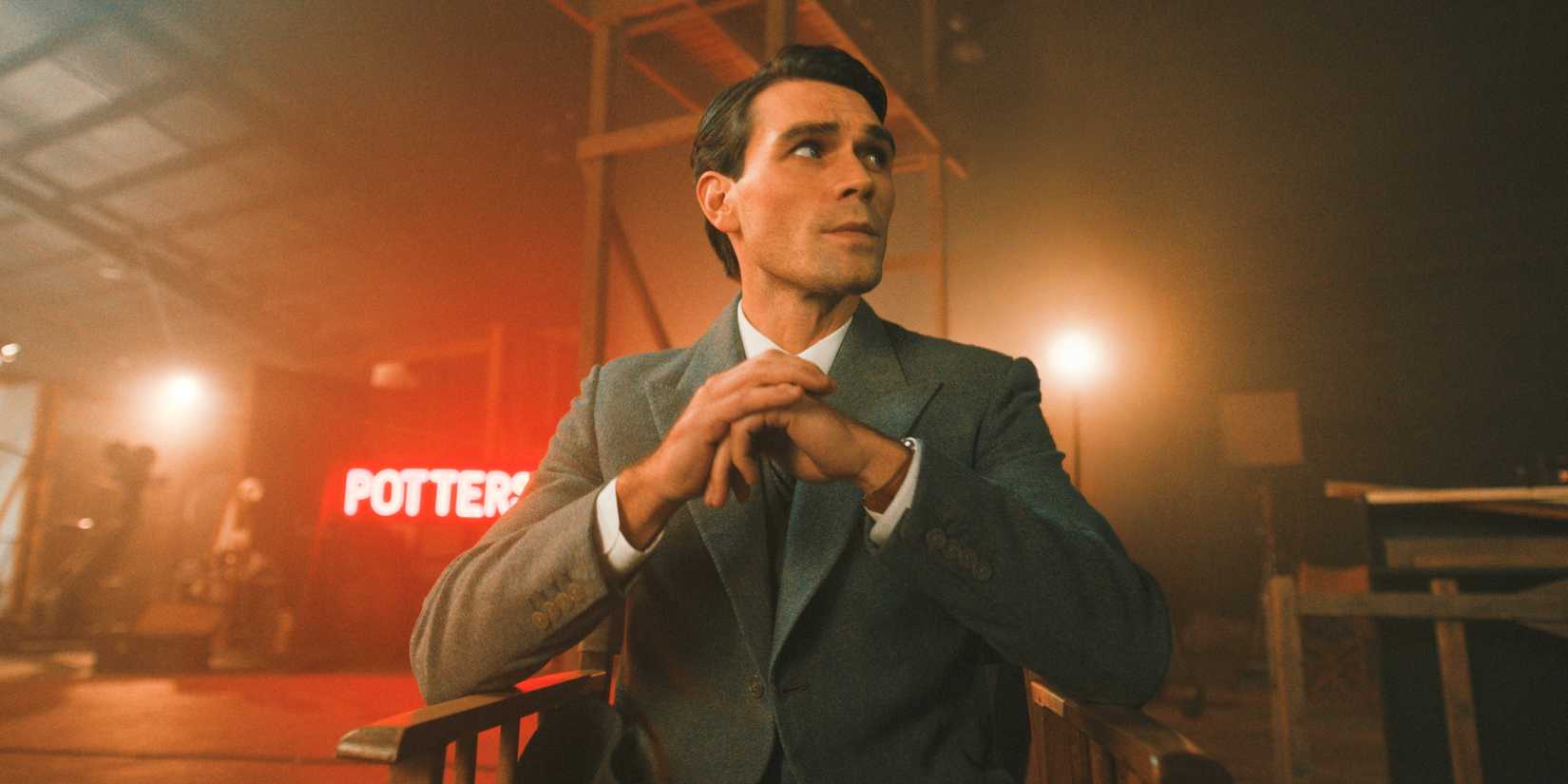 Image via Burns & Co.; JIMMY The Movie LLC, All Rights Reserved.
For all its sincerity and heart, Jimmy is more interested in what Stewart endured rather than exploring the man he was before these experiences changed him. And that’s a big difference when telling the story of one of America’s greatest actors and war heroes. Burns wisely avoids squeezing an entire lifetime into one film, but the screenplay still overlooks relationships that could have given its central character more depth. For starters, the dynamic between his father and his connection to his Pennsylvania hometown is under-explored — yet, in reality, the love was so mutual that there’s a museum and statue dedicated to him in its historic downtown.
Even Ginger Rogers (Jemma Donovan) is introduced without much development, despite the two having briefly dated. More frustrating is the attention given to Julia, a fictional composite of Stewart’s romantic relationships. While their scenes reveal his vulnerability and bring out another layer of Apa’s performance in the middle of war, she remains thinly written. It’s not that the film needed to include every important person in Stewart’s life, but the relationships it chooses to explore don’t always tell us enough about the man himself.
It’s only when Jimmy turns his attention to Capra’s It’s a Wonderful Life that the biopic finds something genuinely moving. After serving for four-and-a-half years, Jimmy’s wartime trauma gives weight to George Bailey’s despair, particularly while filming the famous bar scene at Martini’s. It’s here that we see Apa beautifully convey the pain of a man struggling to find his way back to himself. The film earns that emotional and heartfelt payoff, even if a vision of Stewart’s fallen comrades beforehand feels unnecessarily heavy-handed. Unfortunately, his introduction to Gloria (Jen Lilley), the woman he eventually falls in love with and marries, arrives almost like a bright resolution, never exploring how he rebuilt his life after the war and PTSD.
The film ends on archival footage of the real Stewart, surrounded by family and reflecting on his extraordinary life in his own words, which is undeniably touching. As a longtime fan, it’s this part that made me sob like a baby. But it also highlights how much of the man remains unexplored. Jimmy understands the compassion and decency that made Stewart so beloved, and its depiction of wartime sacrifice carries genuine emotional weight. But seeing what the war took from him isn’t quite the same as understanding everything that made him who he was. Apa gives us a wonderfully human portrait of an American icon, but the film and its writing stop short of becoming the richer biopic that Stewart deserves.
Jimmy opens nationwide in theaters on November 6.
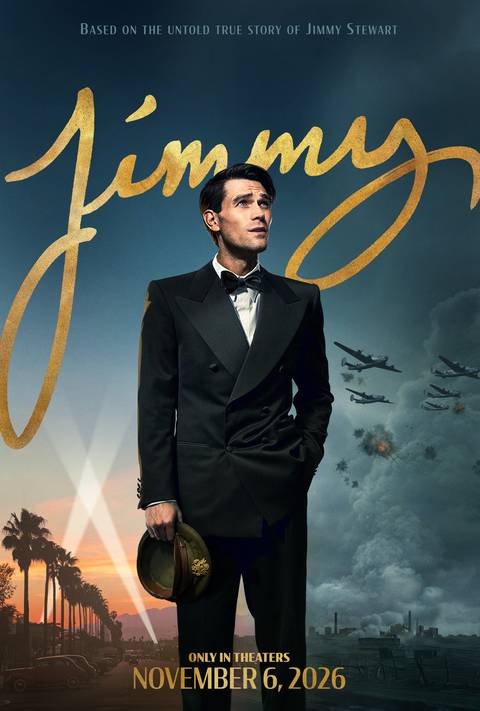
Release Date November 6, 2026
Runtime 120 Minutes
Director Aaron Burns
Writers Justin Strawhand
Producers David Cook, Angela Galgani Sullivan, Jack McClintock, John Norton
Cast


Pros & Cons
- KJ Apa delivers a remarkably restrained, heartfelt performance that restores the humanity behind James Stewart's familiar mannerisms.
- The wartime sequences build emotional weight through Stewart's relationships with his squadron and the devastating losses he endures.
- A sincere, moving exploration of how Stewart's wartime experiences informed his performance in It's a Wonderful Life.
- The screenplay overlooks important relationships and formative experiences that could have offered a fuller portrait of Stewart.
- The fictionalized romance and occasionally sentimental dialogue give parts of the film a conventional, made-for-TV feel.
- Stewart's postwar recovery and eventual family life receive a hurried resolution, leaving significant aspects of his personal journey unexplored.