
Published Oct 24, 2026, 12:00 AM EDT
The perfect marriage of Godzilla and the Blair Witch
 Image: Paramount / Courtesy Everett Collection
In early 2006, J.J. Abrams was in the midst of a generational run. Alias was about to end, Lost had become a cultural phenomenon, and Abrams was traveling the world promoting his directorial debut with Mission: Impossible 3. Somehow, Abrams was just getting started.
At Paramount’s 2007 San Diego Comic-Con panel, Abrams said that while promoting MI3 in Japan, he had visited a toy store with his son. He wanted Godzilla toys. Abrams wanted “our own monster,” something “insane and intense,” rather than King Kong, who he called “adorable.” So he decided to make a movie about one.
That’s how Cloverfield was born. Abrams tapped Lost writer Drew Goddard to write the script and longtime collaborator Matt Reeves to direct. The first teaser appeared before Transformers in July 2007. At Comic-Con, Abrams showed a poster of a beheaded Statue of Liberty looming over a smoky New York City. No title. No actors. Just a release date: Jan. 18, 2008. Keep in mind, this was the same panel that showed early footage from Iron Man, Indiana Jones and the Kingdom of the Crystal Skull, and Abrams’ live-action Star Trek.
Say what you will about some of his less-loved work, but Abrams knows how to generate hype and mystery. Cloverfield, newly streaming on Peacock (but also available on Paramount Plus and for free on Pluto TV), is worthy of both.
What is Cloverfield about?
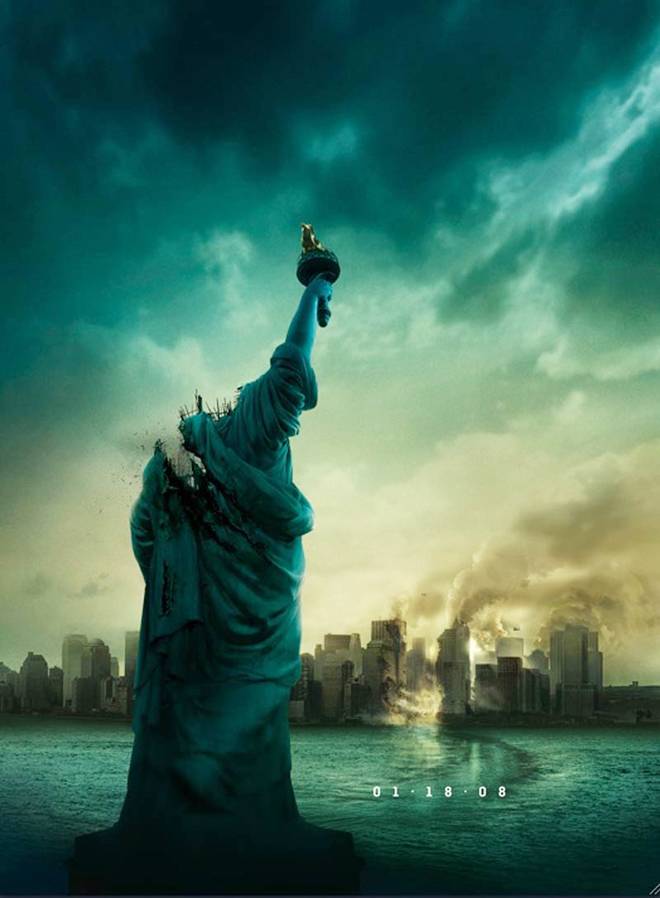 Image: Paramount
The easiest way to describe Cloverfield is as a perfect marriage of found-footage horror like The Blair Witch Project and a kaiju creature feature. A big monster attacks New York City, but the film is told entirely through video footage recorded on a personal camcorder. That allows Cloverfield to do some clever things with its structure. It technically opens on cryptic and generic footage that tells us we’re looking at evidence obtained by the U.S. Department of Defense. It notes “multiple sightings” of a case designated as “Cloverfield” and that the camera was retrieved at the “incident site … formerly known as Central Park.”
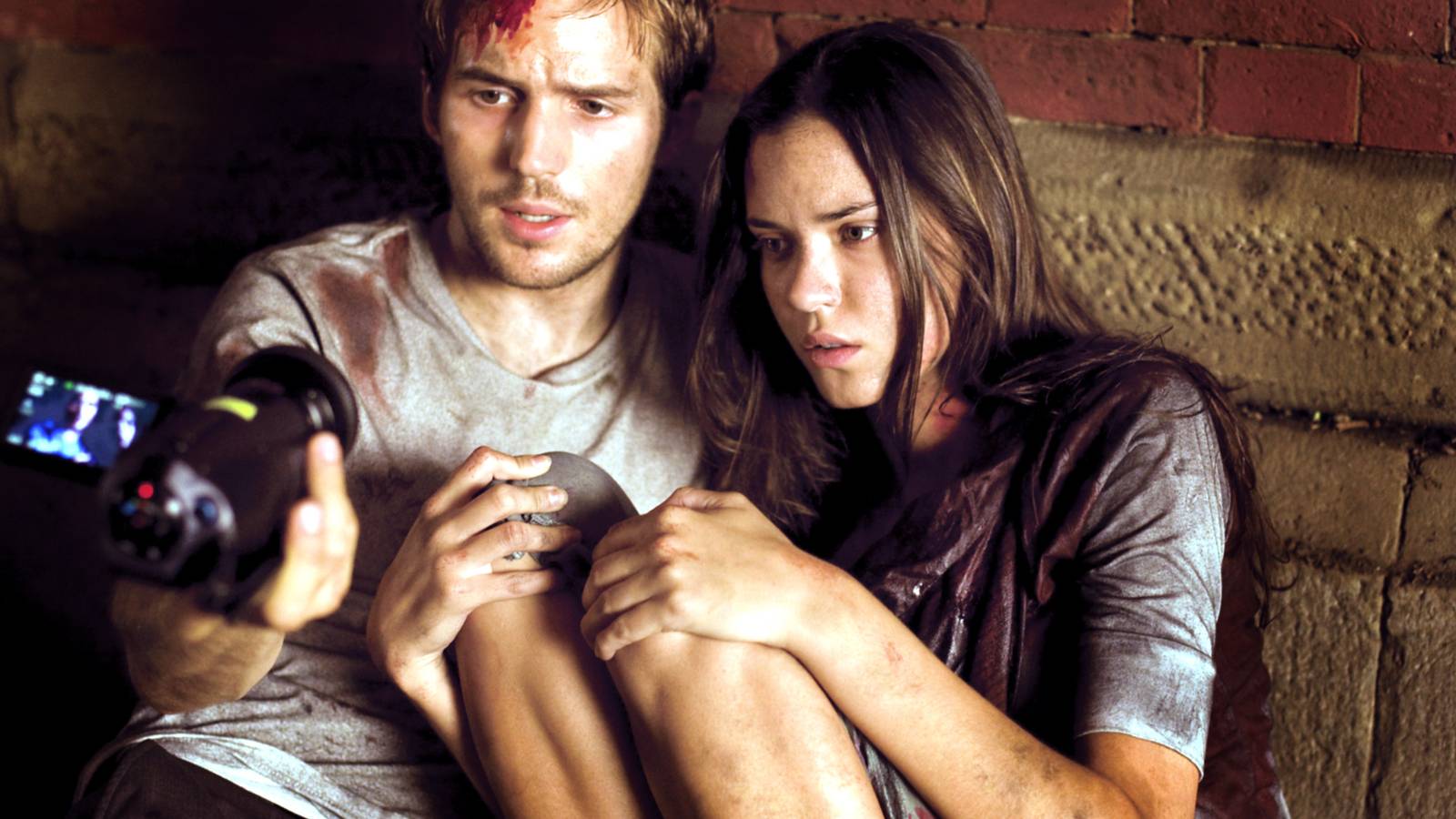
Right away, this spells disaster, but then we see a charming little date between Rob (Michael Stahl-David) and Beth (Odette Annable) in New York City as they travel to Coney Island. The bulk of the movie takes place almost a month later as Rob prepares to leave New York for a new job in Japan. At a going-away party, his friends capture messages for him on the camcorder. Rob’s strained relationship with Beth hangs over the night. She heads home early, not the only one frustrated by how the night has unfolded. Little do they know, it's about to get a lot worse.
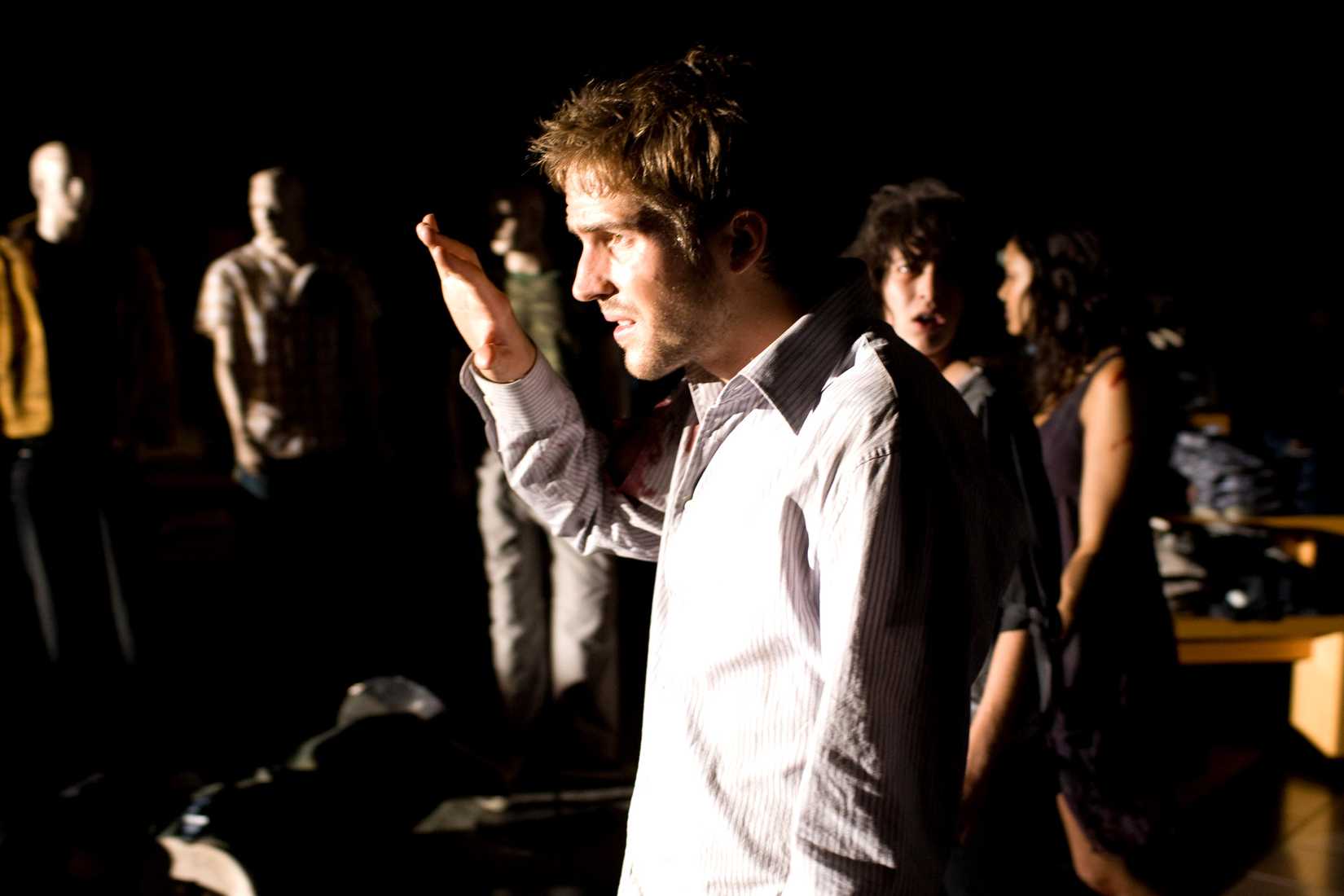 Image: Paramount / Courtesy Everett Collection
Then an explosion lights up the skyline, the city begins to unravel into chaos, and the partygoers set out to find Beth.
That setup gives Cloverfield a clever human scale. This is a Godzilla movie filtered through a handful of young adults trying to get across a city they know, with a camera they’re already using. When Rob and his friends first spot an explosion in the distance, they’re on a rooftop. Having lived in New York myself, I recognize the vibe: a casual night above the street, watching the city go by. Then the blast sends chunks of flaming debris hurtling toward them. The shock lands so well because the movie lets the moment start out so ordinary.
A shaky camera with a clear view of the story
The footage throughout Cloverfield is shaky. That style felt dated even in 2008, but that’s also the point. Cloverfield is coherent enough to keep the geography and the stakes clear, and its breakneck pace does wonders. At just 85 minutes, it has little time to get bogged down in the format’s limitations or anything that even remotely resembles mythology. We don’t ever really get a good look at the monster as it rampages through the city. Instead, the focus is on humans struggling to survive as explosions rock the surrounding city.
At one point early in the film, that severed head of the Statue of Liberty lands in the street nearby. Immediately, everybody whips out their phones and begins recording rather than, I don’t know, running away screaming. This sort of bizarre behavior is so much more likely in 2026 than it was in 2008, and seeing it then felt almost comical. Yet in hindsight, this particular Abrams choice feels particularly prescient.
In a similar fashion, Cloverfield’s biggest strain is kind of obvious: Why would you keep filming while a monster is tearing through Manhattan and doing so jeopardizes your own safety? Hud (T.J. Miller), the party’s designated cameraman, thinks he caught the monster on camera early on and just decides to keep recording. It’s a convenient reason, but it gives the footage a little purpose beyond the movie’s need for a camera. And as the crisis grows, that impulse to document the impossible starts to feel believable.
What stays with me most is that Rob and Beth’s relationship remains such an important part of the story without taking it over. His decision to leave New York for a new job has driven them apart, and it probably explains why he didn’t pursue a relationship after their one-night stand. The disaster gives them a reason to find each other again, and the film lets that romance tug at the heartstrings just enough. As they face the end together, their story adds an ache to the spectacle without slowing it down.
I love Cloverfield. I enjoy the other movies bearing its name, too, even if they don’t feel coherently connected in any legitimate way (and yes, that includes Cloverfield Paradox). But where do you even go after a found-footage movie that makes the Godzilla-style citywide rampage feel this immediate and personal? Cloverfield’s best trick is that it never gives us the whole picture. It just gives us enough to feel what it would be like to be there.