 Image via Fox

Published Oct 22, 2026, 11:04 PM EDT
Liam Gaughan is a film and TV writer at Collider. He has been writing film reviews and news coverage for ten years. Between relentlessly adding new titles to his watchlist and attending as many screenings as he can, Liam is always watching new movies and television shows.
In addition to reviewing, writing, and commentating on both new and old releases, Liam has interviewed talent such as Mark Wahlberg, Jesse Plemons, Sam Mendes, Billy Eichner, Dylan O'Brien, Luke Wilson, and B.J. Novak. Liam aims to get his spec scripts produced and currently writes short films and stage plays. He lives in Allentown, PA.
Sign in to your Collider account
Procedural crime shows have been a staple of television for decades, but Bones had a unique slant on the subgenre that felt like more than just a gimmick. There’s no shortage of series that follow the investigative process through the eyes of detectives or law enforcement officers, but Bones took the unique approach of showing the work done by anthropologists to analyze human remains. While this might imply that the show deals with very dark, disturbingly visceral material, Bones is a surprisingly fun series that became even more character-driven as it went along. Although its final season was largely perfect, wrapping up every character arc in a satisfying way, there hasn’t been a new show in the same space that has come to occupy what Bones represents. Given the growing popularity of the cast and their expressed enthusiasm about reprising their roles, Bones is in a good position to get a reboot.
‘Bones’ Is Primed for a Continuation After 12 Seasons
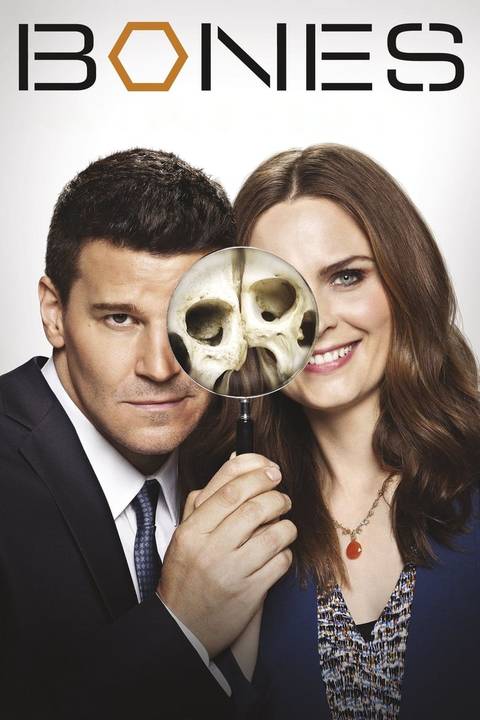
Bones is loosely inspired by the experiences and novels of Kathy Reichs, a real forensic anthropologist who served as a field scientist before becoming a professor at the University of Southern California. The title is not only a reference to the skeletal framework and limbs that are analyzed by the main characters at the Jeffersonian Institute Medico-Legal Lab in Washington D.C., but a nickname for the protagonist Dr. Temperance Brennan (Emily Deschanel), who is based on Reichs. Brennan is a highly exacting, quizzical genius who nonetheless struggles to understand human nature, which gives her an interesting relationship with her partner and eventual love interest, FBI Agent Seeley Booth (David Boreanaz). Bones was able to progress its characters while coming up with interesting procedural case-of-the-week style episodes for over a decade, and enough time has passed that there’s enough nostalgia to generate interest in a reboot.
Collider Exclusive · TV Medicine Quiz Which Fictional Hospital Would You Work Best In? The Pitt · ER · Grey's Anatomy · House · Scrubs
Five hospitals. Five completely different ways medicine goes sideways on television — brutal, chaotic, romantic, brilliant, and ridiculous. Only one of them is the ward your instincts were built for. Eight questions will figure out exactly where you belong.
🚨The Pitt
🏥ER
💉Grey's
🔬House
🩺Scrubs
FIND YOUR HOSPITAL →
01
A critical patient comes through the door. What's your first instinct? Medicine under pressure reveals who you actually are.
AStay completely present — block everything else out and work through it step by step, right now. BTriage fast and delegate — get the right people on the right problems immediately. CTrust my gut and move — I work best when I stop overthinking and just act. DAsk the question everyone else is ignoring — what's the thing that doesn't fit? ETake a breath, make a joke to cut the tension, and then get to work — panic helps no one.
NEXT QUESTION →
02
Why did you go into medicine in the first place? The honest answer says more about you than the one you'd give in an interview.
ABecause I wanted to be where it matters most — right at the edge, when someone's life is actually on the line. BBecause I wanted to help people — genuinely, one patient at a time, in a system that makes it hard. CBecause I was drawn to the intensity of it — the stakes, the drama, the feeling of being fully alive. DBecause medicine is the most interesting puzzle there is — and I needed a problem worth solving. EBecause I wanted to make a difference — and also, honestly, I didn't know what else to do with my life.
NEXT QUESTION →
03
What do you actually want from the people you work with? Who you want beside you under pressure is who you are.
ACompetence and calm — I need people who don't fall apart when things get bad. BTrust and reliability — I want to know that when I pass something off, it's handled. CConnection — I want colleagues who become family, even if that gets complicated. DIntelligence and the willingness to be challenged — I have no interest in people who just agree with me. EFriendship — people I actually like spending twelve hours a day with, because those hours are going to happen either way.
NEXT QUESTION →
04
You lose a patient you fought hard to save. How do you carry it? Every doctor who's worked a long shift has had to answer this question.
AI carry it. All of it. I don't look for ways to put it down — that weight is part of doing this work honestly. BI process it and move — you have to, or the next patient suffers for the one you just lost. CI feel it deeply and lean on the people around me — I don't think you're supposed to handle that alone. DI go back over every decision — not to punish myself, but because I need to understand what I missed. EI grieve it genuinely, find some way to laugh about something unrelated, and try to be kind to myself — imperfectly.
NEXT QUESTION →
05
How would your colleagues describe the way you work? Your reputation on the floor is usually more accurate than your self-image.
AIntense and completely present — no small talk during a shift, but exactly who you want there. BSteady and dependable — not the flashiest in the room but never the one who drops something. CPassionate and occasionally chaotic — brilliant on the hard cases, prone to drama everywhere else. DBrilliant and difficult — right more often than anyone else, and everyone knows it, including me. EWarm and self-deprecating — not the most intimidating presence, but genuinely good at this and easy to like.
NEXT QUESTION →
06
How do you feel about hospital protocol and procedure? Every institution has rules. What you do with them is a choice.
AProtocol is the floor, not the ceiling — I follow it until the patient needs something it can't provide. BI respect it — the system is broken in places, but the structure is there for a reason and I work within it. CI follow it until my instincts tell me not to — and my instincts are usually right, even when they cause problems. DRules are for people who haven't thought hard enough about when to break them. EI try to follow it and mostly do — with a few memorable exceptions that still come up in meetings.
NEXT QUESTION →
07
What does this job cost you personally? Nobody works in medicine without paying a price. What's yours?
AEverything outside these walls — I've given this job my full attention and the rest of my life has gone around it. BMy idealism, mostly — I came in believing the system could be fixed and I've made a complicated peace with that. CStability — my personal life has been as chaotic as the OR, and that's not entirely a coincidence. DMy relationships — I am not easy to know, and the people who've tried to would probably agree. EMy sense of gravity — I use humour as a coping mechanism, which not everyone appreciates in a hospital.
NEXT QUESTION →
08
At the end of a long shift, what keeps you coming back? The answer to this question is the most honest thing about you.
AThe fact that it's real — that nothing else I could be doing would matter this much, right now, today. BThe patients — individual human beings who needed something and got it because I was there. CThe people I work with — I have walked through impossible things with these people and I'd do it again. DThe next unsolved case — there's always another puzzle, and I'm not done yet. EBecause despite everything — the exhaustion, the loss, the absurdity — I actually love this job.
REVEAL MY HOSPITAL →
Your Assignment Has Been Made You Belong In…
Your answers have pointed to one fictional hospital above all others. This is the ward your instincts, your temperament, and your particular brand of dysfunction were built for.
The Pitt
You are built for the most unsparing version of emergency medicine television has ever shown — one that puts you inside a single fifteen-hour shift and doesn't let you look away.
- You need your work to be real, not romanticised — meaning over drama, honesty over aesthetics.
- You find purpose inside the work itself, not in the chaos surrounding it.
- You've made peace with the fact that this job takes from you constantly, and gives back in ways that are harder to name.
- Pittsburgh Trauma Medical Center demands exactly that kind of person — and you would not want to be anywhere else.
ER
You are the person who keeps the whole floor running — not the most brilliant in the room, but possibly the most essential.
- You show up, do the work, absorb the losses, and come back the next day without needing the job to be anything other than what it is.
- You care about patients as individual human beings, not as cases to solve or dramas to live through.
- You believe in the system even when it fails you — and you understand that emergency medicine is about holding the line just long enough.
- ER is television about endurance. You have it.
Grey's Anatomy
You came to medicine with your whole self — your ambition, your emotions, your relationships, your history — and you have never quite managed to leave any of it at the door.
- You feel things fully and form deep attachments to the people you work with.
- Your personal and professional lives are permanently, chaotically entangled — and that entanglement drives both your greatest disasters and your most remarkable saves.
- You understand that extraordinary medicine often happens at the intersection of clinical skill and profound human connection.
- It's messy at Grey Sloan. You would not have it any other way.
House
You are drawn to the problem above everything else — the symptom that doesn't fit, the diagnosis hiding underneath the obvious one.
- You're not primarily motivated by the patient as a person — though you are capable of caring, even if you'd deny it.
- You work best when the stakes are highest and the standard answer is wrong.
- Princeton-Plainsboro exists to house one extraordinary, impossible mind — and everyone around that mind is there because they're smart enough to keep up.
- The only way forward here is to think harder than everyone else in the room. That is exactly what you do.
Scrubs
You understand that medicine is tragic and absurd in almost equal measure — and that the only sane response is to hold both of those things at the same time.
- You are warm, self-aware, and funnier than most people in your field.
- You use humour to get through terrible moments — and at Sacred Heart, that's not a flaw, it's a survival strategy.
- You lean on the people around you and let them lean back. The laughter and the grief are genuinely inseparable here.
- Scrubs is a show about learning to become someone worthy of the job. You are still very much in the middle of that process — which is exactly right.
↻ RETAKE THE QUIZ
One of the most profound ideas in Bones is that the series isn’t interested in establishing a status quo and has accepted the idea that the characters have evolved and matured over time. Although the show begins when Brennan is highly idiosyncratic and Booth is quite stern, they begin to rub off on one another as they share valuable experiences and see the merits in each others’ approaches. The reason that this dynamic works so well is that Deschanel and Boreanaz developed a friendship off-screen and met with one another and an acting coach in order to create compelling chemistry. Although most shows tend to get less interesting when the main characters form a couple, Bones was able to show the dimensionality of Brennan’s relationship with Booth as they work to be both professional and personal allies. It’s because their dynamic was so strong that the show was able to get into more intimate territory, specifically in showing how both Booth and Brennan have been scarred by challenging histories with their immediate relatives.
While Deschanel and Boreanaz's involvement would be enough to get fans enthusiastic about a potential revival, Bones has an extensive cast of characters who were made iconic by their actors, and there’s a lot of room to bring them back. Almost as compelling as the romance between Brennan and Booth is that of the entomologist Jack Hodgins (T.J. Thyne) and the artist Angela Montenegro (Michaela Conlin), whose mutual attraction and eventual marriage was delicately played out over time, leading to a fascinating relationship. While having another matured couple that has its share of experience would obviously be a benefit to the show, there’s also characters like Dr. Zack Addy (Eric Millegan), whose redemptive arc was only just being initiated by the time the final season wrapped in 2017.
‘Bones’ Has an Impressive Degree of Consistency
Bones set up a perfect model in which to introduce a new generation of characters because the series incorporated the “squintern” program that involved doctors-in-training to take part in Brennan’s team. Many of these characters became full-fledged members of the cast, such as Colin Fisher (Joel David Moore) and Daisy (Carla Gallo), as fans' desire to see more of them led to their appearances in subsequent episodes. Although there are many of the former “squinterns” who could easily be part of Brennan’s expanded team in a reboot, there’s also an opportunity to add new cast members to play younger characters, providing a hook to audiences that hadn’t previously watched the show. Although it is more rewarding for those who watch from the beginning and see the progression of the character arcs for over a decade, one of the best things about Bones is that it’s easy to pick up a random episode and still be riveted.
Not every popular show requires a reboot, but Bones is in the perfect spot because its creator Hart Hanson has a tremendous amount of experience, and the premise is open-ended enough that it would make sense to pick up with the characters on just another day at the office. Bones has only reached out to more viewers in the streaming era, as it's a permanent fixture for both new viewers to discover it and exciting fans to revisit it as a “comfort watch.” Boreanaz has somehow managed to have a recurring role on a major network show every year since Buffy the Vampire Slayer started in 1997, and it would only make sense for him to celebrate 30 years by returning to his most beloved character.
Bones
Release Date 2005 - 2017-00-00