
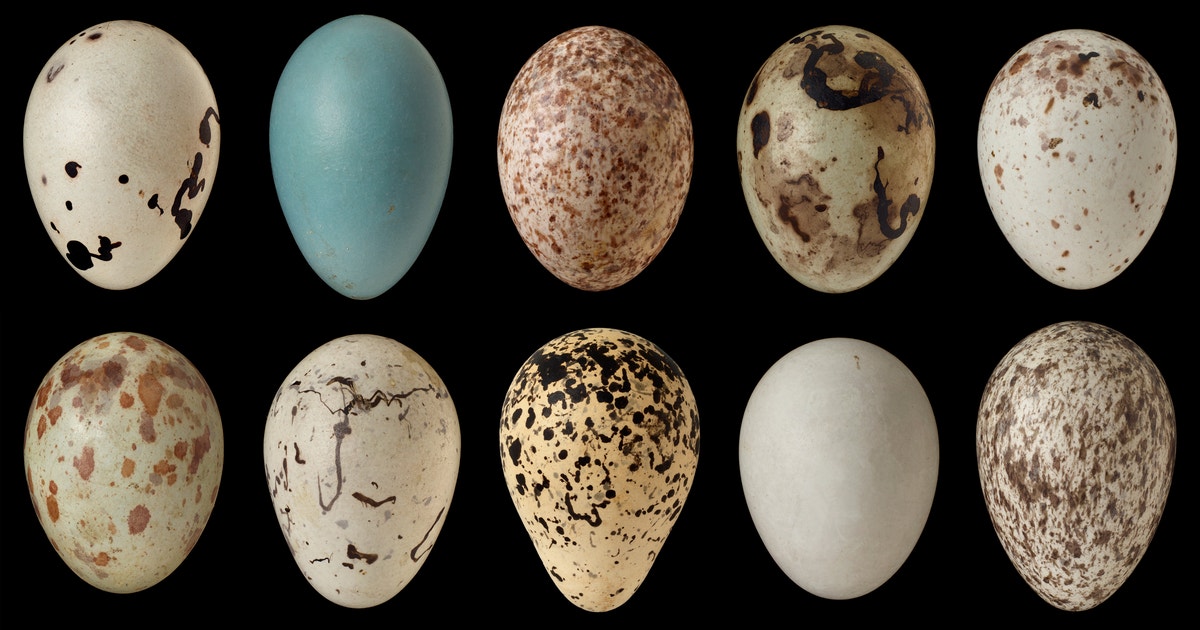
So, you’ve found a bird egg. Maybe it was in a potted plant on the front porch, tucked into a bush's tangled branches at the park, or, sadly, mysteriously broken and by itself on the ground. Stumbling upon an active nest or an orphaned egg happens, along with the natural question that follows: What type of bird does that egg belong to? Well, we're here to help.
Identifying a bird egg is a lot like identifying a bird: You’ll want to pay attention to color, size, and markings to find a species match. Those features can help you quickly identify eggs for a lot of bird species. A few context clues can help you further narrow down the field. (For example, what kind of nest did you find the egg in, and where is it placed?)
Here, we’ve gathered a handy guide to some of the common eggs you’re likely to spot around your home, in the neighborhood, or even inside a nest box. Read on to uncover what species probably laid that egg, and remember: Always observe nests from a safe distance to avoid disturbing adults as they incubate their eggs and, later, feed their chicks. Never linger, and if you happen on an active but unattended nest, snap a quick picture to use as an ID reference later. But always keep the safety of the birds and their chicks first.
Okay, now good luck identifying—or just enjoying the diversity and beauty of eggs that exist in the bird world.
Blue and Blue-Green Eggs
American Robin
- Egg Color and Markings: You know it, you love it. The bright aqua hue of “robin’s-egg blue” has become its own reference. Look for a handful of blue eggs without any marks or spots, settled in a cup-shaped nest.
- Approximate Size: 1.1 to 1.2 inches long, about the size of a grape
- Typical Clutch Size: Usually 4, can be 3 to 7
Eastern Bluebird
- Egg Color and Markings: An Eastern Bluebird’s eggs are a light powder blue, without any marks—or, rarely, they can also come in white. You’ll often spot them in a nest box or tree cavity.
- Approximate Size: 0.7 to 0.9 inches long, about the size of a jelly bean
- Typical Clutch Size: Usually 4 to 5, can be 2 to 7
The eggs of an Eastern Bluebird and an American Robin look pretty similar, but with a couple key differences. A robin’s eggs are a darker, more vibrant shade of blue, while bluebird eggs are a little paler and smaller—like the length of a dime instead of a quarter. Take note of where you find the eggs, too. Bluebirds are cavity nesters, and today mainly lay their eggs in nest boxes. Robins tend to place their nests in low branches of trees or shrubs, or even in gutters and eaves of buildings.
Blue Jay
- Egg Color and Markings: Blue Jay eggs can look greenish, bluish, or light brown, speckled with darker brown and gray spots. Check for them in open-cup nests up in the crotch of a tree or out on a thick branch.
- Approximate Size: 1.0 to 1.3 inches long, about the size of a grape
- Typical Clutch Size: Usually 4 to 5, can be 3 to 7
House Finch
- Egg Color and Markings: House Finch eggs are light blue or whitish, often with some black and lavender dots toward the wider end of the egg. They can turn up in a range of nest sites, from conifers to holes in buildings to cacti.
- Approximate Size: 0.6 to 0.8 inches long, about the size of a jelly bean
- Typical Clutch Size: Usually 4 to 5, sometimes 2 to 6
Common Grackle
- Egg Color and Markings: A Common Grackle’s eggs can appear in shades of light blue to light gray, often with splotches of dark brown. If you spot one bunch of grackle eggs, you may be near another: These social birds often build their bulky, cup-shaped nests in colonies with dozens of others.
- Approximate Size: 1.0 to 1.3 inches long, about the size of a grape
- Typical Clutch Size: 1 to 7
European Starling
- Egg Color and Markings: Starling eggs are a bluish or greenish white, without any markings. They’ll be found in loose nests in cavity sites such as tree holes, nest boxes, or other odd crevices like streetlights.
- Approximate Size: 1.1 to 1.3 inches long, about the size of a grape
- Typical Clutch Size: 4 to 6, rarely 7
Gray Catbird
- Egg Color and Markings: Catbird eggs are a turquoise green-blue, usually unmarked but sometimes with small red spots. You’ll find them in bulky cups placed deep within shrubs or low trees.
- Approximate Size: 0.9 to 1.0 inches long, about the size of a grape
- Typical Clutch Size: 4, can be 2 to 6
Red-winged Blackbird
- Egg Color and Markings: These bold birds lay pale blue-green eggs, with some black, brown, and purple markings. You’ll typically spot their cup-shaped nests low to the ground in marshy plants, shrubs, or grasses.
- Approximate Size: 0.9 to 1.1 inches long, about the size of a grape
- Typical Clutch Size: 3 to 4, can be 2 to 6
Northern Mockingbird
- Egg Color and Markings: Mockingbird eggs come in shades of greenish to bluish gray, and have brown blotches toward the larger end. They’ll be found nestled in a twiggy cup in a dense shrub or tree.
- Approximate Size: 0.8 to 1.1 inches long, about the size of a grape
- Typical Clutch Size: 3 to 4, can be 2 to 6
White and Off-White Eggs
Mourning Dove
- Egg Color and Markings: Mourning Dove eggs are plain white, with no markings. If the nest looks like it might fall apart at any moment, it just might be a Mourning Dove’s. The birds are famous for building flimsy nests—really just collections of twigs—and placing them in surprising spots.
- Approximate Size: 1.0 to 1.2 inches long, about the size of a grape
- Typical Clutch Size: 2
Rock Pigeon
- Egg Color and Markings: Pigeons are technically doves, so Rock Pigeon eggs look a lot like Mourning Dove eggs: They are also plain white without any markings, though tend to be a little bit bigger. In cities, you’ll often see them in twig platform nests balanced on window ledges or in gutters.
- Approximate Size: 0.9 to 1.8 inches long, about the size of a golf ball
- Typical Clutch Size: 2, sometimes 1
American Barn Owl
- Egg Color and Markings: An American Barn Owl’s eggs are an off-white color. They start without markings, but over time will often pick up brownish stains from the nest—which is basically a collection of debris tucked into a tree hollow, cave, or similar structure like a barn loft.
- Approximate Size: 1.5 to 1.7 inches long, about the size of a golf ball
- Typical Clutch Size: Usually 3 to 8, sometimes 2 to 12 or even more
Ruby-throated Hummingbird
- Egg Color and Markings: Ruby-throated Hummingbird eggs are white, unmarked, and tiny—though they’re big compared to a hummingbird’s body size! Look for a pair of eggs nestled into a tightly woven, thimble-sized cup covered with lichen and moss.
- Approximate Size: 0.5 to 0.6 inches long, about the size of a jelly bean
- Typical Clutch Size: 2
Black-chinned Hummingbird
- Egg Color and Markings: Similarly, these Western hummingbirds lay small, white eggs with no markings. Their compact cup nests are typically placed on horizontal branches of trees or shrubs.
- Approximate Size: 0.5 to 0.6 inches long, about the size of a jelly bean
- Typical Clutch Size: 2
Northern House Wren
- Egg Color and Markings: This little bird’s eggs are also petite, usually a white or pinkish-white color with lots of reddish-brown dots. You’ll find them in cavity sites including natural tree hollows, old woodpecker holes, and nest boxes.
- Approximate Size: 0.6 to 0.8 inches long, about the size of a jelly bean
- Typical Clutch Size: 6 to 7, can be 3 to 10
Carolina Wren
- Egg Color and Markings: The Carolina Wren’s eggs are a creamy white color with rusty brown flecks. These birds are adaptable cavity nesters; you can spy their bulky nests, which often have a dome-like construction, in natural crevices as well as flowerpots, shelves, and other artificial sites.
- Approximate Size: 0.7 to 0.8 inches, about the size of a jelly bean
- Typical Clutch Size: 5 to 6, can be 4 to 8
Tree Swallow
- Egg Color and Markings: Tree Swallow eggs start out as a pale pink color, but fade to white after a few days. You’ll frequently find them in nest boxes, as well as natural cavities such as holes in dead trees.
- Approximate Size: 0.7 to 0.8 inches, about the size of a jelly bean
- Typical Clutch Size: 4 to 7, can be 2 to 8
Speckled and Spotted Eggs
House Sparrow
- Egg Color and Markings: House Sparrow eggs are white or greenish-white with gray or brown speckles. Most spots are concentrated toward the bigger end of the egg. Look for them in nests of dried vegetation stuffed into gutters or holes in buildings.
- Approximate Size: 0.8 to 0.9 inches long, about the size of a jelly bean
- Typical Clutch Size: Usually 3 to 6, can be 1 to 8
The whole range of colors and patterns on bird eggs comes from just two pigments: one that’s reddish-brown, and another that’s bluish-green. After studying eggs’ chemical makeup, scientists found that these two pigments, combined in different amounts and painted on top of a white base, are responsible for the rainbow of eggshell hues we see today.
Song Sparrow
- Egg Color and Markings: Similar to House Sparrows, Song Sparrows lay greenish-white eggs with lots of reddish-brown spots. They’re found in sturdy, cup-shaped nests, usually hidden among shrubs and grasses on or near the ground.
- Approximate Size: 0.7 to 0.9 inches long, about the size of a jelly bean
- Typical Clutch Size: Typically 4, can be 2 to 6
American Goldfinch
- Egg Color and Markings: These bright little birds lay rather plain eggs, largely white or bluish-white with some faint brown spots near the large end. Look for them in small, sturdy nests in shrubs or low tree branches.
- Approximate Size: 0.6 to 0.7 inches long, about the size of a jelly bean
- Typical Clutch Size: 4 to 6, sometimes 2 to 7
Killdeer
- Egg Color and Markings: Killdeer eggs are buff colored with lots of black and brown splotches. They’re famously hard to spot, since they camouflage into the birds’ simple scrape nests—shallow depressions scratched into the ground and lined with pebbles.
- Approximate Size: 1.5 inches long, about the size of a golf ball
- Typical Clutch Size: Usually 4, sometimes 3 to 5
Brown-headed Cowbird
- Egg Color and Markings: If you spot one egg that looks different from the rest of its nestmates, it just might be a cowbird’s. These brood parasites lay their eggs, which are white with brown or gray spots, in the nests of other species, offloading the work of incubating and raising their young.
- Approximate Size: 0.7 to 1.0 inches long, about the size of a grape
- Typical Clutch Size: 1 per host nest
Cardinal, Oriole, and Warbler Eggs
These are some of the most commonly requested species for egg IDs. Follow these tips to tell apart these popular species’ whitish, speckled eggs.
Northern Cardinal
- Egg Color and Markings: Northern Cardinal eggs are white, bluish-white, or greenish-white, with specks of brown, purple, and gray. They can be tricky to spot, since cardinals’ nests are usually well hidden in dense shrubs or low trees.
- Approximate Size: 0.9 to 1.1 inches long, about the size of a grape
- Typical Clutch Size: 3 to 4, sometimes 2 to 5
Baltimore Oriole
- Egg Color and Markings: The Baltimore Oriole lays bluish-white or pale gray eggs, marked with brown and black spots and squiggles. Look for them in the birds’ impressive sock-shaped nests that hang down from tall tree branches.
- Approximate Size: 0.8 to 1.0 inches long, about the size of a grape
- Typical Clutch Size: 4 to 5, sometimes 3 to 6
Orchard Oriole
- Egg Color and Markings: Orchard Oriole eggs are a pale bluish-white, marked with blotches of brown, gray, and purple. You’ll spot them in the birds’ woven basket nests, placed up in a forked branch of a tree.
- Approximate Size: 0.8 to 0.9 inches long, about the size of a grape
- Typical Clutch Size: 4 to 5, sometimes 3 to 7
Yellow-rumped Warbler
- Egg Color and Markings: This warbler’s eggs are a creamy white color with brown and gray spots, placed in cup-shaped nests in conifer trees.
- Approximate Size: 0.7 to 0.8 inches long, about the size of a jelly bean
- Typical Clutch Size: 4 to 5, sometimes only 3
Common Yellowthroat
- Egg Color and Markings: The Common Yellowthroat lays white eggs with some gray, reddish-brown, or black spots. Look down to spot them: The birds nest on or near the ground, usually in wet or marshy areas.
- Approximate Size: 0.6 to 0.8 inches long, about the size of a jelly bean
- Typical Clutch Size: 3 to 5, sometimes 6
Northern Yellow Warbler
- Egg Color and Markings: This widespread warbler’s eggs are greenish-white with a variety of specks and spots in brown, olive, and gray. You can spot their cup-shaped nests in bushes or trees across a wide range of habitats.
- Approximate Size: 0.6 to 0.8 inches long, about the size of a jelly bean
- Typical Clutch Size: 4 to 5, sometimes 3 to 6
Frequently Asked Egg Questions
Q: What bird lays small blue eggs?
A: Eastern Bluebirds and House Finches both lay pale blue eggs roughly the size of a marble. The easiest way to distinguish them is by checking for markings: Bluebirds’ eggs are plain, while finch eggs may have black or lavender dots.
Q: What bird lays blue eggs with brown speckles?
A: Common Grackles have light blue eggs, often marked with some dark brown splotches. Blue Jays, too, lay blue eggs, sometimes with a greenish or brownish tint, which have dark brown and gray speckles.
Q: What does a cardinal egg look like?
A: Cardinal eggs are white, sometimes with a tint of blue or green, and have lots of brown and gray speckles concentrated toward the larger end. They’re around 1 inch long.
Q: How small is a hummingbird egg?
A: Ruby-throated Hummingbird eggs are about half an inch long, roughly the size of a jellybean. They are white and unmarked, laid in clutches of 2.
Q: Should I remove cowbird eggs?
A: The short answer: no. Even though it may be tempting to stop these brood parasites from hatching in other birds’ nests, taking out their eggs can have unintended consequences: It could lead parents to abandon the nest altogether, or inspire cowbird revenge. Plus, messing with Brown-headed Cowbird eggs is illegal under the Migratory Bird Treaty Act unless you have a permit. Leave any cowbird management to the pros (and in the meantime, maybe learn to appreciate the species).
Q: How long does it take for bird eggs to hatch?
A: It depends on the species. Many songbirds incubate their eggs for around 10 to 14 days before they hatch. But eggs for other species—such as shorebirds, raptors, and waterfowl—may take a month or more to hatch. Really large seabirds like albatrosses are even known to incubate their eggs for as long as 80 days.
Want to learn more?
To keep exploring the world of bird eggs—and birds themselves!—download the Audubon Bird Guide app. The free app offers a comprehensive field guide to more than 800 species across North America, helping you identify the birds you see and learn much more about their lives.


