
.jpg) 1 hour ago
3
1 hour ago
3
Article content

THIS CONTENT IS RESERVED FOR SUBSCRIBERS ONLY
Subscribe now to read the latest news in your city and across Canada.
- Exclusive articles from Barbara Shecter, Joe O'Connor, Gabriel Friedman, and others.
- Daily content from Financial Times, the world's leading global business publication.
- Unlimited online access to read articles from Financial Post, National Post and 15 news sites across Canada with one account.
- National Post ePaper, an electronic replica of the print edition to view on any device, share and comment on.
- Daily puzzles, including the New York Times Crossword.
SUBSCRIBE TO UNLOCK MORE ARTICLES
Subscribe now to read the latest news in your city and across Canada.
- Exclusive articles from Barbara Shecter, Joe O'Connor, Gabriel Friedman and others.
- Daily content from Financial Times, the world's leading global business publication.
- Unlimited online access to read articles from Financial Post, National Post and 15 news sites across Canada with one account.
- National Post ePaper, an electronic replica of the print edition to view on any device, share and comment on.
- Daily puzzles, including the New York Times Crossword.
REGISTER / SIGN IN TO UNLOCK MORE ARTICLES
Create an account or sign in to continue with your reading experience.
- Access articles from across Canada with one account.
- Share your thoughts and join the conversation in the comments.
- Enjoy additional articles per month.
- Get email updates from your favourite authors.
THIS ARTICLE IS FREE TO READ REGISTER TO UNLOCK.
Create an account or sign in to continue with your reading experience.
- Access articles from across Canada with one account
- Share your thoughts and join the conversation in the comments
- Enjoy additional articles per month
- Get email updates from your favourite authors
Sign In or Create an Account
or
Article content
Article content
Article content
Article content
Article content
OTTAWA, March 18, 2026 (GLOBE NEWSWIRE) — A chronic lack of clean water and hygiene services in delivery rooms is contributing to one in nine mothers in sub-Saharan Africa developing sepsis, with around 13,000 women dying from maternal sepsis each year, new research from WaterAid reveals.
Article content
That is equivalent to 36 mothers lost every day, making mothers in Sub-Saharan Africa 144 times more likely to die from sepsis than those in Western Europe and North America, WaterAid’s new “Born without water” report reveals.
Article content
Article content
The new research exposes the shocking reality inside some of the world’s most under-resourced maternity wards and reveals stark global inequalities in maternal sepsis, a life-threatening infection linked to unhygienic childbirth conditions and the third leading cause of maternal mortality worldwide.
Article content
By signing up you consent to receive the above newsletter from Postmedia Network Inc.
Article content
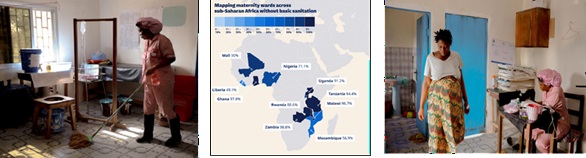
Deep diving into the state of maternity wards across 10 Sub-Saharan African countries, including Nigeria, Rwanda and Zambia, the research finds that 76% of births (around 3 in 4 births) occur in “unsafe” delivery rooms – defined by the lack of basic essentials:
Article content
- 65% of births take place in healthcare facilities which lack proper cleaning
- 66% are without handwashing facilities and soap
- 78% without any decent toilets
Article content
This means mothers are often giving birth in blood-stained rooms and forced to walk to unclean rivers to wash with open wounds post-birth, while babies are delivered by healthcare workers and midwives who have no choice but to provide care with unclean hands and equipment.
Article content
Across the 16 countries studied, Zambia has the highest proportion of births taking place without basic toilets (98.8%) and handwashing facilities (86.1%).
Article content
Article content
Global aid cuts are stalling – or even reversing – progress in reducing maternal and infant deaths. Yet simple, affordable essentials like clean water, toilets, and handwashing could cut maternal infections and deaths by at least 50%, WaterAid reveals.
Article content
The report discovers that investing in and delivering universal water, sanitation and hygiene across healthcare facilities could prevent 10 million cases of maternal sepsis and 8,580 deaths worldwide every year – at a cost of less than $1 per person, much cheaper than the cost of treating sepsis, the study finds.
Article content
These basic essential produces life-saving benefits beyond health, that ripple across families, communities, and society, including poverty reduction, education and gender equality
Article content
WaterAid Canada’s CEO Justin Murgai said:
Article content
“Too many women are still giving birth in facilities where there is no clean water, no soap, and no safe sanitation. When those basics are missing, childbirth can quickly become life-threatening. That’s not just unacceptable, it’s dangerous. Giving birth should be one of the safest moments in a woman’s life. Infections like maternal sepsis are largely preventable, and the solutions are simple and affordable. What’s missing is the investment and focus needed to ensure every healthcare facility has the basics.
 English (US)