
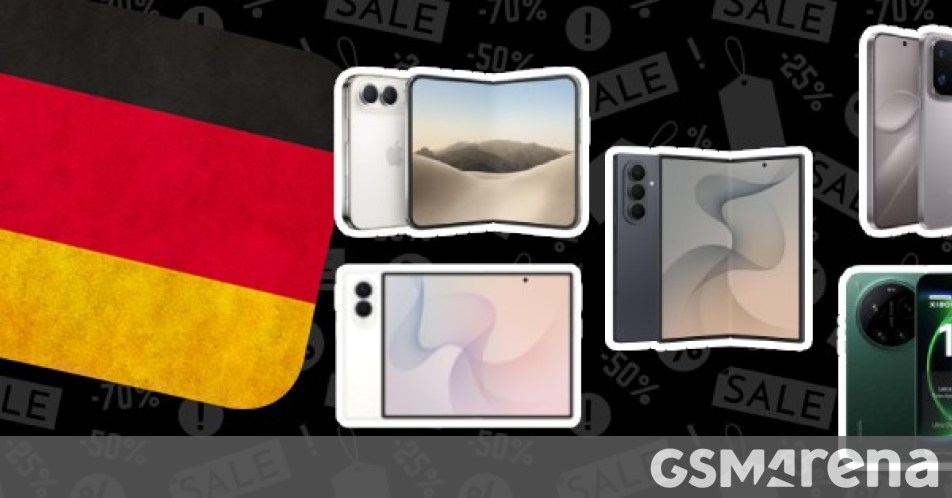
This week saw two major launches – the Oppo Find X10 series went global and the Apple iPhone Duo started shipping. Let’s have a look at the Oppo first.
The Oppo Find X10 Pro Max is a beast of a phone – in our review, we call it “an Ultra in all but name”. The triple 200MP camera is impressive, the battery life is exceptional, the chipset is powerful and the display is beautiful. What more can you ask for? Well, a lower price would be nice.
Right now, Amazon has it with a €100 discount and a choice of one freebie – you can pick between the Oppo Pad 5 with a Matte Display (8/128GB, Wi-Fi, €400), the Oppo Watch X3 (€310) and the Oppo Hasselblad Teleconverter Kit (€550) that goes with the phone. The kit includes a 3.3x/70mm lens (this stacks with the phone’s own magnification for an effective 10x/230mm focal length), the necessary case, a grip and a lanyard. Check out this photo comparison to see how much of a difference the kit makes (and for an overview of some issues it brings).

The Oppo Find X10 also has a €100 discount and the same choice of one of three freebies. This phone is smaller, 6.59” vs. 6.78” display, and uses the Dimensity 9600M chipset (which is based on 9500-level hardware). The Pro Max uses the powerful new Dimensity 9600 Pro instead. The camera hardware on the vanilla model, while still impressive, is no match for the Pro Max either. It has a 200MP main (1/1.4” vs. 1/1.3” sensor size), a 200MP telephoto (both 1/1.56, but 65mm vs. 70mm) and a 50MP ultra-wide (vs. 200MP).
Note that the European Find X10 phones have 7,150mAh batteries instead of 8,000mAh like the units sold elsewhere.

Oppo Find X10
€100 off
free Oppo Pad 5, Oppo Watch X3 or Hasselblad Teleconverter Kit
The Xiaomi 17 Ultra only has a €40 discount, but this is relative to the pre-insanity prices – this makes it cheaper than even the vanilla Find X10. It has the punchy Snapdragon 8 Elite Gen 5 chipset and a small-ish 6,000mAh battery. The cameras feature a 1”-type main (50MP) like a proper Ultra, a 200MP 3.2-4.3x/75-100mm variable focal length telephoto and a 50MP ultra-wide.

The Dimensity 9600 Pro traded blows with the Snapdragon 8 Elite Gen 5 in our tests. Of course, that is Qualcomm’s top chip from 2025. There are already a few phones with the new Snapdragon 8 Elite Extreme Gen 6 – not in Europe, but there are some in China.
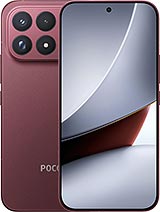
Still, the Elite Gen 5 is plenty powerful and you can have it for a relatively cheap price with the Poco F9 Ultra. Its cameras are not like the other Ultras, but they do include a 200MP main (with a relatively small 1/1.56” sensor), a 50MP 5x/114mm periscope and a 50MP ultra-wide. The battery has 8,050mAh capacity and supports 100W wired and 50W wireless charging.
Moving on to Apple’s first foldable, the iPhone Duo. It starts at €2,300 for the base 256GB model and goes all the way up to €3,800 for the 2TB model. For comparison, the base iPhone 18 Pro Max (256GB) is €700 cheaper and if portability is a concern, there is the smaller iPhone 18 Pro for €150 less than that.


You should also consider the previous generation Pros. The iPhone 17 Pro Max is up to €330 off, while the small 17 Pro is up to €160 off. Here is a detailed comparison between the iPhone 17 Pro Max and the 18 Pro Max. We also have an in-depth comparison between the iPhone 17 Pro and the 18 Pro.


Now, let’s look at the competition. The Samsung Galaxy Z Fold8 is the only other wide foldable in Europe – the Xiaomi 18 Fold is still pending. It currently has a massive discount, which brings the starting price down to €1,400 – this is €900 less than the Duo. The discount on the 512GB variant is much smaller, though.
The Galaxy is thinner (9.7mm vs. 11.3mm) and much lighter (201g vs. 254g) while offering a similar cover display (5.5” vs. 5.4”) and inner display (both 7.6” with similar aspect ratios). They have nearly identical battery capacities too (4,800mAh vs. 4,883mAh), so endurance will depend on chipset efficiency – it’s a Snapdragon 8 Elite Gen 5 for the Galaxy and an Apple A20 Pro for the Duo. Both phones lack dedicated telephoto cameras, offering only dual 50MP and dual 48MP modules, respectively.

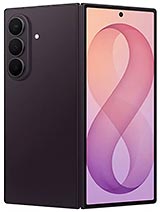
Samsung also has a larger book-style foldable, the Samsung Galaxy Z Fold8 Ultra. Despite having a larger 6.5” cover display (a tall and narrow 21:9 panel) and an 8.0” inner display, the Ultra remains thin and light – 8.9mm and 215g (that is 39g less than the Duo). This one packs a 200MP 1/1.3” sensor in the main camera and does have a telephoto lens, even if it’s only a 10MP 3x/69mm module. Here is a more in-depth comparison between the Z Fold8 and the Z Fold8 Ultra.
The Z Fold8 and Z Fold8 Ultra both have solid 30% discounts on their 256GB variants. The Ultra also has a decent 17% price cut on its 512GB variant for the Graphite model. At the time of writing, we’re seeing the 512GB Violet Shadow at €1,705 (29% off), but with a distant shipping date – between November 19 and January 7. The price is alluring, but it’s a worryingly long wait.
We may get a commission from qualifying sales.


