
.jpg) 58 minutes ago
3
58 minutes ago
3
Article content
“What Canada had was preferential access, granted by treaty, revocable on terms Canada itself agreed to,” he said, adding that CUSMA was always subject to annual reviews if not renewed and could be dissolved by any party giving six months’ notice.
Article content
“Canada signed a structure that reverts to permanent renegotiation the moment agreement breaks down. Nobody hid that. It was in the text in 2020.”
Article content
What that means, he said, is that while Canada retains advantages such as resources, energy, an educated workforce and rule of law, any premium applied to Canadian goods and businesses because of cheap, easy access to the United States could disappear.
Article content
“They are simply worth less than resources plus guaranteed access to the largest consumer market on Earth, which is what people thought they were buying,” Appleton said. “An investor who understood this in 2019 would have made better decisions than one who is learning it this month.”
Article content
Businesses should understand that new risks have been introduced and that qualifications under CUSMA rules won’t necessarily protect the sector or the firm, he said, adding that tariff exposure has become more than a trade compliance issue.
Article content
Article content
“If your investment case depends on the certificate of origin holding, that case has a risk in it that was not there in June,” he said.
Article content
“The firms that come through this well will be the ones that stop asking when the relationship returns to normal and start asking what they would build if it never did.”
Article content
Carney has been pushing diversification of trade and Appleton said companies need to be honest about what their product allows.
Article content
Quebec’s aluminum sector, for example, was able to find buyers in Europe and cut the American export share from around 95 per cent to about 63 per cent in a year.
Article content
“That is real, and it happened in the middle of a trade war in an industry everyone assumed was captive,” he said.
Article content
“But aluminum is close to the easiest possible case.”
Article content
Article content
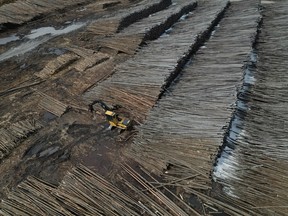
That won’t help a parts manufacturer in Windsor whose components cross the border three times during assembly, a softwood lumber company that competes with suppliers closer to the customer, or companies that ship perishable goods, he said.
Article content
“For a great many Canadian firms, the honest answer is that diversification is partial at best and the real question is whether the North American position can be made defensible rather than replaced.”
Article content
Article content
With annual CUSMA reviews in the mix for the next 10 years, there are likely to be more tariff costs passed through to customers than has been modelled, Appleton said, adding that Bank of Canada research has shown firms were more likely to pass through costs when they expected tariffs to persist over a longer duration.
Article content
He said Ottawa should be doing more than punishing the U.S. with counter tariffs, which is a short-term plan at best. Getting rid of interprovincial trade barriers that have very real costs for business, rebuilding trade advisory infrastructure that was dismantles in 2013 are high on his list. He also points to Mexico’s opposition to the onslaught of fresh tariffs imposed by the U.S. over the past year or so as a possible path forward.
Article content
“Mexico publishes thirteen written demands and asks weekly, on the record, for a standstill on new measures,” Appleton said, pointing to that country’s formal rejection of the tariffs as a violation of the core premise of CUSMA and, as Carney has also argued, the weaponization of trade. Moreover, he said, Mexico can use the U.S. rejection of these formal demands, which include economic data demonstrating damage to U.S. interests in heavily integrated sectors, as leverage in future trade talks.
 English (US)