
.jpg) 10 hours ago
3
10 hours ago
3
Article content
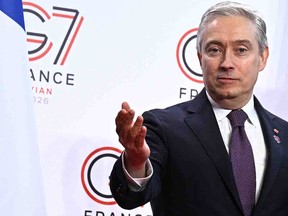
Canada’s finance minister said the country’s planned sovereign wealth fund will be designed to allow citizens to contribute to major nation-building projects, but isn’t intended to reduce their tax burdens.

THIS CONTENT IS RESERVED FOR SUBSCRIBERS ONLY
Subscribe now to read the latest news in your city and across Canada.
- Exclusive articles from Barbara Shecter, Joe O'Connor, Gabriel Friedman, and others.
- Daily content from Financial Times, the world's leading global business publication.
- Unlimited online access to read articles from Financial Post, National Post and 15 news sites across Canada with one account.
- National Post ePaper, an electronic replica of the print edition to view on any device, share and comment on.
- Daily puzzles, including the New York Times Crossword.
SUBSCRIBE TO UNLOCK MORE ARTICLES
Subscribe now to read the latest news in your city and across Canada.
- Exclusive articles from Barbara Shecter, Joe O'Connor, Gabriel Friedman and others.
- Daily content from Financial Times, the world's leading global business publication.
- Unlimited online access to read articles from Financial Post, National Post and 15 news sites across Canada with one account.
- National Post ePaper, an electronic replica of the print edition to view on any device, share and comment on.
- Daily puzzles, including the New York Times Crossword.
REGISTER / SIGN IN TO UNLOCK MORE ARTICLES
Create an account or sign in to continue with your reading experience.
- Access articles from across Canada with one account.
- Share your thoughts and join the conversation in the comments.
- Enjoy additional articles per month.
- Get email updates from your favourite authors.
THIS ARTICLE IS FREE TO READ REGISTER TO UNLOCK.
Create an account or sign in to continue with your reading experience.
- Access articles from across Canada with one account
- Share your thoughts and join the conversation in the comments
- Enjoy additional articles per month
- Get email updates from your favourite authors
Sign In or Create an Account
or
Article content
“We already have a number of tax credits to facilitate savings and investments,” Francois-Philippe Champagne said in an interview on Tuesday on the sidelines of the Group of Seven meetings in Paris.
Article content
Article content
Article content
“This is not a tax play. This is about Canadians being able to contribute,” he said.
Article content
By signing up you consent to receive the above newsletter from Postmedia Network Inc.
Article content
Prime Minister Mark Carney announced the Canada Strong Fund last month, saying his government will seed $25 billion into the vehicle to provide financing for large infrastructure projects and domestic companies.
Article content
Officials have offered few details as to how the fund will operate. But the government pledged to include a retail element that will allow Canadians to invest alongside public funds, potentially giving them a stake in major projects such as pipelines and ports that are meant to grow Canada’s non-U.S. exports.
Article content
“This is more about people being able to be part of growing or building the nation,” Champagne said. “Unless you’re a qualified investor, most of these large infrastructure projects, unless you invest in a very specific fund, would not be broadly available to Canadians.”
Article content
The fund is still being developed pending consultations, so it’s possible some tax incentives could eventually be included.
Article content
The country’s personal tax regime has been regularly criticized for stifling productivity, with some analysts suggesting the highest income bracket kicks in too low.
Article content
Article content
Carney has pledged to boost private investment in Canada by $500 billion in half a decade.
Article content
Article content
Oil shock
Article content
Champagne said the Paris meetings were focused on the war in the Middle East and the subsequent spike in oil prices. There was widespread consensus for the reopening of the Strait of Hormuz.
Article content
“The call was unanimous to stop the hostility as quickly as possible to restore freedom of navigation and look at what we could do on a humanitarian basis,” Champagne said.
Article content
He also raised concerns about the so-called secondary impacts of the war, including the potential affordability damage from higher prices for fertilizer and semiconductors.
Article content
At the same time, the conflict and the spike in crude oil prices are also making Canada stand out as an “energy superpower,” Champagne argued. The recent memorandum of understanding with the oil rich-province of Alberta to build a new pipeline to the west coast is catching international attention, he said.
Article content
“Colleagues around the table certainly look at Canada to play a larger role when it comes to energy security,” he said. “We have already taken a number of steps to increase our production, whether it’s about in conventional or renewable energy.”
 English (US)