
.jpg) 1 hour ago
3
1 hour ago
3
Article content
The Trump administration has threatened to respond with additional measures against Canada, teeing up the prospect of the trade dispute spiraling even further. U.S. Trade Representative Jamieson Greer has signaled that more tariffs and even outright bans on certain imports from Canada are possible, but the timeline is unclear.
Article content
In the meantime, Trump signed an order to rename Lake Ontario as “Lake America” on U.S. maps and posted numerous social media messages disparaging Canada. His officials openly accused Carney of sabotaging the negotiations.
Article content
“They decided for political reasons, domestically, they’d rather fight with Donald Trump, even if it’s bad for the economy of Canada,” Commerce Secretary Howard Lutnick said on Bloomberg Television.
Article content
A Canadian official, speaking on condition they not be identified, said that as of Sunday afternoon, no new meetings were scheduled with the U.S. administration. Neither the White House nor Greer’s office responded to requests for comment in the days before Carney’s newest tariffs were set to take effect.
Article content
‘Written in pencil’
Article content
Carney, 61, has said the White House made “unacceptable” demands that would have infringed on Canadian sovereignty and hurt its industries, including heavy trucks.
Article content
Article content
The prime minister also took a verbal jab at the Trump administration’s willingness to tear up or ignore trade agreements such as the Canada-U.S.-Mexico Agreement. “We recognized that sometimes its signature was written in pencil,” he said.
Article content
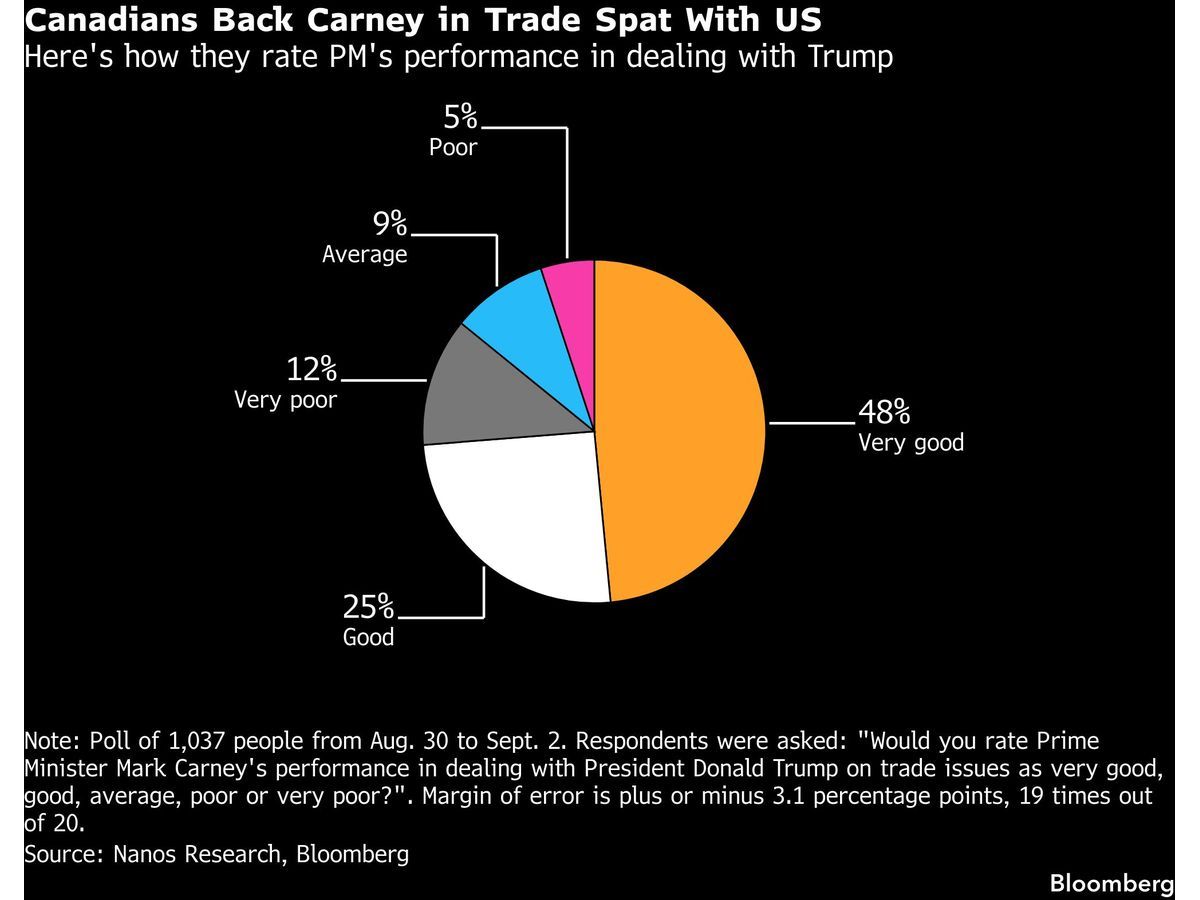
Public opinion surveys show support for Carney’s decision to walk away from negotiations and to punch back with counter-tariffs. A poll conducted by Nanos Research for Bloomberg News last week found nearly three-quarters rated his handling of the trade file as “good” or “very good.”
Article content
Article content
While the talks collapsed in sudden fashion, both sides have signaled since then that some sticking points have been resolved.
Article content
The Americans have dismissed Carney’s claim that French language rights are a deal-breaker — an issue the Canadians have publicly noted is effectively resolved.
Article content
While Carney suggested last week to reporters that the U.S. was willing to extend auto tariff relief to medium- and heavy-duty vehicles, a U.S. official, speaking on condition of anonymity, called that claim false.
Article content
Even with other issues unresolved, there are reasons to believe that it’s in Canada’s interest to try to negotiate a truce and de-escalate the situation.
Article content
Article content
The performance of the Canadian economy has been uneven. After a period in which it stalled, growth bounced back in the second quarter. The number of people with jobs has increased by just 3,400 per month this year, on average. The layoff rate is higher in industries dependent on U.S. demand for exports, according to data from Statistics Canada.
Article content
Canada’s counter-tariffs may help protect some domestic manufacturers, but it will increase costs and leave many of its industries worse off, according to a report from Tony Stillo and Michael Davenport of Oxford Economics. They estimate that the combined effect of the U.S. tariffs, Canadian retaliation and related federal support programs will reduce output by about 0.3 per cent, compared with its baseline forecast.
Article content
That report takes into account only the tariffs that have been announced — not the possibility of another ratcheting up of the trade hostilities.
Article content
‘Durable’ deal
Article content
After talks collapsed last month, Trump announced that he would hike tariffs on autos to 50 per cent, from 25 per cent currently, and also impose a 50 per cent rate on auto parts, with both effective Jan. 1. He hasn’t yet taken formal steps to implement those levies and it’s not clear whether that amounts to his promised retaliation on Carney’s tariffs.
 English (US)