
.jpg) 11 hours ago
3
11 hours ago
3
Article content
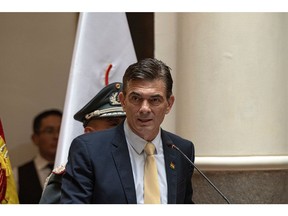
(Bloomberg) — Bolivian President Rodrigo Paz declared an economic emergency late Wednesday night and issued an array of dramatic steps, including scrapping fuel subsidies and loosing the country’s exchange rate regime.

THIS CONTENT IS RESERVED FOR SUBSCRIBERS ONLY
Subscribe now to read the latest news in your city and across Canada.
- Exclusive articles from Barbara Shecter, Joe O'Connor, Gabriel Friedman, and others.
- Daily content from Financial Times, the world's leading global business publication.
- Unlimited online access to read articles from Financial Post, National Post and 15 news sites across Canada with one account.
- National Post ePaper, an electronic replica of the print edition to view on any device, share and comment on.
- Daily puzzles, including the New York Times Crossword.
SUBSCRIBE TO UNLOCK MORE ARTICLES
Subscribe now to read the latest news in your city and across Canada.
- Exclusive articles from Barbara Shecter, Joe O'Connor, Gabriel Friedman and others.
- Daily content from Financial Times, the world's leading global business publication.
- Unlimited online access to read articles from Financial Post, National Post and 15 news sites across Canada with one account.
- National Post ePaper, an electronic replica of the print edition to view on any device, share and comment on.
- Daily puzzles, including the New York Times Crossword.
REGISTER / SIGN IN TO UNLOCK MORE ARTICLES
Create an account or sign in to continue with your reading experience.
- Access articles from across Canada with one account.
- Share your thoughts and join the conversation in the comments.
- Enjoy additional articles per month.
- Get email updates from your favourite authors.
THIS ARTICLE IS FREE TO READ REGISTER TO UNLOCK.
Create an account or sign in to continue with your reading experience.
- Access articles from across Canada with one account
- Share your thoughts and join the conversation in the comments
- Enjoy additional articles per month
- Get email updates from your favourite authors
Sign In or Create an Account
or
Article content
The new regulations represent a decisive break from more than 20 years of socialist economic policy and aim to shore up public finances as inflation soars above 20%.
Article content
Article content
Article content
“Eliminating poorly designed subsidies does not mean abandonment, but order, justice and real, transparent redistribution,” Paz said in a surprise broadcast with his cabinet. “This will allow the generation of additional fiscal resources to be shared between the central and regional governments.”
Article content
By signing up you consent to receive the above newsletter from Postmedia Network Inc.
Article content
The move triggered an 86% jump in gasoline and more than 160% for diesel, the most abrupt energy price adjustments in decades. The new prices will remain in place for six months before being reassessed.
Article content
Some fuel stations La Paz city suspended sales as drivers rushed to stock up on subsidized fuel after the announcement, according to local media reports.
Article content
One of the region’s cheapest subsidized fuels, as well as declining natural gas output, has drained Bolivia’s foreign reserves, causing shortages of both fuel and dollars and creating a drag on the economy.
Article content
The subsidy cuts are accompanied by social protection measures, Paz said, including a 20% increase in the minimum wage next year to 3,300 bolivianos ($479).
Article content
Renta Dignidad — a benefit for elderly citizens without a pension — will rise by 150 bolivianos ($22), while a school bonus for students in public schools will increase by 100 bolivianos ($15). Both are increases of 50%.
Article content
Article content
The government also announced an extraordinary cash-transfer program for the most vulnerable families.
Article content
“This is not welfare,” Paz said. “It is support for families that have been devastated,” he said, implying the damage was due to decisions by previous administrations.
Article content
The decree also authorizes the central bank to secure liquidity financing lines, amend internal regulations, issue external financial instruments, conduct foreign-exchange hedging operations, and carry out currency swaps to stabilize the balance of payments — an option recently discussed with US officials in Washington.
Article content
Paz also announced a program to promote and protect domestic and foreign investments to ensure legal and tax stability for up to 15 years. That includes guarantees that future regulatory changes will not apply to protected investments without explicit investor consent.
Article content
The decree further instructs the central bank to transition to a “new exchange-rate regime,” potentially ending the fixed exchange rate in place since 2011, which set the boliviano at 6.96 per dollar, compared with nearly 10 bolivianos in the parallel market.
Article content
 English (US)