This article appears in the new issue of DEN OF GEEK magazine. Find out how you can subscribe to get the full physical copy right here!
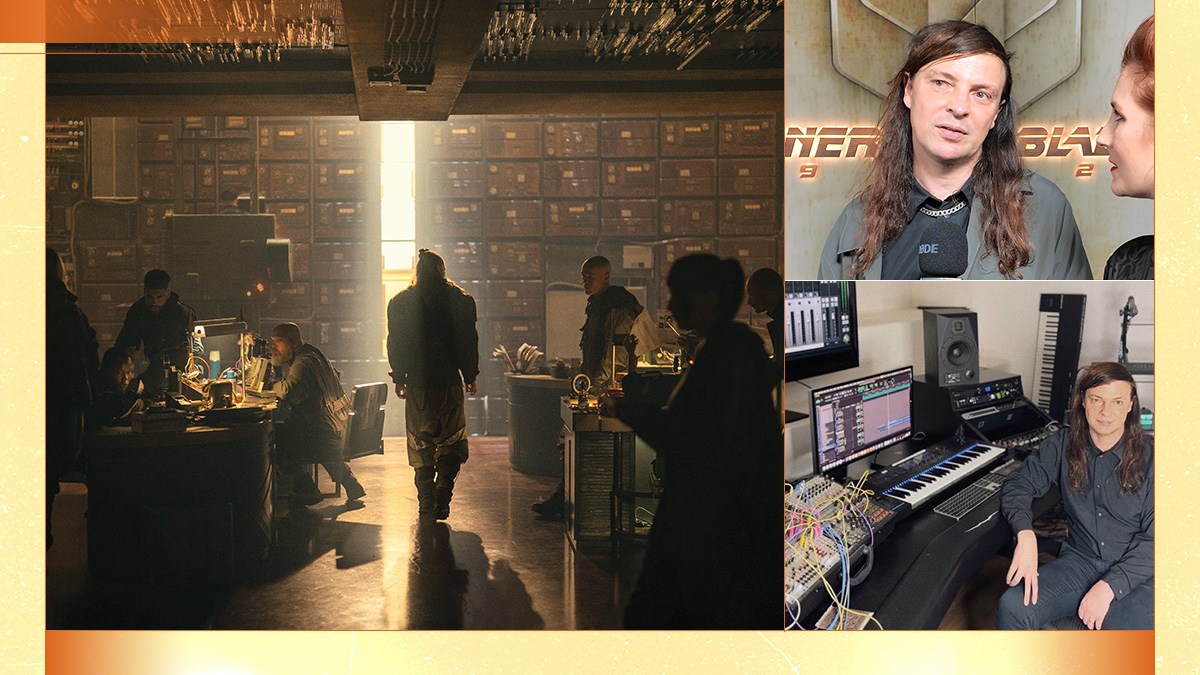
From touring in rock bands to scoring film and television, Leopold Ross has built a career on following his instincts into the unknown.
Those same instincts, along with a deep love of instrumental, atmospheric music, eventually led him to composing for the screen, culminating this month in Prime Video’s Blade Runner 2099. With the new series, the musician is carrying the spirit of Vangelis’ iconic original Blade Runner score forward without copying it, searching for what he and showrunner Silka Luisa describe as “a sense of otherness.”
Ahead of the premiere, Ross sat down with Den of Geek to discuss his creative process, the “uncanny valley” sounds that defined the series, and the feelings of yearning and loneliness he hoped to put at the center of the score.
Do you remember the first time you saw the original Blade Runner and heard Vangelis’ score?
Leo Ross: I do. Vangelis, for me, was one of the first times I was really cognizant of score music. I have a very clear memory of being a kid and watching Chariots of Fire, and thinking to myself, ‘I love this, why do I love this?’ And I realized it was the music. That was a lightbulb moment. And then obviously I remember watching Blade Runner and having the same feeling.
[Vangelis] used a particular synthesizer called the Yamaha CS-80; it’s like a combination of the visual aesthetic that Ridley Scott and his whole team created. Vangelis’ music marries those two elements; it’s so strong and unique. So for me, when I got the opportunity to do [Blade Runner 2099], it was extremely exciting just to kind of feel as though I’m becoming a small part of that legacy.
The 1982 film score is nearly inseparable from the franchise. What specifically about it did you want to keep alive or the same?
Sonically, I knew I wanted the CS-80 to play a role because of how iconic and tied to that world it is. Melodically and harmonically, I wanted to create our own themes. [Vangelis] picked that synthesizer because it was the most cutting-edge piece of equipment he could find at the time. I wanted to carry that spirit forward and find the most cutting-edge equipment I could find at this time, and use that as the next step forward.
The show is set 50 years after Blade Runner 2049. How does music change in that gap, and what does a score set in 2099 sound like?
There’s been such a shift in the power dynamic, story-wise. Essentially, humans are now the underclass and replicants have control. I wanted a very organic, evocative sound, so I used the saxophone, partly because I liked that it was very driven by human breath; you can hear the breathing, you can hear the soul in the instrument. It can play very softly, and it can play really, really over the top. So I felt that it fit into the dynamic of the score really well and made her themes stand out very much as the representative of humans and where they’re at in the world in 2099.
And what about Olwen? Does she have her own musical theme or sound?
I used a particular synthesizer; this goes back to wanting to use the most futuristic sounds available to me. When I came on board for the show, I was so excited I reached out to a synthesizer company I really like, SOMA Laboratory. I said, “Hey, don’t tell anyone, but I’m doing Blade Runner. Have you got anything cooking up that you can send me?” [Laughs]
They sent me this synthesizer that they hadn’t released yet. It’s released now, called the Flux. But since it was a prototype, it didn’t have a manual or anything like that, so I just started messing around with it. [I was] in this kind of blissful ignorance and dreaming of Olwen. So a lot of Olwen’s sounds, both her scary killer sounds and her more evocative sounds, came from that synthesizer.
I’ve always found it intriguing how well these movies portray the human and the robotic, and how those two sides can clash but also work together. Were there specific moments where you found it especially compelling to show that contrast, or to bring the two together through music?
I was excited by the idea of an uncanny valley feeling of “is that a synthesizer that sounds like a saxophone, or is that a saxophone that sounds like a synthesizer? Is that a human voice, or is that a real voice, or is that a synthesizer voice?” I was interested in kind of blurring that line between electronic and organic.
But then I think that there was a real strength in having a counterpoint to the electronic. That’s where I felt like I wanted to use the organic saxophone, specifically with Cora, in her very evocative moments. Not wanting to give away story points, but when there’s, like, heightened emotion, oftentimes it’ll be like a very upfront, very unashamedly saxophone blasting [Laughs].
When people think of Blade Runner, many of them think of Vangelis’ score. When they hear yours, what do you want them to feel? What emotions did you put into your score that you hope people will connect with?
First of all, that’s why it was so exciting for me to be on board the Blade Runner project, because I am one of those people who still listen to the original Blade Runner score regularly. So for me, I think it was more about carrying the spirit forward and carrying the sense of otherness that it created. Emotionally, I always felt that [the original score] was very romantic.
I don’t mean romance like romance between two people. I mean there’s a sense of richness and lush romance in the music, and also a sense of loneliness that always came through to me. Like Cora, for example, she’s essentially a child of war; she’s got PTSD. Her story arc is about reconnecting with what it is to be human, so I wanted there to be that feeling of yearning and loneliness—the feeling of being human, essentially.
Blade Runner 2099 debuts on Prime Video on November 25, 2026.