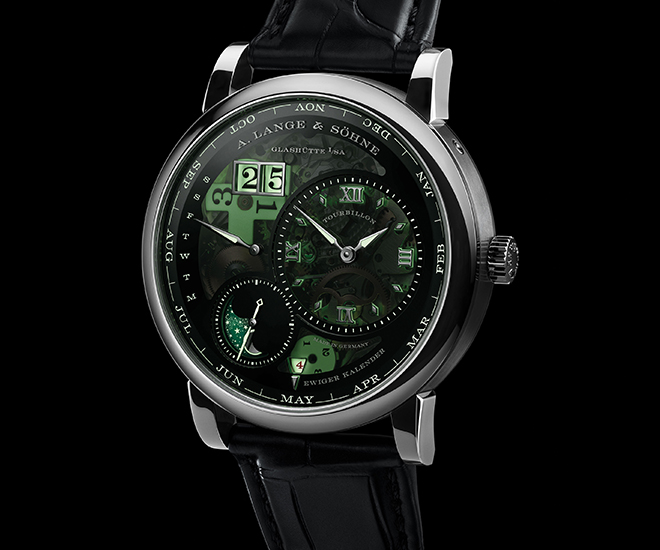
Across couture, high jewellery, watches and motor cars, black strips luxury back to material, form and the craftsmanship beneath the surface.
Luxury has spent centuries finding new colours, yet it has never quite escaped black. Part of its hold lies in what it withholds. At first glance, black can flatten detail and conceal complexity; look closer and differences in texture, finish and construction become considerably more apparent.
Its meanings are equally difficult to pin down. Black can communicate restraint or excess, mourning or authority, discretion or rebellion. The Victoria and Albert Museum traces its fashionable rise to the Spanish court, where during the 16th and 17th centuries black became associated with dignity, wealth and power. Producing a rich black textile was expensive, making the depth of the colour itself an indication of status.
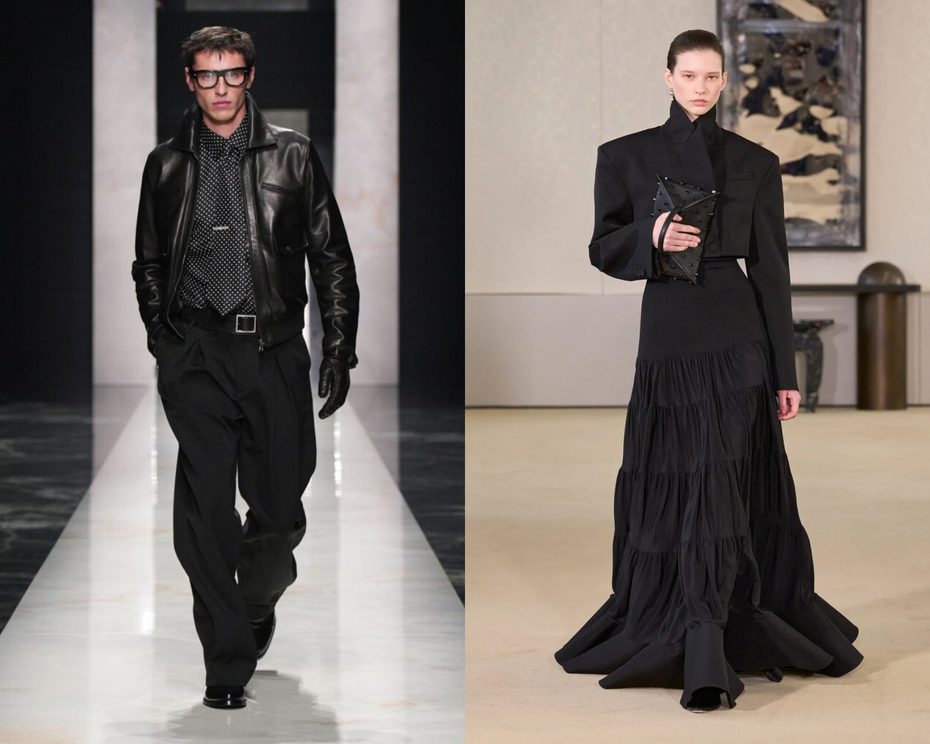 Left to right: Dolce & Gabanna and Altuzarra Fall Winter 2026 Collection. Images courtesy of Dolce & Gabanna and Altuzarra
Centuries later, its dominance remains visible on the runway. According to the T-Fashion Runway Index, black appeared in 54.1 per cent of 13,370 Fall/Winter 2026 womenswear looks, spanning 7,231 looks from 396 designers. It was the most prevalent colour analysed for the season, appearing in 56.5 per cent of Paris looks, 56.4 per cent in New York, 50.7 per cent in London and 49.6 per cent in Milan.
Yet prevalence alone does little to explain black’s persistence. Its advantage in luxury comes from its ability to change character according to the material carrying it. Polished ceramic reflects light differently from lace; onyx intensifies diamonds; anodised aluminium makes industrial construction appear architectural; matte automotive finishes can make familiar surfaces feel more assertive.
Black may appear simple, but it leaves craftsmanship unusually exposed. Once colour stops competing for attention, proportion, texture and finish have more work to do. Across eight objects, that quality allows the same colour to move from couture delicacy and high-jewellery drama to technical performance, discretion and authority.
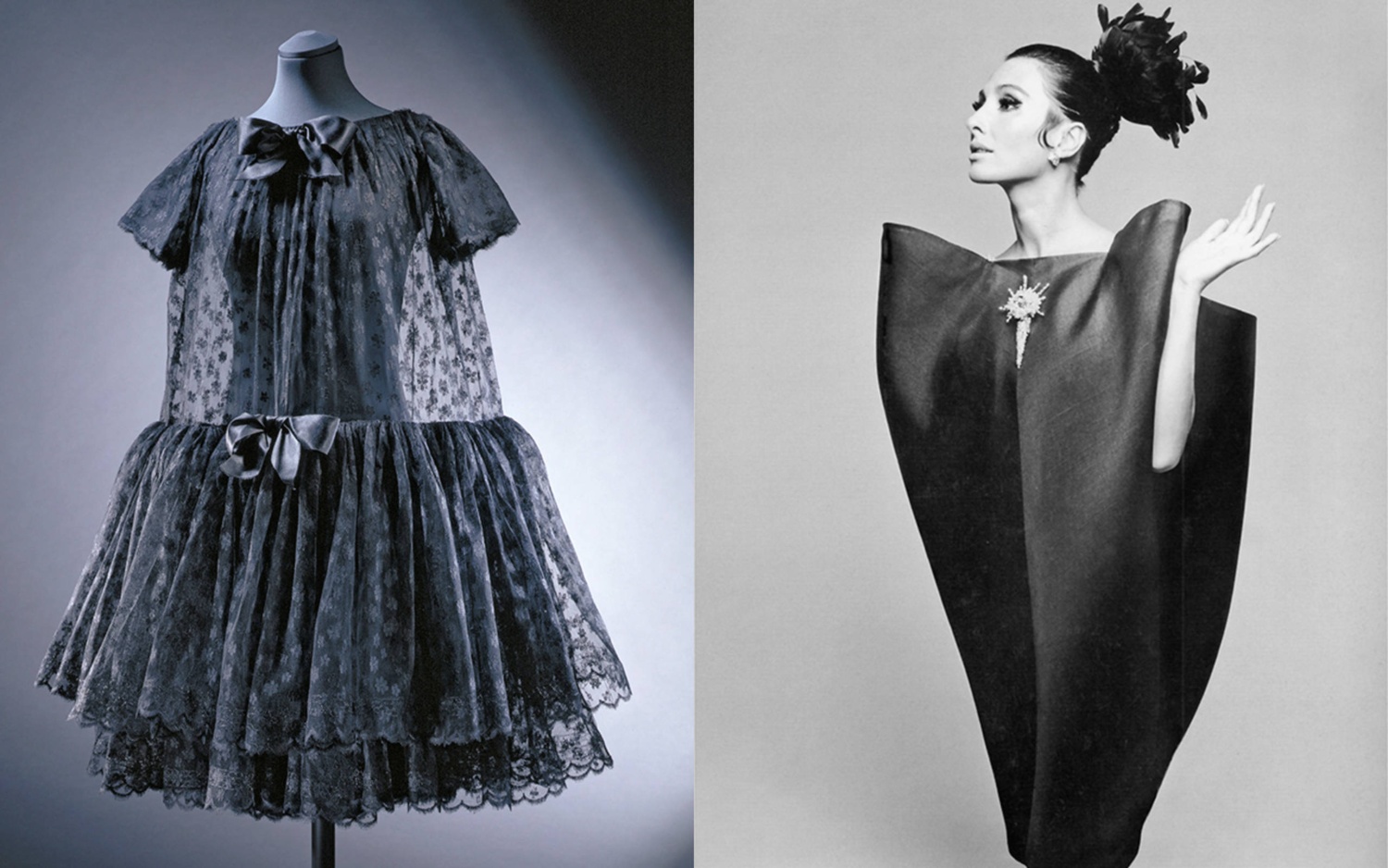 Left to right: Babydoll evening dress, Cristóbal Balenciaga, 1958, Paris. Museum no. T.334-1997. © Victoria and Albert Museum, London. Alberta Tiburzi in ‘envelope’ dress by Cristóbal Balenciaga. Harper’s Bazaar, June 1967. © Hiro 1967. Images courtesy of Victoria and Albert Museum.
Balenciaga: Black as Depth
Cristóbal Balenciaga understood how black could reveal as much as it concealed. A Fall/Winter 1965–66 evening dress in The Metropolitan Museum of Art’s collection combines a structured inner foundation with cream silk, sheer black chiffon and an outer black lace baby-doll dress finished with tiered ruffles and satin ribbons.
The restricted palette makes every material difference more apparent. Lace acquires depth against the pale underlayer, while the tiers recall Spanish flamenco dress and Balenciaga’s recurring engagement with the art and dress traditions of his homeland. Horsehair reinforces the ruffles, giving the silhouette movement and volume.
Here, black does little to simplify the dress. Instead, it draws attention towards texture, construction and movement — demonstrating how darkness can make complexity easier to see.
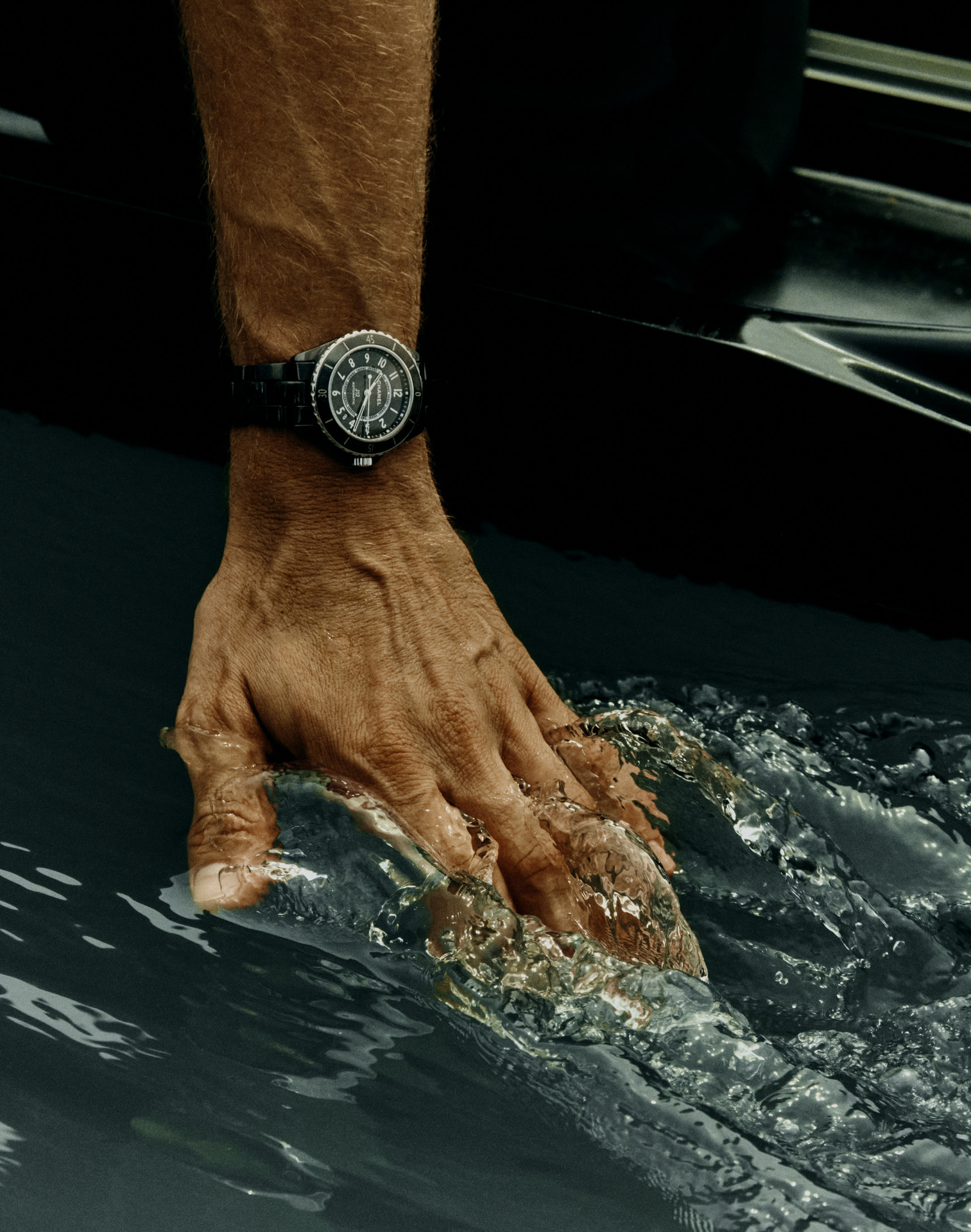 Inspired by racing yachts, CHANEL’s ceramic watchmaking icon pairs exceptional durability with a smooth, refined finish. Image courtesy of Chanel.
Chanel J12: Black as Technology
When Chanel introduced the J12 in 2000, black moved from fabric into engineering. Conceived as a monochromatic black sports watch at a time when steel and gold dominated watchmaking, the J12 uses high-resistance ceramic across its case and bracelet.
CHANEL says the ceramic is seven times stronger than steel in its resistance to abrasion, while its colour is achieved by heating the material above 1,300°C. The black therefore belongs to the ceramic itself rather than functioning as a coating applied afterwards.
The J12 demonstrates how luxury can turn colour into a technical proposition. Its appearance creates the immediate impact; the deeper value lies in the process required to make that colour durable, tactile and consistent.
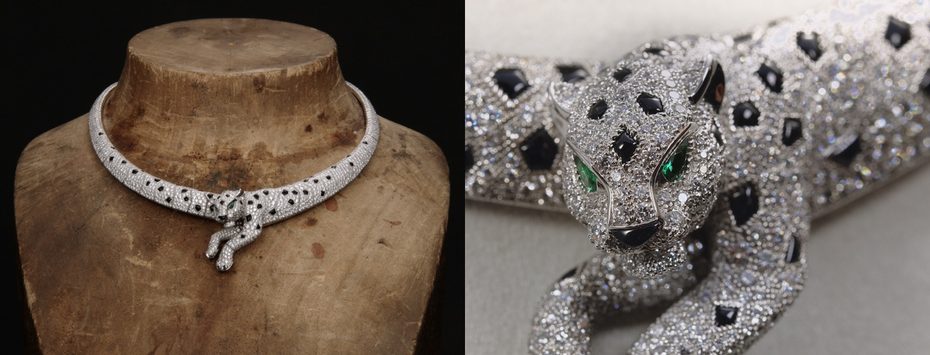 Panthère de Cartier necklace in white gold, onyx, emeralds and diamonds. Images courtesy of Cartier.
Cartier Panthère: Black as Contrast
Cartier uses black for an entirely different purpose. A Panthère de Cartier high-jewellery necklace combines black nephrite jade and onyx with emeralds and 385 brilliant-cut diamonds. Onyx forms the animal’s spots and nose, sharpening the panther against white gold and diamond pavé.
The panther first entered Cartier’s aesthetic vocabulary in 1914 and has since become one of the maison’s defining motifs. In this interpretation, darkness gives the animal greater graphic definition. Against black, diamonds appear brighter and the emerald eyes more intense.
Black serves spectacle here. The same colour associated with restraint in fashion can intensify ornament in high jewellery.
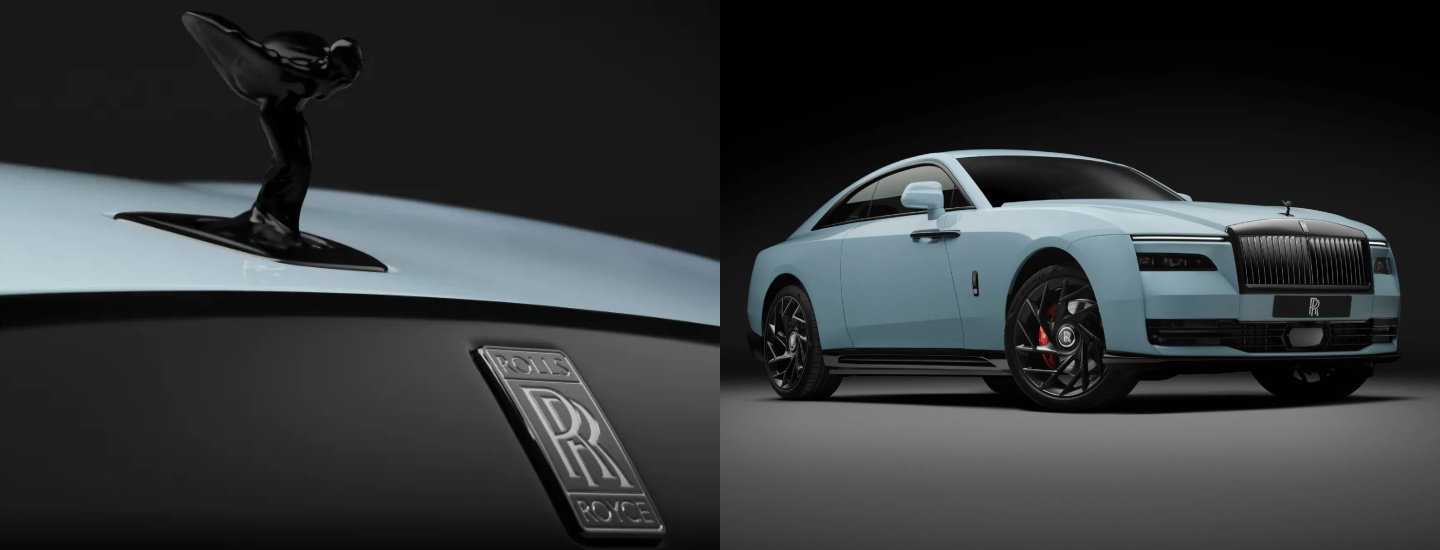 The Rolls-Royce Black Badge Spectre Series II pairs assertive electric performance with a darker aesthetic, new Ethereal Blue finish and Bespoke detailing. Images courtesy of Roll-Royce.
Rolls-Royce Black Badge Spectre Series II: Black as Rebellion
Few luxury marques have turned black into an alter ego as explicitly as Rolls-Royce. The Black Badge Spectre Series II extends that idea through both performance and finish. A new Iced Black treatment transforms traditionally bright elements — including the grille surround, door handles and Spirit of Ecstasy — with a satin-like matte surface. Infinity Mode unlocks 500 kW, while Spirited Mode raises torque to 1,100 Nm, making it the most powerful Rolls-Royce produced to date.
Black changes the psychology of the car. Where Rolls-Royce traditionally communicates ceremony and composure, Black Badge introduces a harder visual edge and greater aggression. Here, colour becomes character.
Montblanc Meisterstück 149: Black as Authority
The Montblanc Meisterstück 149 represents a quieter expression of power. Introduced in 1952, the oversized fountain pen evolved from the broader Meisterstück family and has retained the form that made it immediately recognisable.
Its familiar black body is now produced from precious resin. Montblanc says each gold nib passes through a 35-step manufacturing process, while the resin is shaped under temperatures reaching 280°C and intense pressure.
Its appeal relies partly on ritual. On an object associated with signatures, correspondence and consequential decisions, black lends visual seriousness while allowing the gold nib and white Montblanc emblem to provide restrained contrast. The colour communicates authority through familiarity rather than spectacle.
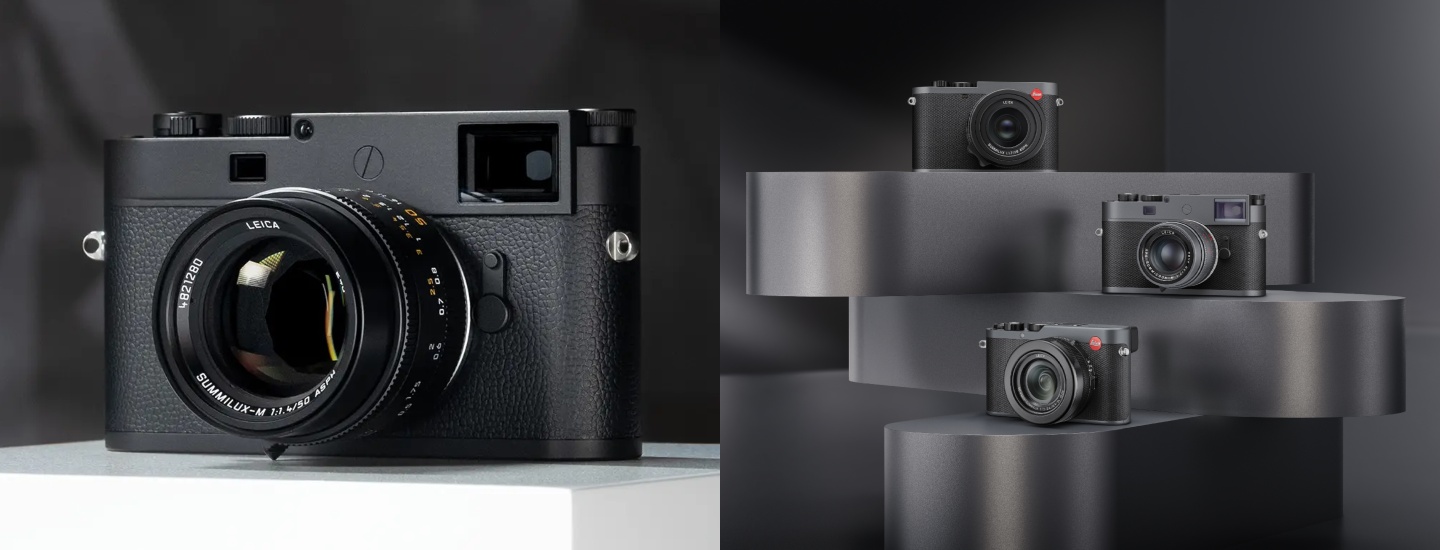 Left to right: Leica M-11 Monochrom launched in 2023 and Leica’s latest M11-P, Leica Q3 and Leica D-Lux 8 in a modern metallic grey finish. Images courtesy of Leica.
Leica M11 Monochrom: Black as Discretion
Leica pushes restraint further with the M11 Monochrom. The camera has an all-black, scratch-resistant finish, dark chrome details and deliberately omits Leica’s familiar red logo. Its appearance reduces branding at precisely the point where many luxury objects amplify it.
The concept continues inside: the M11 Monochrom is designed exclusively for black-and-white photography.
Its luxury therefore depends partly on recognition among people who already understand the object. Value is communicated through knowledge rather than overt display, giving black another function: discretion.
In this context, concealment itself becomes part of the appeal.
RIMOWA Original Trunk: Black as Industrial Refinement
The RIMOWA Original Trunk begins with anodised aluminium, a material rooted in engineering. In black, its signature vertical grooves rely on light and shadow rather than metallic brightness to articulate the surface.
The current 90-litre Trunk weighs 6.1kg and retains the locks, Multiwheel system and grooved construction associated with the Original collection. RIMOWA also backs the suitcase with a lifetime guarantee.
The treatment demonstrates why monochrome design places greater emphasis on surface. Every ridge remains visible, yet the dark aluminium gives the industrial form a more architectural presence. Black changes the material without disguising it.
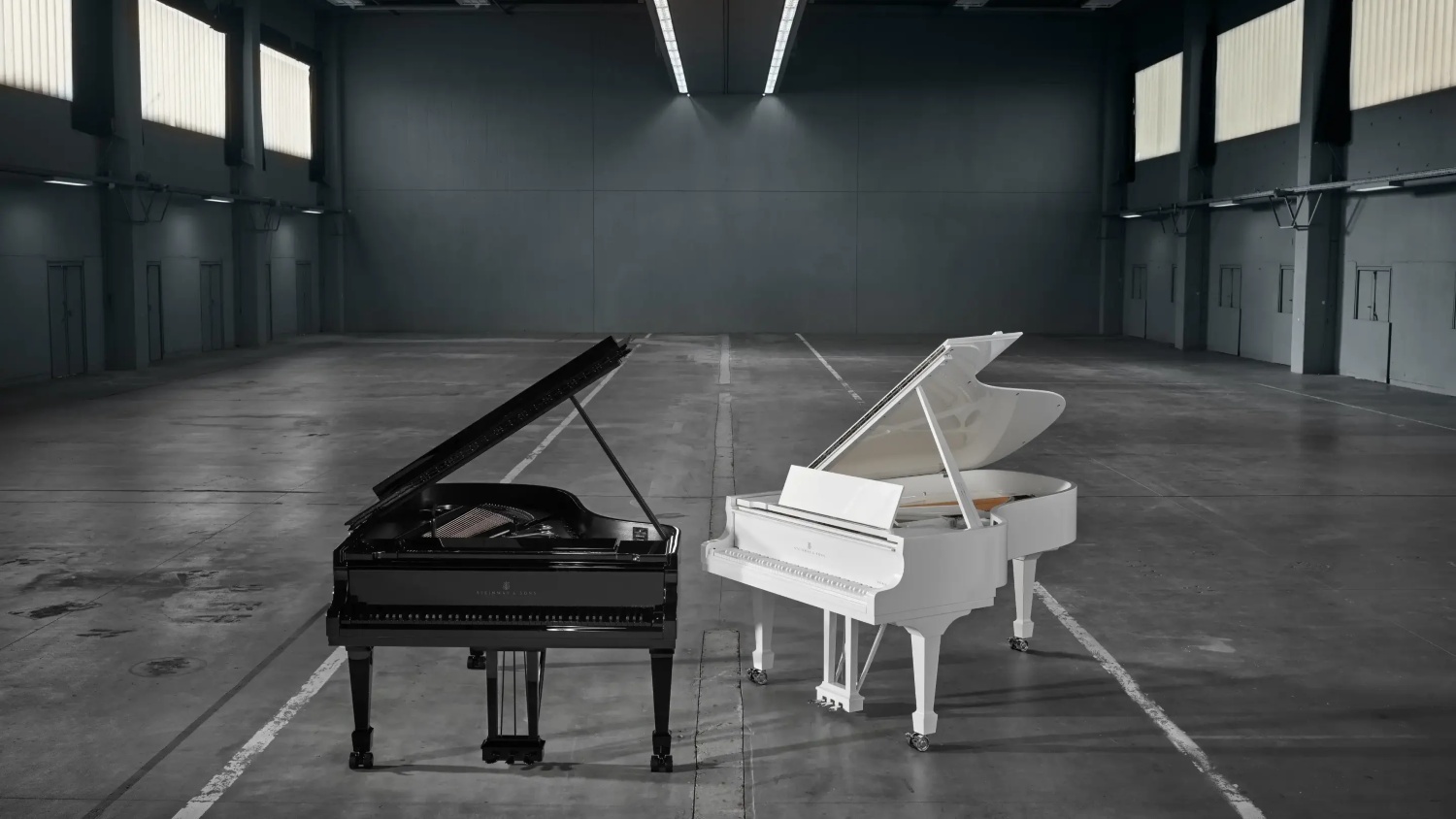 Steinway & Sons’ Ultra Black & Ultra White Limited Edition pairs monochromatic design with signature craftsmanship, limited to just 52 grand pianos worldwide. Images courtesy of Steinway & Sons.
Steinway Ultra Black Model D: Black as Ceremony
Steinway takes monochrome towards its logical conclusion with the Ultra Black Limited Edition. The body, soundboard and hardware are treated in variations of deep black, while exterior branding is reduced to a single engraved logo on the front. The Ultra Black edition includes just eight Model D concert grands.
The Model D itself measures 274cm in length and weighs 483kg, giving the instrument considerable physical presence before a note is played.
By removing much of the usual visual contrast, Ultra Black allows the grand piano’s silhouette to dominate. A colour long associated with concert formality becomes architectural: restrained in palette, imposing in scale.
The Colour That Leaves Nowhere to Hide
Taken together, these objects reveal why black has remained so useful to luxury. Its meaning changes continually according to what surrounds it. In Balenciaga lace it exposes depth and movement; in ceramic it becomes technical; beside diamonds it sharpens contrast; across a Rolls-Royce it creates attitude. Elsewhere it communicates authority, discretion, industrial precision or ceremony.
Their common ground lies in material. Black directs attention towards cut, finish, weight, texture and surface because colour provides less distraction. A weak finish becomes easier to detect. Exceptional execution acquires greater importance.
That helps explain why black continues to dominate contemporary fashion even as designers gain access to an almost limitless spectrum of colour. Its familiarity has never exhausted its possibilities because much of its character remains dependent on what lies beneath, beside or within it.
Black can retreat or dominate, conceal or reveal, sharpen an object or make it quieter. Its greatest luxury, however, may lie in what it leaves exposed. When colour recedes, craftsmanship has fewer places to hide.
For more luxury style and lifestyle reads, click here.