
.jpg) 2 hours ago
3
2 hours ago
3
Article content
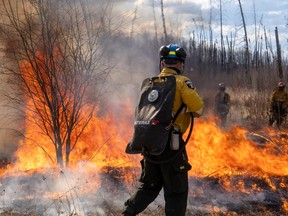
The fires in France and Spain have had devastating impacts. More than 220,000 people fled the flames west of Bordeaux. Outside Madrid, fires scorched an area twice the size of the capital and drove nearly 90,000 people from their homes. Those who lost their homes and livelihoods deserve sympathy — and far better fire policy.

THIS CONTENT IS RESERVED FOR SUBSCRIBERS ONLY
Subscribe now to read the latest news in your city and across Canada.
- Exclusive articles from Barbara Shecter, Joe O'Connor, Gabriel Friedman, and others.
- Daily content from Financial Times, the world's leading global business publication.
- Unlimited online access to read articles from Financial Post, National Post and 15 news sites across Canada with one account.
- National Post ePaper, an electronic replica of the print edition to view on any device, share and comment on.
- Daily puzzles, including the New York Times Crossword.
SUBSCRIBE TO UNLOCK MORE ARTICLES
Subscribe now to read the latest news in your city and across Canada.
- Exclusive articles from Barbara Shecter, Joe O'Connor, Gabriel Friedman and others.
- Daily content from Financial Times, the world's leading global business publication.
- Unlimited online access to read articles from Financial Post, National Post and 15 news sites across Canada with one account.
- National Post ePaper, an electronic replica of the print edition to view on any device, share and comment on.
- Daily puzzles, including the New York Times Crossword.
REGISTER / SIGN IN TO UNLOCK MORE ARTICLES
Create an account or sign in to continue with your reading experience.
- Access articles from across Canada with one account.
- Share your thoughts and join the conversation in the comments.
- Enjoy additional articles per month.
- Get email updates from your favourite authors.
THIS ARTICLE IS FREE TO READ REGISTER TO UNLOCK.
Create an account or sign in to continue with your reading experience.
- Access articles from across Canada with one account
- Share your thoughts and join the conversation in the comments
- Enjoy additional articles per month
- Get email updates from your favourite authors
Sign In or Create an Account
or
Article content
What they do not need is the climate sermon that now follows every new wildfire. Spain’s prime minister Pedro Sánchez called the fires a “painful expression” of climate change. The U.K. and Spanish governments rushed out a joint statement declaring that “climate change was now a national security emergency” threatening our way of life. The verdict was in even while houses burned: only ending fossil fuels can put out the flames.
Article content
Article content
Article content
Here is what makes this so exasperating: the planet is doing the opposite of burning. Satellite data show that as of August 12, the world’s burned area in 2026 was 42 per cent below the 2012-25 average for this point in the year — on track, in fact, to becoming the quietest global fire season in a century. On current trends, 2026 could end up burning less than 1.5 per cent of global land area. This would be well below the satellite record low in 2022 of 2.2 per cent and likely lower than in any year since 1900
Article content
By signing up you consent to receive the above newsletter from Postmedia Network Inc.
Article content
Climate change is a global issue. It should be assessed using global data. Pointing to horrific fires in one corner of one continent while ignoring a planet that is burning less than normally is the very definition of cherry picking: keep the observations that fit the story, throw away the rest.
Article content
Imagine the reverse. If global burned area were running 42 per cent above average, would anyone accept “but the Baltics are quiet this year” as a rebuttal? Of course not. Yet that is precisely the logic now deployed in the other direction: the planet is burning at a below-average rate but we’re focusing on the hotspots — which are undeniable and tragic but also, for this year, atypical.
Article content
Article content
The climate lobby has seized on one data quirk: The satellite fire surveillance data for “Europe” include the whole of Russia — Siberia and all — so a quiet Russian year can flatten the continental numbers. But if you strip Russia out entirely, Europe without Russia had by August 12 only burned two-thirds of its 2012-25 average so far this year. Ten of the past 14 years saw more fire by mid-August. Yes, France’s season is record-bad and Spain’s is also severe. But two countries having a dreadful summer do not constitute a continental inferno, let alone a planetary one. Europe as a whole is having a below-average fire year.
Article content
Article content
The same pattern holds everywhere you look. Earlier this summer, Canada’s export of smoke to the skies over New York generated the usual apocalyptic headlines, not to mention new tariff threats from Donald Trump. Yet Canada is having a below-average fire year, as is the United States. Both North America and South America as a whole are at all-time satellite lows. Africa, the most burned continent, is also at an all-time low, 44 per cent below normal. Oceania (which is mostly Australia) is 15 per cent below its usual burned area, and Asia has burned at near- record lows this year. Every continent is either below normal, far below normal or setting records for how little is burning.
 English (US)