
.jpg) 1 hour ago
2
1 hour ago
2

Article content
Bitcoin has likely reached a floor and could rise to US$150,000 by the end of 2026, according to Bernstein, which argues the cryptocurrency is being reshaped by a steady shift toward institutional ownership and financing.

THIS CONTENT IS RESERVED FOR SUBSCRIBERS ONLY
Subscribe now to read the latest news in your city and across Canada.
- Exclusive articles from Barbara Shecter, Joe O'Connor, Gabriel Friedman, and others.
- Daily content from Financial Times, the world's leading global business publication.
- Unlimited online access to read articles from Financial Post, National Post and 15 news sites across Canada with one account.
- National Post ePaper, an electronic replica of the print edition to view on any device, share and comment on.
- Daily puzzles, including the New York Times Crossword.
SUBSCRIBE TO UNLOCK MORE ARTICLES
Subscribe now to read the latest news in your city and across Canada.
- Exclusive articles from Barbara Shecter, Joe O'Connor, Gabriel Friedman and others.
- Daily content from Financial Times, the world's leading global business publication.
- Unlimited online access to read articles from Financial Post, National Post and 15 news sites across Canada with one account.
- National Post ePaper, an electronic replica of the print edition to view on any device, share and comment on.
- Daily puzzles, including the New York Times Crossword.
REGISTER / SIGN IN TO UNLOCK MORE ARTICLES
Create an account or sign in to continue with your reading experience.
- Access articles from across Canada with one account.
- Share your thoughts and join the conversation in the comments.
- Enjoy additional articles per month.
- Get email updates from your favourite authors.
THIS ARTICLE IS FREE TO READ REGISTER TO UNLOCK.
Create an account or sign in to continue with your reading experience.
- Access articles from across Canada with one account
- Share your thoughts and join the conversation in the comments
- Enjoy additional articles per month
- Get email updates from your favourite authors
Sign In or Create an Account
or
Article content
The Wall Street firm says a transition from a market once dominated by retail speculation to one increasingly anchored by exchange-traded funds, corporate balance sheets and structured capital is altering how Bitcoin behaves. And it’s making downturns less disorderly and potentially extending the current cycle.
Article content
Article content
Article content
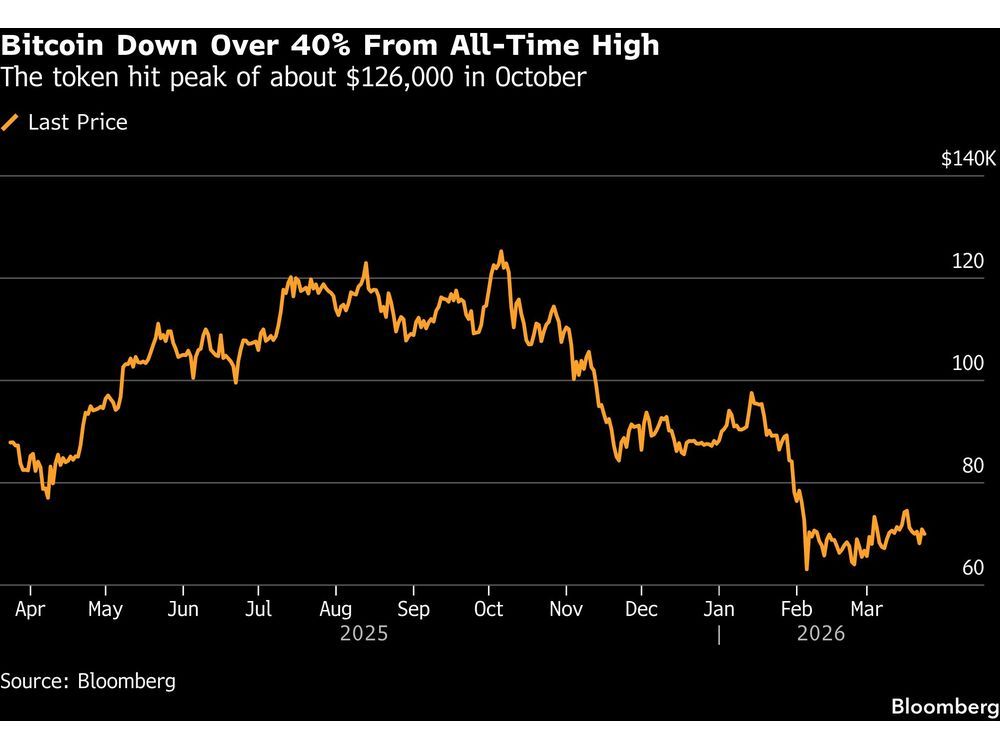
Bitcoin’s recent performance offers a test of that thesis. Prices, currently trading around US$70,000, fell by more than 50 per cent from their peak, yet the selloff didn’t trigger the kind of cascading liquidation seen in earlier cycles.
Article content
By signing up you consent to receive the above newsletter from Postmedia Network Inc.
Article content
“Bitcoin will continue to outperform driven by strong institutional demand from ETFs which have been resilient through the market correction (year-to-date outflows have reversed) and new institutional on-ramps from banks offering Bitcoin financial services,” the firm said in a Tuesday report.
Article content
“Bitcoin market structure has matured” relative to earlier boom-and-bust cycles, Bernstein added.
Article content
Companies such as Michael Saylor’s Strategy Inc. have continued to accumulate Bitcoin through the downturn, using equity and preferred securities to fund purchases. This growing link between crypto markets and capital markets is creating a more persistent source of demand — and a different set of risks, Bernstein says.
Article content
Article content
Strategy alone has bought the token at a pace exceeding new issuance this year, effectively absorbing a meaningful share of incremental supply even as prices declined.
Article content
Article content
A prolonged downturn in Bitcoin, particularly as convertible debt matures, could force firms like Strategy to refinance on less favorable terms or sell holdings to meet obligations, while a pullback in capital markets could limit their ability to raise fresh funds.
Article content
So far, however, those pressures have not derailed accumulation. “Strategy enjoys a track record of risk management, living through deep Bitcoin correction cycles, and not over-extending itself on debt,” the report says.
Article content
Bernstein pointed to a concentration of ownership among long-term holders, with 60 per cent of Bitcoin supply inactive for more than a year. That reflects a base of investors less sensitive to short-term price swings, helping to dampen volatility during drawdowns.
Article content
ETFs are also becoming a key source of stability for the digital asset, holding about 6.1% of total Bitcoin supply — a shift Bernstein says is positive for its ownership structure.
Article content
Together, these trends challenge fears that Bitcoin’s four-year cycle peaked in 2025, Bernstein says, pointing to a more extended bull run that could end with a potential high of around US$200,000 at the end of 2027.
Article content
Article content
 English (US)