
 10 hours ago
2
10 hours ago
2
With more people reading manga and Webtoons (aka vertical scroll comics) than ever before, Beat’s Bizarre Adventure gives three writers an opportunity each week to recommend some of their favorite books and series from Japan, Korea, and elsewhere. This week we have brain goop, werewolves, and, of course, urban legends.
 Version 1.0.0
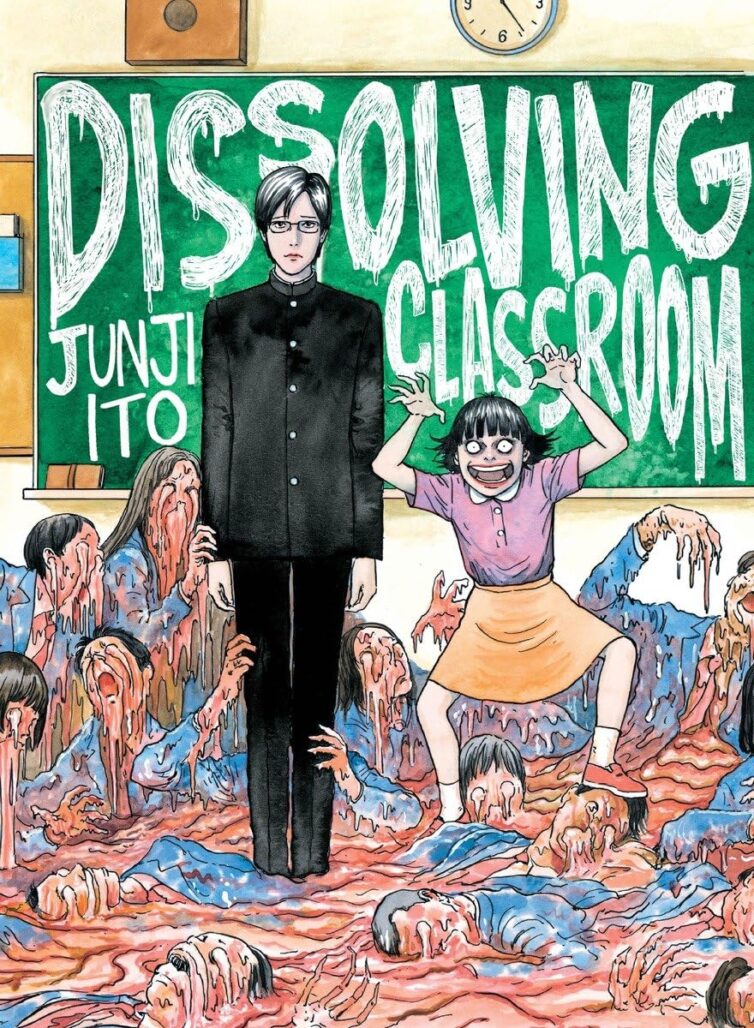
Dissolving Classroom
Writer/Artist: Junji Ito
Translation: Melissa Tanaka
Publisher: Vertical
I don’t remember how long it’s been since I wrote my last piece about a Junji Ito comic. But the man is nothing if not prolific and has graced us with many, many stories to experience and discuss! This time I’m focusing on a smaller series and one of the few not published by VIZ here in the states, Dissolving Classroom. While I wasn’t big on it when I first read it long ago, I’ve come to appreciate it more on revisit.
The story follows two siblings Yuuma & Chizumi Azawa. Yuuma is addicted to apologizing for every tiny infraction, and if he apologizes too much the people around him begin to melt until there’s nothing left of them but brain goop. Chizumi is a feral child who loves to scare people and drink the brain goop that these melted individuals become. After each major incident the two flee to another town. This lets the series take on that signature anthology style Ito is well known for, where each tale is different but connected through an ongoing background plot and theme.
From a back-up page at the end of this book, Dissolving Classroom is a critique of Japanese culture’s penchant for apologizing in public. I’m not educated enough to go into further detail on that, but I do like how Ito makes apologizing an almost euphoric habit for Yuuma. He almost seems to enjoy it even though it causes so much harm to everyone else.
The weakest parts of the story involve the brain goop. I can’t give too many details in fear of spoiling, but there are portions of that specific story beat that I didn’t care for. What I did enjoy was how everything ties together at the end, as well as the villain.
There are two back-up stories at the end of this volume that don’t have anything to do with Dissolving Classroom. They’re both fine. Not much to write home about, although they have intriguing ideas. Still though, it’s always nice to have more Ito to read.
Check out Dissolving Classroom, it’s pretty good! — Derrick Crow
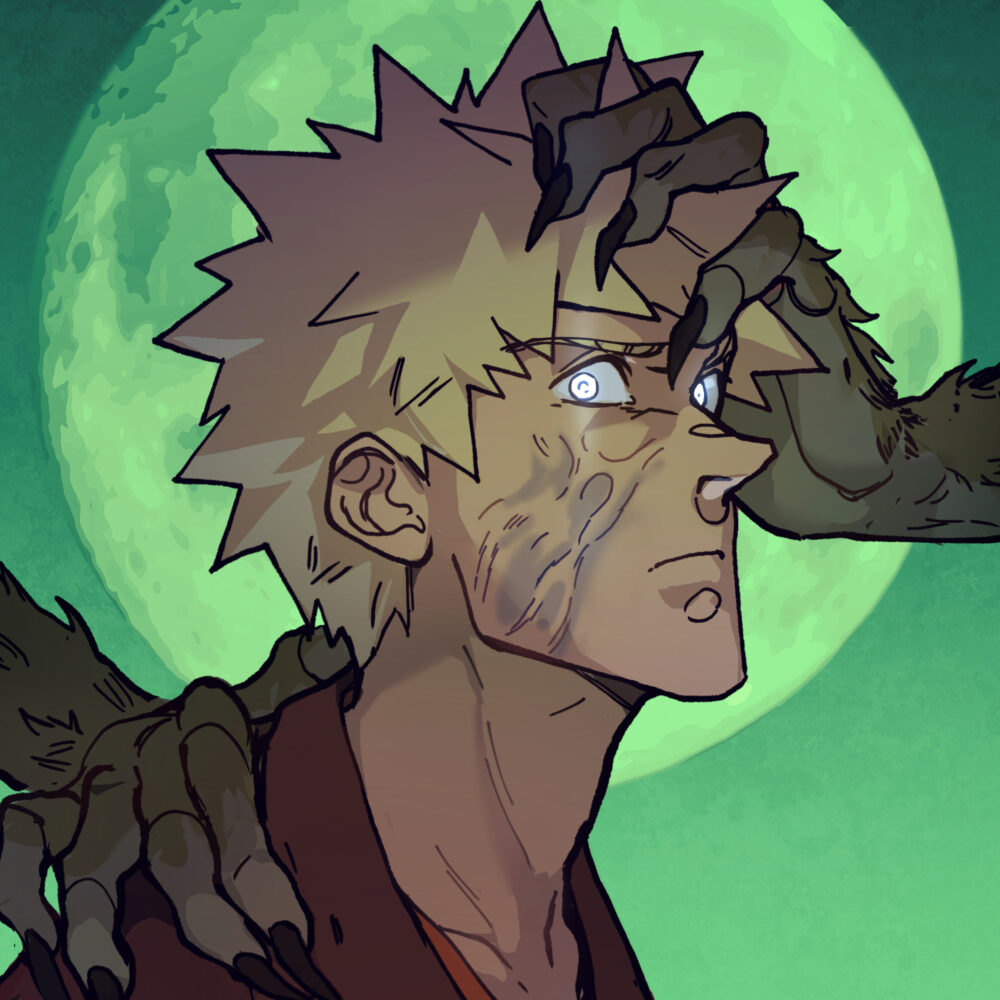
Earthshine
Writer/Artist: MissMisery
Platform: WEBTOON CANVAS
I may be a hardcore vampire story stan, but lately i’ve been bit by the werewolf bug, I blame Zach! Speaking of werewolves, there’s a webtoon I’ve been wanting to talk about which scratches that itch for me: Earthshine, a series created and illustrated by MissMisery starting in February 2021. Set in the city of Sonnenritter, the story follows Daira, a werewolf working for a special task force that keeps the peace between humans and Lyncans. Unfortunately, malevolent forces in the background threaten to undermine everything they have achieved.
Earthshine starts with a lengthy prologue that details how the world viewed and treated Lycans before the Task Force did its best to repair that relationship. It then progresses into a thriller in which Daira must solve the mystery of why specific people are being turned into Lycans and who is doing it.
There’s a night and day difference between the early and most recent chapters, showcasing MissMisery’s artistic evolution. Their approach has shifted from rough and sketchy lineart with flat shading to a very polished style that is uniquely their own. While the style has some minor influence from anime and manga, the rest draws from western cartoons. At first glance I was reminded of CyberSix—does anyone remember that series? (If not, I am actually getting old, oh my God…)
The character art hasn’t necessarily changed that much since the first episode. But there’s a greater emphasis on the shading and coloring that brings out so much depth and detail. MissMisery also leaned away from hand-eye drawing backgrounds instead started cleverly using 3D assets that look hand-drawn but blend in so much better with the characters in the panels. These refinements elevate the series even more.
Earthshine’s strong visual identity, combined with its intriguing storytelling and world, satisfies my werewolf cravings and even throws fuel into the creative fire that’s burning in my mind as of writing. If you’re interested in werewolf stories with amazing art, I implore you to check this one out. Happy hunting! — Justin Guerrero
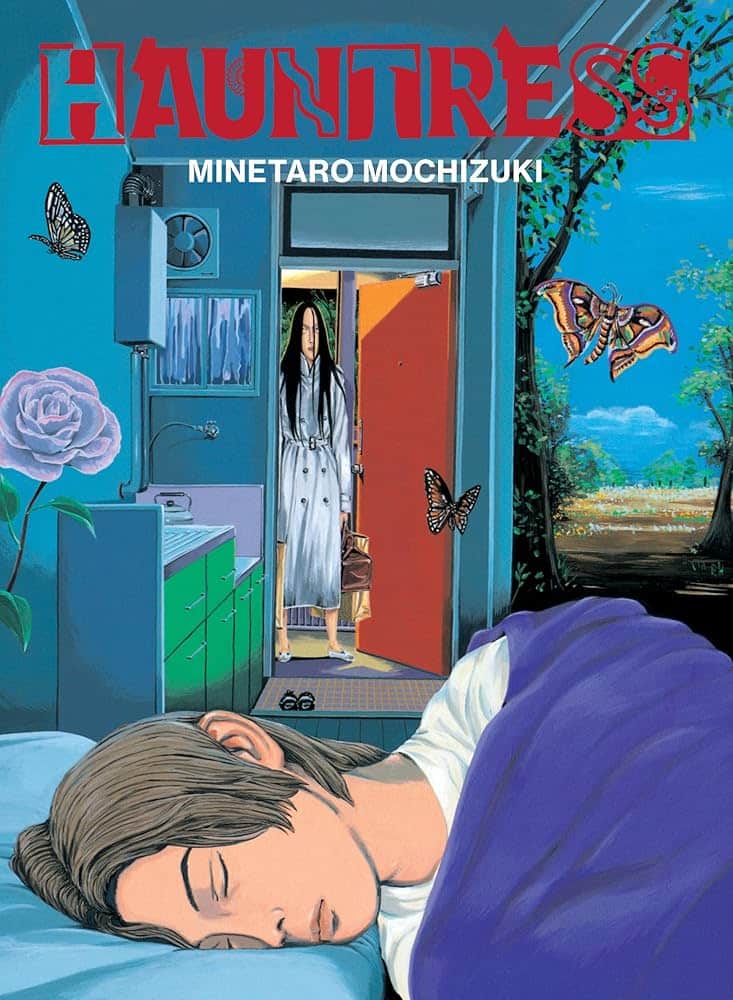
Hauntress
Writer/Artist: Minetaro Mochizuki
Translation: Annelise Ogaard
Editor: Daniel Joseph
Production: Tomoe Tsutsumi, Pei Ann Yeap, Hiroko Mizuno
Proofreading: Kevin Luo
Publisher: Vertical
The start of Hauntress is simple yet terrifying: college student Hiroshi Mori can’t sleep because a strange woman is ringing his neighbor’s doorbell. Who hasn’t been in a situation where something inexplicable happens just outside of your comfort zone, and the last thing that you want to do is to involve yourself? In the end Mori invites the woman inside to call his neighbor over the telephone, leading to a chain of events in which the woman makes a key to his apartment and torments him day in and day out. Now Mori, not his next-door neighbor, is her target. Perhaps he was even her target all along.
Hauntress was drawn in 1993 by Minetaro Mochizuki, in between the stories of adolescent ennui that defined his early career (Bataashi Kingyo, 1985) and his 1994 horror epic Dragon Head. As a result it has elements of both. Mori is a resolutely ordinary protagonist–a college student whose main worry is whether or not a high school girl he sees at the convenience store will go out with him. Mochizuki depicts his carelessness realistically. Similarly, while the woman lurking around his apartment is like a creature out of a Kazuo Umezu story, she is often pathetic in a way that reads as human rather than monstrous.
Is Hauntress a misogynist comic? Its central thesis after all is that the worst thing that could happen to a young man is doing a favor for an older woman. What I respect about it though is how much Mochizuki leaves to your imagination. Every answer the comic provides for why the woman is doing what she is doing just raises more questions. Did Mori bully her as a child? Is she a ghost, a monster or just a figment of his imagination? The reader is never given the satisfaction of piecing together the truth. Instead they are left with an uncomfortable reality: that there are things in the world that nobody will ever understand. The moment Hiroshi became involved he became just another statistic, the victim of an urban legend. — Adam Wescott
Follow Beat’s Bizarre Adventure to get weekly manga and webtoon recommendations!
 English (US)