
.jpg) 1 hour ago
3
1 hour ago
3
When Tom Kerss, chief aurora chaser for the Norwegian coastal voyage operator Hurtigruten, was looking back through footage from his latest season of northern lights voyages, he stumbled upon something truly remarkable.
Typical pulsating aurora displays last 10 to 20 minutes, but Kerss had captured almost three hours of extreme pulsating auroras — an unusually powerful display and one of the longest on record, according to the statement.
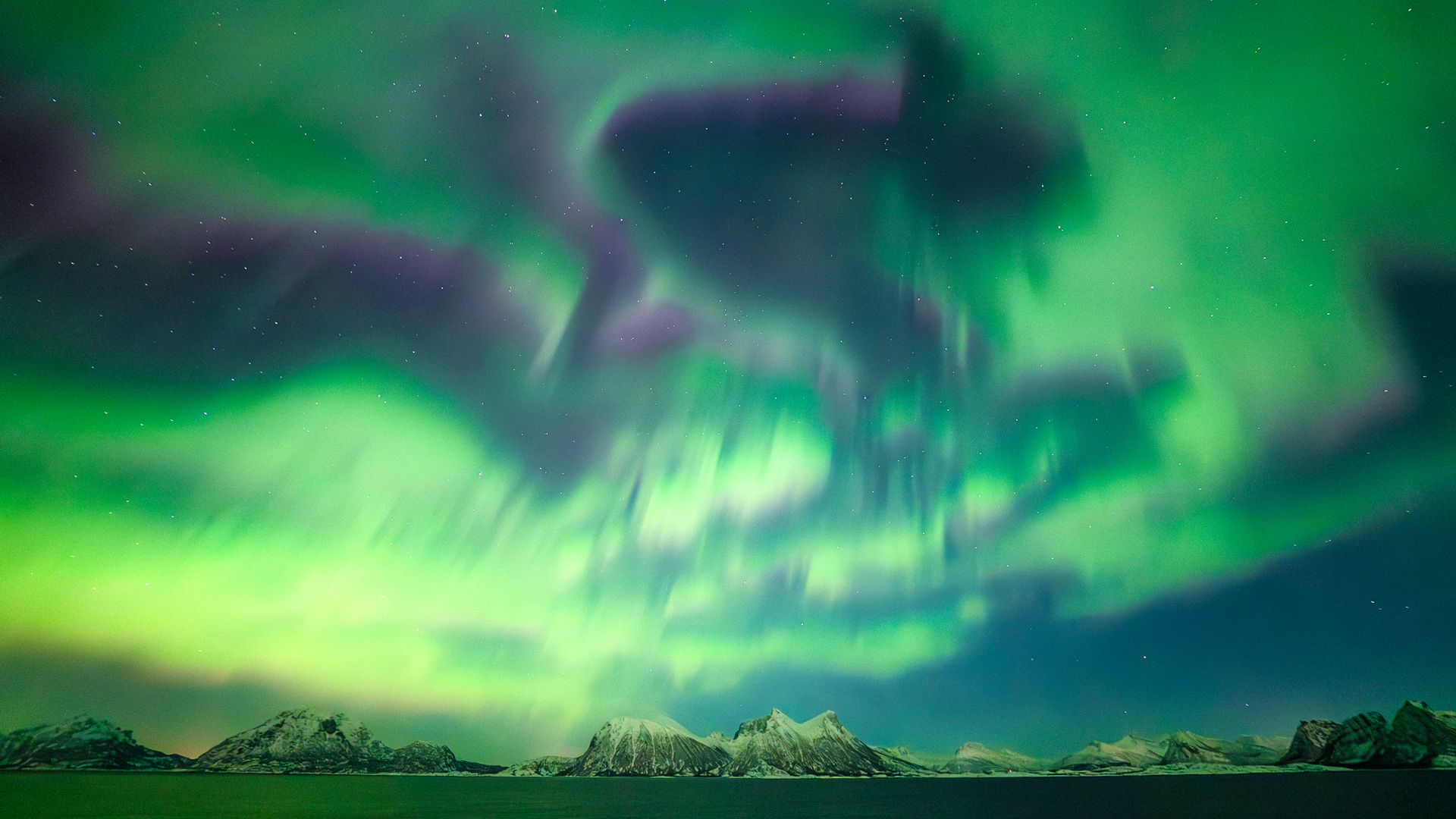
"Even to the naked eye, it was clear something exceptional was happening, with visible pulses and shifting colour," Kerss explained.
"The display lasted for hours, flashing pink and green long after midnight."
He captured the jaw-dropping display in real time using a Sony A7S camera and 14mm F1.4 lens onboard Hurtigruten's MS Trollfjord during an intense geomagnetic storm on Feb. 22, 2026.
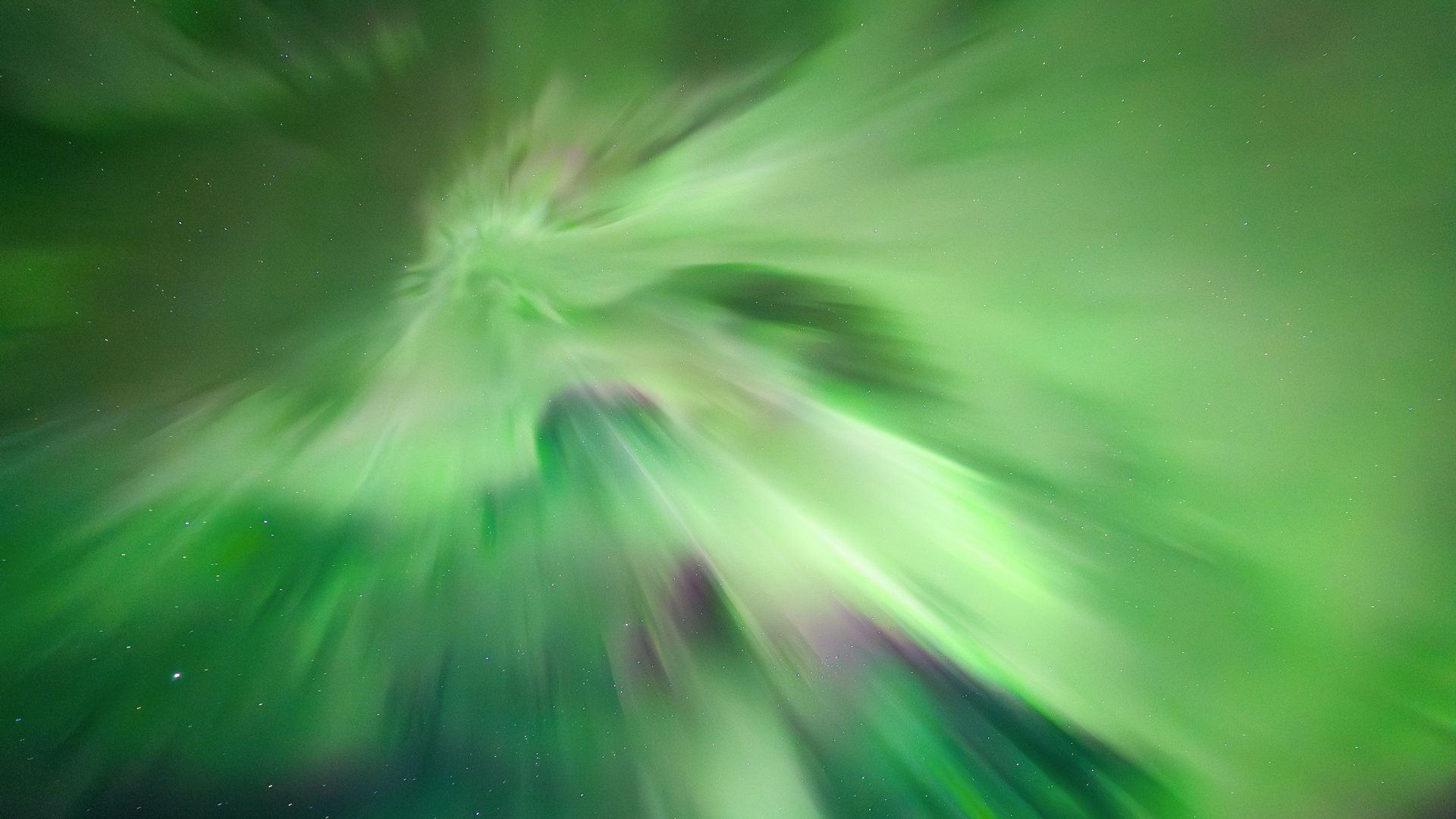
Pulsating auroras are not particularly rare. They are commonly associated with powerful auroral substorms that occur somewhat regularly, especially in high-latitude regions like Arctic Norway. But to see them spread across the entire sky in this way, and last for hours, is very unusual.
These pulsating, blinking aurora displays are thought to be driven by waves of energy deep within Earth's magnetic tail — the stretched-out part of our planet's magnetic field that extends into space away from the sun. These waves, known as "chorus waves," act a bit like a cosmic drumbeat.
Each "beat" sends bursts of charged particles — electrified material called plasma — hurtling toward Earth's upper atmosphere. When these particles collide with gases like oxygen and nitrogen, they produce flashes of light that appear to switch on and off across the sky.
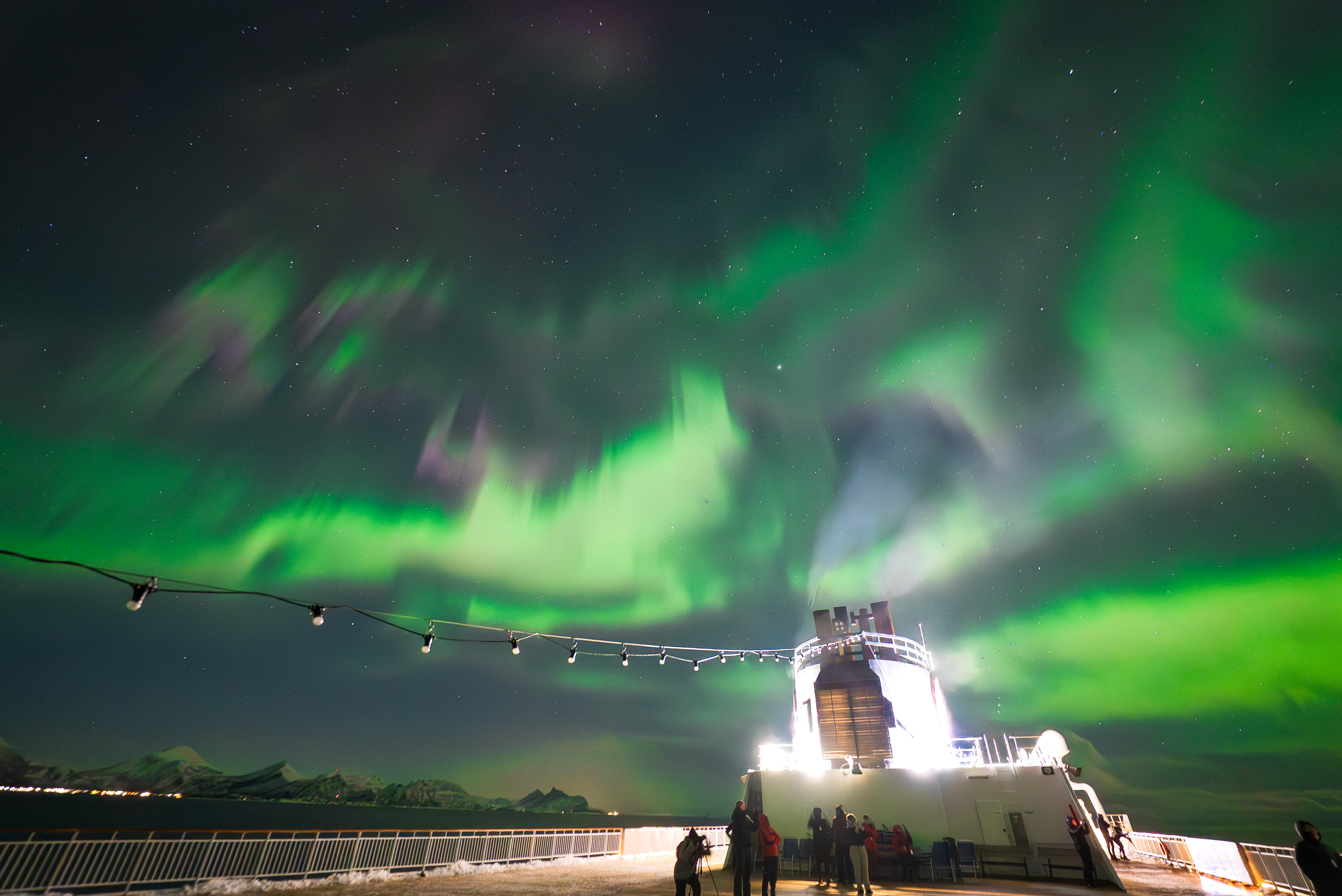
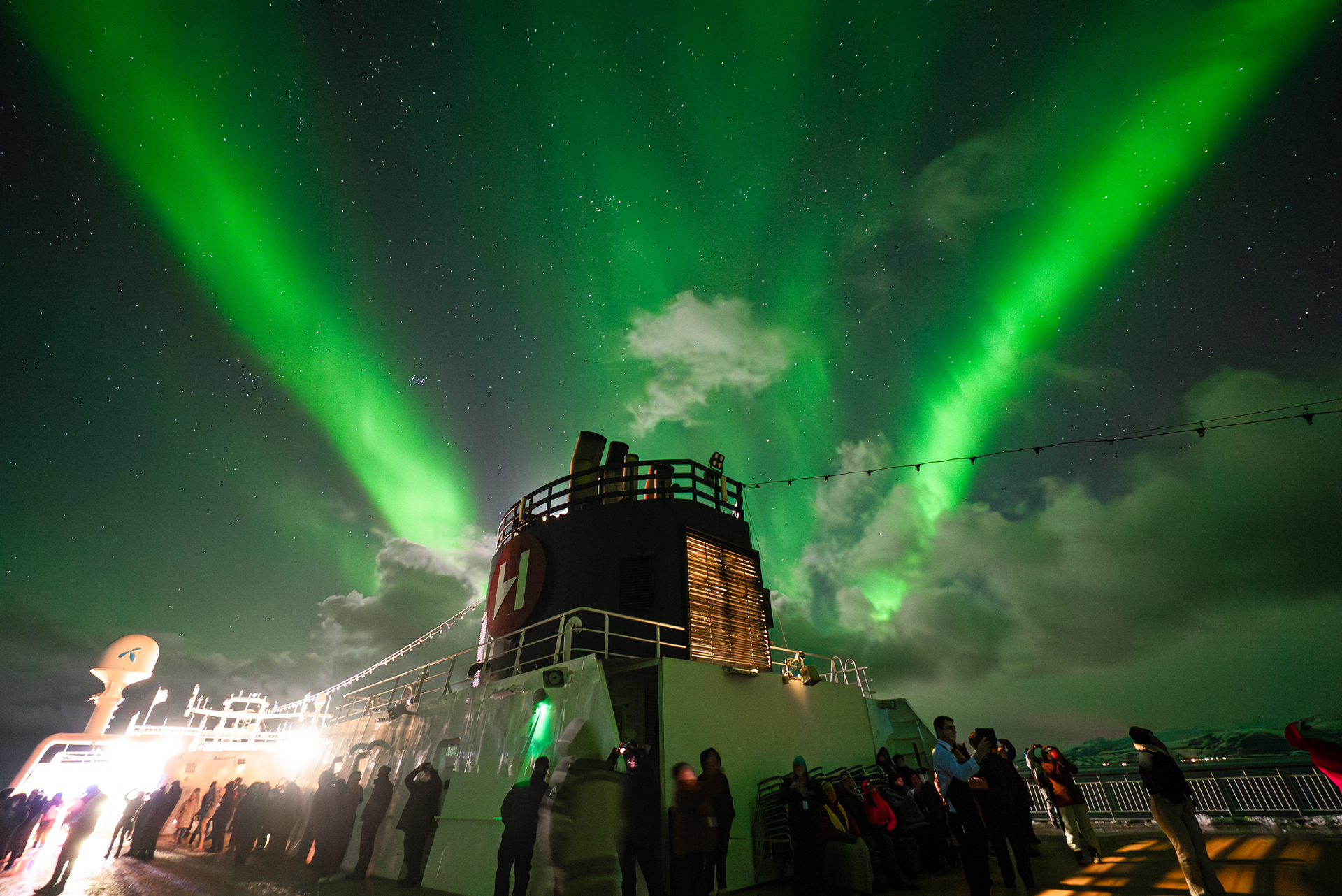
If you look carefully in the video at the top of the article, you can also notice a subtle but rather fascinating detail in how the colors appear. Pink flashes often come first, followed by green moments later. That's because different gases release light at slightly different speeds. Nitrogen emits its pinkish glow almost instantly, while oxygen takes a fraction of a second longer to produce the familiar green aurora.
"The footage captures not just the beauty, but rare detail that offers real scientific insight," Kerss said.
 English (US)